Yesterday, the RP, contributing RP Lisa Borders, and a group of other Democrats, Republicans and Independents from across the country, helped launch No Labels Radio.
No Labels is a new grassroots movement of Democrats, Republicans, and Independents who are united in the belief that we do not have to give up our labels, merely put them aside to do what’s best for America. No Labels Radio will offer a weekly dose of news and interviews with the policymakers who are working to find bipartisan answers to the otherwise intractable problems our country faces.
No Labels Radio is broadcast every Thursday at 2 PM EDT.
Yesterday’s broadcast is now online. You can listen to it here:
We’ve received a lot of feedback on The Atlantic magazine’s piece that we posted this week, in which former New York City School Chief Joel Klein praised the work that contributing RP Eva Moskowitz has been doing to promote education in the innercity.
We thought that now is an appropriate opportunity to hear it from Eva herself. Accordingly, we present a ten-minute video of a speech Eva gave last year in Denver on the subject of charter schools.
Our own contributing RP, Jason Atkinson, has a need for speed.
Specifically, he’s pushing to raise the interstate speed limit in Oregon, which is the slowest state west of the Mississippi.
Here is what the (Southern Oregon) Mail Tribune reports:
Sen. Jason Atkinson, R-Central Point, has joined Sen. Bruce Starr, R-Hillsboro, in a push to increase the speed limit to at least 70 mph for noncommercial vehicles and 60 mph for semitrucks and other commercial traffic.
They’ve proposed an amendment to a House transportation bill (HB 3150) that would give the Oregon Transportation Safety Division the authority to raise the limit to a maximum 75 mph at its discretion. Atkinson said he hopes OTSD will meet in the middle with an increase of 5 mph.
Atkinson, who is on the state committee for Business, Transportation and Economic Development, said raising the speed limit would streamline traffic on the interstates.
As we previewed a few hours ago, the RP, contributing RP Lisa Borders, and a bipartisan group of national leaders, committed to promoting civility and bipartisan solutions to the nation’s toughest problems, have launched No Labels Radio.
No Labels is a new grassroots movement of Democrats, Republicans, and Independents who are united in the belief that we do not have to give up our labels, merely put them aside to do what’s best for America. No Labels Radio will offer a weekly dose of news and interviews with the policymakers who are working to find bipartisan answers to the otherwise intractable problems our country faces.
Former New York City Schools Chancellor Joel Klein penned a lengthy and thought-provoking essay that appears in this month’s Atlantic magazine entitled “The Failure of American Schools.” In it, he reveals a number of disturbing trends and endemic problems that plague the nation’s public schools system.
Klein offers, however, a signal of hope that comes from the work being done currently by contributing RP, Eva Moskowitz, in her Harlem Success Academy:
Eva Moskowitz is Founder and CEO of the Harlem Success Network
At the individual school level, the differences can be breathtaking. One charter school in New York City, Harlem Success Academy 1, has students who are demographically almost identical to those attending nearby community and charter schools, yet it gets entirely different results. Harlem Success has 88 percent of its students proficient in reading and 95 percent in math; six other nearby schools have an average of 31 percent proficient in reading and 39 percent in math. And according to the most-recent scores on New York State fourth-grade science tests, Success had more than 90 percent of its students at the highest (advanced) level, while the city had only 43 percent at advanced, and Success’s black students outperformed white students at more than 700 schools across the state. In fact, Success now performs at the same level as the gifted-and-talented schools in New York City—all of which have demanding admissions requirements, while Success randomly selects its students, mostly poor and minority, by lottery.
These school-level differences ultimately reflect the effectiveness of a child’s particular teachers. Eric Hanushek, an economist at Stanford, has shown that, while some teachers get a year and a half’s worth of learning into a year, others get in only half a year’s worth of learning with essentially the same students. Imagine the cumulative impact of the best teachers over 13 years of elementary and secondary education. Indeed, even if California raised its performance to Texas’s level, Detroit to Boston’s, the neighborhood schools in Harlem to Harlem Success’s—that is to say, if our least effective teachers performed at the level of our most effective—the impact would be seismic.
Sometimes, a stupid lie that seems inconsequential at the time – in my case about a campaign postcard – can lead to betrayal, the end of a friendship, and a prison term. Other times, a stupid, inconsequential lie can lead to the blossoming of a long and meaningful friendship.
***
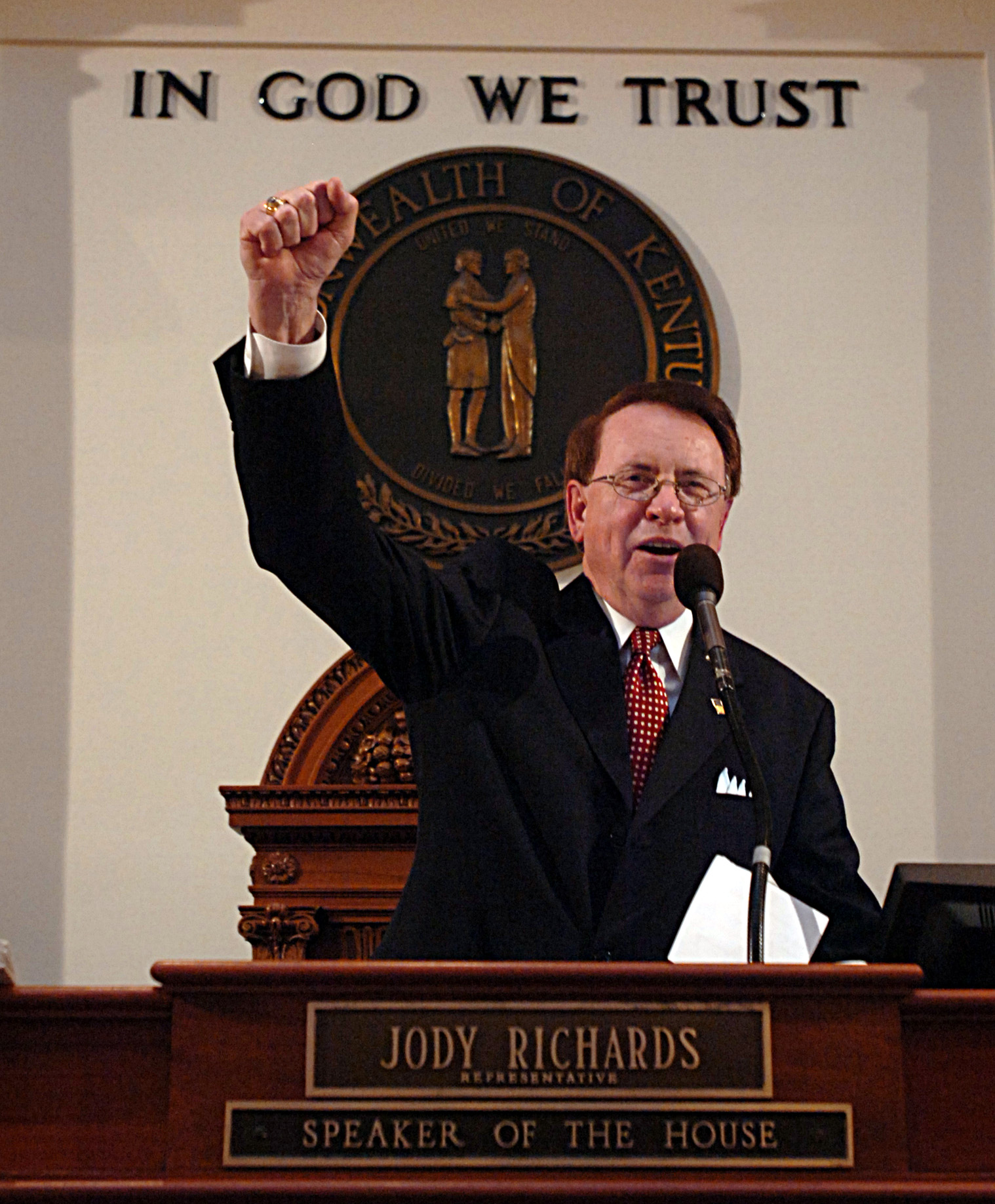
During my first Senate session in early 2007, I drove to Louisville for the weekend to visit my ex-girlfriend, who served as press secretary for Kentucky gubernatorial candidate Bruce Lunsford. It was the weekend before the Democratic primary, and on Sunday afternoon before I headed back to St. Louis, we stopped at a restaurant which we soon realized shared a patio with an adjacent restaurant hosting a campaign BBQ for one of her gubernatorial campaign opponents, Kentucky House Speaker Jody Richards.
Lis, whose jet-black hair, pale skin, haute couture dress, and staccato delivery screamed New York City, hid her head in her hand. “Oh my God,” she said, “they’re totally gonna recognize me and think I’m tracking them. Ohmigod, this is so embarrassing. Let’s get the fuck out of here.”
Although most people in St. Louis politics viewed me as a Type A politician, who sprinted door-to-door and whose campaign aides who worked 16 hours a day seven days a week, I tended to take a much more relaxed view of campaigns than Lis did. A year earlier, she had famously called my campaign manager and berated him for failing to blind-copy a group of reporters on a routine press advisory. I’d watched the call from his side in the office; he stood there, mouth agape and crumpling like a boxer taking gut punches, for 60 seconds while the office listened to her tear into him, the phone a safe distance from his ear.
Knowing her aversion to even the smallest gaffes, I mischievously decided, as was my wont, to antagonize her. “Hey, I’m gonna go meet Jody,” I said, rising from the table. As a politician, a political scientist, and a huge geek, I liked meeting and analyzing politicians. The only thing better than meeting and analyzing them was to do it undercover.
Lis trembled and turned ashen. “Do NOT do that. Ohmigod I will fucking KILL you if you do that! Let’s just get the check and get out of here.”
***
Former KY House Speaker Jody Richards
I rose from my seat and approached Richards. “Hey, Mr. Speaker, how’s it goin’?”
He clasped my outstretched hand and pumped it furiously. “Hey there, young fella, how ya doin’?”
“I’m great. How’s the campaign going?”
“Well, pretty dern good!” He gestured to the patio, where an embarrassingly small group of supporters had gathered for the BBQ. “Look at all these folks! I’d say things are pretty dern good! What’s yer name, young fella?”
“John,” I lied.
He reached out and pumped my hand some more. “It’s great to see ya, John. Where ya from?”
“Oh, right down Bardstown,” I replied, gesturing vaguely to my left, praying he wouldn’t pursue that line of inquiry any further. I needed a distraction, fast. “So, tell me about your platform.”
Read the rest of… Jeff Smith: When “John” Met John Y.
By Kathleen Kennedy Townsend, on Tue May 24, 2011 at 8:30 AM ET
Among her many civic and philanthropic roles, contributing RP Kathleen Kennedy Townsend sevres as Chair of the University of Maryland School of Medicine’s Institute of Human Virology, founded by well-known AIDS researcher Dr. Robert C. Gallo. In recent weeks, the Institute received $23 million in new funding for an HIV/AIDS vaccine from the Bill and Melinda Gates Foundation, the U.S. Army, and other organizations.
Still, Townsend argues, the need for research dollars is far, far greater. As she wrote for Atlantic magazine online:
While researchers are still struggling to develop a preventive vaccine, the treatment of HIV/AIDS has drastically changed. For most of the developed world, HIV/AIDS has been transformed from a death sentence to a chronic disease.
Unfortunately, this isn’t the case in the developing world, particularly in sub-Saharan Africa, where millions don’t have access to life-saving drugs. For them the death sentence has not been commuted.
By Jason Atkinson, on Mon May 23, 2011 at 8:30 AM ET
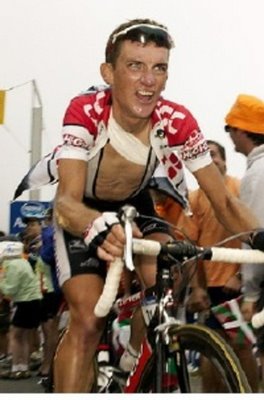
When I raced in Belgium in 1992, I thought I was finally on the verge of breaking into the highest levels of cycling. I came home to Oregon, back to skiing, got run over by a bubble-gummer driving her Daddy’s Chevy Blazer and ended up in politics. Through it all, I have remained a complete lover of cycling.
As I write, the Lion of Flanders flag is a mast over my farm. I put it up for the Tour of Flanders; keep it up for the Paris–Roubaix (the greatest bike race of the season) and through the Grand Tour seasons. My son, when he was barely able to speak complete words, could say the name Paolo Bettini in perfect Italian, Paolo was the World Champion in 2006 and 2007.
I saw doping first hand. Racing on the German – Austrian border I recall seeing two Czech development riders for team Banesto take out syringes during a race and shoot up. What as amazing about this was not the openness, but the herculean speed they had about twenty minutes later. My team had four riders at the Olympic trials that year. We were not the strongest, but certainly a team deep with talent and these two dopers dropped us.
In all the reports from that era, doping was really getting widespread and more sophisticated than the rumored amphetamine use during the 1970’s. Greg LeMond, a three time tour winner, first American game changer and gun shot survivor, commented in the early 1990’s, in the waning years of his career, how cyclists were gaining incredible strength. He was openly criticized for being grumpy and past his prime, but I believed him. LeMond was a man God designed to win bike races. Even in his late 30’s, someone as good as him just does not get dropped.
Lance Armstrong and Marco Pantani
My sport has widespread doping scandals, but I remained true. The Festina mess, then Marco Pantani, “the Pirate.” I have always given the benefit of the doubt, because unlike American team sports where people are elevated with gigantic professional contracts and grow enormous egos based on them, Cyclists rarely make over $100k ($45k for a domestique in the 1990s) and in order to reach those levels cyclists spend years of countless miles training alone. Cyclist loves their sport deeply like few athletes in other sports do. There is never an off-season.
I was hit hard when Pantani was found dead in his hotel room after an overdose. He and I were almost the exact same age. I had seen him race. He was amazing. After the scandals he left cycling and fell deep into depression. I felt for him as a depressed man looking for redemption.
When the allegations surrounding Tyler Hamilton surfaced, I was among the first to sign his web-site’s
Tyler Hamilton
comments section and encourage him to stand strong. More than his Olympic victory, his solo win in the mountains during the 2003 Tour de France with a broken collarbone was perhaps the greatest testament to mind over pain and the love of cycling I had ever seen. When he made his comeback winning the US Championships by a hair’s breath, my son and I were yelling in victory at our TV.
Last night, some of the shine rubbed off as Hamilton came clean on 60 Minutes. It’s another sad day for the sport I love and will again be a necessary cleansing agent. Other sports and their heroes – with far more money in play – are protected, but professional cycling is unique culture around the world and needs to be cleansed.
We Americans marvel and do not quite understand all the hoopla surrounding World Cup Soccer and why the teams and countries are exalted over individual players and multimillion dollar shoe contracts. In the same vein, we don’t fully appreciate professional cycling either. That is why it is hard to grapple with Lance Armstrong.
Like I have, I will remain true and give the benefit of the doubt to Lance Armstrong. I want to believe Lance did not use banned substances. I want to believe in cycling. The 60 Minutes piece was hard for me to watch, and we will all focus on the individual hero, but that is not the sport of cycling.
Five feet away, across my desk – hanging on the wall of my office – is a photo of Governor Schwarzenegger, Governor Kulongoski, myself and my son signing legislation to protect a river that my little boy is the fifth generation to grow up on. I was so proud that day and had the picture made to give my boy when the responsibility to care for the river becomes his. Just like cycling, how do I look at the picture now?
Cycling will still need its heroes next year. My river will still be there in thirty years and will still need her champions. All we want is for both to be clean and protected.
Contributing RP Artur Davis has been an outspoken national leader on the subject of the proper role of faith in public policy. Four years ago, he sat down for an interview to summarize his views on this subject. His words rings true today, especially in light of the partisanship and polarization plaguing American politics.
In his role as a contributing member of Politico’s “Arena,” contributing RP Jeff Smith was asked if he believed the U.S. Senate’s “Gang of Six” — a bipartisan group formed to develop a solution to the budget deficit crisis — would remain relevant after the recent departure of conservative Republican Senator Tom Coburn of Oklahoma.
Here’s Jeff’s answer:
The Gang remains relevant. Given his nature, Coburn could return as easily as he left; sure, he may be frustrated, but it’s probably just a tactic to get more movement from Durbin. Apparently they’re close to an agreement; if $130 billion more in Medicare savings is the main sticking point in an effort to achieve $4 billion in overall debt reduction, it would seem that this impasse can be bridged. And the ten weeks remaining to bridge it is an eternity: as with a tied NBA championship game with ten seconds left, there may be many more twists and turns to come.