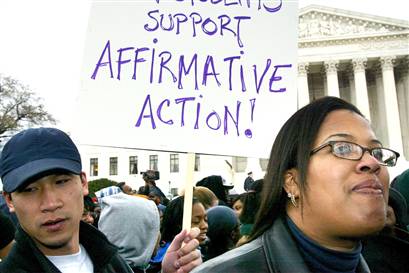
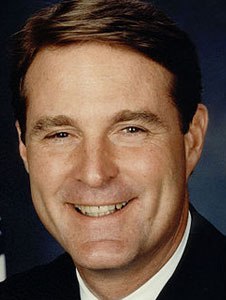
Former RNC Chairman Michael Steele‘s tumultuous tenure as head of the national GOP was marked by his tendency toward outspokenness, a tendency that earned him little reward. Since he become a contributor for MSNBC almost a year ago, however, that tendency has become an asset. Although still a strong critic of President Obama, the Chairman isn’t afraid to tell uncomfortable truths about his own party. In part two of our exclusive interview, Chairman Steele discusses one such truth: the Republican Party’s rocky relationship with racial politics.
One of the more remarkable moments of Michael Steele’s stint as RNC chairman was his stunning admission that, by virtue of the decades-long, race-based Southern Strategy, his party had given black voters very little reason to vote for them.


 |
|||
 Sometimes when I’m in a long line at Starbucks and in a hurry, I wonder to myself, “Who was the annoying customer who kept complaining that the Barista never asked if he wanted ‘room for cream?'” Sometimes when I’m in a long line at Starbucks and in a hurry, I wonder to myself, “Who was the annoying customer who kept complaining that the Barista never asked if he wanted ‘room for cream?'”That person was probably the cause of the blanket Starbucks policy to ask every customer ever time that same question ad nauseum.
That question, repeated millions of times a day seems to take a lot of time for the Barista to ask, the customer to think about, the customer to answer, the Barista to process and the Barista to respond to. And I’m not sure it’s an important enough question to ask millions of times daily.
I think Starbucks should post a “Room for cream opt out” policy. In other words, it will be assumed that all Starbucks customers want room for cream unless the order otherwise (e.g. “No room for cream, please” or “I don’t need room for cream” or “I’m utilizing the ‘opt out’ policy for room with cream”—or something like that).
I suggest a pilot project for Louisville. I suspect we’ll see a lot of freed up time to Starbucks customers that is currently time being drained from our local economy. And wouldn’t it be interesting if we discovered that this inane question asked of everyone passing through Starbucks turned out to be the primary cause of our current recession?
Of course, I don’t really believe the “room for cream” question contributed to the recession.
Just aggravated it a little.
I do think that the new additional –and more complicated—Starbucks question, “Would you prefer light or dark roast?” has the potential to seriously undermine out economy.
As Galston observes, communitarian language has deep roots in American civic tradition, from the pilgrim John Winthrop’s “shining city on a hill”, a biblical phrase that he reshaped into a clarion call for shared sacrifice and mutuality; to Teddy Roosevelt’s New Nationalism and its paen to heroic civic vigor; to Mario Cuomo’s 1984 Democratic keynote address, which elegantly describes “the family of America, recognizing that at the heart of the matter we are bound to one another.” The same strains have surfaced prominently in Obama’s best recent efforts—including the Osawatomie, Kansas “inequality” speech in December, and the State of the Union. Read the rest of…
Remember the old saying, “I feel like a million bucks!”? That was very popular a few decades ago and meant you felt good physically and were on top of the world. I have done an economic analysis based on when that saying was at the height of popular usage and have adjusted for inflation. In today’s monetary terms, the proper saying should be “I feel like $2,435, 721.32” However after adjusting for what each individual on average owes over their lifetime based on our national debt, the new adjusted number is roughly “$6.48.” So, if you are feeling especially good today…and especially positive about the future, cock your head, put back that gleam in our eye and say, “Hey there, pal! I’m feeling like roughly $6.48 today, adjusting for inflation and my portion of the debt!” It’s not quite as catchy as the original line, but spirit of that expression is still in there somewhere. On the other hand, if you aren’t feeling especially good today physically or about your personal future, you will need to adjust further downward if someone asks you to estimate your dollar value based on your frame of mind today. Unfortunately, there’s not a lot of wiggle room. I guess what I’m saying is I hope everyone is feeling, as Larry David likes to say, “Pretty, pretty, pretty, pretty good” about things. Figuratively speaking. ; ) While we were public servants, our constituents counted on us to represent them well in Washington. It was our job to deliver to the best of our abilities. Unfortunately, both today and while we were in office, Congress has simply been unable to deliver on one of its most fundamental responsibilities — passing, on time, the spending bills necessary to fund and run the government. It has been more than 1,000 days since Congress last passed a budget on time, and well over a decade since it did so with all appropriations bills. Read the rest of… In several well-read pieces here at The Recovering Politician, former Missouri State Senator (and contributing RP) Jeff Smith has analyzed the impact of redistricting on his one-time political rival Congressman Russ Carnahan, and then predicted that Carnahan would ultimately choose to challenge his fellow Democratic Congressman William Lacy Clay. Turns out, Jeff was right. Here’s an excerpt from Real Clear Politics, “Carnahan Files for Congressional Seat.”
Read the full piece from Real Clear Politics here.
A friend of mine today broached the topic of mid life crisis in men…and wondered if he, at 44, was in the midst of his own midlife crisis. We talked about it and I’m not so sure. I explained that even if he was, he had plenty to be upbeat about. “Like what?” he asked. “Well, look at it this way,” I said. “I had my midlife crisis at around 38….I consider that young for a midlife crisis. I was sort of an AP mild life crisis type—you know, kinda precocious for that stage of development. But here’s the silver lining for you. If that was truly midlife for me, my life expectancy is only 76. You, on the other hand, are a little slower to get around to passing through your midlife crisis “right of passage”–but if 44 is midlife for you, your life expectancy is, well, 88. That means you’ll live 12 years longer than I will based on my mid-life math. Sure you may be more confused and depressed than me this year…and you’ll say silly and pathetic things, maybe even quite your job or buy a tacky looking sports car. But you get to outlive me by over a decade! I guess sometimes it pays to be a slow learner.”
Count me as a conflicted spectator who chafes at both poles of the debate. Read the rest of…
February is soon coming to a close. As usual, too soon. I don’t say that because anything especially touching or profound happens ever February. Not at all. Just the very literal fact that Feb got the shortest number of days of any of the 12 months. And over time it’s taken its toll on February’s self-image and self esteem. It’s one thing to draw the short end of the stick one, two, three years in a row. But over 200 here in just the US! And don’t get me started on the whole Julian Calendar thing. It’s wounded generations of Februaries than can never be made right again. It’s just that I was born with and have developed in my life a strong sense of social justice. And it’s time that we stand up for February to have equal time. I commented last week about February have lousy national holidays. Do you think that President’s Day and Groundhog Day being in February is really an accident? It takes confidence and some successes to be able to handle a Thanksgiving or Fourth of July even (although there admittedly would be temporal challenges to moving the 4th to February). The point is you’ve never heard anyone say, “I can’t wait until February!” Or “I hear we’re going to have an awesome February this year.” It doesn’t happen. In fact, we are so impressed, sated, and exhausted from the over-achieving November and December and –to a lesser extent–January, we typically just quietly endure the chronically under-achieving February….and, frankly, don’t even get our hopes up about anything until March 1. It’s like February, already inferior, has to sit each year next to the three most popular kids in the class. Not fair! February is like the Kentucky of Presidential Primaries (we get to vote in May to decide if it will be Romney or Santorum or Gingrich or any of the others, if they are still alive, physically and politically). Sure, primaries (and Februaries) happen. But no one pays attention and neither really matters. Both are done mostly out of habit. More as an afterthought than eagerly anticipated. I think, perhaps, we should take one day each from May, July and August (none has used efficiently their 31st day) and give those three days to February. February will then at least feel like it’s equal to most other months—with 31 days. And then every four years, on Leap Year, February can look down it’s nose on all other months. And on that day, for the first time, Leap Year –and February –will totally rock!! Or maybe…just maybe—and I’d love this!–February could turn the tables on the other “slacker” months by pointing out that it does in 28 days what it takes most the others 31 days to do.
Our own contributing Krystal Ball helped change an imminent government policy in Virginia last week. After helping expose the implications of a proposed state law that would have required transvaginal ultrasounds for women seeking abortion, Governor McDonnell withdrew his support. Here’s Krystal on MSNBC’s “Martin Bashir Show” last week:
Here’s the video: Visit msnbc.com for breaking news, world news, and news about the economy And here’s Krystal’s piece from last week’s The Recovering Politician:
|
| ||
| Copyright © 2026 The Recovering Politician - All Rights Reserved | |||