There has never been much of a reservoir of respect in Barack Obama’s White House for the Republican Party. The disdain is partly the reflex of Chicago-bred operatives who found John McCain’s campaign soft and clumsy; partly the mindset of intellectual liberals who view John Boehner and Mitch McConnell as pedestrian local Civitans made good; but mostly it is the product of a worldview that sees conservatism as neither trendy nor clever, and as the fading gasp of a whiter, duller society. By all lights, Team Obama expected to dismantle Mitt Romney, who seems to them to crystallize all the inadequacies of their opposition.
So, imagine their perplexity that Romney is either slightly ahead, or tied with Obama as spring heads to summer. For all of the Obama campaign’s tendencies to discredit any polling they don’t like, the numbers tell a more or less consistent story: Gallup puts Romney’s chronically low favorable ratings at their highest point yet, about even with Obama’s; CBS/New York Times reveals that the president’s much touted embrace of same sex marriage hurts him more than it helps, and that strikingly, nearly seventy percent of the country attributes the president’s history-making on the subject to political motives. ABC/Washington Post shows that a country preoccupied with the economy believes that a Romney presidency will make it better, and that an Obama reelection will have little effect.
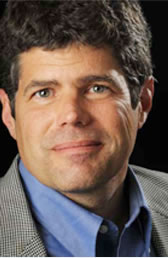
By John Y. Brown III, on Fri May 25, 2012 at 12:00 PM ET
Human motivation and how to understand it.
We all do things or say things that perturb and puzzle others. That don’t make logical sense or seem appropriate for the situation.
Why do we do it? I have a 6- pronged approach to make sense of such situations and would like to share it with you.
1) Ask “What is the pay off for the behavior?” You will often discover there is a history or story behind seemingly silly behavior that helps explain otherwise unusual behavior. Under the right circumstances, many unusual behaviors can still have a “pay off” for people.
2) Dopamine spurt. It’s remarkable how many of our behaviors are unknowingly locked into dopamine “reward system.” Running, sports, anger fits, romance, good grades, and so on–including a number of less savory behaviors are reinforced daily by our desire to get a quick hit of the brain chemical dopamine.
3) Parents. This explanation is a time-honored standby for unpleasant behavior. Tracing it back to some parental deficiency that is still having an awkward impact today. This must be used sparingly to remain credible.
4) Birth order. Sibling birth order can explain some traits and temperaments and has a good deal of solid science to back it up.
5) Philosophical-spiritual. When someone behaves badly simply understand it as the person acting the way he or she needs to at the moment as part of a larger positive process. Statements like “He’s doing the best he can with the tools he has” are often heard to describe this assessment tool.
6) Not caring. This is fast becoming my favorite strategy when trying to understand another person’s inappropriate behavior. It’s more declarative than diagnostic but works very efficiently. When someone behaves badly instead of starting down a long mental path to understand the behavior, stop. Instead, simply say to yourself “That was a really inappropriate behavior and i don’t need to understand why he did that.”
Over time many who use this last technique are able to use the shorthand, “I can’t believe he did that. What an asshole.”
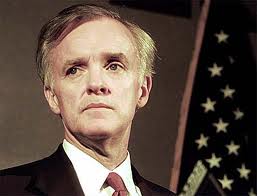
There is cruel irony in the notion that Kerrey’s decade here at The New School will hurt him in Nebraska. The irony is that, well, most people here didn’t like him very much. Indeed, the last time he stood for election was not 1994; it was a no-confidence vote brought by the faculty of the New School.
The overall vote was reportedly 271 to 3 against Kerrey, with the vote among tenured faculty 74-2 against, and Kerrey announced his resignation soon thereafter. (I was not on faculty then.)
This occurred after Kerrey went through five provosts in seven years before naming himself provost in addition to president, which helped trigger student occupations of the administration building (back before the word “occupy” was capitalized).
Admittedly, The New School is a politically charged environment and certainly not an easy place to govern. And a decade is a long time to run anything, let alone a university with a long and vibrant tradition of dissent. But to say that his New School tenure was rocky is like saying that Nixon had a bumpy presidency.
So in my view, he ought to try to make lemons from lemonade: find some footage of himself clashing with unkempt student protesters (he called police during the occupation and students were forcibly removed) and have someone put it up on YouTube. Say that he got pushed out because people rejected his “common-sense Midwestern approach.”
Read the rest of… Jeff Smith: Is Bob Kerrey Too New York for Nebraska?
A decade ago, the Hispanic political community and the gay rights lobby were in a substantially similar position: both with agendas that were largely under radar, far enough off the grid that their cause was neither a rallying point for friends nor a wedge issue for their adversaries. The demands of both groups were mostly inconsequential in a national election.
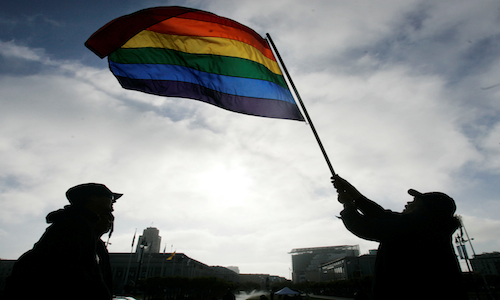
Adjust the dial to 2012 and both gay rights and immigration have turned into cultural flashpoints. But the fortunes of the respective constituencies have taken sharply divergent paths. By any measure, gay rights advocates are on the rise. A once far-fetched goal of theirs, repealing “Don’t Ask Don’t Tell”, survived congressional gridlock to become one of the Obama administration’s signature achievements; an even more implausible seeming cause, full-fledged marital status for same-sex couples, has just won the endorsement of the President of the United States and has become a major policy commitment of that president’s party.
In contrast, Hispanic interest groups are in the midst of a bad run. They are winless at the congressional level in the preceding decade—losing badly in their campaign to open up citizenship opportunities for much of the illegal immigrant population, and failing in a more incremental bid to legalize young undocumented adults who join the military or complete college. During Barack Obama’s term, they have actually lost ground. Alabama and Arizona have passed sharply restrictive laws aimed at making their states all but unlivable for illegal immigrants. The Democratic Party that generally wins Latino votes has been an ambivalent ally, with two major elements of their base, labor unions and African Americans, skeptical of any broad liberalization of immigration laws.
Read the rest of… Artur Davis: Hispanic Losses, Gay Victories
By John Y. Brown III, on Wed May 23, 2012 at 12:00 PM ET
Generational changes, concert-wise.
My first rock concert I was 14 and went to see the band Chicago with my mother and two younger sisters.
It was held at Freedom Hall. We didn’t pose for pictures beforehand. And I wasn’t sure why we even went.
I think my mom wanted to go because she Chicago was her favorite band at the time.
Fast forward 30+ years and my daughter, age 14, is attending her, like, third or fourth concert. At the new Yum Center.
Back when I went to my first concert mention of an “antebellum lady” conjured images of a Southern belle in a hoop dress.
Today talk of Lady Antebellum conjures a very different image. Still a Southern gal but without hoop dresses ….and who is more likely to give the vapors to others than get them herself.
And pictures are taken before the concert. And the 14 year olds don’t go because their parents make them go see the parents favorite group. I think all in all, that’s probably progress. Mostly.
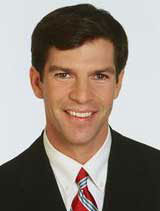
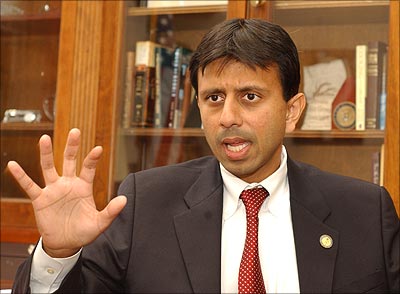
I saw Bobby Jindal speak in New Orleans a few years ago and I was very impressed. He was personable and loose – the opposite of how he came off during his big national television debut. He demonstrated obvious policy chops but was also quite smooth during the grip and grin. Given his resume and evident intellect, he eliminates any potential for Palin-esque surprises.
And he brings a ton of Indian money, although that’s probably the last of Romney’s worries.
I don’t, however, think he’s the best choice, for a few reasons.
First, he does nothing to reduce the gender gap.
Second, he doesn’t help in the Appalachian hollows in swing states like Ohio and Virginia where both Romney and Obama have struggled to connect; in the eyes of those voters he’s just as “exotic” as Obama.
Third, the exorcism. Do the Republicans really want to put up 1) a guy who sadistically pins down boys he suspects are gay to shear them and 2) a guy who pins down women he thinks are possessed by Satan to exorcise them?
Last week, The Chronicle of Higher Education waded headfirst into the culture wars by terminating one of its bloggers for a column excoriating the black studies discipline and calling for its end. The saga around Naomi Schaeffer Riley has ignited a predictable back-and-forth, from the partly organic, partly organized attack by the left on the original piece, to conservative bloggers who have defended her against political correctness run amuck.
I’m of two minds about the controversy. Most of the assault against Riley does seem like shop-worn viewpoint censorship. As even a liberal critic like Eric Alterman has pointed out, labeling the essay as “hate speech” is a frivolous, overwrought charge, and Alterman is right to recognize that a formal response by the black studies faculty at Northwestern which alludes to past discrimination against black college applicants seemed simultaneously pointless and defensive about the capacities of some of the department’s students—who, of course, are not even all black.
But the Riley essay does not strike me as the best line of defense for admirers of intellectual candor. It is not exactly an exercise in rhetorical grace: there is a talk-radio style bluntness to its 500 odd words that is dependent on name-calling: “left wing victimization claptrap”, “liberal hackery”, a parting shot that practitioners of black studies should defer to “legitimate scholars”. Substantively, the essay’s thesis, that a Chronicle article exposed an intellectual sloppiness in the black studies field, is overly reliant on examples from three dissertations to make a vastly more far-reaching point. Even if two of the papers seem hopelessly polemical and one of them sounds hopelessly opaque, it’s a stretch to indict an entire discipline on such a thin foundation. The whole thing feels like an impressionistic hit dashed off to meet a deadline.
Read the rest of… Artur Davis: The Blogger and Black Studies
By John Y. Brown III, on Tue May 22, 2012 at 12:00 PM ET
Life “Superscores.”
With the SAT and ACT, no matter how often you take the tests, colleges only get your “Superscore” (the highest score obtained in each of the individual sections).
I’ve thought about this a lot lately.
Who am I to disagree with professional test writers at the College Board? They are much smarter than I am.
And so….I have decided to apply this Superscore philosophy to every area of my life–both going forward and recalculating old scores.
Suddenly, my life is looking a whole lot better in most every category. Ha!
And to think, the problem was I was simply scoring it wrong.
I can’t wait to explain to my beloved wife, Rebecca, later today that if we take my “high score” in every category over the past 20 years, I’m in, like, the 97th percentile among husbands (not just “satisfactory”).
She is going to be so excited!!! Can’t wait to see the expression on her face!
By John Y. Brown III, on Mon May 21, 2012 at 12:00 PM ET
One isn’t the loneliest number that you’ve ever heard, after all. Sometimes it can mean a lot.
On my business page on Facebook which I recently updated…(click here for the page)…it’s off to a slow start and I don’t think there’s much more I can do with it.
Or even want to with it.
It’s one of those things I felt I needed to do because it looks bad if you don’t have one.
But it is depressing when I check it in the morning and it lists the number of “likes” and then always lists “People talking about this” And every morning it says the exact same number of people are talking it: “0.”
As in Zero. Or to translate verbally, nobody.
I understand and didn’t expect anyone to ever talk about it…but does Facebook really need to have than showing on the page? Can they make that optional?
Or better yet, is there a way I can add another “measurement” piece next to it that reads “Number of people thinking about this.” And have the number 1 next to that one.
I mean, heck, if I’m checking to make sure no one is talking about it, I should at least get credit for me “thinking” about the business. Right?


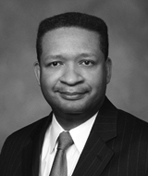 There has never been much of a reservoir of respect in Barack Obama’s White House for the Republican Party. The disdain is partly the reflex of Chicago-bred operatives who found John McCain’s campaign soft and clumsy; partly the mindset of intellectual liberals who view John Boehner and Mitch McConnell as pedestrian local Civitans made good; but mostly it is the product of a worldview that sees conservatism as neither trendy nor clever, and as the fading gasp of a whiter, duller society. By all lights, Team Obama expected to dismantle Mitt Romney, who seems to them to crystallize all the inadequacies of their opposition.
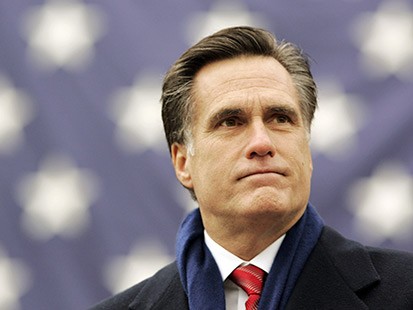 So, imagine their perplexity that Romney is either slightly ahead, or tied with Obama as spring heads to summer. For all of the Obama campaign’s tendencies to discredit any polling they don’t like, the numbers tell a more or less consistent story: Gallup puts Romney’s chronically low favorable ratings at their highest point yet, about even with Obama’s; CBS/New York Times reveals that the president’s much touted embrace of same sex marriage hurts him more than it helps, and that strikingly, nearly seventy percent of the country attributes the president’s history-making on the subject to political motives. ABC/Washington Post shows that a country preoccupied with the economy believes that a Romney presidency will make it better, and that an Obama reelection will have little effect.