Imagine if it were revealed that Scott Pelley or Diane Sawyer had met with Chris Christie last year to implore him to enter the presidential race in order to save the country from political crisis, and had offered the platform of their evening newscast for the announcement. Then imagine the reaction if Brian Williams made a speech decrying extremism in the Republican Party and describing the Right as a threat to the national discourse. For good measure, consider the aftermath if the Romney campaign made back-channel inquiries to Sawyer about running for vice president and Sawyer failed to disclose the offer to her superiors, much less her audience.
Any single one of these scenarios would be explosive and would ignite a gusher of passion about the decline of objectivity in journalism. The specter of national news anchors venturing so blatantly into politics would be cited as toxic proof that their craft had been corrupted.
If you have waded through Douglas Brinkley’s thick, detailed book on Walter Cronkite’s life, you know that each one of these far-fetched sounding examples is borrowed from actual events. The venerable news legend exhorted Robert Kennedy to challenge Lyndon Johnson in 1968 and prodded him to announce his bid on the CBS Evening News. Cronkite publicly assailed the Nixon Administration for seeking to subvert the press specifically and political dissent broadly. On one occasion, in 1972 with George McGovern, and perhaps with an independent candidate in 1980, Cronkite entered discussions about taking a vice presidential slot, and kept the conflict of interest from his public and his bosses.
There is not much condemnation of Cronkite’s line crossing in Brinkley’s account; to the contrary, there is a tone of mourning for how much Cronkite’s stature is missed, and a lot of wide eyed admiration for the role he played as “America’s most trusted man” for a span of about 20 years. If Brinkley is at all discomfited by the times Cronkite crossed over from observer to participant, they are overshadowed by the many occasions when Brinkley applauds Cronkite for shaping the public debate, from Cronkite’s televised takedown of Lyndon Johnson’s Vietnam policies, to his overt endorsement of the environmental movement, to his open jousting with Richard Nixon and Spiro Agnew (the night Agnew resigned after admitting he took bribes, Cronkite editorialized on air that he and Agnew had been “ideological enemies”).
By John Y. Brown III, on Wed Jul 11, 2012 at 12:00 PM ET
Fathers and sons.
Tip for the day.
If you are a dad and haven’t complimented your son recently for doing something well, take the time today to do so. You’ll feel better and it will make your son’s day. … I promise.
Whether you are a 25 year old father with a 4 year old son or a 78 year old father with a 49 year son, it always works that way. Always. And it doesn’t matter whether the compliment is about throwing a baseball or writing silly posts on a blog (or Facebook).
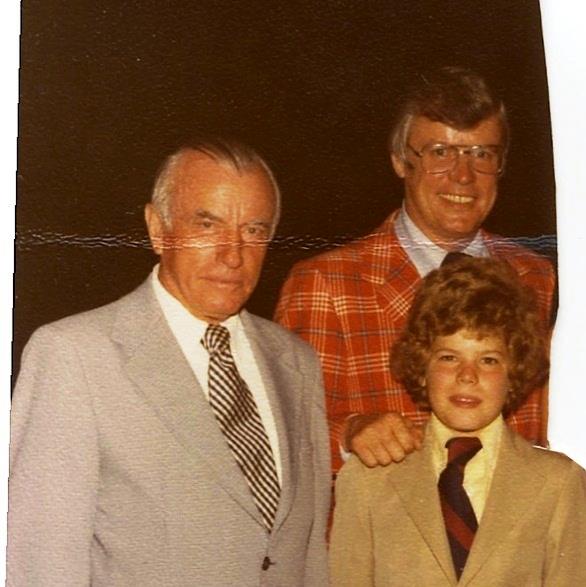
Case in point, an email received yesterday from my father.
JYB Sr., JYB Jr. and JYB III circa 1972
“I try to keep up with your blogs (Recovering Politician) and I find most of them entertaining and thought provoking. I just finished catching up with the last week of blogs and you had a good week.What’s so amazing to your father is how informed you are on so many different categories and how uninformed I am. Guess it’s never too late to try and catch up to be relevant. Love, Dad (There was a time in my life I thought I was pretty well informed but with the computer information I been left far behind. I’m having more fun learning than ever. Even in my so called twilight years .)”
And if you can throw in a comment about you, as a father, having a weakness, even better.
Kickstarter has become a mainstream Internet mechanism where individuals can donate money in advance to help with funding an idea or platform and get a perk or product in return. Innovative recent Kickstarter projects such as the Pebble Smart Watch, Elevation Dockand Brydge have blown away expectations and proven that the crowdfunding concept works. A simple, but innovative platform for creative projects.
A group of high-tech entrepreneurs in Kansas City, Mo., witnessed the success of Kickstarter and websites like the Million Dollar Homepage and decided — why can’t we do this with civic projects? At a time where funding from local, state or federal government is a big if and taxpayers are burnt out on funding major infrastructure projects, Neighbor.ly was born.
Neighbor.ly creates a system where everyone wins through crowdfunding. Capital improvement projects under the transportation, sports, entertainment, education and public amenities umbrella are Neighbor.ly’s focus. The first major endeavor is the proposed streetcar line in downtown Kansas City, Mo. So how does everyone win with civic crowdfunding? Lets take a look at the example of a streetcar plan. Neighbor.ly creator and CEO Jase Wilson believes:
The city wins because it pays less for financing the project. Citizens win because they get a new streetcar. The local economy wins because it limits the impact on taxpayers, and because the streetcar creates jobs. Basically it’s a win engine. Our mission is to transform the streetcar starter line from an obligation affecting a small number of Kansas Citians into an opportunity open to anyone in the world.
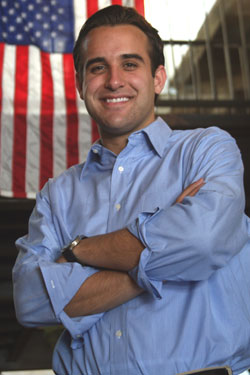
Read the rest of… Jason Gril: Crowdfunding Civic Infrastructure? The Next Big Thing
By John Y. Brown III, on Tue Jul 10, 2012 at 12:00 PM ET
Mental Molting or Convergence?
Once upon a time I had a well trained mind. Disciplined; respectful; dutiful; useful and predictable.
It used to be when I was given a new topic for consideration my mind would race breathlessly to pull up as much relevant information as possible and have it ready to stand at attention and be manipulated or marshaled as needed to impress or persuade.
Not so much anymore.
I don’t know if it is some glorious harmonizing of the totality of our mental capacities that now–as my mind ripens with age– allows me to hear a new topic for consideration and, for several minutes immediately following, hear the stark sound of crickets. And then follow up with the expressionless expression exuded by Jack Nicholson’s character in the final scene of One Flew Over the Cuckoo’s Nest as we realize he’s been lobotomized. Maybe it is some form of intellectual convergence at work. But I suspect it’s something different and inglorious.
Like pruning or mental molting. New topics I hear these days stimulate either nothing or something random I later try to make a logical excuse for popping into my mind.
For example, I was discussing the news website Digg.com. After listening for several minutes about it all I could think of was the lyric “Dig this!” from The Main Ingredient singing “Everybody Plays the Fool.”
And now I’m trying to introduce the song as a logical and relevant part of our discussion about Digg.com.
So, if you can relate, Dig this!
And let’s hope others only think we’re “playing the fool.”
By John Y. Brown III, on Mon Jul 9, 2012 at 12:00 PM ET
“I –seriously–believe that an appeal of the Republican party is to appeal to people with a father-deficiency (or “father hunger” as Robert Blye calls it). It’s the father-party. Hierarchical, protective, tough, male-dominated, etc.”
This is a verbatim line form an email sent to a friend [Editor’s Note: Me] who asked me if this meant that Democrats had “mommy issues.”‘
I said, yes. And I really do think you can divide the two major political parties into a patriarchal and matriarchal divide in how they approach problems and appeal to voters.
Republicans are, as described above, the party more inclined to have a convention speaker accuse the competition of being “Girly men.” It’s crude, dated, and ham handed but also fills a need we all have for a strong sure father-figure. Ronald Reagan mastered this role in a way that Schwarzenegger only caricatured.
By contrast, we Democrats are viewed as the more nurturing, compassionate, and patient party who “feels your pain” as Bill Clinton famously said. A banal statement that became famous because it so well symbolized a key difference between Clinton and his opponent; Democrats from Republicans.
A conservative will tell you to quit whining and fix a personal problem yourself. A liberal will go on a long walk with you to help you talk through it. Both approaches have their excesses and extremes. But both parties, in my opinion, do have this primitive distinction between them at their core.
Of course, the gender characterizations I make are outmoded and crude. But then again, that’s a very liberal thing to say.
Even assuming that at least some of the conservative sentiment is the desire to find comfort in defeat, and that some liberals are engaging in the intellectual version of being graceful winners, there is some core of truth here: upholding the mandate on commerce clause grounds would have linked the power to regulate a market with the power to compel participation in it. Justice Ginsburg’s concession that the power’s only limitation is practicality and political modesty is much less dangerous in a concurrence than a majority opinion.
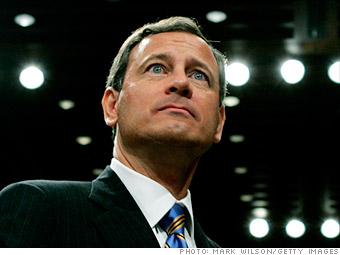
But the fact that five votes coalesced around a weakening of the commerce clause is cold comfort when the fifth vote hinged on blowing the lid off of the tax and spend power. That taxing power, which looked until the day of the ruling like a straightforward ability to add an official levy to commercial activity, now looks ominously broader. As of now, it as limitless as the government’s imagination, as long as it not so high that it turns into a de facto penalty or a fine. Or, in Chief Justice Roberts phrasing, as long as it is “just a tax hike”, all is fair.
Read the rest of… Artur Davis: The Silver Lining is Dark


 Imagine if it were revealed that Scott Pelley or Diane Sawyer had met with Chris Christie last year to implore him to enter the presidential race in order to save the country from political crisis, and had offered the platform of their evening newscast for the announcement. Then imagine the reaction if Brian Williams made a speech decrying extremism in the Republican Party and describing the Right as a threat to the national discourse. For good measure, consider the aftermath if the Romney campaign made back-channel inquiries to Sawyer about running for vice president and Sawyer failed to disclose the offer to her superiors, much less her audience.
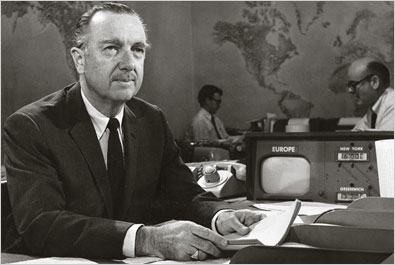 There is not much condemnation of Cronkite’s line crossing in Brinkley’s account; to the contrary, there is a tone of mourning for how much Cronkite’s stature is missed, and a lot of wide eyed admiration for the role he played as “America’s most trusted man” for a span of about 20 years. If Brinkley is at all discomfited by the times Cronkite crossed over from observer to participant, they are overshadowed by the many occasions when Brinkley applauds Cronkite for shaping the public debate, from Cronkite’s televised takedown of Lyndon Johnson’s Vietnam policies, to his overt endorsement of the environmental movement, to his open jousting with Richard Nixon and Spiro Agnew (the night Agnew resigned after admitting he took bribes, Cronkite editorialized on air that he and Agnew had been “ideological enemies”).