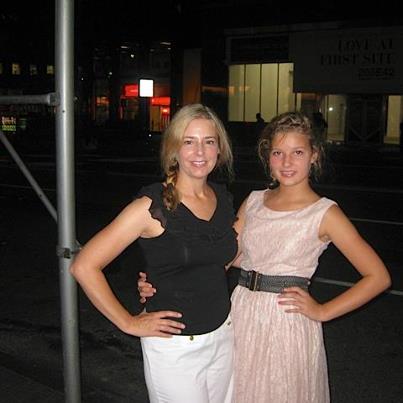
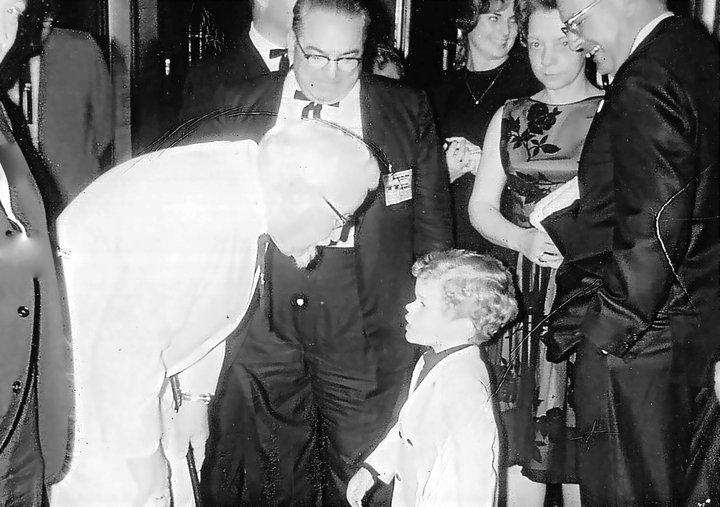
The group leading Maryland’s same-sex marriage campaign is highlighting Catholic supporters, including former lieutenant governor Kathleen Kennedy Townsend (D)…
The Maryland Catholic Conference, the official lobby for the church, was among the more vocal opponents of Maryland’s same-sex marriage legislation this year and is also working for its repeal in the November election. Among other arguments, the group stresses the importance of having both fathers and mothers in children’s lives.
But Catholics are not of one voice on the issue in a state where the church played a central role in its founding.
Gov. Martin O’Malley (D), who sponsored this year’s same-sex marriage bill, is a practicing Catholic. He has argued that all families should have the same legal rights. House Speaker Michael E. Busch (D-Anne Arundel) also broke with the church in shepherding the legislation through his chamber.
More recently, both O’Malley and Busch have appeared at fundraisers to benefit Marylanders for Marriage Equality…
Townsend, the oldest child of Robert and Ethel Kennedy, has written and lectured in recent years on the role of faith in public life.
By John Y. Brown III, on Wed Aug 8, 2012 at 12:00 PM ET
A fancy story. About Kentucky politics.
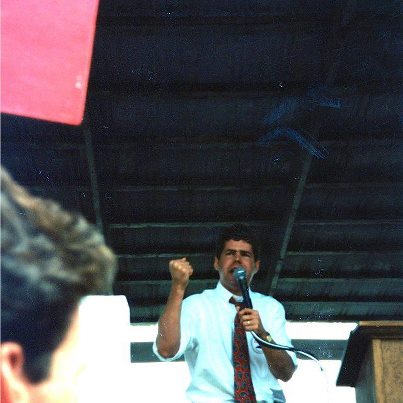
In Kentucky we still have the medieval practice of Trial by Ordeal for our politicians. And it’s a great amount of fun for spectators. If you want to take your place among Kentucky’s statewide and congressional officeholders you must first survive Fancy Farm. Part stump speaking; part right of passage.
To borrow from Frank Sinatra, “If you can make it there (Fancy Farm), you can make it anywhere.”
It is the Southern political equivalent of an actor making it through his or her first Broadway show. You have been initiated and are now part of an elite club. You have what it takes…and the courage to put it all that on the line. And you survived. This time. And for a while you have the respect of others.
I remember preparing for my second Fancy Farm speech. I was in deep West KY outside our Super 8 hotel. I was sitting alone on the curb scanning the local newspapers for local tidbits to pepper my speech with while others ate breakfast inside. I overheard two people talking about me admiringly. Two people I had come to know well.
“Look at him. He’s something isn’t he? He’s reading those papers and putting his speech together in his head right now. I don’t know how he does it.”
And yet just a few days earlier I heard these same two people talking about me in a very different way. “You know you can’t rely on him. I don’t know what’s wrong with him. If you want something done, don’t expect him to do it.”
It was my wife and mother-in-law talking about me.
But Fancy Farm changed all that. Suddenly I went from failure on the home front to being a hero—one of only a few who would take the Fancy Farm platform later that day. And they were related to me. It made them proud. It made me feel special.
And grateful, for this one day each year, I wouldn’t be expected to run any errands or be judged on the same scale as ordinary mortals. Which was never my strong suit anyway.
Today, we proudly present a new feature at The Recovering Politician. Jeff Smith, one of our most popular contributing RPs will be answering YOUR political advice questions here and at City & State, a very popular Web site that focuses on New York politics.
My name is Jeff Smith, and I’m a recovering politician. Oh, I still love politics, and I follow it as closely as ever. But I no longer have a political future; the U.S. Attorney in Missouri’s Eastern District saw to that.
After a 2004 congressional bid in which, as a 29-year-old nobody, I lost narrowly to the scion of Missouri’s leading political dynasty, I figured I was done with politics. But thanks largely to a documentary film about our first campaign I got sucked back in, winning a State Senate seat two years later. I adored the Senate—loved crafting policy, loved helping people, loved the camaraderie with my colleagues.
Then, through an uncanny series of events involving a lie, a car bombing (in which I had no part) and my best friend’s wiretap, I spent 2010 in federal prison.
Along the way I learned about politics, policymaking and people; about friendship, temptation and betrayal. Mine is a hard-won perspective, but one I’m honored to have the opportunity to share with City & State’s readers.
One of the hardest things in politics is knowing whom to trust. That makes discretion critical, since asking a friend for advice can be akin to calling a press conference and broadcasting it.
This column aspires to be the confidant you can trust for an unvarnished opinion: a “Dear Abby” for politicos, if you will. I look forward to answering questions about all things political, and helping readers gain their wisdom more easily (and anonymously) than I did.
I’m running for office, and though I have some volunteers, most come in once, then disappear. I asked my campaign manager why and he said they were all flaky. Do you have any advice?
S.E., Webster Groves, Mo.
Dear S.E.:
First, fire your manager; he sounds flaky. Second, sit down with volunteers when they come in. Ask them why they’re volunteering and what their dream campaign job is. Then—unless their answer involves holding a press conference or sleeping with the candidate—give them a chance to do it. They may have to hit 100 doors before they get to draft a press release, design a mail piece or storyboard a TV ad, but they’ll have a reason other than cold pizza to stay engaged.
Finally, the heart of the problem: Your campaign is no fun. Make your campaign a social event. You’re the candidate; you set the tone. If you’re having fun, they will too—and you’ll attract more fun people. I used to bet my interns/volunteers on anything: One-on-one basketball, who could recruit more supporters while canvassing, which one of them could get somebody’s digits at an event. It’s possible to have a blast and be deadly serious about getting votes at the same time.
I’m a legislator who screwed up. I promised a school superintendent in my district that I’d vote against new charter schools, then told the charter-school advocates that I’d support their bill, which would allow for charter-school expansion. If I seek higher office, the public-school types and teachers’ union could get me primary votes, but the charter-school lobby donates pretty heavy. What should I do?
W.C., St. Louis
Dear W.C.:
In the future, only make promises you can keep. But since it’s too late this time, here’s what you should do. Since you appear to be agnostic about which is the best policy, call some informed constituents without a stake in the matter to feel them out. If there’s any consensus, vote that way. Then, if you must break your word, you have the one semi-acceptable excuse: “I’m sorry. I heard from my constituents and thought hard, and I decided to vote ‘No.’ This was a good lesson; next time I won’t give my word until I understand the issue better.” And tell them well before the vote so they don’t count you as a “Yes.”
Last, before running for higher office, get your views straight so you’re never again making policy calls based purely on personal political considerations. It screams “hack,” and it’s why people distrust pols.
I’m an elected official who recently found out that my female chief of staff had sex with three male interns. I’m not sure whether to talk to her or high-five them—she’s pretty hot. But seriously, should I say anything to her?
D.A., Miami
Dear D.A.:
If your male chief of staff had banged your last three female interns, would you say anything to him? (Hint: Any answer that includes the phrase “high-five” is incorrect.)
Read the rest of… Jeff Smith: Do as I Say — A Political Advice Column
By John Y. Brown III, on Tue Aug 7, 2012 at 12:00 PM ET
About 16 months ago I agreed reluctantly to write a weekly column for the new Recovering Politician blog. I believed in the idea and wanted to support my friend Jonathan Miller’s efforts.
Personally, my hope was to write 4 or 5 obligatory columns and then start coming up with excuses for why I couldn’t continue and then just slip off his radar.
But that didn’t happen. I started making up excuses for why I couldn’t continue after my first and only column. I enjoyed writing the column but I didn’t want to be under a deadline, didn’t have the time to devote to a regular lengthy columns, and didn’t want to write about politics.
Jonathan then came up with a compromise. He said, “Don’t feel obligated to write anything. Don’t write about politics and make it informal and conversational —like when you write something on Facebook. (I had just gotten in the habit of posting random thoughts on Facebook.)
Jonathan went on, “But when you do feel the desire to write, post it on Facebook and if it is something that can work on the blog, I’ll post it.”
I was stuck. There was nothing to say “no” to. So I mumbled that it sounded like a good idea. And it was.
This my 200th post for The Recovering Politician. About 199 more than I thought I had time for under the original plan.
So, thanks Jonathan for the opportunity to write for your blog. Thanks also for the encouraging nudge. And thanks to all of my Facebook friends for putting up with my fits of conversational prose, impulsive observations, quirky insights and a dozen other kinds of random, mundane and fleeting thoughts.
Here’s the original piece for the RP that–in truth–I tried to come up with an excuse not to write before I finished it. But somehow got it done. And am glad I did.
By Jonathan Miller, on Tue Aug 7, 2012 at 8:30 AM ET
Ted Cruz’s Senate win in Texas was no upset by the time he pulled it off, and for all of the necessary public posturing from David Dewhurst’s camp, it would taken scandal or a natural disaster to arrest Cruz’s momentum. Every atmospheric detail favored Cruz, from his assiduous courting of the state’s Tea Party activists while Dewhurst confused checks from the Texas GOP establishment with a voter base; to the edge primaries usually confer on insurgent candidacies; to the fact that Cruz demonstrated a quick learning curve as a first-timer, while Dewhurst had not run a competitive race in about a decade.
There will be a substantial case made today, as Ed Kilgore already has in The New Republic, that Cruz’s win is primarily emblematic of the ongoing internal coup in Republican ranks by far-right, anti-accommodation jihadists. It’s certainly right that Dewhurst was tabbed as an Austin insider who was too cozy with the state’s ruling class, but it’s hard to attribute that line of attack to a particular ideological mantra—especially in this case, when by Kilgore’s own account, Dewhurst had no real ideological apostasies for Cruz to tout. While much of the mainstream commentary tries to have it both ways, assuming Cruz’s win proves the hard-right tilt of GOP primaries and simultaneously conceding Dewhurst’s conservative bona fides, it’s at most more likely, and at least worth considering that Cruz’s outsider status mattered considerably more than litmus tests.
Recognizing that the Texas race was one between two mainline conservatives and not a reprise of, say Christine O’Donnell and a avowed moderate like Mike Castle, upends a certain narrative about tea partiers in Texas and elsewhere. It’s a liberal article of faith that the Tea Party’s rise is fueled by a militancy that would level government to the ground; in reality, it’s much more a symptom of an altogether plausible conclusion—that government at every level has veered off course, lost touch with popular sentiment, fallen into the grip of monied interests, and struggled to deliver even core public services. In other words, a gripe that liberals themselves sound often enough, and hardly one outside the realm of regular political discourse.
Read the rest of… Artur Davis: What Liberals Are Missing About Ted Cruz
By John Y. Brown III, on Mon Aug 6, 2012 at 12:00 PM ET
New York Notebook.
A Kentucky family spends a few days in the Big Apple just before their college-bound son leaves for his freshman year. There is a parental sense of obligation to expose him at least once to the big city before leaving the nest. There is no real itinerary. Just a last minute plan to get to NY, see the city, and return safely home. And hopes that the entire family feels that they can “Make it there.” Because, as the song says, if you can do that, “You can make it anywhere.”
And I gotta admit I really do Iike that song. Even if I haven’t cared a great deal for New York. But I’m keeping an open mind and trying to see the city with fresh eyes and try to make sense of it. With the occasional post for The Recovering Politician blog.
I am in New York City and amazed at how little difference there is between here and back home in Kentucky.
Here’s a picture from the subway.
It’s just like Walmart except underground an not as well organized in different sections.
Oh yeah. And a subway.
= = =
More on NY. Well….they have the iPhone here too. Shoot! Hoping we’d have them on that one.
Based in conversations so far most everyone is working only part-time or in a temporary job. And most everyone is really a full-time actor, actress or model. And a solid number of can drivers.
Pretty limited economy, if you ask me.
= = =
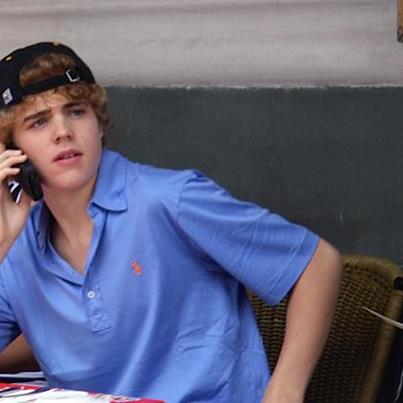
My college bound boy apparently closing a business deal before a power lunch in the city. With his sister. —
Yesterday I was having trouble with a mobile device and went to the Verizon store to see if they would exchange it.
There was a pleasant looking Egyptian gentleman behind me who listened as I explained my situation. The store clerk politely said I couldn’t exchange it. I thanked him and left. Two blocks later I hear a “Sir. Excuse me, sir!” It was the Egyptian man from the store.
“I overheard you and was wondering if you’d like to sell to me.”
“Well, I don’t know. Really?” I gave him a price that was more than I expected.”
He countered just slightly lower and I said OK.
He paid me cash and I introduced myself. He said, his name was Mohammad (or “Mo”) and that he was head waiter at The Palm restaurant down the street and we should try it out. He told me about his son in Egypt (who the device was for) and said he thought it was a fair deal. I agreed and we shook hands and parted ways.
Later in the day I called The Palm and made a reservation for dinner. It’s an historic restaurant with a long and colorful history that is obvious from the walls which are covered with pictures, drawings and news clippings from the past.
We were seated and I surprised my family by asking if Mo was working that night.
The maitre d smiled broadly and said he would let Mo know I had arrived. A few minutes later we were warmly greeted like old friends and long time patrons.
My family was impressed.
I offered slyly, “What can I say? I know some people who know some people…..and, yes, Mo is a friend.”
It was a nice dinner. A good deal. And we all thanked Mo as we left and a great family dinner came to an end.
= = =
Two Kentucky beauties in the Big Apple. Holding their own. And then some.
I learned about “Truth is” from my daughter’s Facebook page. I’m gonna try it.
Truth is New York used to intimidate me.
Truth is I found a hotel and made reservations and picked out a restaurant tonight for the family.
Truth is I walked the streets of the city today and no one seemed able to notice I was trying hard not to be noticed by standing out like a tourist. Which means I basically fit in.
Truth is I’m feeling pretty grown up right now.
Truth is at 49 I still consider that a small but worthy victory.
====
NY City will toughen you up in short order. The hustle bustle and proud dog eat dog competitive spirit is not for the faint hearted.
Just now I ordered coffee at a crowded cafe. It was really hot but I didn’t dare ask for a sleeve for my cup. I just put in the cream and sugar and slyly placed a napkin in my pocket until I was outside and a block away.
Wish I’d gotten two napkins.
Read the rest of… John Y’s Musings from the Middle: Musings from NYC
Rich Copley, culture editor for the Lexington Herald-Leader, shared his well-considered thoughts on the Chick-Fil-A controversy, and just so happened to quote a semi-famous recovering muser:
The idea of ideological consumerism was lampooned on The Daily Show earlier this week in a sketch in which comics Wyatt Cenac and Jessica Williams sat down with host Jon Stewart to discuss the controversy.
Williams, representing the conservative point of view, chows down on a Chick-fil-A sandwich, and when Stewart attempts to have a bite, Cenac smacks it out of Stewart’s hands, saying, “Liberals buy liberal products!”
A moment later, when Cenac pulls out his iPhone, Williams complains that she wants one but won’t buy it because Apple supports gay marriage. Cenac laughs, then Stewart points out that Apple has some “labor issues,” referring to complaints about practices in its Chinese factories. Then he says Chick-fil-A does good things for its workers, including paying for them to go to college.
At the end of the bit, Cenac concludes that he can eat at Chick-fil-A in good conscience, as long as he follows it with some Ben & Jerry’s, and Williams decides to buy an iPhone and load it with tunes by right-wing rocker Ted Nugent.
On former state treasurer Jonathan Miller’s Recovering Politician blog, former Kentucky secretary of state John Y. Brown III, son of former governor and chicken magnate John Y. Brown Jr., joked, “This creates a frenzy among the remaining fast-food chicken chains to see who will try to appeal to the gay-friendly chicken-eating population.”
In the end, everyone needs to act on his or her own conscience. If you strongly support gay marriage, you probably will find it hard to go to Chick-fil-A. But if you start researching the fast-food joints surrounding our local Chick-fil-As, you might find some politics that are equally disturbing or affirming, depending on your leanings.