The key to unlocking the next wave of economic growth may be as simple as enabling more people to try more stuff. The industrial era was all about scale and squeezing out the possibility of mistakes. As a result we are too afraid to fail. Companies only take on projects with highly predictable results. Employees fall in line for fear of making career-limiting moves. How will we get better if the fear of failure prevents us from trying anything new? How will we make progress on the big system challenges of our time, if every time someone tries something transformational and fails, we vilify them? What if we reframed failure as intentional iteration?
Take the example of Better Place, the startup that set out to create a world full of electric cars with a novel battery swapping business model. In my book, The Business Model Innovation Factory, I highlight Better Place and its founder Shai Agassi as one of the best examples of business model innovation and the importance of a real world test bed.
In 2005 Agassi attended the World Economic Forum (WEF) in Davos, Switzerland. He was inspired by a framing question asked by WEF’s founder Klaus Schwab at the beginning of the conference, “How do you make the world a better place by 2020?” Agassi took Schwab’s question seriously and decided he would make the world a better place by reducing the world’s dependence on oil by creating market based infrastructure to support a transition to all electric cars. Agassi knew that the only way to accomplish his goal was through business model innovation and industry system change. OK, it didn’t work. After 6 years, raising $850 million in private capital and launching commercial operations in Israel and Denmark, Better Place filed for bankruptcy.
Read the rest of… Saul Kaplan: Reframe Failure As Intentional Iteration
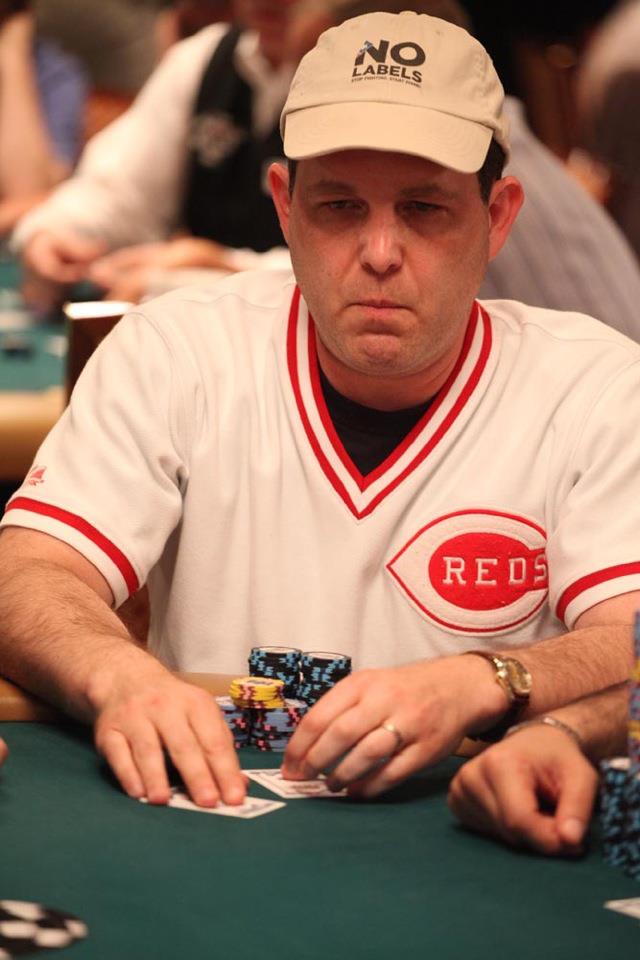
In his second of his series of World Series of Poker articles for Newsweek/The Daily Beast (here’s Piece #1), The RP interviews leading card sharks (including New York Times pollster/pundit Nate Silver) to draw some lessons for hyper-partisan Washington from the green felt.
The marriage of political advocacy and poker wouldn’t surprise close observers of both; indeed, the two zero-sum games are really two sides of the same chip. As esteemed political prognosticator and poker savant Nate Silver told me, “politics and poker share the feature of being both very prosaic and very poetic”: Building your chip stack by grinding with careful mathematical calculations is akin to developing a sound get-out-the-vote effort through micro-targeted polling and door-to-door canvassing; riding an electric run of great cards and lucky flops is as thrilling as being uplifted by a gifted political orator. Of course, Silver—who poetically surged to near the top of the of the leaderboard on Day 1 of the Little One event, only to meet a prosaic bustout on Day 2—concedes that poker is the “more refreshing” of the two contests: “It’s pure, undistilled competition, with no intrigue, no B.S.”
There’s also no disputing that the two games require similar skill sets. A career in politics could in fact prepare someone quite well for a life at the poker table. Consider:
• Serving up fiery, red-meat orations at partisan rallies or stump-speaking amid hostile, heckling crowds at open events can help a poker player perfect the art of projecting confidence… or alternatively, vulnerability… and shape a poker face to confuse opponents as to the strength of any particular hand.
• Retail campaigning—the hand-shaking, back-slapping, and baby-kissing—enabling someone to observe, listen to, and really understand people, can be employed powerfully in a game in which you have to read the strength of your opponents’ hands by their facial expressions and body language.
• Late-night, smoke-filled, back-room, legislative negotiations—tests of endurance and concentration—provide invaluable practice for sitting long hours at tables with adversaries who’d say or do anything to provoke you or otherwise knock you off your calculated strategy.
• Waiting out filibuster blockades, partisan stall tactics, and special-interest foot-dragging—to win even the smallest of policy victories—can equip anyone with the resolve to withstand days of numbing boredom at the poker table, and to resist all temptations to take risky gambits that could send the player to the rail.
By Jonathan Miller, on Sat Jul 13, 2013 at 9:00 AM ET
If you’ve been following the legislative actions taken surrounding the Farm Bill in Washington, DC, this past month, you’ve seen some of the very worst about our current political system — deep hyper-partisan divides, bills passed without thorough discussion, secret power plays on behalf of special interests, yadda, yadda, yadda.
But one thing happened last week that represents the very best of American politics — the bi-partisan passage in the U.S. House of an amendment that would allow colleges and universities to grow hemp for research purposes in states where hemp production is allowed by state law (like Kentucky, Colorado and about a dozen other states.)
The amendment was co-sponored by Reps. Jared Polis (D-Colo.), Earl Blumenauer (D-Ore.) and Thomas Massie (R-Ky.); and here in the Bluegrass State, it has the support of a broad partisan and ideological coalition, including conservative Senator Mitch McConnell, Tea Party champion Senator Rand Paul, and progressive icon Congressman John Yarmuth.
The lead advocate for hemp legalization in Kentucky is Agriculture Commissioner James Comer, and I was lucky to join him in Washington recently for high-level meetings on the bill with senior Obama Administration officials and even House Speaker John Boehner. (Click here to read about our efforts.)
Comer was thrilled about the recent development, telling WPSD-TV, Paducah, “It wasn’t that long ago that people told us we wouldn’t even get a sponsor for the bill in the state Senate. Now we have a state law for regulating hemp production, and one house of Congress has passed legislation to allow colleges and universities to grow hemp. This has been an amazing journey. And we’re not finished.”
So, please help us get across the finish line. Sign the petition below, and contact your Senator ASAP. Click here for an easy link.
U.S. Senators, Support Hemp Amendment to Farm Bill
By Jonathan Miller, on Fri Jul 12, 2013 at 3:00 PM ET
This afternoon (generally in the 6:00 PM EDT hour on most NPR stations), Friend of RP, Mark Nickolas will be appearing on National Public Radio’s “Marketplace,” discussing his critically-praised new short film, “The Story of the Wall Street Bull.”
Nickolas, who singlehandedly started Kentucky’s political blogosphere, has become a documentary filmmaker, and his new short film on Occupy Wall Street is up for a Smithsonian In Motion award.
Watch the film below, and vote here to support Mark’s effort. (The film is listed as “The Story of the Wall Street Bull” and is in the ‘Arts’ category. You’ll see when you click on the link.)
Check out a cameo from contributing RP (and former Missouri State Representative) Jason Grill in this teaser video about his taking part in a Google Glass experiment — and stay tuned in the days ahead for more videos chronicling their progress:
By Jonathan Miller, on Fri Jul 12, 2013 at 10:00 AM ET
Friend of RP, and the man who launch Kentucky’s political blogsophere, Mark Nickolas, has embarked on a documentary film career that is already getting broad national attention. His short film on Occupy Wall Street is up for a Smithsonian In Motion award.
Watch the film below, and vote here to support Mark’s effort. (The film is listed as “The Story of the Wall Street Bull” and is in the ‘Arts’ category. You’ll see when you click on the link.)
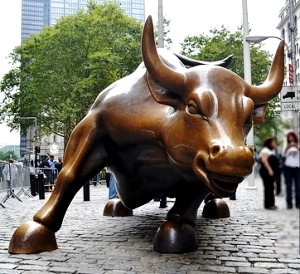
What if New York City’s famous charging bull could talk? Mark Nickolas’s short film, My Life in the Canyon of Heroes, answers just this question. The clever film traces the history of the Wall Street bull from the perspective of none other than the animal himself. With the voice of a friendly middle-aged New Yorker, he recounts his life, from his birth as a defiant piece of guerrilla art, up through his murkier days as the Occupy Wall Street movement’s symbol of financial greed and excess.
The short is nominated for Smithsonian magazine’s In Motion video contest, along with 24 other finalists. The contest recognizes videographers that “explore and document the world around us.” Voting is open to the public, and the grand prize winner will be announced on July 15, 2013.
If there’s one place you want to look your best, I would venture to say at the beach or poolside would be at the top of the list. After all, that’s where (presumably) you’ll be as close to naked as you’ll ever get in public. Thanks in large part to the James Bond movie “Casino Royale,” which features a taut Daniel Craig emerging from the water in short, tight swim trunks, men’s swim styles have been moving gradually toward higher hemlines and more tailored cuts. While not everyone has the build or desire to bare quite as much as 007, abbreviated and tailored looks are in fact more flattering and mature in feel than the oversized, extra-long trunks you may be used to. My clients are always pleasantly surprised at what a couple fewer inches and a narrower trouser-like cut can do. With that in mind, below are 6 Rath-approved swimsuits for Summer 2013, with a little something for everybody.
With its flat waistband, mid-thigh length, constructed fly and trim leg openings, this classic style from Hartford
($165) looks good on just about everyone. Bonus tip: for the most flattering leg width, you should be able to fit 2-3 fingers in the bottom leg opening of your suit.
Read the rest of… Julie Rath: Sink or Swim: Your Guide to Summer’s Best Swimsuits
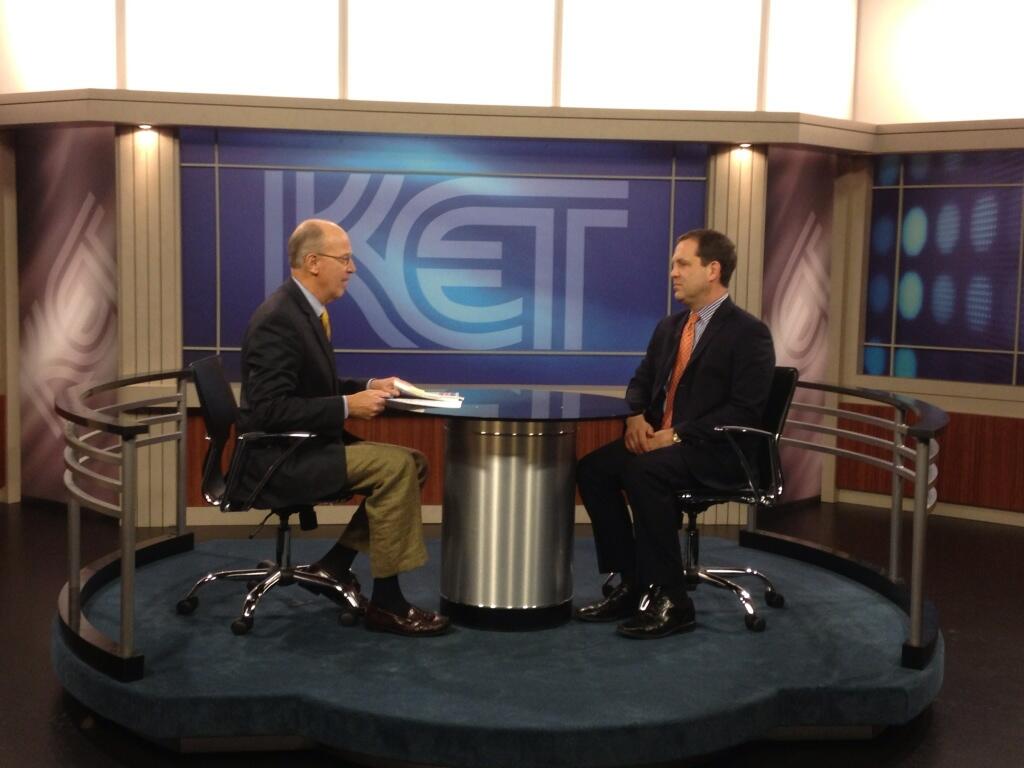
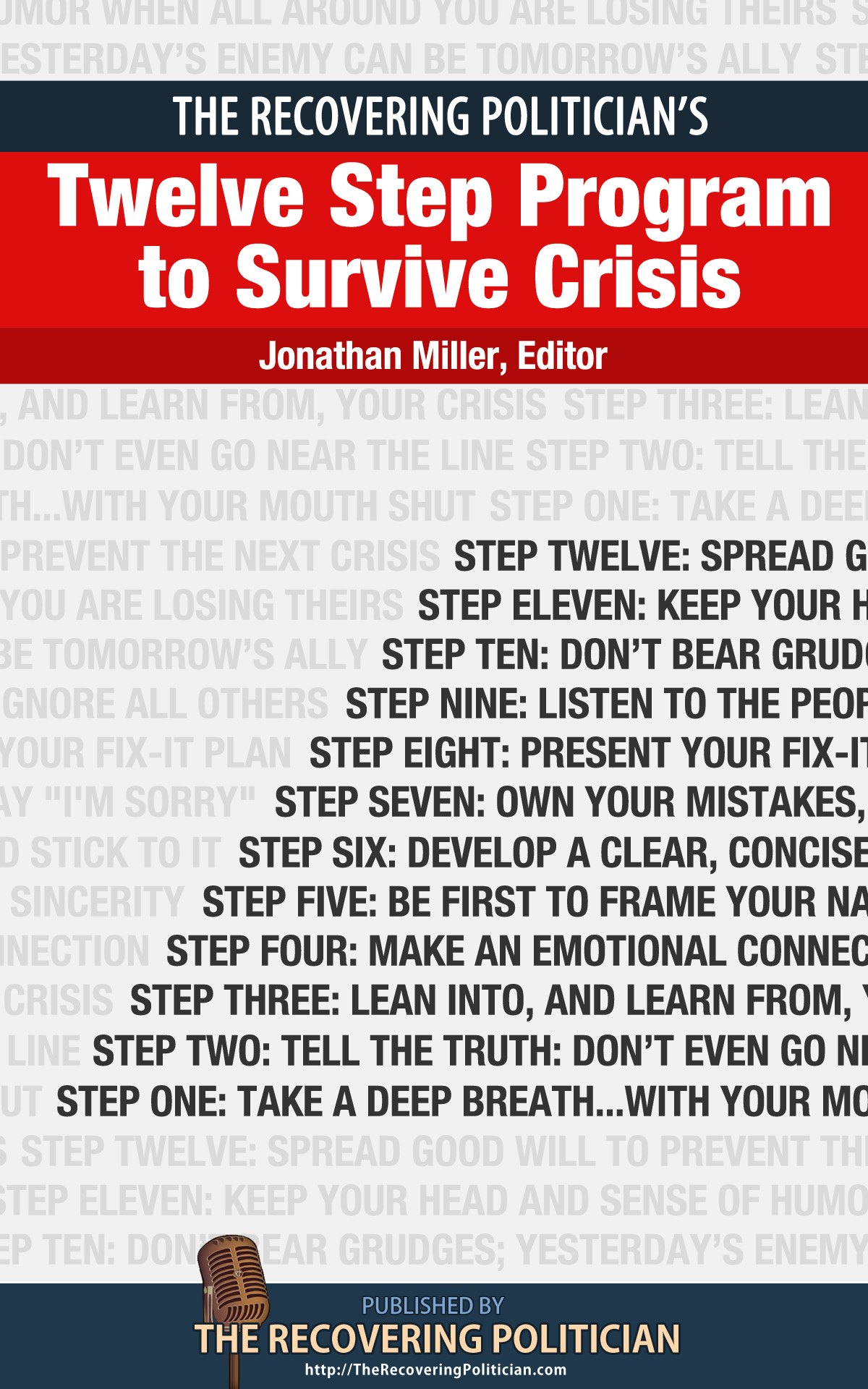
This afternoon, The RP taped a 30-minute broadcast of “One on One” with Hall-of-Fame broadcaster Bill Goodman of Kentucky Educational Television. They discussed, among other things, the new book, The Recovering Politician’s Twelve-Step Program to Survive Crisis.
Read about the program, and tune in on July 28 at 7:30 PM EDT/6:30 PM CDT to watch. For you foreigners outside of the Bluegrass State, we will post the video at this web site.
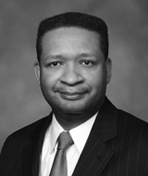
Artur Davis might actually have a shot at being the first politician in half a century to be elected to Congress in two different states.
Virginia Republican Rep. Frank Wolf has represented his state’s 10th congressional district for over three decades. In the 2012 election cycle, he cruised to his 17th consecutive term by a healthy 21-percent margin, despite his district having gone to Republican presidential nominee Mitt Romney by a 1-percent margin.
Reportedly, Wolf has yet to indicate whether he will seek an 18th term and retire. But should he forgo reelection, the race for his successor will be wide open, according to preliminary polling — making it possible for even former Alabama Democratic Rep. Artur Davis, who switched political parties in 2012, to be elected in that district as a Republican.
With the exception of a brief spell in the late 1970s, Virginia’s 10th congressional district — which stretches from West Virginia to the outskirts of Washington, D.C. — has traditionally leaned Republican. But if Wolf were to retire, the Democratic Congressional Campaign Committee would almost certainly have interest in an attempt to take the seat.
A survey conducted by a Republican polling entity on June 30-July 2 — with a sample of 432 and margin of error of 3.44 percent — shows no clear front-runner among a handful of potential Republican candidates that included Davis, Virginia State Sens. Jill Holtzman Vogel and Dick Black, Virginia State Dels. Barbara Comstock and Tim Hugo, and Prince William County Supervisor Corey Stewart.
The survey, commissioned by Davis and given to The Daily Caller by someone who has been shown the data and a polling memo connected with it, reveals Vogel and Black as front-runners but both coming in at under 17 percent with 31 percent of respondents undecided.


 The key to unlocking the next wave of economic growth may be as simple as enabling more people to try more stuff. The industrial era was all about scale and squeezing out the possibility of mistakes. As a result we are too afraid to fail. Companies only take on projects with highly predictable results. Employees fall in line for fear of making career-limiting moves. How will we get better if the fear of failure prevents us from trying anything new? How will we make progress on the big system challenges of our time, if every time someone tries something transformational and fails, we vilify them? What if we reframed failure as intentional iteration?
 In 2005 Agassi attended the World Economic Forum (WEF) in Davos, Switzerland. He was inspired by a framing question asked by WEF’s founder Klaus Schwab at the beginning of the conference, “How do you make the world a better place by 2020?” Agassi took Schwab’s question seriously and decided he would make the world a better place by reducing the world’s dependence on oil by creating market based infrastructure to support a transition to all electric cars. Agassi knew that the only way to accomplish his goal was through business model innovation and industry system change. OK, it didn’t work. After 6 years, raising $850 million in private capital and launching commercial operations in Israel and Denmark, Better Place filed for bankruptcy.