By Grant Smith, RP Staff, on Fri Jul 1, 2011 at 3:00 PM ET
I’m not going anywhere: Timothy Geithner claims he will stay at Treasury Post for “foreseeable future.” [CNBC]
The debt-ceiling debate is “rolling back the clock to 2008.” [Fortune]
Amazon.com and the battle against the sales tax: a state-by-state look at the state of the conflict. [The Street]
The new “Google+”: all dressed up, but nowhere to go? [The Washington Post]
By Ronald J. Granieri, on Thu Jun 30, 2011 at 8:30 AM ET 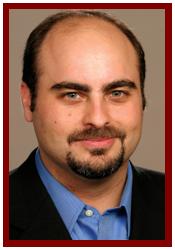 The news of late has been full of images of growing chaos in the “cradle of democracy.” This week in Athens, crowds of angry stone-throwing citizens chanting, “Traitors, traitors!” have confronted police in riot gear, who have responded with tear gas, while public employee unions announced a 48-hour general strike in advance of a crucial parliamentary vote. The protesters directed their rage both at the government and at international financial agencies, especially the European Union [EU], which have demanded a series of austerity measures in response to Greece’s debt crisis. The news of late has been full of images of growing chaos in the “cradle of democracy.” This week in Athens, crowds of angry stone-throwing citizens chanting, “Traitors, traitors!” have confronted police in riot gear, who have responded with tear gas, while public employee unions announced a 48-hour general strike in advance of a crucial parliamentary vote. The protesters directed their rage both at the government and at international financial agencies, especially the European Union [EU], which have demanded a series of austerity measures in response to Greece’s debt crisis.
Meanwhile, outside pressure on the Greeks has grown, with foreign observers declaring there is “no plan B” if this combination of austerity and bailout fails, markets swinging wildly on alternate waves of hope and fear, and many commentators concerned that even these programs will not be enough. As I write this article, the Greek parliament narrowly approved its austerity plan in the face of the public’s wrath, averting the possibility of national default, at least for now.
No one disputes that Greece has, after years of generous public spending and indifferent-to-incompetent tax collection, run up such enormous debts that investors no longer believe in the Greek state’s ability to pay them. This is nothing new in the history of the world economy, or even in the history of Greece.
 What gives this Greek tragedy its greater significance is Greece’s participation in the European common currency, the Euro. As a Euro member, the Greeks are not completely masters of their own fate, unless they choose to leave the common currency, which could touch off an even bigger crisis of continental if not global proportions. Greece and its partners in the Eurozone are locked in a fateful embrace. The other Euro members, who last year already committed 110 billion Euros to prop up the Greek economy, are committed to bailing out the Greeks even more, while the Greek public faces a long period of austerity, which will force them to accept significant cuts in a generous welfare state. The Greeks have not taken this very well, to put it mildly. At the same time, the richer EU states, especially Germany, that will be expected to fund the Greek bailout (and potential bailouts for Portugal, Ireland, Spain, and someday perhaps Italy—collectively and colloquially the PIIGS) are facing a restive electorate that does not understand why they may have to pay higher taxes to fund bailouts for their profligate cousins. What gives this Greek tragedy its greater significance is Greece’s participation in the European common currency, the Euro. As a Euro member, the Greeks are not completely masters of their own fate, unless they choose to leave the common currency, which could touch off an even bigger crisis of continental if not global proportions. Greece and its partners in the Eurozone are locked in a fateful embrace. The other Euro members, who last year already committed 110 billion Euros to prop up the Greek economy, are committed to bailing out the Greeks even more, while the Greek public faces a long period of austerity, which will force them to accept significant cuts in a generous welfare state. The Greeks have not taken this very well, to put it mildly. At the same time, the richer EU states, especially Germany, that will be expected to fund the Greek bailout (and potential bailouts for Portugal, Ireland, Spain, and someday perhaps Italy—collectively and colloquially the PIIGS) are facing a restive electorate that does not understand why they may have to pay higher taxes to fund bailouts for their profligate cousins.
Read the rest of…
Ronald J. Granieri: Greek Myths; Greek Lessons
By Grant Smith, RP Staff, on Fri Jun 24, 2011 at 3:00 PM ET
Why did President Obama tap the strategic oil reserves now? Stock market analysts break-down the strategy behind the decision. [CNBC]
The Wealth Report: What it’s like to party like an NHL Stanley Cup winner. [Wall Street Journal]
Surprise, surprise: There are more millionaires now than there were before the recession. [MainStreet.com]
Mad Money’s Jim Cramer lists five major bank stocks that the analysts “love to hate” right now. [The Street.com]
GOP negotiators pull out from the budget talks. [WSJ Politics]
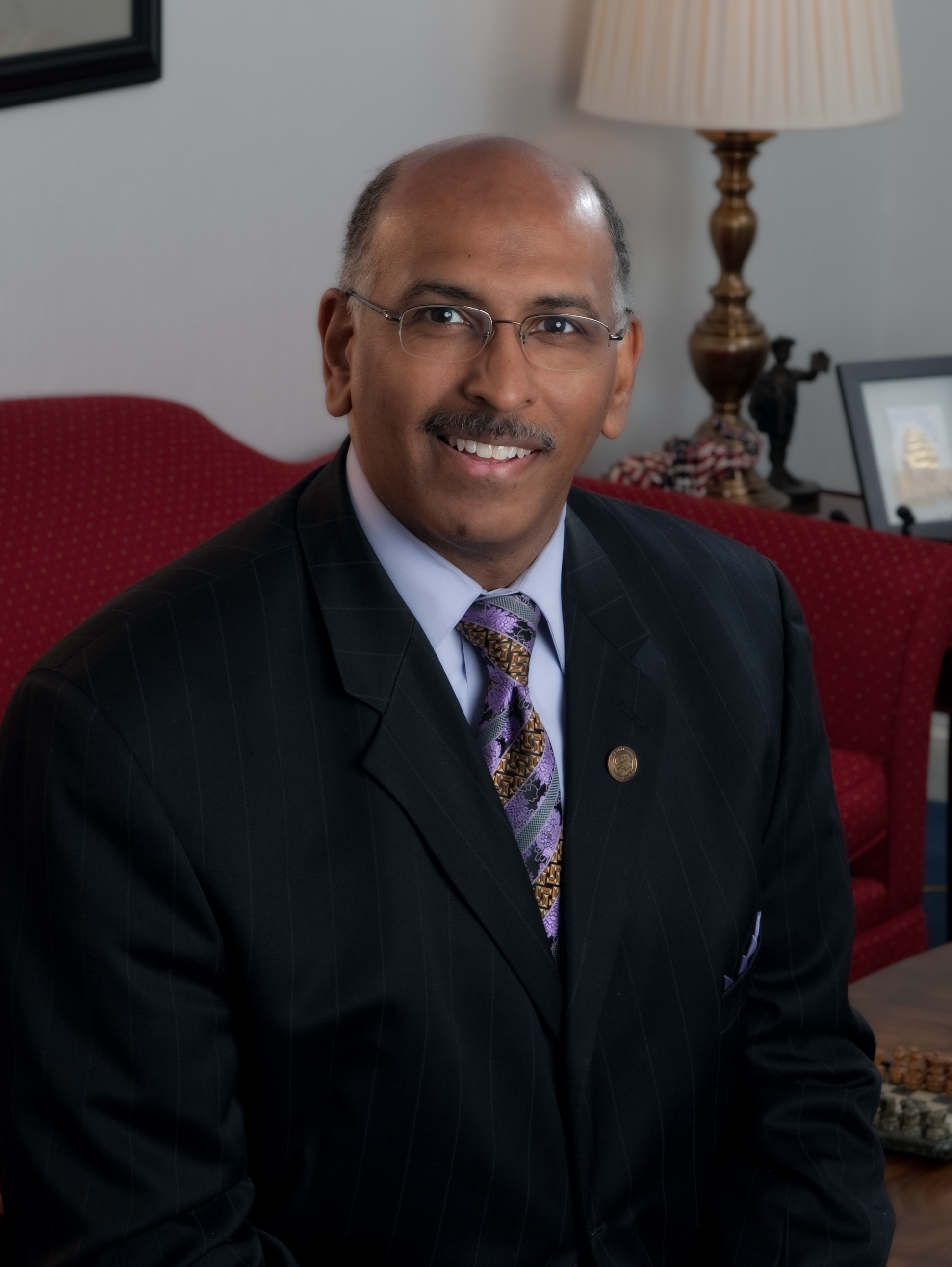
By Michael Steele, on Thu Jun 23, 2011 at 8:30 AM ET 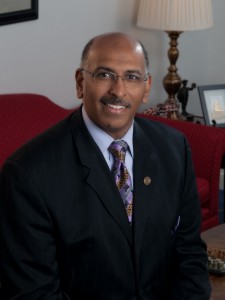 Summertime, and the living won’t be easy. From electricity to groceries to clothing, the cost of everything you need, and of most things you want, has increased. But there are few places where Americans have felt the sting of higher prices more profoundly than at the gas pump. And you don’t have to own a car to feel it; just get on a plane, take the train — heck, catch a cab. Summertime, and the living won’t be easy. From electricity to groceries to clothing, the cost of everything you need, and of most things you want, has increased. But there are few places where Americans have felt the sting of higher prices more profoundly than at the gas pump. And you don’t have to own a car to feel it; just get on a plane, take the train — heck, catch a cab.
As we begin to pack up the family car for that long-awaited summer vacation at Grandma’s house, a gallon of gasoline averages $3.80, $1.07 more than this time last year. Maybe you can just email Grandma a photo of the kids instead.
Or better yet, maybe President Barack Obama could address workers at a research facility funded by a $528.7 million stimulus-act grant to develop a new alternative mode of energy-efficient transportation: airborne porcine units (also known as “flying pigs”). Although the facility won’t have produced a commercially viable prototype, Obama could go on to express confidence that, with additional government investment (aka “spending”), the needed technology breakthroughs would be achieved. I can hear him now: “When pigs fly, my energy policies will be vindicated, and the taxpayer dollars we have committed to this effort will greatly lessen our dependence on foreign oil.”
Fantasy? Of course, but then again, taxpayers are on the hook for a $528.7 million loan to a company seeking to make plug-in electric cars that the Obama administration announced with great fanfare in 2009. The result? That company recently breathlessly announced that it plans to sell a car for the bargain price of $96,850 that charges in “as little as six hours” and has — wait for it — a 50-mile range before a backup gasoline engine kicks in.
Read the rest of…
Michael Steele: Obama’s Energy Policy vs. Reality
By Kathleen Kennedy Townsend, on Mon Jun 20, 2011 at 12:00 PM ET  I recently spoke in Pesaro, Italy at a conference on new ways of measuring the well-being of nations and communities. For the past half-century, the yardstick for measuring national progress has traditionally been GDP. But in the last few years, a growing number of economists, concerned citizens, and even heads of state have been asking whether there is more to happiness than a big pile of dollar signs. I recently spoke in Pesaro, Italy at a conference on new ways of measuring the well-being of nations and communities. For the past half-century, the yardstick for measuring national progress has traditionally been GDP. But in the last few years, a growing number of economists, concerned citizens, and even heads of state have been asking whether there is more to happiness than a big pile of dollar signs.
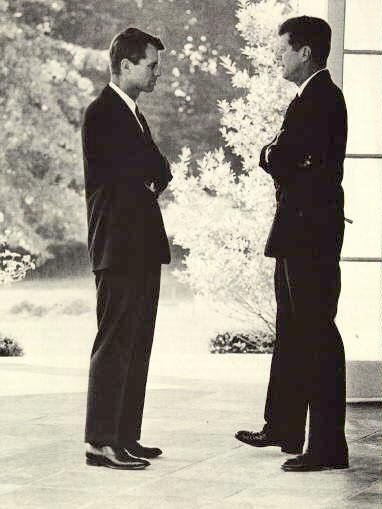
Politicians, at times, see what should be done, but can’t quite persuade citizens to act–as when Franklin Roosevelt, despite the terrible threat Hitler presented, couldn’t convince Americans they should fight. Right now we’re on the cusp of taking seriously an insight about GDP that my father, Robert Kennedy, originally had more than 40 years ago.
For those who haven’t been reading speeches from 1968, let me remind you what my father said a few days after he announced his candidacy for the presidency. Speaking to students at the University of Kansas, he said:
 Click here to watch RFK's Eulogy for King, April 4, 1968 Too much and for too long, we seem to have surrendered personal excellence and community values in the mere accumulation of material things. Our gross national product, if we judge the United States of America by that, counts air pollution and cigarette advertising and ambulances to clear our highways of carnage. It counts special locks for our doors and the jails for people who break them. It counts the destruction of the redwood and the loss of our natural wonder in chaotic sprawl. It counts napalm and counts nuclear warheads and armored cars for police to fight the riots in our cities. It counts Whitman’s rifle and Speck’s knife and the television programs which glorify violence in order to sell toys to our children.
Yet the gross national product does not allow for the health of our children, the quality of their education, or the joy of their play. It does not include the beauty of our poetry or the strength of our marriages, the intelligence of our public debate or the integrity of our public officials. It measures neither our wit nor our courage; neither our wisdom nor our learning; neither our compassion nor our devotion to our country; it measures everything, in short, except that which makes life worthwhile. And it can tell us everything about America except why we are proud that we are Americans.
For years, my father’s words were viewed not as a practical challenge to the use of GDP but as an affirmation that a nation, like individuals, needs a purpose that is not merely material but spiritual. His policy insight didn’t catch on. With little dissent, we’ve continued to measure the success of a nation by a single number, its GDP.
Read the rest of…
Kathleen Kennedy Townsend: What Makes Life Worthwhile? GDP Won’t Tell You
By Grant Smith, RP Staff, on Fri Jun 17, 2011 at 3:00 PM ET
10 “vintage” stocks that are now worth a fortune. [The Street]
5 lessons from IBM’s 100th Anniversary. [CNN Money]
Desperate public pension funds are doubling their bets on hedge funds. [CNBC]
Who’s the AIG in the Greek financial tragedy? [Forbes]
One more freedom down the drain? San Francisco mulls a ban on goldfish. [NBC Bay Area]
By Jonathan Miller, on Wed Jun 15, 2011 at 12:00 PM ET It’s what you’ve been up late nights awaiting…
The final episode of the RP’s classic quadrology (is that the next step after trilogy?): Part 4 of his home energy rehab.
If you missed Parts 1-3, the audit and the rehab, which includes some exciting film of the geothermal work done on the Miller Home, click here.
In Part 4, Jamie Clark of Arronco leads the RP through the final stages of the rehab, and then through the quality assessment, made possible by the Kentucky Home Performance program.
 If I’ve inspired you to explore an energy efficiency rehab at your own residence, and you live in Kentucky, we have a great new program called KY Home Performance – that I’m using for my own home — which provides low-interest loans or generous rebates to KY citizens. You can find out more here. If I’ve inspired you to explore an energy efficiency rehab at your own residence, and you live in Kentucky, we have a great new program called KY Home Performance – that I’m using for my own home — which provides low-interest loans or generous rebates to KY citizens. You can find out more here.
 If you live in the region, amd you’d like to specifically contact Jamie Clark of Arronco — who is both the contractor of the rehab as well as the tour guide of this film — go to this link. Arronco can install geothermal, as well as the more traditional electric and gas rehab work, in an extraordinarily affordable and environmentally-friendly way. If you live in the region, amd you’d like to specifically contact Jamie Clark of Arronco — who is both the contractor of the rehab as well as the tour guide of this film — go to this link. Arronco can install geothermal, as well as the more traditional electric and gas rehab work, in an extraordinarily affordable and environmentally-friendly way.
If you live outside of Kentucky, click here for a US Department of Energy site that provides links to programs in all 50 states.
Read the rest of…
RPTV: My Home Energy Rehab, Part 4
By Grant Smith, RP Staff, on Wed Jun 15, 2011 at 8:30 AM ET We live in a world gone mad on stimulus. From “five hour energy drinks” to natural male enhance, from bodily augmentation to three dimensional television, there is little left in our daily lives that is not, well, “stimulated.”
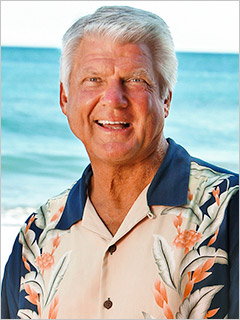
Jimmy Johnson: Pro-stimulus
It should come as no surprise, then, that once the economy hit the fan, Bush and Obama would both choose Keynesian “stimulus” over that vanilla-plain Hayekian approach. We could have it no other way. If any people on Earth could be said to burn the candle at both ends and still curse the darkness, it is us. Wait out the business cycle? Forget about it!! We want action! When do we want it?? Now!!!
Whether or not you agree with the Tea Party, one thing is certain: when socialism comes/came to America, it will be so much more interesting than those European fuddy-duddies could ever imagine. After all, we could have it no other way.
Read the rest of…
The Politics of Stimulus: Our Lives in a World Gone Mad
By Kathleen Kennedy Townsend, on Tue Jun 14, 2011 at 12:00 PM ET I’ve been mulling over a column by David Brooks on “The Politics of Solipsism” for the past couple of weeks. What he wrote is nervy to say the least. He argues that America has lost the republican virtues on which it was founded, namely, the curbing of self-centeredness in the interest of the public good. I too am a fan of Cicero, but Brooks fails in one of the primary republican virtues by not forthrightly acknowledging that Republicans, the adherents of Ayn Rand, are the ones who have most blatantly deserted these same virtues. Self interest has center stage on their platform.
Brooks praises Truman and Eisenhower, but he fails to mention that it was President Kennedy who repeatedly challenged Americans and asked them to sacrifice. He urged us to go to the moon because it was tough, not because it was easy. And when my father, Robert Kennedy, was running for president and medical students asked him who would pay for more health care for the poor, he quickly answered, “You will.”
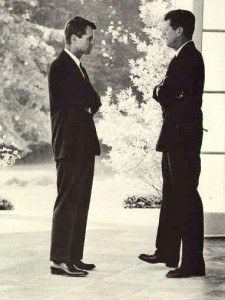 Contrary to the Republican philosophy, summed up by Ronald Reagan, that government is the problem, John and Robert Kennedy considered politics an honorable profession and affirmed that government was the place where we “make our most solemn common decisions.” Contrary to the Republican philosophy, summed up by Ronald Reagan, that government is the problem, John and Robert Kennedy considered politics an honorable profession and affirmed that government was the place where we “make our most solemn common decisions.”
Both my uncle and my father knew that America is at its best when its citizens are willing to give up something for others. That was the spirit in which they committed themselves to public service. Ultimately they both gave their lives in the service of their country.
Like my father and my uncle, I believe that serving the public good is the essential republican virtue. In fact I led the effort to make Maryland the first and still only state in the country where community service is a condition of high school graduation. I did this because I believe that virtue comes from habits developed, not sermons given. Aristotle said, “we become house builders by building houses, we become harp players by playing the harp, we grow to be just by doing just actions.”
Republican governors are making their mark attacking public servants. They’re laying off citizens who exemplify republican virtues like teaching in inner city schools, fighting drug cartels, and rushing into burning buildings. Why? So that those who make outrageous salaries can pay lower taxes.
Brooks says that Republicans want growth, but I see no evidence that they want growth for anyone but the most well off. Where is the commitment to education, to infrastructure, to science?
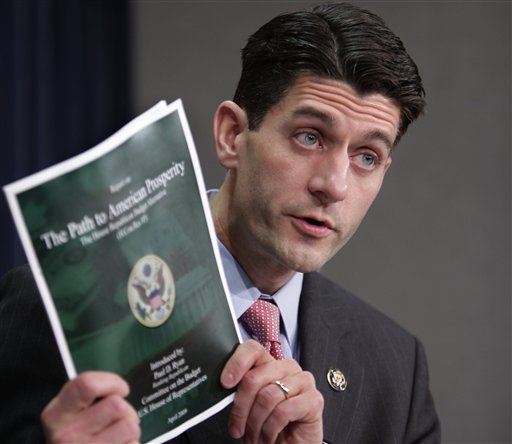
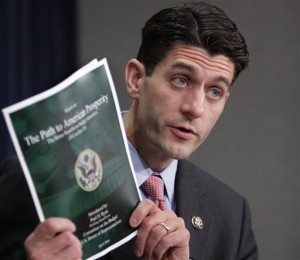 Rep. Paul Ryan Brooks commends Paul Ryan for sending the message that “politics can no longer be about satisfying voters’ immediate needs.” And yet Ryan would give the rich even more of a tax break at a time when our taxes are the lowest in three decades.
George Washington, whom Brooks also praises, would be surprised that the rich are being asked to shoulder less of a burden. He supported excise taxes that would fall disproportionately on the wealthy. When he went to war, he brought his wife, Martha, to share the hard, cold winter of Valley Forge along with him.
The wealthy have a special responsibility. From those who have been given much, much will be asked. In a true republic, people of wealth and privilege are first in line to serve in government, go to war, contribute to the honor and glory of their country. They set the nation’s values. If what they value is money, money, money, then the country will follow.
After 9/11, George Bush asked us to shop. At just the moment when he could have called us to a cause greater than ourselves, he (apparently on the advice of Karl Rove) urged us to step up for new TVs and designer bags rather than for the public good.
So if Brooks really wants to put an end to the politics of solipsism, he must take on the Republican party itself, which has done so little to cultivate the virtues of service, sacrifice, and commitment to country.
Please don’t lecture us about solipsism and republican virtues when it’s Republicans who are the ones who have made such a virtue of self interest.
Cross-posted from Atlantic.com
By Grant Smith, RP Staff, on Fri Jun 10, 2011 at 3:00 PM ET
Is Secretary of State Hillary Clinton planning to resign and take charge of the World Bank? [The Telegraph]
How Steve Jobs and Apple have rewritten the rules for Netflix, Amazon, and others. [Fortune]
Developer Robert Bigelow hopes to be the first landlord in space: details here. [Forbes]
Time to relax for the weekend: read the latest news on the Cuban cigar industry. [Cigar Aficionado]
Really want to relax? Here are five ways to beat summer airfare price hikes. [The Street]
|
The Recovering Politician Bookstore
|