By Grant Smith, RP Staff, on Fri Jun 3, 2011 at 3:00 PM ET
Federal Reserve Chairman Ben Bernanke’s Summer of discontent. [CNN]
He’s baaaaack: Trump announces his purchase of a “new used plane.” [Forbes]
Boy sells a kidney in order to buy an iPad. [Fortune]
Steve Forbes argues for a new gold standard for the modern era. [The Street]
As World’s Millionaires multiply; Singapore holds its lead. [Business Week]
By RP Staff, on Thu Jun 2, 2011 at 12:45 PM ET Our very own contributing RP, Andrei Cherny, recent launched an initiative to focus attention on small business development in Arizona. He wrote about it in an op-ed in the Arizona Republic:
As a businessperson, I’ve seen Arizona fall behind our economic competitors – around America and around the world. As chair of the Arizona Democrats, I’ve made it a priority for us to offer leadership that will help turn our economy around.
That’s why we recently held the first meeting of our new Business and Entrepreneurship Council, a group of Arizona business leaders committed to pushing new ideas that will bring back jobs and spur economic growth. committed to pushing new ideas that will bring back jobs and spur economic growth.
As I looked around the room at the start of our meeting, I saw businesspeople ranging from leaders of Arizona’s largest businesses to entrepreneurs of high-tech startups to owners of “mom and pop” small businesses. The people there were Democrats, Republicans and independents alike.
Read the rest of Andrei’s op-ed here.
By Grant Smith, RP Staff, on Fri May 27, 2011 at 3:00 PM ET
Is that a Google in your pocket? New “Google Wallet” may be the future of money. [Forbes]
King Coal: How West Virginia could one day face ghost towns, despite the current boom. [CNN Money]
“Un-friending” Bambi: Facebook guy Mark Zuckerberg decides to only eat meat he kills himself. [Fortune]
Faith and the Market: how the financial sector mimics religion. [Economist]
MAD MONEY’S Jim Cramer has found four potential bull markets you should know about. [CNBC]
By Jonathan Miller, on Tue May 24, 2011 at 12:00 PM ET We’re now ready for Part 3 of the most spectacular film I have ever directed and produced. (OK, it is the only one. Still…) Hopefully, it is more like Return of the Jedi than Godfather III.
Last week, RPTV shared with you Part 1 and Part 2 of My Home Energy Efficiency Rehab which taught you about the initial energy audit of my residence, and gave you some illustrative examples of some of the problems your own house might be facing. It also shared some of the energy savings that you might be able to capture with just a small investment — an investment that will be returned in spades.
Today, Part 3 focuses on the rehab itself. The 15-minute film will give you a brief overview of the plans, as well as show you much of the work being done at my home. As you will see, I have decided to install geothermal in my home — a big production, but something that will pay for itself and far more in the long run.
 If I’ve inspired you to explore an energy efficiency rehab at your own residence, and you live in Kentucky, we have a great new program called KY Home Performance – that I’m using for my own home — which provides low-interest loans or generous rebates to KY citizens. You can find out more here. If I’ve inspired you to explore an energy efficiency rehab at your own residence, and you live in Kentucky, we have a great new program called KY Home Performance – that I’m using for my own home — which provides low-interest loans or generous rebates to KY citizens. You can find out more here.
 If you live in the region, amd you’d like to specifically contact Jamie Clark of Arronco — who is both the contractor of the rehab as well as the tour guide of this film — go to this link. Arronco can install geothermal, as well as the more traditional electric and gas rehab work, in an extraordinarily affordable and environmentally-friendly way. If you live in the region, amd you’d like to specifically contact Jamie Clark of Arronco — who is both the contractor of the rehab as well as the tour guide of this film — go to this link. Arronco can install geothermal, as well as the more traditional electric and gas rehab work, in an extraordinarily affordable and environmentally-friendly way.
If you live outside of Kentucky, click here for a US Department of Energy site that provides links to programs in all 50 states.
Read the rest of…
RPTV: My Home Energy Efficiency Rehab, Part 3
By Grant Smith, RP Staff, on Fri May 20, 2011 at 3:00 PM ET
How to fly on a private jet at airline costs: these are austere times, after all! [Forbes]
INTERACTIVE MAP: How is China investing in your home state? [CNN Money]
Domnique Strauss-Kahn: No decision yet on who will replace him at the International Monetary Fund. [Wall Street Journal]
LinkedIn’s IPO: another tech bubble starting? [Washington Post]
Your end-of-the-week water-cooler factoid: really expensive cosmic ray hunter attached to the International Space Station. [Yahoo News]
By David Snyder, on Fri May 20, 2011 at 8:30 AM ET 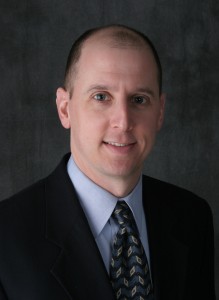 Not being much of a writer, but having known the RP for going on 30 years, I was offered the opportunity to contribute to the blog. The theme of all first timers on this site is (in the RP’s own words), “how you got to your second act.” Although I am not a recovering politician, I am a recovering lawyer. Not being much of a writer, but having known the RP for going on 30 years, I was offered the opportunity to contribute to the blog. The theme of all first timers on this site is (in the RP’s own words), “how you got to your second act.” Although I am not a recovering politician, I am a recovering lawyer.
I spent ten years practicing law and I am proud to say – IT CAN BE DONE – you can make it out alive. And there is life on the outside. This is in no way meant to disparage attorneys. Many on this site (the RP included) are attorneys, as are my own father and many friends. So many attorneys do great work and are still engaged in and excited by the practice of law, and it really is amazing to see. Law still remains the most noble of professions.
But I also know there are many like myself who had their fill and needed to move on. I was typical of many solo practitioners – doing criminal defense and smaller litigation cases, wills and trust work, and eventually part of a small firm, doing more complex business litigation. And I reached a point where the fight of other’s battles became a thankless and ungratifying place to be.
I had always wondered where my life would go if I left the practice of law. And as fate would have it, while I was contemplating this issue in my law office in downtown Cincinnati, an opportunity arose that put me on the path I am on today.
 While considering my future in 2002, I was visited by my financial advisor who, while performing an annual review, began recruiting me. And within a day, I was already on my way to meetings, interviews and a whirlwind of education and licensing for four months that led me to Northwestern Mutual and being a Financial Advisor, where I have been the past 8+ years. The fit was perfect. I already had the legal background and a good knowledge of planning from the legal perspective and add to that the financial/investment education and the proper licenses and credentials, as well as a very supportive wife, and I was set to go. While considering my future in 2002, I was visited by my financial advisor who, while performing an annual review, began recruiting me. And within a day, I was already on my way to meetings, interviews and a whirlwind of education and licensing for four months that led me to Northwestern Mutual and being a Financial Advisor, where I have been the past 8+ years. The fit was perfect. I already had the legal background and a good knowledge of planning from the legal perspective and add to that the financial/investment education and the proper licenses and credentials, as well as a very supportive wife, and I was set to go.
Within a month, my entire perspective on being a professional had changed. While leaving an appointment in that first month, the clients actually thanked me for spending time talking with them and discussing their financial planning. No one had ever done that while practicing law and my life had been transformed. I knew I had found a home in this profession. I realized that I had a passion for this work. I have the privilege of making an impact, making a difference, of working with individuals, protecting families and businesses, and more importantly, building wealth in a most tax efficient manner.
This is gratifying and satisfying, something that many lawyers never feel. Despite all of the good work that attorneys perform, much of it is thankless and that took its toll on me. Practicing law was work. Now I have a career.
I must say that it has not been easy and without certain trials and tribulations. Being self employed is great, but requires much work to build up a going business. And the biggest bridge I have crossed is toeing the line between personal and professional life. In no other business I have seen does a person actively seek out so many people that you already know in an effort to help them out and make them clients. That can cause strife when your professional relationship creeps into the personal relationship. And it is the burden that all who work as Financial Advisors must carry.
I was very recently confronted with this situation – a client who is a long time friend, and there is most definitely a fine line between the appropriate times for business and the times when the relationship must remain purely social. I am comforted by my passion, because I know that even when I walk along that line, I am operating from a good place and with good intentions. My heart and passion are in the right place and this career offers me the opportunity to help not only those I have just met, but also those persons I have known for so long and care so much about. Where else can you impact people, including friends and family and help provide them with the security and peace of mind they so desperately want and need?
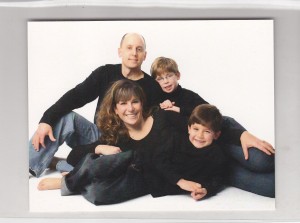 So here I am, 8+ years later, happier and professionally satisfied. And while being self employed has its challenges, I can make my own schedule which allows me to attend my childrens’ sports activities and school programs, along with other extra curricular and charitable work I have begun. So here I am, 8+ years later, happier and professionally satisfied. And while being self employed has its challenges, I can make my own schedule which allows me to attend my childrens’ sports activities and school programs, along with other extra curricular and charitable work I have begun.
To all the attorneys out there in RP land – I applaud you. But if you are like me, there is hope – find what you like and go after it. It can make all the difference.
By RP Staff, on Thu May 19, 2011 at 2:15 PM ET  In his role as a contributing member of Politico’s “Arena,” contributing RP Jeff Smith was asked if he believed the U.S. Senate’s “Gang of Six” — a bipartisan group formed to develop a solution to the budget deficit crisis — would remain relevant after the recent departure of conservative Republican Senator Tom Coburn of Oklahoma. In his role as a contributing member of Politico’s “Arena,” contributing RP Jeff Smith was asked if he believed the U.S. Senate’s “Gang of Six” — a bipartisan group formed to develop a solution to the budget deficit crisis — would remain relevant after the recent departure of conservative Republican Senator Tom Coburn of Oklahoma.
Here’s Jeff’s answer:
The Gang remains relevant. Given his nature, Coburn could return as easily as he left; sure, he may be frustrated, but it’s probably just a tactic to get more movement from Durbin. Apparently they’re close to an agreement; if $130 billion more in Medicare savings is the main sticking point in an effort to achieve $4 billion in overall debt reduction, it would seem that this impasse can be bridged. And the ten weeks remaining to bridge it is an eternity: as with a tied NBA championship game with ten seconds left, there may be many more twists and turns to come.
Read the rest of Jeff’s answer here.
By Artur Davis, on Thu May 19, 2011 at 8:30 AM ET 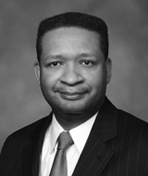 By my count, six Republicans of differing degrees of stature have passed on running for President. Some of the hesitation is rooted in jitters about entering the national stage prematurely (Pence, Thune, maybe Christie, if he is chemically capable of jitters); some of it is based on a cold assessment that Barack Obama plus a billion dollar war-chest is too high a barrier in the fall, and that playing kingpin in the primaries is an appealing enough way to spend the winter and spring of 2012. By my count, six Republicans of differing degrees of stature have passed on running for President. Some of the hesitation is rooted in jitters about entering the national stage prematurely (Pence, Thune, maybe Christie, if he is chemically capable of jitters); some of it is based on a cold assessment that Barack Obama plus a billion dollar war-chest is too high a barrier in the fall, and that playing kingpin in the primaries is an appealing enough way to spend the winter and spring of 2012.
As for the remainders–Mitt Romney, Newt Gingrich, Tim Pawlenty, and Jon Huntsman seem the most serious and the most plausible, with Mitch Daniels and Sarah Palin still keeping their own counsel. I offer four questions to keep in mind for the growing peanut gallery observing this race:
(1) Can Romney win a nomination when his signature accomplishment is anathema to his party? In the early part of the last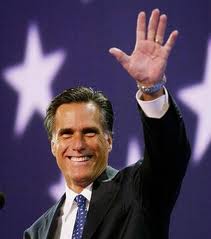 decade, when a centrist record seemed essential to winning general elections, Romney’s stewardship of healthcare reform in Massachusetts seemed ideal pre-positioning for an eventual presidential run. Today, “Romneycare” is why a candidate who just raised 10 million dollars in a day, and who leads in the polls, is still so vulnerable. Roughly 80% of Republicans not only oppose the national legislation that copies major portions of Romney’s work, they loathe it and desperately desire its repeal. Romney’s efforts to explain away the comparison are so far a babble and greater scrutiny of his plan will only make matters worse. decade, when a centrist record seemed essential to winning general elections, Romney’s stewardship of healthcare reform in Massachusetts seemed ideal pre-positioning for an eventual presidential run. Today, “Romneycare” is why a candidate who just raised 10 million dollars in a day, and who leads in the polls, is still so vulnerable. Roughly 80% of Republicans not only oppose the national legislation that copies major portions of Romney’s work, they loathe it and desperately desire its repeal. Romney’s efforts to explain away the comparison are so far a babble and greater scrutiny of his plan will only make matters worse.
Romney’s hope is that electability, the fact that he alone polls within hailing distance of Obama, will outweigh his albatross. His problem is that in primaries, electability is a vessel for blank slates, not candidates with a freight train of positions. Nor is Bill Clinton ‘s “centrist campaign” in 92 much of a model. Clinton’s defense of the death penalty and his then vague promises to revamp welfare were hardly signature issues that year; in contrast, the fate of Obama’s healthcare law will be front and center, especially in the GOP electorate. The hard reality for Romney: Gerald Ford is the last candidate who won a nomination with his party opposed to major chunks of his record and that did not end well.
(2)  Is there a “silent majority” in the Republican Party? Jon Huntsman and to a degree, Mitch Daniels, think there is and that it is very different from the cultural conservative base that the term was coined to describe. The reason that Huntsman conceives that a social moderate who served in the Obama Administration can win, and the reason that Daniels call for a “truce” on abortion and gay rights, is that in their estimation there is a sleeping center in the Republican Party that distrusts the “culture wars”. There is limited circumstantial evidence for the premise: national polls for the better part of a decade have shown unexpected Republican sympathies for abortion rights and gay rights. But primaries and early caucuses contain more than their share of evangelical leaning conservatives who remain embracing of a traditional moral agenda. Is there a “silent majority” in the Republican Party? Jon Huntsman and to a degree, Mitch Daniels, think there is and that it is very different from the cultural conservative base that the term was coined to describe. The reason that Huntsman conceives that a social moderate who served in the Obama Administration can win, and the reason that Daniels call for a “truce” on abortion and gay rights, is that in their estimation there is a sleeping center in the Republican Party that distrusts the “culture wars”. There is limited circumstantial evidence for the premise: national polls for the better part of a decade have shown unexpected Republican sympathies for abortion rights and gay rights. But primaries and early caucuses contain more than their share of evangelical leaning conservatives who remain embracing of a traditional moral agenda.
Read the rest of…
Artur Davis: Handicapping the Republican Primary
By Jonathan Miller, on Mon May 16, 2011 at 8:30 AM ET As evidenced by my very first post on this site, I am a passionate and often times irrational fan of the University of Kentucky Wildcat basketball team.
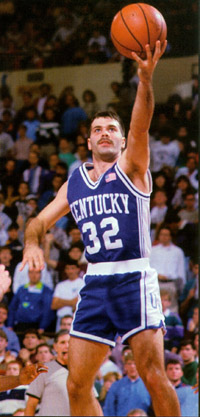
One of my favorite all-time players was a rural Eastern Kentucky-reared shooting guard named Richie Farmer. Farmer played during a pivotal Wildcat era: the first four years of Coach Rick Pitino’s rebulding mission, which followed a series of recruiting scandals that had brought the team to the brink of an NCAA-imposed death penalty. The ragtag squad of lesser talents –through unselfish, gritty play — over-achieved to the point of almost scoring one of the biggest upsets in college basketball lore. (Ugh — yes, this was the 1992 regional final against Duke University that provided the worst moment in world history.) The squad is still known popularly as “The Unforgettables.”
Indeed, Farmer was the most popular player on the team, and one of the most-beloved Wildcats of all time. His country roots, his trademark mustache, and his history as a prolific scoring, home-grown high school “Mr. Basketball,” made him into a living legend, particularly among those extraordinarily passionate rural fans who live to the far west and far east of Central Kentucky’s “Golden Triangle” that extends between Lexington, Louisville and the southern suburbs of Cincinnati.
Frankly, after Richie was overwhelmingly elected the state’s Agriculture Commissioner and occupied an office directly across the hall of mine in the State Capitol Annex when I was State Treasurer, I was a bit starstruck. While famously oratorically challenged, Richie turned out to be a decent, kind, friendly neighbor.
And while Richie endured a little negative press when first entering office — the new fellow-GOP Governor had hired Farmer’s relatives to state jobs — the press mostly treated Farmer with kid gloves. Farmer got away with things for which other state officials would have been crucified: such as spending thousands of taxpayer dollars in 2006 to distribute Richie Farmer bobbleheads at the state high school tournamen; or running a seemingly endless loop of state-financed television ads promoting Kentucky produce, starring himself and his Unforgettable teammates.
But when State Senate President David Williams chose Farmer to serve as his running mate in his 2011 gubernatorial campaign, the scrutiny became considerably more intense. And in recent months, a steady stream of articles have revealed Farmer’s ultra-liberal spending practices during an unprecedented state fiscal crisis:
Taking three aides on a $10,000 taxpayer-financed Caribbean junket.
Pocketing some of his excess campaign funds.
Giving top staff big raises while the rest of state government was taking cuts.
Purchasing more than $400,000 worth of new cars for his office, including a new luxury SUV for his personal use.
Refusing to voluntarily take a few furlough days — as every other elected executive branch official did — in salary-cutting solidarity with career state employees who were furloughed under statute. (Ultimately, he did, after considerable pressure from the public and perhaps Williams.)
Renting, at taxpayer expense, a luxury hotel suite for the state high school basketball tournament even though he lives less than 30 miles away.
Read Farmer’s responses (usually through a spokeman) in each of the links. An obvious sense of entitlement resonates: He deserves special treament, doesn’t he?
And who could blame him for feeling this way? Since a young high school student, Farmer has been treated as something of a demi-god. UK basketball players are our local royalty: They live in a specially equipped luxury dormitory; They are coddled by administrators and boosters; They are literally the biggest men on campus.
For nearly his entire life, Farmer’s been told that he’s special, he’s different. Why wouldn’t he think that he’d be exempt from the same budget slashing that the faceless, nameless bureaucrats have to endure? This is perhaps why David Williams, a bit inartfully, excused Farmer’s luxury expenditures on his “celebrity status.”
But a more careful argument might focus on Richie Farmer’s four-year period of indentured servitude to the University of Kentucky and the general fan population. For four years, Farmer provided enjoyment to millions of Kentuckians, as a teenager and young adult, with no pay, and with all of the privacy complications that much older celebrities have to endure.
So readers, I ask you to weigh in. Do we owe our former athletes a special compensation for the joy they brought us for free and the inconveniences they must endure? Or once you enter politics are you held to the same rigorous standards that we apply to everyone else in the arena?
Do you find Farmer’s conduct par for the court? Or is Richie’s behavior unforgiveable and unforgettable?
Comment away below:
By Grant Smith, RP Staff, on Fri May 13, 2011 at 3:00 PM ET
Maria Shriver and the other Kennedy Curse: bad marriages. [Slate]
Ousted Egyptian President Mubarak is detained during an investigation of his finances. [Wall Street Journal]
Ignore the ticker-tape machine in the corner: Jim Cramer’s take on investing in the current economic climate. [CNBC]
The boys of summer: small company still producing American-made premium leather baseball gloves. [CNN Money]
Love in a time of smart phones: how is technology influencing dating? [Fortune]
Fighting City Hall, Fortune 500 style: Google threatens to shut down Street View in Switzerland. [Forbes]
|
The Recovering Politician Bookstore
|