By Patrick Derocher, on Wed Jul 27, 2011 at 2:00 PM ET
Tensions remain high on Capitol Hill as both House and Senate debt-reduction plans have hit major setbacks. The CBO has scored both the Reid and Boehner plans, and neither scored as highly as was initially touted, with the Reid plan saving $2.2 trillion rather than $2.7 trillion and the Boehner plan saving $850 billion rather than $1.2 trillion. House Republicans moved the vote on the plan from Wednesday to Thursday in hopes of modifying the plan and shoring up more support, especially within the Tea Party. Reid, meanwhile, has had problems rallying the Senate around his plan, which controversially includes a drawdown in Iraq and Afghanistan as part of debt reduction. [NY Times]
From The Washington Post, a useful graphic comparing the Reid and Boehner plans. [Washington Post]
Time magazine’s Jay Newton-Small has compiled a list of possible results of the debt talks, with analysis on why and how each possibility might happen. [Time]
GOP presidential candidates have been less-than-welcoming to the Boehner debt-reduction plan, with only former Utah governor Jon Huntsman embracing the plan fully. Former Minnesota Governor Tim Pawlenty, Minnesota Congresswoman Michele Bachmann, and Texas Congressman Ron Paul have all come out against the plan. [Washington Post]
The chief economist for Moody’s Analytics has said that a credit downgrade for the United States would not be “the end of the world.” Though acknowledging that interest rates would rise, Mark Zandi said on CBS that they would not rise too drastically and a return to AAA rating could come quickly. [National Journal]
Reflecting a recent study by Barclays, the United States may be able to keep paying its bills until August 10, having taken in more and disbursed less money than initially anticipated. [NY Times]
Dissatisfied with Speaker Boehner’s leadership in the House, Tea Party Patriots founders Jenny Martin and Mark Meckler have suggested that a new speaker may be in order. Citing his lengthy Washington experience and ingrained political habits, they did not go so far as endorsing someone to replace Boehener, though Meckler mentioned Michele Bachmann as a possibility if she weren’t running for President. [National Journal]
For the second day in a row, President Obama has no scheduled meetings to discuss the debt debate with Congressional leadership. Though spokesman Jay Carney has insisted that the President has been involved with debt negotiations, it increasingly looks as though the final deal to be presented to him will be hammered out between competing bills in the House and Senate. [Washington Post]
Although tensions remain high within the House Republican Caucus, the likelihood of the Boehner debt plan passing the House seems to be climbing. This is in spite of a recent e-mail leak from inside the Republican Study Committee, a caucus of conservative Republicans, that indicated which members of that group might or might not support the plan. [National Journal]
Former Republican presidential candidate John McCain has lashed out at Tea Party-leaning Republicans who have demanded a balanced budget amendment as part of any debt ceiling agreement. Reading from a Wall Street Journal editorial that envisioned hardliner Republicans as denizens of a Tolkein-esque fantasy world, McCain blasted the notion of an amendment as unrealistic given the Democratic majority in the Senate. [The Hill]
By Will Allison, on Wed Jul 27, 2011 at 12:00 PM ET  Like I said, this deal ain’t happenin’. Like I said, this deal ain’t happenin’.
People keep telling me that a deal on raising the debt ceiling will definitely happen. It must happen. Both sides agree it must happen. The fate of the global economy depends on no less. They’re back at the negotiation table. Sure, Speaker Boehner walked out on Friday, but he was back in the White House on Saturday. Some kind of product must emerge from these negotiations.
A few days ago, as I was walking down the street in Lower Manhattan, I saw a man reach into a garbage can, fish out an open can of soda, and chug whatever was left in it. It was a hot day, but Jesus Christ.
At this point, any product that would emerge from negotiations between the President and the Tea Party would be as valuable as that can of soda.
Those who believe otherwise must also believe that the behavior of the House Republican majority—intransigent to the point of nihilism–will radically change in the next week. That’s right: we have one week left until default. One week left before the crash.
Here is an example of the behavior of the new House Republican Majority. Allen West is a freshman GOP Congressman from Florida, a star of the 2010 Tea Party wave. He is an Iraq War veteran, discharged from the service after torturing an Iraqi police officer. Most people would try to put that kind of shameful incident behind them. West returned home and campaigned on it. Successfully.
A couple of weeks ago, Congressman West shot off an email to Democratic Congresswoman Debbie Wasserman Schultz, whose congressional district adjoins his. In the email, he wrote, “You are the most vile, unprofessional, and despicable member of the U.S. House of Representatives. If you have something to say to me, stop being a coward and say it to my face, otherwise, shut the heck up. Focus on your own congressional district!” Not done, he followed that up with “You have proven repeatedly that you are not a Lady, therefore, shall not be afforded due respect from me!” Then he copied most of Congress on the email, just to let everyone else know how hurt his feelings were.
What did Debbie Wasserman Schultz do to poor Mr. West to provoke such a tirade? Steal his daughter’s Justin Bieber tickets? Drown his cat? Assert the supremacy of Mellencamp over Springsteen?
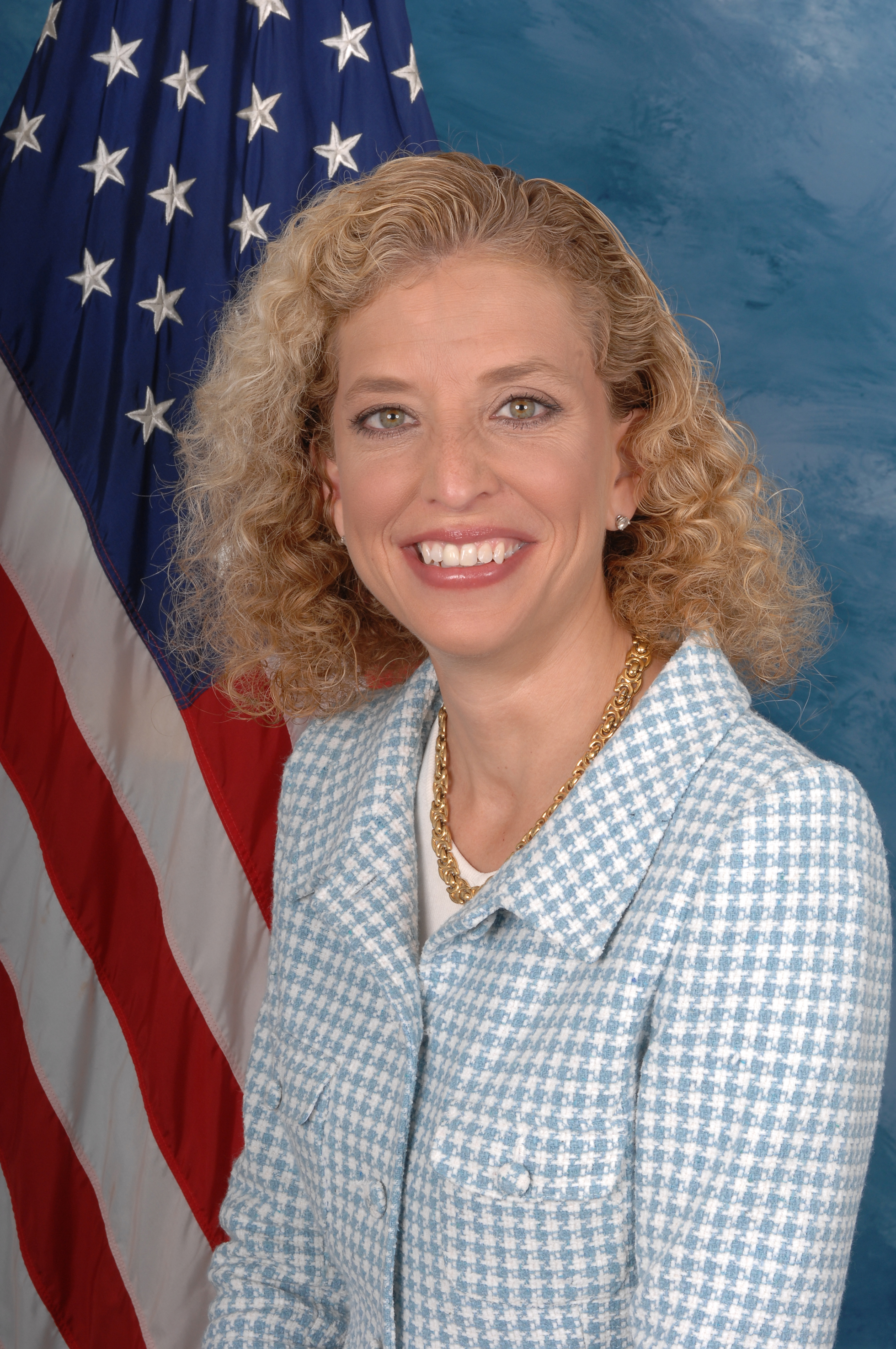
 (Pictured above: a former Lieutenant Colonel’s worst nightmare.) Even worse. This “lady” had the nerve to actually describe Allen West’s plans for Medicare recipients, via the debt ceiling negotiations: “The gentleman from Florida. who represents thousands of Medicare beneficiaries, as do I, is supportive of this plan that would increase costs for Medicare beneficiaries, unbelievable from a Member from South Florida”.
That’s it. That’s what set him off. In West’s defense, perhaps he felt physically threatened by Wasserman Schultz. After all, she does look awfully intimidating.
These are the kinds of people President Obama is trying to negotiate a debt ceiling increase out of. Crazy people. Not to say they aren’t serious people. No, these people take themselves very, very seriously. As to their role as stewards of our nation’s well-being? Taken about as seriously as a box of Lucky Charms.
Read the rest of…
Will Allison: Unloading Their Guns
By Zac Byer, on Tue Jul 26, 2011 at 3:00 PM ET Bipartisan meetings continue to fail to produce results on the debt crisis If you watched the TV show Lost, you probably sat through some episodes (or seasons) and found yourself, well, lost. That’s the same way I feel trying to wade through the muck coming out of Washington lately. Some days, the debt crisis seems like a grade-AAA fiasco. Other days, I wonder if this is all just a bunch of pre-primary fear-mongering.
Last night, President Barack Obama started his first prime-time address on the debt crisis with guns ablaze against George W. Bush’s tenure. Speaker John Boehner did not mention the words “revenue” or “loopholes” or “tax code” once. Really? Compromise? President Obama, don’t you remember your campaign line about this being the United States of America, not the Blue States or Red States of America? Speaker Boehner, don’t you remember when, only days ago, you put your support behind a plan that sought to raise nearly $800 million in revenue? IS ANYBODY LISTENING?!?
It’s hard to keep track of all the plans the Beltway crowd has sent our way. Grand Bargain? Give me a break, Mr. President. Henry Clay would be disappointed. Constitutional amendment? Uh, remember the 18th Amendment? That’s what happens when people make lofty decisions without considering all of the potential consequences. The Gang of Six? They say a group starts losing productivity when the membership exceeds seven people – maybe that’s why the plan makes some sense. But, until the Six make like Ross Perot and explain the plan to the public, our skepticism will remain.
As America approaches her debt ceiling, we are nearing our Regret Ceiling. Most people think that Congress will raise the debt ceiling by August 2nd. If our representatives and president fail us, here are a few of the regrets to expect:
Read the rest of…
Zac Byer: The Regret Ceiling
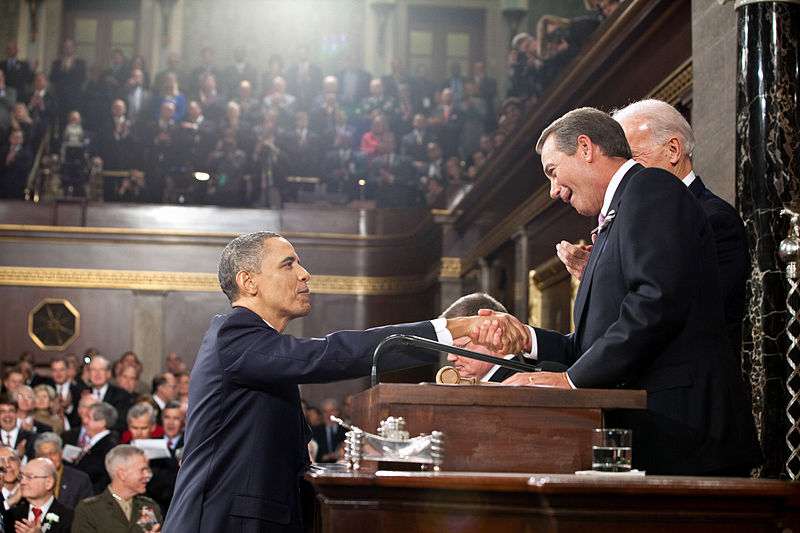
By Patrick Derocher, on Tue Jul 26, 2011 at 9:31 AM ET Seen here in less contentious times, President Obama and Speaker Boehner laid out their opposing strategies on the debt crisis last night in Washington. In dueling speeches in primetime Monday, President Obama and Speaker Boehner reinforced their positions on the debt ceiling debate, with the President criticizing overly-steadfast Republicans for their intransigence (though he assigned blame to both parties) and the Speaker continuing his push against revenue increases. As part of his 15-minute speech, President Obama encouraged American to contact their representatives and urge them to compromise on a debt agreement. Shortly after the speech, several Senate and House member websites were overloaded. [Politico]
President Obama, in speaking on the debt debate, notably refrained form using the word “veto” on Monday, moving away from his earlier threats to veto any plan that did not extend the debt ceiling through the end of 2012. It has been speculated that the President may now believe that he will have to accept any deal that manages to pass both houses of Congress. [National Journal]
National Journal has compiled a list of consequences if the United States fails to raise its debt ceiling. Among them: stock markets around the world are likely to tank, government programs including food stamps and Pell Grants face spending cuts by 40 to 45 percent, economic recovery would slow drastically or reverse, Social Security checks may or may not be released, the US’s credit rating could be cut to as low as D, and businesses across the country run the risk of total failure. [National Journal]
One common factor of the plans put forth by Speaker Boehner and Majority Leader Reid is the “Super Congress,” a bipartisan commission with extraordinary power to craft debt and budget legislation. In both cases, the Tea Party faction of the Republican Party finds the proposal unacceptable, while left-leaning groups such as MoveOn.org are criticizing the plan for its intent to make cuts to entitlement programs. [Huffington Post]
Additionally, the Boehner plan has received criticism from fiscal conservatives who feel that it is a step back from Cut, Cap, and Balance and the Balanced Budget Amendment. Majority Whip Kevin McCarthy of California has declined to say whether the Boehner plan has a support of the majority of the House Republican caucus. [The Hill]
Reuters has put together a concise comparison of the Boehner and Reid debt-reduction plans. [Reuters]
One of the biggest sticking points on the debt debate is whether troop drawdowns in Iraq and Afghanistan count as part of a deficit reduction plan, with Democrats including Senate Majority Leader Harry Reid arguing that it does and Republicans including House Majority Leader Eric Cantor claiming it does not, even though Representative Paul Ryan’s plan earlier this year took the same tack as Reid. [Huffington Post]
The House Rules Committee has posted the content of the Boehner deal on its website and scheduled a hearing for Tuesday afternoon at 3 p.m. [House Rules Committee]
In Congressional debt ceiling negotiations, House Majority Leader Eric Cantor has been leading the charge to push back against the Obama Administration’s desire to hit hedge funds and private equity firms with higher taxes. [Washington Post]
According to Standard & Poor, the Boehner plan may still trigger a lowering of the US’s AAA credit rating. The agency says that such a move would likely be viewed as a “Band-Aid” that would not assure the country’s financial stability for a long enough period to avoid the downgrade. [Huffington Post]
Still confused as to what all of this means? Want to find out how you can have your voice heard on this issue? Click here to read The RP’s “Debt Ceiling for Dummies.”
By Kathleen Kennedy Townsend, on Tue Jul 26, 2011 at 8:30 AM ET  In an earlier piece, I talked about the breakdown of our infrastructure based on my experience with the Washington DC Metro: the broken escalators, the slow Orange line, the unscheduled stops in the middle of tunnels. In an earlier piece, I talked about the breakdown of our infrastructure based on my experience with the Washington DC Metro: the broken escalators, the slow Orange line, the unscheduled stops in the middle of tunnels.
Today I’d like to add my complaints about the Maryland Area Regional Commuter line, MARC, where delays are not uncommon, and Amtrak’s Acela, which sustained a speed of 0 mph for two straight hours in New York’s Penn Station during one of my recent trips.
I choose the quiet car, because I don’t want to hear the curses that greet one delay after another. But then I think, Is passivity really the American way? Aren’t we supposed to take action, do something, get the job done? Americans solve problems. What’s going on when I read that China is launching a new line of fast trains and we aren’t even able to get our slow trains going?
 Congressman John Mica So I took it personally when Congressman John Mica, a Florida Republican and head of the House Transportation and Infrastructure Committee — rather than embracing the idea of an infrastructure bank that had the backing of John Kerry (Democrat) and Kay Bailey Hutchinson (Republican), the Chamber of Commerce, and the AFL-CIO — proposed to decrease infrastructure funding even beyond what Paul Ryan had proposed. Mica wants a 40 percent cut, to outdo the Tea Party’s cut of 30 percent.
The Republicans say they want to create jobs. But making it difficult to get to work is not the right path. And it’s tough get a job when you can’t get to an interview on time. On the delayed Acela, one of my fellow passengers complained (despite being in the quiet car) that he was going to miss his meeting with a potential client. As we sat in the station, unmoving, he became increasingly agitated and depressed. “In this bad economy, I really can’t afford not to meet him,” he said.
Read the rest of…
Kathleen Kennedy Townsend: Why Are Our Bridges Made in China?
By Patrick Derocher, on Mon Jul 25, 2011 at 4:00 PM ET President Obama endorsed Harry Reid's $2.7 trillion budget plan over John Boehner's today. It’s been a busy day for debt and budget negotiations in Washington, enough to justify a second round of budget crisis updates from The Recovering Politician:
President Obama has endorsed Harry Reid’s plan to cut $2.7 trillion from the budget without raising revenues, a major departure from his earlier insistence that any debt deal include significant revenue increases, though the Reid plan does fulfill his desire to have the debt ceiling raised enough to get the US through the 2012 election cycle. White House Press Secretary Jay Carney praised the plan for cutting responsibly and removing default-related uncertainty from the coming year. [Politico]
Speaker Boehner has released the details of his debt-reduction plan to House Republicans. The proposal includes a two-step process that will cut spending by $3 trillion over the next ten years without raising taxes. It also includes the temporary debt ceiling increase that President Obama and Congressional Democrats have balked at in the past. [The National Review]
The International Monetary Fund has weighed in on the United States debt crisis, echoing the sentiment that getting spending under control, and more immediately, raising the debt ceiling, are necessary for the continued economic health of the US and the rest of the world. The IMF supported proposals that include spending cut and revenue increase triggers should Congress fail to act in a timely manner. [The Hill]
In spite of extensive testimony to the contrary, Representative and candidate for President Ron Paul has said that a default is the best thing that could happen to the United States. He cites past credit defaults as evidence that a default in 2011, though harmful to the US economy, would not be calamitous. [National Journal]
The Boehner budget proposal is being referred to as a victory for the Tea Party, since it includes no revenue increases, a two-tier raising of the debt ceiling, and a vote on a balanced budget amendment. Though not a complete rehash of the Cut, Cap, and Balance bill, this budget would require a vote on a Constitutional amendment during 2012. [Huffington Post]
Massachusetts Democratic Representative Edward Markey has accused House Republicans, and Speaker Boehner in particular, of trying to harm the US economy in hopes of pinning the blame on President Obama. [The Hill]
Democratic sources have confirmed that Harry Reid’s $2.7 trillion deficit reduction plan does not touch entitlement benefits in any way. This further differentiates his plan from Speaker Boehner’s and is likely to shore up support among Democrats who were unhappy that President Obama had expressed a willingness to put entitlement programs on the table as part of a debt deal. [Huffington Post]
Still confused as to what all of this means? Want to find out how you can have your voice heard on this issue? Click here to read The RP’s “Debt Ceiling for Dummies.”
By Patrick Derocher, on Mon Jul 25, 2011 at 11:00 AM ET  Senate Majority Leader Harry Reid has created the most recent effort at a budget deal that can pass both Houses of Congress and be signed by the President. In a Sunday afternoon conference call with House Republicans, Speaker Boehner urged his caucus to stand firm in budget negotiations while acknowledging that compromise and a bill that can pass both houses of Congress will be necessary. For their part, Democrats including President Obama, Senate Majority Leader Harry Reid, and Treasury Secretary Tim Geithner still refuse to accept a deal that includes only a short-term debt ceiling increase, which House Republicans continue to push. [National Journal]
Mark Warner has called for the Senate to vote on the budget reduction plan put forth by the Gang of Six, a bipartisan coalition of which he is a member. Since its release a week ago, the plan has largely fallen by the wayside in favor of dueling plans by House Republicans and Senate Democrats. The Gang’s plan, through cutting defense spending, reforming entitlements and closing tax loopholes, would reduce the deficit by $9 trillion over the next decade. [The Hill]
Facing a Republican Party that is unwilling to share its debt-reduction plan or get behind any existing plans, Harry Reid is drafting a plan that will cut the deficit by $2.7 trillion dollars. While the plan includes raising the debt ceiling through 2013, as President Obama and other Democrats have demanded, it trims the deficit without raising revenues, as Republicans have demanded. [Politico]
President Obama is refocusing his administration on bridging the gaps between Democrats and Republicans, a major theme of his 2008 campaign that may be used to boost his appeal to independent voters in the 2012 election. In particular, he is working to break the partisan logjam surrounding debt ceiling and deficit negotiations, a goal which, if achieved, would likely improve the President’s image as far as the economy is concerned. [Washington Post]
According to a poll by The Hill, US voters are highly skeptical about the ability of Congress and the President to reach a deal on the debt ceiling: 71% say that they have little or no confidence in the government’s ability to do as much. Among Democrats, 47% have some level of confidence that a deal will be reached, while only 11% of Republicans agree. A slim majority (51%) believe Congress is too unwilling to compromise, while 35% believe it is too willing to do so, with Republicans being more likely than Democrats and independents to believe that Congress is too willing to compromise. [The Hill]
Speaking on MSNBC this morning, New York Democratic Senator Chuck Schumer referred to Majority Leader Harry Reid’s plan as something that House Republicans should be able to get behind and end the stalemate over debt reduction plans. He lauded its extension of the debt ceiling through 2013 while noting that it meets the major Republican criteria of not raising revenues and having a 1:1 spending cuts to debt ceiling increase ratio. [Huffington Post]
The Dow Jones Industrial Average opened about 125 points (one percent) lower on Monday, reflecting skepticism about the ability of Congress and President Obama to reach a deal on the debt ceiling before August 2. This drop is in line with similar declines in Asian markets Monday, includingJapan’s Nikkei, which fell be 0.81 percent, and the Shanghai Composite, which closed down about three percent on Monday. As a result of the declines, economists in Asian countries have been calling on the United States to effect swift action on the debt question. Drops in European markets have been less marked; as of Monday morning on the East Coast, the SIX Swiss Exchange was down 0.25 percentage points while the FTSE in England had barely dropped, by about 0.01 percent. [Politico]
Speaking in the economic powerhouse city of Shenzhen, Secretary of State Hillary Clinton reassure Chinese officials that the American economy is sound and in no real danger of defaulting on its loans. In doing so, she stressed that the United States will not give up on its role as a major power in the Asian political and economic affairs. [Huffington Post]
Still confused as to what all of this means? Want to find out how you can have your voice heard on this issue? Click here to read The RP’s “Debt Ceiling for Dummies.”
By Jonathan Miller, on Mon Jul 25, 2011 at 9:00 AM ET With the debt ceiling crisis in the headlines for weeks (and perhaps weeks to come), the RP has written a column (cross-posted at The Huffington Post) that tries, in plain-English terms, to explain what all the fuss is about, and why it is so critical for each of us to make our voices heard to our representatives in Washington:
As we approach August 2, the deadline for Congress to lift the debt ceiling before the nation begins to default on its credit, there’s still considerable public confusion about what it all means.
While nearly every economic expert declares that default would be a disaster, and a bipartisan consensus of politicians not aligned with the Tea Party agree, the country is still sharply divided. The most recent Pew Research Center poll found that only 40 percent of the public felt it was “essential” to raise the debt limit, while 39 percent of Americans (including 53% of Republicans) felt that we could go past the August 2 deadline without major economic problems.
Why the disconnect?
Part can be attributed to the continuing and growing distrust of Washington politicians, particularly by those disaffected on the far right.
Much is also due to the esoteric, bewildering, and sometimes coma-inducing nature of the financial jargon and labyrinthine subject matter associated with the debt ceiling debate.
As a Democrat and a former state Treasurer and CFO, I’m probably not the right guy to convince the partisan-blinder-wearing Ceiling Deniers.
But for the rest of us, I offer the following straightforward, plain-English summary to hopefully help better explain the real-life impact of American credit default:
Read the rest of the RP’s column by clicking this link.
UPDATE: As of 9:15 AM, 07/25/11, there have already been 130 comments at The Huffington Post on this piece. Please click here and have your say.
By Patrick Derocher, on Sun Jul 24, 2011 at 2:00 PM ET Bipartisan meetings have failed to produce results on the debt crisis After President Obama’s emergency debt talks ended following less than an hour of debt negotiations, Sen. Reid and Rep. Pelosi expressed frustration with Republican leadership being unwilling to compromise on a long-term debt deal. This gives the parties involved increasingly little time to put together a package before Asian stock markets open for business Monday. [NY Times]
Speaker Boehner told House Republicans in a conference call Saturday that he wanted to have a plan in place Sunday afternoon to avoid disrupting trading in Asia. He has said that the plan will be similar to the failed Cut, Cap and Balance plan and stay away from Sen. McConnell’s plan that would have allowed the President to raise the debt ceiling himself. President Obama, along with Congressional Democratic leadership, continues to assert that he will not sign a debt ceiling increase unless it extends through the end of the 2012 election cycle. [Politico]
Setting a conference call for 4:30 this afternoon (Sunday), Boehner has said he plans to release a debt ceiling plan that he is willing to advance without Democratic support. The plan, which bears some structural resemblance to one proposed by Treasury Secretary Tim Geithner, would be a two-step process, involving a savings and tax cut package followed by entitlement reform. The parties are still in disagreement as to whether the debt ceiling should be raised enough to get through 2012, as the Democrats want, or in a two step process, which Boehner and other Republicans have suggested. [National Journal]
Stock and currency market watchers are on tenterhooks, waiting to see if and how recent progress (or lack thereof) in debt negotiations will affect financial markets, beginning in Asia around 5 p.m. on the East Coast. Secretary Geithner devoted time Sunday morning to warning of the possible repercussions of the lack of a deal, while some are accusing him of using scare tactics to back Republicans into a corner on debt negotiations. [Politico]
Although precise numbers are difficult to impossible to find, it is estimated that Republican-leaning groups are outspending their Democratic counterparts by a margin of between five and ten to one on television ads relating to the debt ceiling and deficit battles. Leading the pack is Crossroads GPS, the Karl Rove-founded conservative group that is spending some $20 million in July and August to run the ads. In comparison, Democratic group Patriot Majority USA is spending $225,000 to run ads in Nebraska, Missouri, and Montana. [Politico]
Confused about the debt ceiling debate? Want to learn how to have your voice heard? Click here to read the RP’s “Debt Ceiling for Dummies.”
By Patrick Derocher, on Sat Jul 23, 2011 at 11:03 AM ET  The RP's Budget Crisis Update In spite of the collapse of the most recent round of Obama-Boehner talks and the pursuant blame game, it appears that some major points of agreement have been reached, namely raising the Medicare eligibility age from 65 to 67 and slowing the growth of Social Security benefits. [Huff Post]
In related news, Pres. Obama has called an emergency meeting involving himself, Speaker Boehner, Sens. Reid and McConnell, and House Minority Leader Nancy Pelosi at the White House Saturday at 11 a.m. Boehner has said that he needs to have a bill in hand on Monday (and passed in the House by Wednesday [Politico]…in order to get the debt ceiling raised by the August 2 deadline [National Journal]…
…which may in fact be an August 10 deadline. Researchers at Barclays, noting that the Treasury has taken in $14 billion more and spent $1 billion less than expected since July 13, may not run out of money until about a week after the currently anticipated deadline. [Huff Post]
This summarizes the he said-he said back-and-forth over the collapse of Pres. Obama and Speaker Boehner’s debt talks. The President blames the Speaker for not taking the plan (“the tough thing, but the right thing”) to his caucus because of revenue-raising measures, while the Speaker blames the President for having “moved the goal post” and requesting $400 billion in additional revenue toward the end of the failed negotiations. [Politico & Politico]
This is, of course, the sort of behavior House Republicans (especially the Tea Party set and the freshmen) wanted to see out of Boehner. [Politico]
In something of a repeat from 2010, House Republicans, especially the leadership, are on the lookout for primary challenges from the Tea Party wing of the Republican Party. The fear is that house primaries will be ignored by the party mainstream, allowing right-wing ideologues to win primaries in solidly Republican districts. This has, of course, made Speaker Boehner’s job rather difficult as he tries to work out a debt-response plan that will be accepted by the Senate and President without putting members of his caucus in electoral peril. [Huff Post]
Debt negotiations have claimed their first victims: thousands of employees of the Federal Aviation Administration will be furloughed or asked to work without pay after Congress failed to reach a deal that would either give them a temporary funding extension (the 21st consecutively) or a permanent funding scheme of some sort. [Washington Post]
In an interesting twist, Grover Norquist has said that Republican lawmakers should increase the debt ceiling to avoid the US defaulting on its obligations next month. Additionally, and perhaps more astonishingly, he has endorsed Senate Minority Leader Mitch McConnell’s “Plan B” legislation that would give President Obama the power to raise the debt limit as he sees fit. Norquist made news a few days ago when he said that letting the Bush tax cuts expire would not violate his anti-tax pledge that most Republican lawmakers have signed. [Roll Call]
In a reversal of their skepticism last week, Senate leaders have expressed willingness to consider the proposals made by the Gang of Six after Tom Coburn rejoined the group. Sen. McConnell: We wanted to give them an opportunity to make their suggestions about how their recommendations fit into the endgame here, and we had a good discussion.” Members of the Gang have expressed uncertainty about whether their plan will be the template for the eventual debt-reduction plan, but a willingness to work through the negotiations. [Politico]
|
The Recovering Politician Bookstore
|