By Rod Jetton, on Mon Feb 6, 2012 at 11:30 AM ET  Rod Jetton: Rebuttal #5 Rod Jetton: Rebuttal #5
[Krystal Ball’s Provocation; Artur Davis’ Rebuttal #1; Jeff Smith’s Rebuttal #2; Ron Granieri’s Rebuttal #3; The RP’s Rebuttal #4; Ron Granieri’s First Response]
Listening to liberals the past few weeks is so fun.
They are all giddy with how “nasty” the Republican primary has become and have convinced themselves that the “weakened” Republican nominee won’t stand a chance against President Obama.
Krystal made these points in her post, but those predictors are not very objective. They point out that the tea party base will nominate an extremist who can’t beat Obama. They seem happy to take on Romney even though he is considered to be the moderate Republican.
This election is not like 1968, or 1972. It’s a bit like 1980 and a lot like 2008. Artur Davis pointed out reality in his post, and those facts about the key states Obama has to win are real. I’m sure the polling and focus groups show the Bain Capital attack to be effective. That is why Newt and every Democrat talking head repeat it every chance they can. I also think it will be more effective on general election voters, but Romney has a chance to turn those attacks into a positive if he plays it right.
Read the rest of…
The RPs Debate the GOP Mudfest: Rod Jetton Rebuts
By Ronald J. Granieri, on Mon Feb 6, 2012 at 11:00 AM ET Ron Granieri’s First Response
[Krystal Ball’s Provocation; Artur Davis’ Rebuttal #1; Jeff Smith’s Rebuttal #2; Ron Granieri’s Rebuttal #3; The RP’s Rebuttal #4]
Touché, Jonathan (he drawled while slouching in an old office chair…). You are quite right that Gingrich is no Reagan, nor are any of the other impostors. The analogy is flawed, but nonetheless retains its admonitory power. Indeed, as Robert Reich has written elsewhere, liberals should temper their enthusiasm for a Gingrich candidacy because even a small percentage chance of his election is too much.
Ultimately, all such comparisons should make us remember Jonathan’s favorite philosopher, Karl Marx, who famously wrote in The 18th Brumaire: “Hegel remarks somewhere that all great world-historic facts and personages appear, so to speak, twice.
He forgot to add: the first time as tragedy, the second time as farce. Caussidiere for Danton, Louis Blanc for Robespierre [Gingrich for Reagan]….precisely in such epochs of revolutionary crisis they anxiously conjure up the spirits of the past to their service, borrowing from them names, battle slogans, and costumes in order to present this new scene in world history in time-honored disguise and borrowed language.”
Peace out.
By Jonathan Miller, on Mon Feb 6, 2012 at 10:30 AM ET The RP: Rebuttal #4
[Krystal Ball’s Provocation; Artur Davis’ Rebuttal #1; Jeff Smith’s Rebuttal #2; Ron Granieri’s Rebuttal #3]
First of all, a hearty Mazel Tov to Ron Granieri for being the first person ever at the Internet tubes to use both the terms Schadenfreude and QFT in a post.
(I had to look the latter up at the Urban Dictionary and assume he is using definition #1, not #2)
I know that Ron’s childhood hero, William F. Buckley would be proud.
(No, seriously, RP Nation. When the rest of us were reading comic books and the backs of baseball cards, Ron was queuing Firing Line repeats, poring through back issues of the National Review, and dog-earing his prized first edition of God and Man at Yale.)
I have to take issue, however, with the Reagan analogy which has been über-abused by the TV screaming heads who tend to fill up air time with clichéd analyses. Gingrich (or Paul…or Santorum…or Bachmann…yadda, yadda, yadda) is no Reagan in any sense of the word, particularly when it comes to electability. Certainly both of our liberal fathers misjudged Reagan’s general election appeal (My Dad…ugh…voted for Bonzo’s BFF in fact because he eerily predicted Carter’s antipathy toward Israel), as did much of America.
Read the rest of…
The RPs Debate the GOP Mudfest: The RP Rebuts
By Ronald J. Granieri, on Mon Feb 6, 2012 at 10:00 AM ET 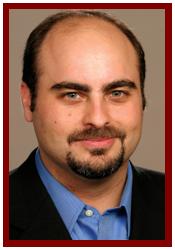
Ron Granieri: Rebuttal #3
[Krystal Ball’s Provocation; Artur Davis’ Rebuttal #1; Jeff Smith’s Rebuttal #2]
I understand the premature Schadenfreude that so many Democrats are feeling as they rub their hands gleefully and imagine how easy it will be to pick off the weakened Republican nominee after this primary fight.
I can also see why so many writers imagine that this is 1984 or 1972 or 1964 all over again, with an opposition party hopelessly captive to ideological extremists furiously working toward massive defeat. Maybe it will be. I am not much for predictions. Being a historian means I have spent my professional life shaking my head over predictions later proven to be false.
With that in mind, I will only offer this memory of my father, who would have been 75 this past Wednesday. It was late 1979, and my father, a lifelong Democrat, was bemoaning the weakened position of President Carter. (He would eventually support Ted Kennedy’s rebellion against the President, which should give you an idea of his positions on things.)
Read the rest of…
The RPs Debate the GOP Slugfest: Ron Granieri Rebuts
By Jeff Smith, on Mon Feb 6, 2012 at 9:30 AM ET 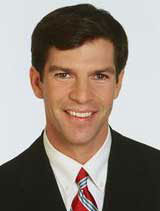 Jeff Smith: Rebuttal #2 Jeff Smith: Rebuttal #2
[Krystal Ball’s Provocation; Artur Davis’ Rebuttal #1]
I think Krystal pegs the psychology of Newt perfectly when she suggests that no one in the country will be happier with a Romney loss in November, with the possible exceptions of Jeb Bush, Chris Christie, and Bob McDonnell. As the old Janis Joplin song goes, Freedom’s just another word for nothin’ left to lose. And Mitt won’t be quite so enamored of the concept of “freedom” when he sees how Newt uses his in the the next few weeks. Rather, he’ll be urging his Jewish bundlers to call Adelson and beg him to stop (assuming he hasn’t already done so.)
I also agree with her smart observation that Newt has leveled much harsher critiques of Mitt Romney’s time at Bain Capital than Democrats would be able to pull off. Even more importantly than the attack is that Romney’s takeaway from the attacks will be, I think, that his response was effective. But I don’t think it will work in a general to proclaim, “I don’t apologize for my success” without expressing some empathy for all the people who lost jobs when companies went under after Bain sucked them dry.
Regarding Artur’s analysis, I’m not sure how Democratic losses in all of the states cited signify a victory of ideology over personality. Knowing both of the candidates in Missouri last cycle, for instance, I would say just the opposite: Republican Blunt was an affable, indefatigable campaigner who disarmed urban Democrats during intimate meetings while retaining his rural conservative base. Conversely, Democrat Robin Carnahan was widely seen even by Democrats as inaccessible and icy, and even after ostentatiously moving towards the middle proved utterly incapable of connecting with center-right voters. I don’t think ’10 was an ideological election any more than ’06 or ’08 were ideological elections favoring progressives; it was merely one more lurch back by an unsettled, anxious electorate pounded by job losses and economic insecurity.
Read the rest of…
The RPs Debate the GOP Mudfest: Jeff Smith Rebuts
By Artur Davis, on Mon Feb 6, 2012 at 9:00 AM ET 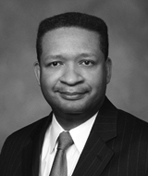 Artur Davis: Rebuttal #1 Artur Davis: Rebuttal #1
[Krystal Ball’s Provocation]
I agree with Krystal on the basics: Romney has been undercut by Gingrich’s attacks, and most of the Gingrich line of attack will resonate even better in the general. I agree that Romney’s unfavorables are disconcertingly high right now; if they continue, they would be the worst any nominee has carried into the general since 1984 (that path does not end well). I even share the premise that Obama has found a fairness based frame for this election that discomfits Republicans, and is broadly, if not deeply, popular.
There is, however, an overestimation of Obama’s reelection prospects that is taking hold in Democratic circles, and it is worth rebutting. First, at the same time consumer confidence is at its peak level in the past nine months, and the unemployment rate is at its lowest point since 09, its striking that the president’s approval ratings still appear stuck around 46-47-48 percent. Its just as revealing that at the same time Gallup recorded Obama’s best approval numbers since June, its polling gives him no better than a tie with Mitt Romney in swing states. While there is some variance, most battleground state by state polls still put Obama and Romney in a dead heat.
In other words, an incumbent who is defining the race in much the way he wants, who is receiving generally good economic news, and whose likely opponent has stumbled prominently still has over half the country expressing its disapproval and nearly as many voters inclined to reject him as to support him. That’s textbook vulnerability that in polling terms, has not gotten much better.
Read the rest of…
The RPs Debate the GOP Mudfest: Artur Davis Rebuts
By Krystal Ball, on Mon Feb 6, 2012 at 8:30 AM ET Over the past month, we’ve launched a new tradition at The Recovering Politician: a great virtual debate on the issues of the day among our recovering politicians; with provocations, rebuttals, responses, and defenses. Our first discussion focused on presidential leadership; our second on legalizing marijuana; our third, Tim Tebow; and our fourth, expanded gambling.
This week, the RP stirs up the mix with another controversial subject: the morality of gambling The RP starts off with his provocative article from The Huffington Post. Tune in every half hour to read what other RPs have to say.
SPOILER ALERT: There will be fireworks.
 Krystal Ball’s Provocation Krystal Ball’s Provocation
Whatever loyalty former House Speaker Newt Gingrich had to the Republican establishment was destroyed when it dropped the anvil on him after his South Carolina victory. Whatever goodwill Newt had toward former Gov. Mitt Romney evaporated in the blitz of negative ads that stole his chances for a win in Iowa. Now what’s left is Newt’s utter contempt for Mitt Romney. Newt will not be vice president. He will not be in the administration. He will not be fawned over by the Republican establishment like Gov. Mitch Daniels or Rep. Paul Ryan. All that’s left for him is a deep desire for revenge. This is not a happy state of affairs for the GOP.
I attended Newt’s rally with Herman Cain in Tampa this week. While it’s true that the blunt, Gadsden flag-bearing crowd at the rally go together with Mitt Romney about as well as ice cream and anchovies, they are ultimately Republican base voters who will come back into the fold. It is independent voters who may turn away from Mitt Romney and never look back. While Newt may not have the money that Mitt Romney does, he knows how to use the media and is a master at framing negative attacks. Already he has leveled much harsher critiques of Mitt Romney’s time at Bain Capital than Democrats would be able to pull off and it has been effective. Governor Romney’s business experience, supposedly his strongest selling point, is now as likely to be viewed favorably as unfavorably by independents. This is an attack that is less resonant in a Republican primary, but is plenty effective among swing voters.
Read the rest of…
The RPs Debate the GOP Mudfest: Krystal Ball Provokes
By John Y. Brown III, on Fri Feb 3, 2012 at 12:00 PM ET 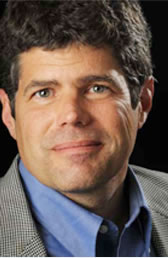 “Happiness is knowing who to blame,” a friend of mine used to facetiously joke–especially when he was trying to nudge me into taking responsibility for a situation I was complaining about–and trying to blame someone else for creating. “Happiness is knowing who to blame,” a friend of mine used to facetiously joke–especially when he was trying to nudge me into taking responsibility for a situation I was complaining about–and trying to blame someone else for creating.
I thought he was right then…and still think he’s right.
What he was really saying is that seeking to resolve frustration by blaming others only creates the temporary illusion of happiness–or relief. It’s not real and won’t last.
A better approach is thinking hard and honestly about what role I played–so I can own my part in an unpleasant predicament.
When I do that, I at least have some hope of changing things.
f it truly is another person’s fault, chances of changing that person—and then of that person changing the offending situation– leaves chances of things improving looking pretty bleak.
So, it seems, the more I am focusing on finding my role in displeasing areas of my life (instead of seeking out others to blame), the more hopeful I feel.
So maybe the saying should be “Hopefulness is knowing where I am to blame.”
By Artur Davis, on Thu Feb 2, 2012 at 8:30 AM ET The defining issues of our time ought to be why an economy with all our underlying strengths takes two years to generate a million jobs (for a stretch in 83 and 84 it was taking all of a month); or why we trail a significant portion of the developed world in educational excellence; or why we are yielding the first generation of 18 to 35 year olds who will under-perform their parents in relative earnings; or why the dropout rate in an advanced society like ours, that puts no barriers on public education, remains so stubbornly high.
Economic inequality does belong on the list – middle-income work generates too little reward and both parties seem flat out of ideas on how to roll back poverty -but it is not, as the president suggests, a function of government having aligned itself with the powerful. Instead, inequality is one more symptom of an abundant nation not performing at full capacity.
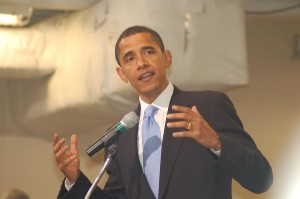 A dramatic hike in upper income taxes tomorrow wouldn’t move the needle an inch on the inequality front. A dramatic hike in upper income taxes tomorrow wouldn’t move the needle an inch on the inequality front.
On the politics of it all, the president’s rhetoric always shines and its a sound contrast to Republicans who are struggling to defend the merits of the modern economy. As substance, its another sign of liberalism spending more time defining the past than solving the future.
(Cross-posted, with permission of the author, from Politico’s Arena)
By RP Nation, on Tue Jan 31, 2012 at 8:30 AM ET Yesterday, The Recovering Politician featured a lively debate among the contributing RPs on the subject of whether states should expand gambling for the additional tax revenues they present during these difficult times.
To read the first piece that started it, check out The RP’s “The Moral Case for Gaming”
To review all of the arguments and counter-arguments, pro, con and sideways, from yesterday’s RPs Debate, click here.
Our readers sent in some very thoughtful and interesting comments. We excerpt a few below:
I understand the need for gambling in Kentucky. I have no moral arguments against gambling. My discussion is more the benefits of the individual vs. the benefits of society. First a disclaimer – I’m very liberal. Statistically speaking, it is no surprise to the educated that gambling favors the “house”. The odds are any one person will probably lose more money than they gain from a wager.
According to a national survey, blacks and Hispanics are more likely to be “pathological” gamblers. Impulsivity also was greater among youth of lower socio-economic status . Gambling can also find risk populations with older adults. The bottom line, to me, is does the benefit of society outweigh the benefit (or lack thereof) for the individual. W.C. Fields said there’s a sucker born every minute. And Kentucky would depend on these “suckers” to help fund our state. Yes, we have our signs that urge citizens to drink responsibly, gamble responsibly, etc. But I can’t help but feel Kentucky would be enabling a negative behavior for those least able to afford it.
I understand other states have gambling, and Kentucky is losing $$ to those states. What percentage of Kentucky citizens are flocking to tangential states, and what percentage do we anticipate gambling would increase in Kentucky with in-state casinos? We need to be creative to generate income for our state. And I know in-state gambling is one of those creative ideas. I just believe it is an idea the ultimately will generate as many problems as it attempts to solve.
Read the rest of…
The RP Nation Weighs in on the Gambling Debate
|
The Recovering Politician Bookstore
|


 Rod Jetton: Rebuttal #5