By Artur Davis, on Thu Apr 19, 2012 at 8:30 AM ET  When Barack Obama is not being re-cast as a principled defender of progressive values, his defenders in the press try another sleight-of-hand, defining him as a pragmatist desperately seeking responsible Republicans with whom to cut deals. Enter Paul Krugman’s latest column, “The Gullible Center”,which is a warmed over attack on Paul Ryan’s “extremism” (the ninth from the New York Times editorial pages in seven days, but who’s counting) and a mildly more original jab at moderates who allegedly lavish the undeserved label on seriousness on Ryan’s budget cutting, while missing the genuine article in President Obama. When Barack Obama is not being re-cast as a principled defender of progressive values, his defenders in the press try another sleight-of-hand, defining him as a pragmatist desperately seeking responsible Republicans with whom to cut deals. Enter Paul Krugman’s latest column, “The Gullible Center”,which is a warmed over attack on Paul Ryan’s “extremism” (the ninth from the New York Times editorial pages in seven days, but who’s counting) and a mildly more original jab at moderates who allegedly lavish the undeserved label on seriousness on Ryan’s budget cutting, while missing the genuine article in President Obama.
A few observations about Krugman’s revisionism. First, I’m not exactly a Ryan devotee for a variety of reasons: marginal tax rate reductions are overstated in Ryan’s model as a tool of economic growth; at the same time, his plan leaves too little room for additional investments in worker retraining, infrastructure, and education (it is particularly worrisome that he would leave Washington with fewer resources to incentivize the wholesale reforms on education that have to be effected at the state level) and it slices out too many elements of the safety net without doing a rigorous accounting of what has and hasn’t worked. Budgeting, Ryan style, is much too vulnerable to the criticism that it is a theory of emasculated government and an ideological tool rather than a blueprint for expanded prosperity.
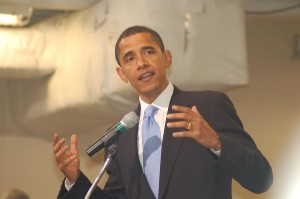 But the notion that President Obama is the misunderstood centrist in the budget wars? It’s a fantasy; to paraphrase Krugman’s closing jab at moderates, a naked conceit that has not much substance. Obama’s current budget repeats his minimalist approach to entitlements from last year—a series of mini-measures on cost reduction for Medicare, no rethinking whatsoever of how to restore Social Security to a safety net rather than a substantial net windfall for its beneficiaries. While Ryan has at least traded future structural realignments in Medicare for a safe haven for current beneficiaries, Obama resists countering Ryan, by defending the status quo while outlining an alternative of what a sustainable future looks like. To the contrary, Obama’s budgetary approach to Medicare and for that matter Obamacare mimics conservatives when they load all manner of unrealistic growth assumptions on top of their tax cut proposals: Obama’s version of fanciful thinking is the cost-cutting from comparative efficiency techniques that may or not survive congressional review, and that may or may not be scalable. But the notion that President Obama is the misunderstood centrist in the budget wars? It’s a fantasy; to paraphrase Krugman’s closing jab at moderates, a naked conceit that has not much substance. Obama’s current budget repeats his minimalist approach to entitlements from last year—a series of mini-measures on cost reduction for Medicare, no rethinking whatsoever of how to restore Social Security to a safety net rather than a substantial net windfall for its beneficiaries. While Ryan has at least traded future structural realignments in Medicare for a safe haven for current beneficiaries, Obama resists countering Ryan, by defending the status quo while outlining an alternative of what a sustainable future looks like. To the contrary, Obama’s budgetary approach to Medicare and for that matter Obamacare mimics conservatives when they load all manner of unrealistic growth assumptions on top of their tax cut proposals: Obama’s version of fanciful thinking is the cost-cutting from comparative efficiency techniques that may or not survive congressional review, and that may or may not be scalable.
Read the rest of…
Artur Davis: The “Obama is a Moderate” Fantasy
By Krystal Ball, on Fri Apr 13, 2012 at 1:30 PM ET  When Republicans took over state legislatures and the US Congress in 2010, we were promised a war on unemployment. Instead we’ve gotten a war on the environment, women, minorities, unions and everything else that moves, organizes and votes Democratic. When Republicans took over state legislatures and the US Congress in 2010, we were promised a war on unemployment. Instead we’ve gotten a war on the environment, women, minorities, unions and everything else that moves, organizes and votes Democratic.
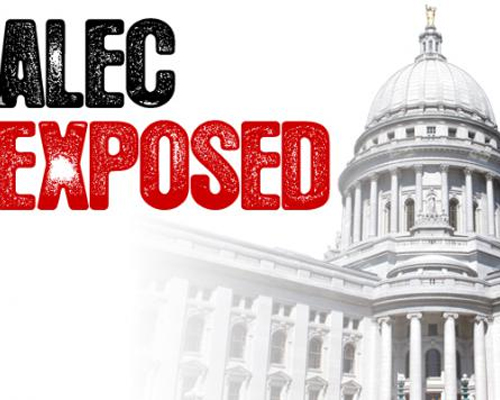
What the heck happened? While a lot of attention has rightly been focused on Super PACs, there’s another type of organization that has had an even more dramatic and troubling impact on our democracy. Secretive, tax-exempt 501©(3)s have been gaming our system, enabling corporations and private foundations to buy our democracy at wholesale. They have orchestrated a broad sweep of extreme legislation across the country while using a tax-exempt status to hide their funders and sustain their existence through favorable IRS treatment. Two organizations in particular, the American Legislative Exchange Council (ALEC) and Americans United for Life (AUL) have led the charge in what has been described as “ghostwriting the law”but which in fact goes far beyond that.
 The idealized “Schoolhouse Rock” version of our democratic process works something like this: Constituents concerned about a problem in the community contact their representative in the legislature, who recognizes the issue and decides to respond. The legislator works together with a skilled staff to draft legislation. The legislation is honed in committees where other members bring the perspective of their districts. The idealized “Schoolhouse Rock” version of our democratic process works something like this: Constituents concerned about a problem in the community contact their representative in the legislature, who recognizes the issue and decides to respond. The legislator works together with a skilled staff to draft legislation. The legislation is honed in committees where other members bring the perspective of their districts.
Finally, the entire body votes for the bill and it either succeeds or fails on its merits. We all know that this ideal has long been perverted by lobbyists and large donors who hold undue sway in our democracy. Less visible but even more pernicious is the impact of organizations like ALECand AUL who turn legislating into a wholesale, Costco-style activity.
Read the rest of…
Krystal Ball: ALEC and AUL: Buying our democracy at wholesale
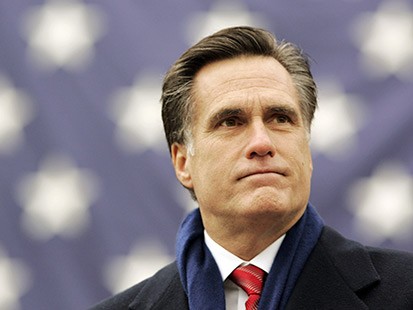
By Kristen Soltis, on Thu Apr 12, 2012 at 3:00 PM ET  Having weathered the tense, topsy-turvy contest for the Republican presidential nomination, Mitt Romney now moves into the next chapter of the 2012 campaign. But how that next chapter reads is yet to be determined. Having weathered the tense, topsy-turvy contest for the Republican presidential nomination, Mitt Romney now moves into the next chapter of the 2012 campaign. But how that next chapter reads is yet to be determined.
The departure of Rick Santorum from the race has sparked debate about how much Romney will need to “fire up the base” as he moves forward in order to turn out very conservative voters in November. Yet as voters grow increasingly frustrated with both parties, it is disaffected voters and disappointed independents who will be most decisive in this coming election. 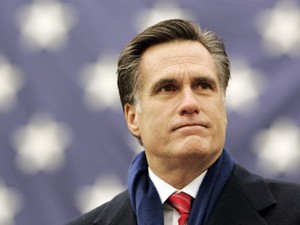
The great news for Romney is that, no matter how you slice the electorate into target groups, the economy and jobs are the top issues on voters’ minds. This is not an election that will be decided on social or cultural issues. Despite Democrats’ efforts to turn fundamentally economic and fiscal issues into cultural issue wedges, the election will not hinge on issues like free contraception or funding for Planned Parenthood.
Read the rest of…
Kristen Soltis: Does Romney Still Need to Court Conservatives?
By Artur Davis, on Thu Apr 12, 2012 at 8:30 AM ET Ira Shapiro’s recent work on the late seventies, “The Last Great Senate”, has the gift of good timing. It hits bookstands during a time when its thesis–that Washington was occupied by political giants, moderates, and thoughtful deal-makers until far-right Republicans dragged it into the mud–is the conventional wisdom du jour. As a narrative, the book also reads well, which is no small accomplishment, given its dive into the nuts and bolts of policy battles that are only dimly recalled: Jimmy Carter’s conservation initiatives and his failed stimulus are not exactly the stuff of lore. As Shapiro reminds, there actually was an ample amount of substance and rigor in many of those debates, and the quality of the fight seems, in Shapiro’s telling, richer than our current sound-bite clashes.
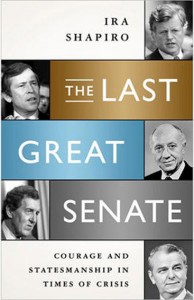 Click on the book cover to order To be sure, there is much that is admirable about this book from one of the most credentialed public policy lawyers in DC. It’s worth asking though, whether Shapiro’s underlying theory of senatorial decline and right-wing liability really holds up as a description of the last thirty odd years. Two threshold criticisms: first, the supposed dark ages after 1980 contain a lot more bipartisan accomplishment than Shapiro acknowledges. While his epilogue makes a nod to a series of eighties era achievements, including a refinancing of Social Security, a work-over of Title VII, tax reform, immigration reform, and the patent protection that enabled the generic drug market, it’s a run of success that Shapiro seems to dramatically understate and which is at odds with his premise. If Shapiro is right about the sources of dysfunction, a Republican lurch to the right and the surge of cut and slash ad wars sponsored by conservative cash, the eighties should have been one long pattern of gridlock. The fact that they weren’t gives Shapiro’s case fits that he doesn’t really address.
Read the rest of…
Artur Davis: Seventies Night on Capitol Hill
By John Y. Brown III, on Tue Apr 10, 2012 at 12:00 PM ET  “Funny awkward” or just “awkward” “Funny awkward” or just “awkward”
Sometimes when I’m out and see someone I know out of the corner of my eye, I just don’t have the energy to say hello… so I pretend I don’t see them. And hope they don’t see me.
We are likes two ships passing in the dark of night (or light of day, really).
Sometimes, though, I’ll see them catching a quick glimpse at me. But also choose not to say hello because they are preoccupied with something and don’t have the energy or time to speak to me.
Once I know they have seen me and not said hello, I get uncomfortable. There is a chance they have also seen me see them and know that I failed to say hi when I had the chance.
So, I slyly “pretend” to have just seen them and act surprised (like I’m spotting them for the first time) and say hello. They–in return–act like they are just seeing me for the first time and say hello.
But what if their “fake first time hello” is less enthusiastic than mine? You can’t help but wonder if that be considered a slight? Or just life as it is in our hurried world? It’s the latter, of course.
That’s when I feel the whole exchange is “funny awkward.”
And when that happens, I admit, there’s a part of me that wants to point out that I did notice they saw me about a minute ago and could tell they didn’t want to talk to me.
Just so I know that they know…that I knew.
But I don’t. Because that would be just plain “awkward.”
And probably the last time we’d ever pretend not to see each other in public again…. before pretending to see each other for the first time and striking up a conversation.
By Jonathan Miller, on Fri Apr 6, 2012 at 8:00 AM ET  Fair readers, have no fear: This column is not a revelation of yours truly as a self-hating “self-hating Jew.” Fair readers, have no fear: This column is not a revelation of yours truly as a self-hating “self-hating Jew.”
Nor is it a critique of Jonathan Miller, the News Corp executive, Jonathan Miller, the Birmingham Rabbi, Johnathan Miller, the Iran-Contra felon, or even Jonathan Miller whom God called to run for Congress in West Virginia.
Rather, my deep disappointment is directed toward the most famous Jonathan Miller.
For those of you who are under the age of 50 and have never tried to Google me, THE Jonathan Miller is “is a British theatre and opera director, actor, author, television presenter, humorist and sculptor,” best known for being a frequent guest in the early 1980s on The Dick Cavett Show.
 That Jonathan Miller also recently committed an act of transparent anti-Semitism. That Jonathan Miller also recently committed an act of transparent anti-Semitism.
Miller co-signed a letter (along with three dozen other British actors, directors, and writers, including two-time Oscar winner Emma Thompson), asking Shakespeare’s Globe Theater in London to withdraw its invitation to an Israeli theater company “so that the festival is not complicit with human rights violations and the illegal colonisation of occupied land.”
A charge of anti-Semitism, of course, is quite severe, especially concerning a fellow Jonathan Miller. And I’m not one to consider every pronouncement against Israeli policy anti-Semitic or even anti-Zionist.
Furthermore, I strongly support a two-state solution in the Middle East that would require Israel to return most of the West Bank lands it captured in its defensive struggle for existential survival during 1967’s Six Day War. I believe that criticism of the occupation, and particularly of many of the Jewish settlements in these territories, can be — in the proper context — a profoundly Zionist statement.
But this is far from the proper context.
Read the rest of…
Jonathan Miller: Jonathan Miller’s Anti-Semitic Act
By Jason Grill, on Thu Apr 5, 2012 at 3:00 PM ET 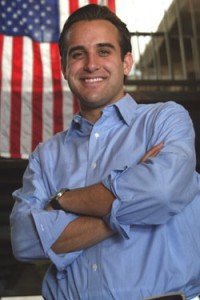 For as long as I can remember in politics, Democrats have always taken it on the chin from Republicans about not being pro-business or not being concerned about small business issues. For as long as I can remember in politics, Democrats have always taken it on the chin from Republicans about not being pro-business or not being concerned about small business issues.
An event this week in Washington D.C. proved otherwise. I had the opportunity to join a delegation of about 25 business leaders (Republicans, Democrats, and Independents) from my hometown of Kansas City, Mo. This group consisted of CEO’s, small business leaders, entrepreneurs, and elected officials. It had the clientele of a Chamber of Commerce event. The only thing was we were at the White House meeting with senior officials from the administration to share business ideas, work together on solving problems, and identify ways that the federal government could help or get out of the way to make Kansas City, Mo. grow and thrive.
Interactive dialogue between the group and the chief economist for the U.S. Department of Commerce, deputy secretary of education, President Obama’s top advisors, and the assistant secretary for administration at the Department of Health and Human Services all took place in D.C. Shocking right? Not really, but that is what many political pundits and opposition to the president would like you to believe.
The fact that the White House and the administration is reaching out and bringing individuals into the policy making process is positive. Being part of the process and reaching out to the business community, whether large or small, should stand above the political rhetoric filling up our heads these days. All of the relative and salient points made at this meeting will go into a report for President Obama.
Read the rest of…
Jason Grill: Democrats and Small Business
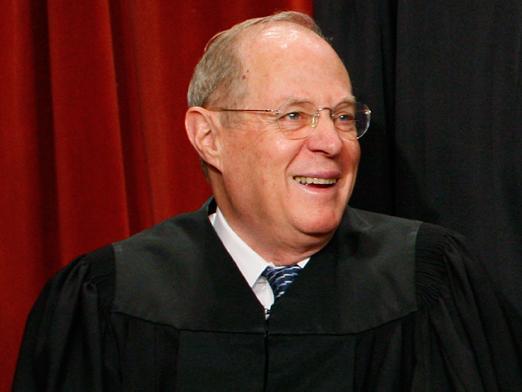
By Artur Davis, on Thu Apr 5, 2012 at 10:00 AM ET At the risk of reading tea leaves from two justices, the ever pivotal Anthony Kennedy and the magisterial but cautious John Roberts, the game seems up on the health insurance mandate.
In casual parlance, they seemed to get it—the “it” being that a government with the power to compel a consumer to enter a market is as omnipotent economically as it wants to be. That government is not only theoretically free to pursue a range of things it won’t do, from making Prius purchasing, Iphone carrying, broccoli eaters of all of us—but, as Kennedy especially seemed to intuit, its also capable of doing something more realistic and more substantial, which is collapsing the zone of economic autonomy to almost nothing, in the name of making the economy look the way government thinks it should.
 David Brooks, in his latest column in the NY Times, puts the mandate in the familiar context of the Obama Administration’s penchant for centralized bureaucracies, and he is certainly right about that. Given its druthers, and more votes in Congress, the president would have almost certainly followed that trend into a full scale public option that would have arguably refashioned healthcare delivery along the lines of the fraying, cost-exploding model that is Medicare. For good measure, this White House would have done the same with cap-and-trade and the market for carbon emissions, and they have certainly run the same play in the context of the Dodd-Frank reform by carving out an aggressive new regulator for consumer financial products. David Brooks, in his latest column in the NY Times, puts the mandate in the familiar context of the Obama Administration’s penchant for centralized bureaucracies, and he is certainly right about that. Given its druthers, and more votes in Congress, the president would have almost certainly followed that trend into a full scale public option that would have arguably refashioned healthcare delivery along the lines of the fraying, cost-exploding model that is Medicare. For good measure, this White House would have done the same with cap-and-trade and the market for carbon emissions, and they have certainly run the same play in the context of the Dodd-Frank reform by carving out an aggressive new regulator for consumer financial products.
Read the rest of…
Artur Davis: The Mandate’s Very Bad Day
By Jeff Smith, on Wed Apr 4, 2012 at 10:00 AM ET 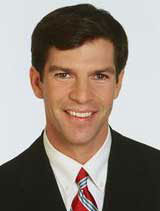 They’ve seen the polling – they can read the writing on the wall. Demographics are destiny: young people overwhelmingly (2:1) support gay marriage. Middle-aged people (45-65) and mixed; seniors against. They’ve seen the polling – they can read the writing on the wall. Demographics are destiny: young people overwhelmingly (2:1) support gay marriage. Middle-aged people (45-65) and mixed; seniors against.
So the process of generational replacement over the next decade will just continue moving the center further and further left on this issue. (The last issue I can remember with a generational split this stark is polling on interracial marriage around the time of Loving v. Virginia – ’67-68.) Clearly, Republicans are wise to begin what will be a long retreat from their rhetoric around this issue.
And as POLITICO notes this morning, some smart Republicans are also beginning to take the longer view on immigration. Alienating young people and Latinos in a country that will be increasingly dominated by them in coming decades is a huge political loser.
Unfortunately for Republicans, small symbolic steps won’t enough to sway many folks this fall. Undoing the damage from this year’s nasty primary (and the forces that led to it) is a multi-cycle proposition.
(Cross-posted, with permission of the author, from Politico’s Arena)
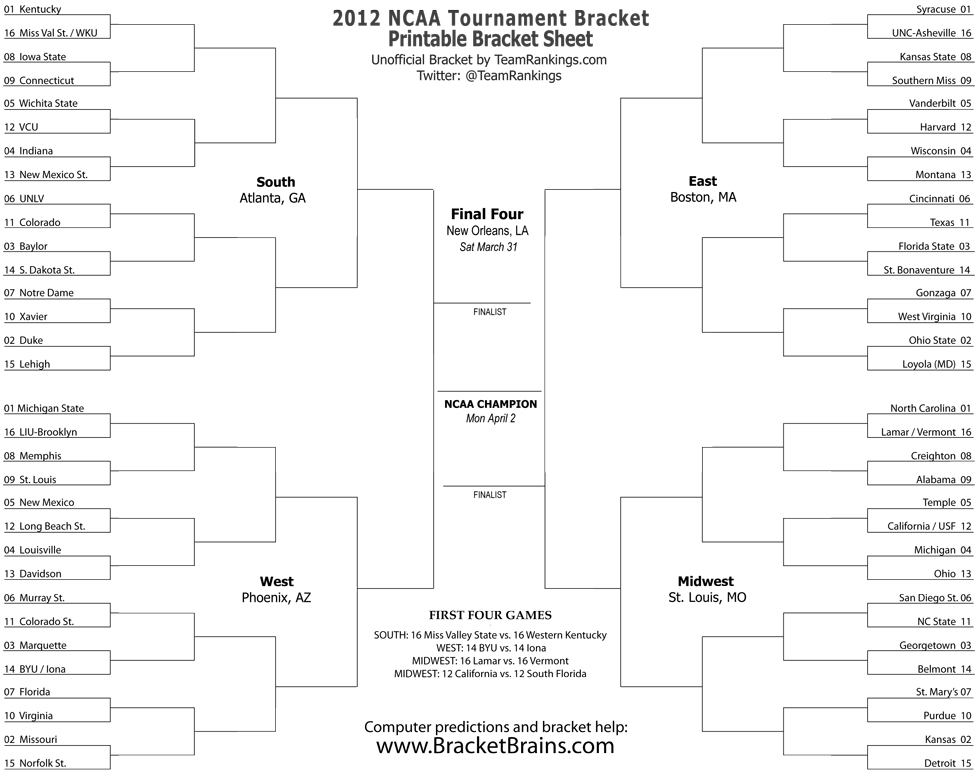
By RP Staff, on Tue Apr 3, 2012 at 9:15 AM ET 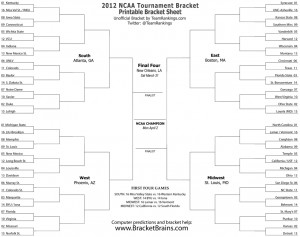 The University of Kentucky Wildcats basketball team and the Big Blue Nation weren’t the only winners last night The University of Kentucky Wildcats basketball team and the Big Blue Nation weren’t the only winners last night
The First Annual No Labels/Recovering Politician NCAA bracket contest — “No Bracket No Pay” — is now crowning two champions.
The overcall winner — of the original 68-team bracket contest — was “Nate.” “Nate” please identify yourself to claim your prize. In second place was Butler University student Scooter Stein, whose mom happens to be Kathy Stein, the beloved State Senator from Lexington, Kentucky. The RP came from way back in the field of 77 to finish a respectable 7th.
 Here's our goofball winner of the Second Chance tourney with his prize, an original bottle of "Duff" beer, available only in Italy, Argentina, and Springfield, the fictional home of Homer J. Simpson And in the “second chance” bracket — featuring picks for the Sweet Sixteen forward, the winner was…The RP himself! By picking the winners of every single game in the Sweet 16 except for Louisville’s surprise wins, and then accurately predicting the 8 point margin of victory in the finals (the tiebreaker), the RP edged out Friend of RP John Johnson for the title. How fitting that the guy who started this site dedicated to second acts wins the second chance tourney.
Or is it part of the greater international Zionist conspiracy? You decide!
Congrats to all, and don’t forget to go to NoLabels.org, and make your voice heard about “No Budget, No Pay”
|
The Recovering Politician Bookstore
|


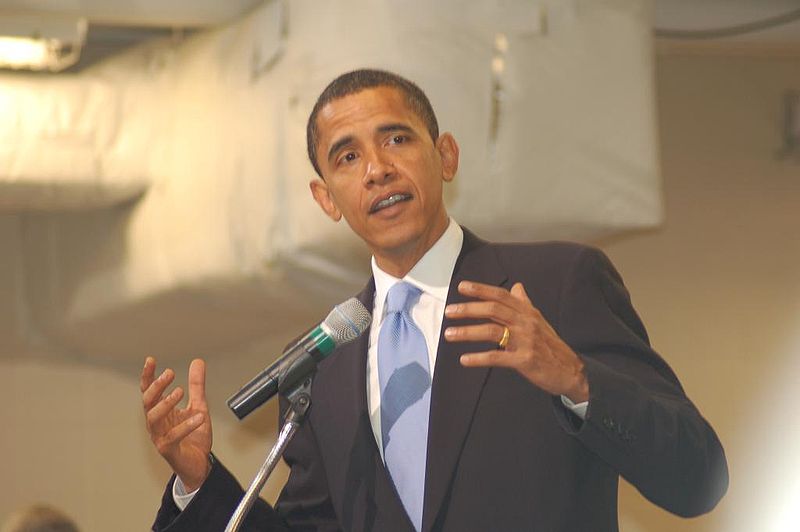 But the notion that President Obama is the misunderstood centrist in the budget wars? It’s a fantasy; to paraphrase Krugman’s closing jab at moderates, a naked conceit that has not much substance. Obama’s current budget repeats his minimalist approach to entitlements from last year—a series of mini-measures on cost reduction for Medicare, no rethinking whatsoever of how to restore Social Security to a safety net rather than a substantial net windfall for its beneficiaries. While Ryan has at least traded future structural realignments in Medicare for a safe haven for current beneficiaries, Obama resists countering Ryan, by defending the status quo while outlining an alternative of what a sustainable future looks like. To the contrary, Obama’s budgetary approach to Medicare and for that matter Obamacare mimics conservatives when they load all manner of unrealistic growth assumptions on top of their tax cut proposals: Obama’s version of fanciful thinking is the cost-cutting from comparative efficiency techniques that may or not survive congressional review, and that may or may not be scalable.