By Jonathan Miller, on Wed Nov 16, 2011 at 12:00 PM ET JERUSALEM: My people — the Jewish people — have the reputation of being both opinionated and cantankerous. Israel’s founding father, David Ben-Gurion, once remarked that “for every two Jews, there are three opinions.” When his successor as Prime Minister, Golda Meir, was confronted by President Lyndon Johnson — who complained that he had to satisfy 150 million voters — Meir responded that she had to placate two million prime ministers.
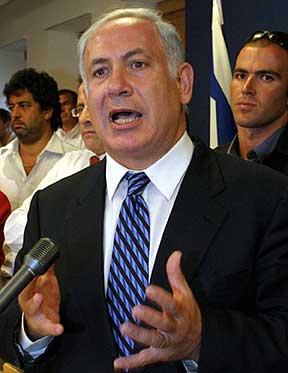
So it’s been especially remarkable that my conversations this week with Israelis reveal a broad consensus of popular support for the government’s decision last month to trade more than 1000 prisoners for the safe return of just one Israeli soldier, Gilad Shalit. Indeed, Israel’s controversial prime minister, Benjamin Netanyahu, is surging in the nation’s public opinion polls since the prisoner swap.
How is this consensus possible? Upon first glance, the trade seemed highly imbalanced and unfair. And many analysts have complained that such a deal only encourages further hostage taking. Remember the maxim, “Never negotiate with terrorists”?
Yesterday in Jerusalem, I learned the powerful lesson why.
 The first clue came in a visit to an Immigration Absorption Center in the Jerusalem suburbs. I had the extraordinary opportunity to meet with dozens of recent immigrants from Ethiopia, a small representation of the more than 120,000 Ethiopian Jews who have emigrated to Israel in recent decades, most dramatically in two covert military operations, Operation Moses (1984) and Operation Solomon (1991). With their lives in danger due to famine and political unrest, thousands upon thousands were airlifted to Israel to enable them to begin their lives anew, free to worship their God. And in the intervening decades, Israel has spent many millions of dollars to educate, feed, clothe, shelter and prepare these immigrants for modern life. The first clue came in a visit to an Immigration Absorption Center in the Jerusalem suburbs. I had the extraordinary opportunity to meet with dozens of recent immigrants from Ethiopia, a small representation of the more than 120,000 Ethiopian Jews who have emigrated to Israel in recent decades, most dramatically in two covert military operations, Operation Moses (1984) and Operation Solomon (1991). With their lives in danger due to famine and political unrest, thousands upon thousands were airlifted to Israel to enable them to begin their lives anew, free to worship their God. And in the intervening decades, Israel has spent many millions of dollars to educate, feed, clothe, shelter and prepare these immigrants for modern life.
Read the rest of…
The RP: Why did Israel Trade 1000 Prisoners for Galid Shalit? I Learned the Powerful Answer in Jerusalem
By Jonathan Miller, on Tue Nov 15, 2011 at 12:30 PM ET  I'm placing a written within the cracks of Jerusalem's Wailing Wall, a centuries-old tradition Meandering yesterday through the cobblestone streets of Jerusalem’s Old City brought back some poignant memories of my first trip to the Jewish homeland — a precocious and often obnoxious 11-year-old — traveling on a community family mission in 1978.
I most vividly remember the reaction of many Israelis to my yarmulke (skull cap) — specifically the stitching of my first name translated into Hebrew: Yonatan.
They’d flash a proud smile, point to my head, and shout “gibor,” the Hebrew word for hero.
After some initial confusion — I couldn’t figure out why so many Israelis knew about my junior tennis exploits — I learned that I wasn’t the subject of their compliments.
Instead, it was my fellow Yonatan, Jonathan Netanyahu, who two years earlier had led the successful Raid on Entebbe, a hostage rescue mission at the Entebbe Airport in Uganada, in which all 102 hostages were rescued unharmed. Indeed, the only casualty of the mission was Netanyahu himself.
It was a great time to be a Yonatan. And I would never forget the surname.
 A few decades later, I became aware of a new Netanyahu. Yonatan’s baby brother, Benjamin — better known to Israelis as “Bibi” — made a dramatic splash on the international stage in the mid-1980s, as Israel’s representative to the United Nations. A few decades later, I became aware of a new Netanyahu. Yonatan’s baby brother, Benjamin — better known to Israelis as “Bibi” — made a dramatic splash on the international stage in the mid-1980s, as Israel’s representative to the United Nations.
Of course, I was intrigued. Bibi was smooth, polished, charismatic, and spoke the best American-ized English I’d ever heard from a native Israeli. I was proud to be connected to him; even though the association was mostly in my imagination.
But then came the bad news. Bibi was a card-carrying member of the Likud party, the dreaded right-wing of Israeli politics. A proud, progressive Democrat, I couldn’t associate myself with the Israeli GOP equivalent. And when Bibi’s first foray as Israel’s Prime Minister in the 1990s concluded unsuccessfully — and his personal reputation grew more controversial — my heart hardened further; the Entebbe narrative dissipated further into childhood fantasy.
Read the rest of…
The RP: Me and My Bibi
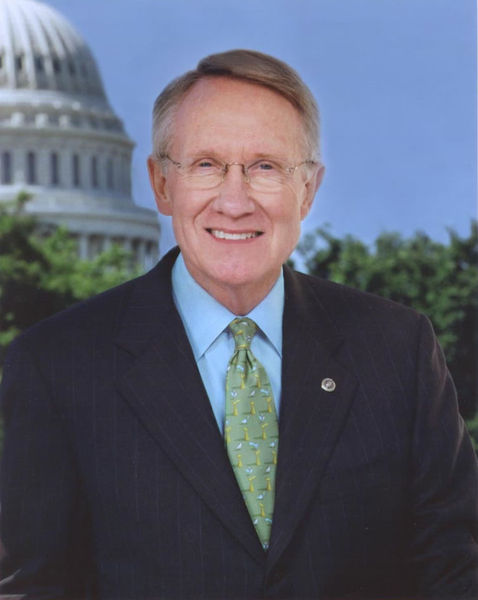
By Jonathan Miller, on Mon Nov 14, 2011 at 12:00 PM ET “We’ve been waiting for the House to conduct their business and they’re having trouble conducting it.” – Senate Majority Leader Harry Reid (D-NV); July 29, 2011.
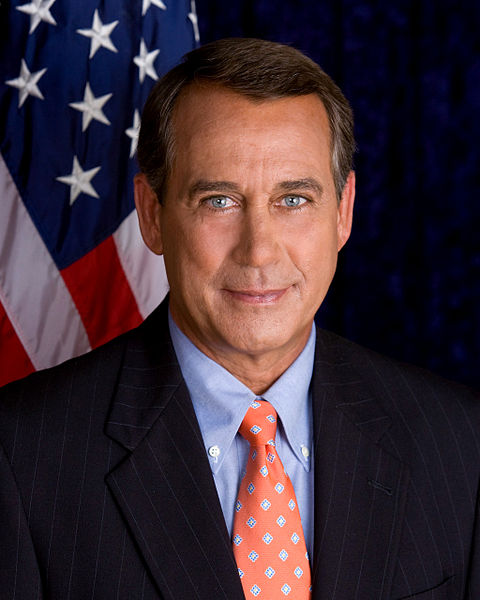
“The only thing standing in the way of the House proposal…is the president and Sen. Reid.” – House Speaker John Boehner; July 30, 2011.
America’s leaders are playing the blame game — and citizens across the country are bearing the consequences.
America’s Congressional leaders have always held enormous influence in both chambers of Congress. While all lawmakers are involved in drafting and voting upon legislation, the central role of the Speaker of the House, the president pro tempore of the Senate, and majority and minority leaders in both bodies, cannot be underestimated.

However, the people with the most responsibility and capability to move legislation forward, rarely meet in-person. How can Congressional leadership pilot a nation together if they’re never in the same room with one another?
To fixing this glaring deficiency, No Labels proposes bringing our leaders together by creating a Bipartisan Congressional Leadership Committee.
Read the rest of…
The RP: Ending the Blame Game on Capitol Hill
By Jonathan Miller, on Mon Nov 14, 2011 at 8:30 AM ET  You aren’t going to believe this. I’m stuck in Israel, my passport’s stolen, and I need each of you to wire me $10,000 US$… You aren’t going to believe this. I’m stuck in Israel, my passport’s stolen, and I need each of you to wire me $10,000 US$…
OK, this is not one of those posts.
Indeed, I landed in Tel Aviv yesterday, and I’m already having a fantastic experience.
Periodically, when I get back to my hotel room, I will post accounts of my travels this week in the Holy Land. Don’t expect a boring travelogue; I hope to share with you some unique insights, history lessons, geopolitical analysis, and maybe a few jokes.
So, please check in periodically. And if you really want to wire me some money…
By John Johnson, on Fri Nov 11, 2011 at 12:30 PM ET  When I think of female empowerment, I can’t help but think of one of my most important responsibilities–being a Dad to Courtney, my 11 year old daughter. I don’t think any experience can make a man think about female empowerment more than having a soon to be teenage daughter. When I think of female empowerment, I can’t help but think of one of my most important responsibilities–being a Dad to Courtney, my 11 year old daughter. I don’t think any experience can make a man think about female empowerment more than having a soon to be teenage daughter.
I think about this a lot. How do I foster her growth and confidence? What can I do to give her the tools to face the challenges in the world? How do I relate to her interests which are different than mine?
One simple example: I love that Courtney loves math like I do. She also loves fashion , something I know nothing about. We have found common ground. I share geeky math tricks with her and help her with her homework. She has taught me to watch and even enjoy project runway. Last week, She even went with me last week to buy a new suit. She definitely understands fashion better than I do. 
But we have intertwined our two interests to better relate to each other.
As she grows and our interests diverge, I hope I can continue to find ways to understand and empower her. Awareness of the challenge is a great first step.
By Jonathan Miller, on Fri Nov 11, 2011 at 11:11 AM ET It’s 11:11:11 on 11/11/11, and I’m saluting my favorite veteran-hero, Jerry Wurmser.
 Jerry flew 66 fighter-bomber missions over Europe during the final years of World War II. His earlier claim to fame is that he almost broke the sound barrier on June 9, 1944, at 6:05 p.m. over Salisbury, Maryland, and lived to tell about it. At 88 years young, he remains an active member of Lexington’s Jewish community, as well as a doting grandfather and great-grandfather. Jerry flew 66 fighter-bomber missions over Europe during the final years of World War II. His earlier claim to fame is that he almost broke the sound barrier on June 9, 1944, at 6:05 p.m. over Salisbury, Maryland, and lived to tell about it. At 88 years young, he remains an active member of Lexington’s Jewish community, as well as a doting grandfather and great-grandfather.
Who are you saluting? Please comment below:
(And if you missed it, there’ll be another 11:11:11 in 12 hours, as long as you aren’t one of those international clock-ers!)
By Jonathan Miller, on Thu Nov 10, 2011 at 11:30 AM ET
By Jonathan Miller, on Wed Nov 9, 2011 at 8:30 AM ET
Since its spontaneous generation a few months ago, Occupy Wall Street has made me cautiously optimistic.
“Optimistic” because I’m thrilled that there’s finally a highly visible effort to shine a spotlight on one of our country’s worst modern tragedies: the cancerous spread and increasing metastasization of income inequality.
“Cautious” because I’ve feared, as have many others, that the movement’s uber-anti-hierarchical — some would say anarchistic — organizational structure would frustrate the emergence of any meaningful, concrete reforms that could actually tackle the worthy issues OWS is raising.
Fortunately, here in my hometown of Lexington, Kentucky, local OWS organizers have developed a concrete, comprehensible platform: They have formed “Invest in Kentucky,” which they describe on their Web site as “a grassroots initiative calling on the Kentucky State Treasurer to reinvest the Commonwealth of Kentucky’s public funds into a financial institution that is headquartered in Kentucky.” They’ve also specifically called upon the Treasurer to divest the state’s funds from J.P. Morgan Chase, an out-of-state financial institution which was at the center of the country’s 2008 financial collapse, and are asking interested citizens to sign a petition to that effect.
Unfortunately, however, “Invest in Kentucky” is aiming its rhetorical weapons at the wrong target.
The Kentucky State Treasurer has absolutely no authority — administrative, legal, or political — to take the action “Invest in Kentucky” is demanding. And while I don’t pretend to be the expert on many state policy matters, I’m pretty familiar with this one: I served in that office for eight years.
The good news is that there is another, viable path for meaningful reform, should “Invest in Kentucky” choose to take it. And I’m happy to show the way.
But first a little history is in order.
Read the rest of…
The RP: Occupy Wall Street’s “Invest in KY” — Worthy Cause; Misplaced Tactics
By Jonathan Miller, on Mon Nov 7, 2011 at 8:25 AM ET Welcome to a special episode/week at The Recovering Politician.
With a brilliant wife, mom, sister, and two daughters (and A not-so brilliant female dog), I’m surrounded by strong, empowered women. The adults in that group have been powerful spokeswomen for femal empowerment, the teens are well on their way.
So this week, we are dedicating the site to he issue. You will hear from some outstanding women writers, and all of our Weekly Web Gems will focus on the female side of our everyday issues.
So put away your y chromosomes, it’s time to celebrate the better sex.
By Jonathan Miller, on Fri Nov 4, 2011 at 12:30 PM ET In an otherwise excellent column on the national ramifications of next week’s Kentucky gubernatorial election, one of my favorite political journalists, Howard Fineman of The Huffington Post, writes:
And then there is the charm factor. [Governor Steve] Beshear is a good ol’ boy of the old school, the kind of guy you’d see at the lunch counter. [Running mate Jerry] Abramson — who would be the first Jew elected to statewide office in Kentucky — looks like a prosperous, well-barbered guy in the good seats at the ballgame, but he’s just as gregarious, and he’s traveling the state from Pikeville to Paducah to talk about the jobs he has managed to bring to the Louisville area. (Emphais added)
So what am I, chopped liver?
Since I am the first Jewish political contributor to The Huffington Post, I am especially offended.
(H/t to Leah McCormick Adkins, the winning Campaign Manager for Miller for Treasurer 1999)
|
The Recovering Politician Bookstore
|


 The first clue came in a visit to an Immigration Absorption Center in the Jerusalem suburbs. I had the extraordinary opportunity to meet with dozens of recent immigrants from Ethiopia, a small representation of the more than 120,000 Ethiopian Jews who have emigrated to Israel in recent decades, most dramatically in two covert military operations, Operation Moses (1984) and Operation Solomon (1991). With their lives in danger due to famine and political unrest, thousands upon thousands were airlifted to Israel to enable them to begin their lives anew, free to worship their God. And in the intervening decades, Israel has spent many millions of dollars to educate, feed, clothe, shelter and prepare these immigrants for modern life.