By John Y. Brown III, on Fri Jun 22, 2012 at 12:00 PM ET
Facebook will slowly undermine the effectiveness of negative political advertising.
Oh, you think I jest?
Seriously, I believe there’s a connection–and that over time Facebook will slowly erode the shock impact—and therefore the political and electoral impact that political campaigns have relied on for decades by using political attack ads to help defeat opponents.
Really. I do.
Why?
Not because people will be on Facebook instead of watching political ads on TV or because the ads will somehow run on Facebook or that voters will start getting political information on Facebook—none of that. Rather, I think Facebook is facilitating an overdue cultural correction in America. Namely, making us less prudish, secretive and judgmental (of ourselves and others).
Remember Mrs Crabtree from Bewitched? The nosy neighbor always shocked at any behavior she’d spy that wasn’t befitting a model 1950s imaginary TV family? We voters have been a little like that the past 40 years–even though we would hate the think of ourselves as “Nosy Neighbor Voters” (to make up a new voting block moniker, like “Soccer Moms.”)
But I think it’s true. Don’t you–at least to some extent?
A good deal has been written about how Facebook encourages narcissism. Perhaps a little. But not nearly as much as it has fostered more open and honest sharing about how we daily think and act in all too human ways.
I mean, think about it. What would Mrs. Crabtree share about herself on Facebook? A recipe or two?
Facebook. Facilitating, one "like" at a time, the end of an era. What's on your mind, Mrs Crabtree? It's OK, we won't tell the neighbors.
Maybe over time she’d chill out and admit she’s a voyeur and getting help with weekly therapy and medication. For now, though, the Mrs. Crabtrees of the world are simply watching what others write on Facebook and telling others who increasingly couldn’t care less. And although there are all sorts of personal abuses and overshares on Facebook, in the end, Mrs. Crabtree will lose.
And when the minor faults of political candidates are overtaking the airwaves again a few years hence, instead of acting “Shocked. Shocked!” We’ll be more likely to shrug and say, “Yeah, that actually happened to me a couple of years ago. Not a big deal. In fact, I posted on Facebook yesterday about how glad I was to have that behind me.”
By Artur Davis, on Fri Jun 22, 2012 at 10:00 AM ET
When a gifted politician stumbles over words, it is often the case that Michael Kinsley’s venerable definition of a gaffe is the reason: namely, that the supposed miscue is nothing but the truth being told unintentionally. By those lights, there is a value in lingering over the last week of presidential gaffes: Barack Obama’s observation that the private sector economy is “doing fine”; and Bill Clinton’s aside that the Bush tax cuts should be extended for the immediate future.
The Obama blunder has already been discarded by the White House, with the campaign team weakly offering that “doing fine” was a poor word choice offered on behalf of a fact—that private sector job growth has been constant for 20 odd months. Clinton has more doggedly pleaded the defense of context killing by Republicans. The maze of explanation goes something like this: the former president opposes and has always opposed the Bush tax cuts on the wealthy and if he had his druthers, would repeal them; having said that, repealing the cuts not in isolation but as one element in a comprehensive deficit reduction deal is the best strategic approach for the economy; to buy more bargaining space for a deal, Clinton reverts to a short-term extension of the cuts for one year past their expiration this December. Not exactly a model of clarity, but perhaps a model of how to muddy the record.
The Kinsleyan truth is that both men meant it, but didn’t quite mean to say it. As for Obama, the remark on Friday paints a candid picture of this administration’s sanguine view of its economic record. Whereas most of the country incorrectly but tellingly describes the economy as mired in a recession, the Obama team believes it has woven a success story that compares splendidly with the staggering job losses in early 09. While the country hands Obama an approval rating barely above 40 percent on its economic policies, Team Obama grades itself as the architect of an emergency set of maneuvers that averted a depression. While polls show the country leveling at least some blame on Obama for failing to break the gridlock in Washington, it is the president’s conviction that the recovery would be stronger if only Republicans had not been so determined to block his policies out of calculation and extremism.
In other words, it is a self-drawn portrait that is indeed “fine”, perhaps even verging on quite good; it’s premises are recited as an article of faith by Democratic loyalists on every level. If only the country could see it.
As for the 42nd president, it is worth noting that no high profile Democrat more consistently draws a link between taxes and economic growth. On more than one occasion, Clinton has extolled the virtues of the Simpson Bowles Commission and its blend of entitlement reform, discretionary spending discipline and tax reform as well as outright tax hikes—but he has regularly done so with the caveat that the blueprint ought to be adopted now but shelved until after the recovery has gotten more robust. While the distinction can seem like a timing detail, it is in fairness a sharp point of departure from the 44th president, who sought just last summer to forge a substantial tax hike (and a package of spending cuts) in the teeth of the weakest three months of job growth in the last two years.
Read the rest of… Artur Davis: Of Presidential Gaffes & Their Consequences
By Jonathan Miller, on Thu Jun 21, 2012 at 5:00 PM ET
From The Huffington Post:
MSNBC has found its replacement for Dylan Ratigan’s show: “The Cycle.”
The new program, which the network was set to announce on Thursday, will feature a permanent cast of four: conservative commentator S.E. Cupp, author and pundit Touré, Salon writer Steve Kornacki and former Congressional candidate Krystal Ball. All were previously contributors to the network. The show launches on Monday at 3 PM.
By John Y. Brown III, on Thu Jun 21, 2012 at 12:00 PM ET
Now there’s a summer blockbuster!!
On vacation this week I’ve seen 3 movies.
Dictator, That’s My Boy, and Think Like a Man (a topic stretched to nearly 2 hours that could have easily been handled in less than 2 minutes)
There were fresh and hilarious lines in all 3 movies–but probably only enough for one really good movie.
So….I guess what I’m saying is I wish someone had combined the three movies and made one really good movie about a short-sighted, shallow and cadish guy who as a teenager has a son out of wedlock (with his hot high school teacher) and after becoming a dictator in a Middle Eastern country works to resolve that relationship by getting drunk and going to strip joints with his formerly estranged son.
By Michael Steele, on Thu Jun 21, 2012 at 8:30 AM ET
Monday, we announced that we would be working together in a new company focused on bipartisan solutions in Washington. The reaction on the Internet on the left and right has been — surprise! — personal attacks, bile, blatant false accusations.
Exactly proving our point.
It’s time to change the game.
We’re from different parties, with widely diverging political philosophies, supporting different candidates.
We, like the American people, are divided on many things. We don’t agree, for example, about raising taxes, repealing health care reform, legalizing gay marriage or other issues that divide liberals and conservatives.
But we share a strong passion for what the country needs. Polls show that most of the American people agree: They want to hear Obama and Romney debate the issues and tell us their solutions — not attack each other.
Over the past 10 years, we have watched political leaders in Washington free-fall from one decision to the next. Whether on jobs, our nation’s debt, spending cuts or entitlement programs, the partisan excuses, outright misrepresentations and the blame game have grown old.
Lanny Davis
As the Obama and Romney presidential campaigns gear up, it is already assumed that the American people will just accept the inevitable bile of negative, personal attack ads (after all, “they work”) and half-truths about each candidate and his record.
During the Republican nomination campaign, Romney ran an ad last November taking Obama’s statements about the economy during the 2008 presidential campaign out of context, distorting their meaning. Obama had actually been quoting Sen. John McCain.
When asked, Mr. Romney replied, “What’s sauce for the goose is now sauce for the gander.”
The Obama campaign recently ran a misleading ad, saying Mr. Romney’s leadership at Bain Capital caused the loss of jobs after the steel company it had acquired went bankrupt. Then the truth came out that Romney had left Bain two years before this bankruptcy. In fact, the person in charge of Bain at the time is now a big Obama fundraiser.
The partisan game of “gotcha” and outright misrepresentations has grown old and, frankly, we’re sick of it. As Newark Mayor Cory Booker, talking about misleading, personal attack ads on both sides, said recently, they are “nauseating. … Enough is enough.”
We urge both campaigns to repudiate these negative personal attack ads and, instead, instruct their campaigns to tell us the candidates’ ideas and specific answers to the problems that Americans care about most.
The American people want a great debate between Obama and Romney on big solutions for the economy, health care, Social Security and Medicare. They want to hear about each candidate’s ideas that could spur the private sector to create more jobs; address the problems of the poor and seniors; reduce our $15 trillion national debt and ensure the long-term solvency of Social Security and Medicare.
For too long, too many have preyed on the fears of red and blue America. But now is the opportunity for Obama and Romney to embrace the hopes of a purple nation.
Read the rest of… Michael Steele (w/Lanny Davis): Memo to Obama, Mitt — Nix Negativity
By John Y. Brown III, on Wed Jun 20, 2012 at 12:00 PM ET
Got Clout? I mean the other kind–with a “K”
I’m fascinated with analytics.
Not in how they work. I don’t really understand that.
But how they can be used as a tool for better assessment and prediction purposes. And, of course, better decision making.
But analytics may be the new statistics–in the sense of being a mysterious new numbers logic that because of its air of inaccessibility to lay people carries with it an air of irrefutably.
It won’t be long until some says “There are 4 kinds of lies: lies, damned lies, statistics, and analytics.”
OK. I guess technically speaking someone just did…but that’s beside the point.
My recent questioning of exuberant uses of analytic tools is with the website Klout. I’m sure they are on to something…but have a long way to go. True, you must find a way to measure something to fully understand it. But some things are more amendable to metrics than human relationships. Workflow processes, controlling inventory and related business tasks come to mind. How trustworthy, reliable, persuasive, likeable, etc a person is within a functional network is much harder to measure with numbers.
It’s still worth a try….but we have to realize the results are more of a fun sideshow compared to more serious analytics work.
I see it like the difference between standing on a scale for weight data versus putting on a mood ring to measure my “mood.” Sure, it’s something…but not enough to bother too much with. Otherwise eHarmony and other such metric driven dating sites would be called “marriage tools” instead of a dating tool. They may help recommend a first date…but don’t base an important decision on it.
Analytics are incredibly useful where they are truly applicable.
And by the way, Klout has so far helped me in only two measurable, concrete outcomes. It caused me to waste several hours trying to understand the new vanity meansure. And it’s provided a topic for this Facebook status update. A really useful analytics tool would have predicted that outcome in advance and saved me the trouble. ; )
Anytime you’ve got an R after your name, and you’re running in the most Republican state in the country with the best political name in the nation (from a Utahn perspective) topping your ticket, you have a chance.
But it’s just wishful thinking to say that she’ll garner more black GOP support. Allen West and Tim Scott haven’t done so; Michael Steele didn’t do so last cycle.
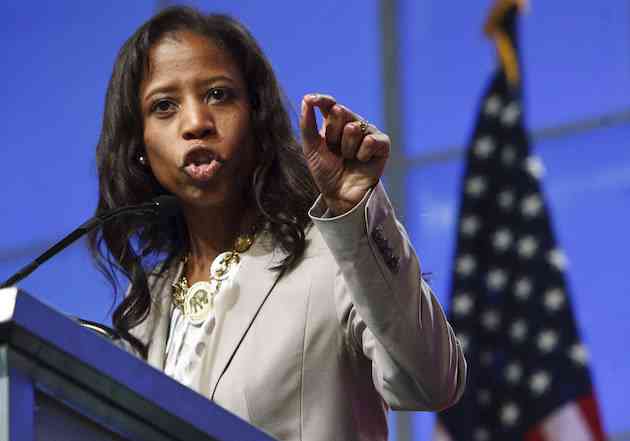
Mia Love
Data suggests that someone a lot higher profile (Rubio) has been unable to do so for Latinos.
Although, I’m sure the Republicans will have her onstage 12 hours a day in Tampa. Of course, that will be targeted at suburban white women more than at blacks; they’re smart enough to realize that Obama is going to get 90 percent of the black vote regardless.
And as long as there are state Republican parties hosting conventions where bullet-riddled outhouses decorated as Obama presidential libraries are seen as funny jokes, that will never change.
By John Y. Brown III, on Tue Jun 19, 2012 at 12:00 PM ET
What we do is only what we do. Not who we are. (Or why lawyers shouldn’t commit suicide)
As my teen kids get older I encourage them to find “their people”–the groups where they feel they belong and are most at home with. Their tribe, so …to speak. For me, one of the first such groups I found this kinship with was lawyers. I’m one myself, though non-practicing. I found that my interests, ways of thinking, sense of humor, social concerns and life aspirations lined up well with other lawyers–more so than say engineers, accountants, or medical professionals.
Lawyers are a quirky bunch. I joked the other day that one appeal of the profession is that it allows an individual to take his or her collective character defects and bill for them. It’s an exacting, hyper-competitive and idealized profession where each day you start off feeling like Perry Mason but finish the day feeling more like Melville’s Bartleby the Scrivener. And so it’s not a shock that attorney’s, as a group, suffer a notably higher than average rate of depression, addiction and suicide. It’s a profession that is both analytical and philosophical. Lawyers are trained to think more and feel less. And many eventually find themselves, on their bad days, on an intellectual precipice staring down, as Nietzsche observed, at the abyss. And the abyss can seem both all consuming and mocking. And since lawyers are not encouraged to ask for help themselves –since they aspire for the controlled hero role in their jobs– they are left alone to do as they are trained to do: To “think their way” out of a problem that was created, ironically, by over-thinking.
My mother tells me my favorite book as a young child was What People Do All Day by Richard Scarry. In the book it explains how everyone has a job to do during the day. Some are bakers, some are firemen, some our merchants, some are farmers, some are moms, some are repairmen, some are are doctors and some are lawyers. And so on. And each has some task or assignment for the day that makes everything kind of work together.
The reason I started this post was to link to this story —an eloquent reflection on on the legal profession by one of Kentucky’s wisest and most insightful practitioners, Supreme Court Justice Bill Cunningham, who recently lost yet another friend and colleague to suicide. Click here to read the story.
But I think I’d rather end this post on a more mundane note. Or rather a mundane hope. That lawyers, like the characters in Richard Scarry’s “What People Do All Day” realize they are only doing a job, completing a task, fulfilling a role that makes society somehow work. If it wasn’t being a lawyer they’d be doing some other job that makes society function. And that it’s just a job, like any other. And that they are just people too. Mostly just trying to stay busy all day.
And others in our busy little towns have jobs that can help those struggling with depression, addiction and thoughts of suicide. And that these people need to stay busy too–from people who need them and reach out for their help. Or our busy little towns won’t work so well.
For the same reasons that I didn’t apply the gaffe label to Barack Obama’s sanguine musings about the economy, or Bill Clinton’s rebelliousness on Democratic tax policy, I wouldn’t apply it to Jeb Bush’s recent pronouncements on the Republican Party. The former Florida governor, and the man who would have been elected president in 2000 if he had turned a couple of percentage points in his first Governor’s race, meant to put the force of his substantial appeal behind a warning about the erosion of a certain generational brand in the GOP. If not exactly a lament for Rockefeller type moderates, it was certainly a wishfulness for a strategic and political approach that coopted Democrats on themes like education and healthcare, and that sought active ownership of issues like immigration reform: in other words, the template that got two other members of the family elected president.
Conservative cynics will note that said template did not prevent one Bush from losing reelection, and another from a disastrous second term, and that the failings of both yielded the two most successful Democratic candidacies in the last three decades. But Bush is certainly right about the long view: a Romney presidency that wanted to make headway on entitlements, that wanted to make the authentically bold education reforms Romney is proposing a reality, and that wanted to end Obamacare without triggering a politically dangerous surge in the ranks of the uninsured, would need room to maneuver and navigate through implacable Democratic opposition. It is not heresy to envision a Romney term that breaks gridlock instead of perpetuating it.
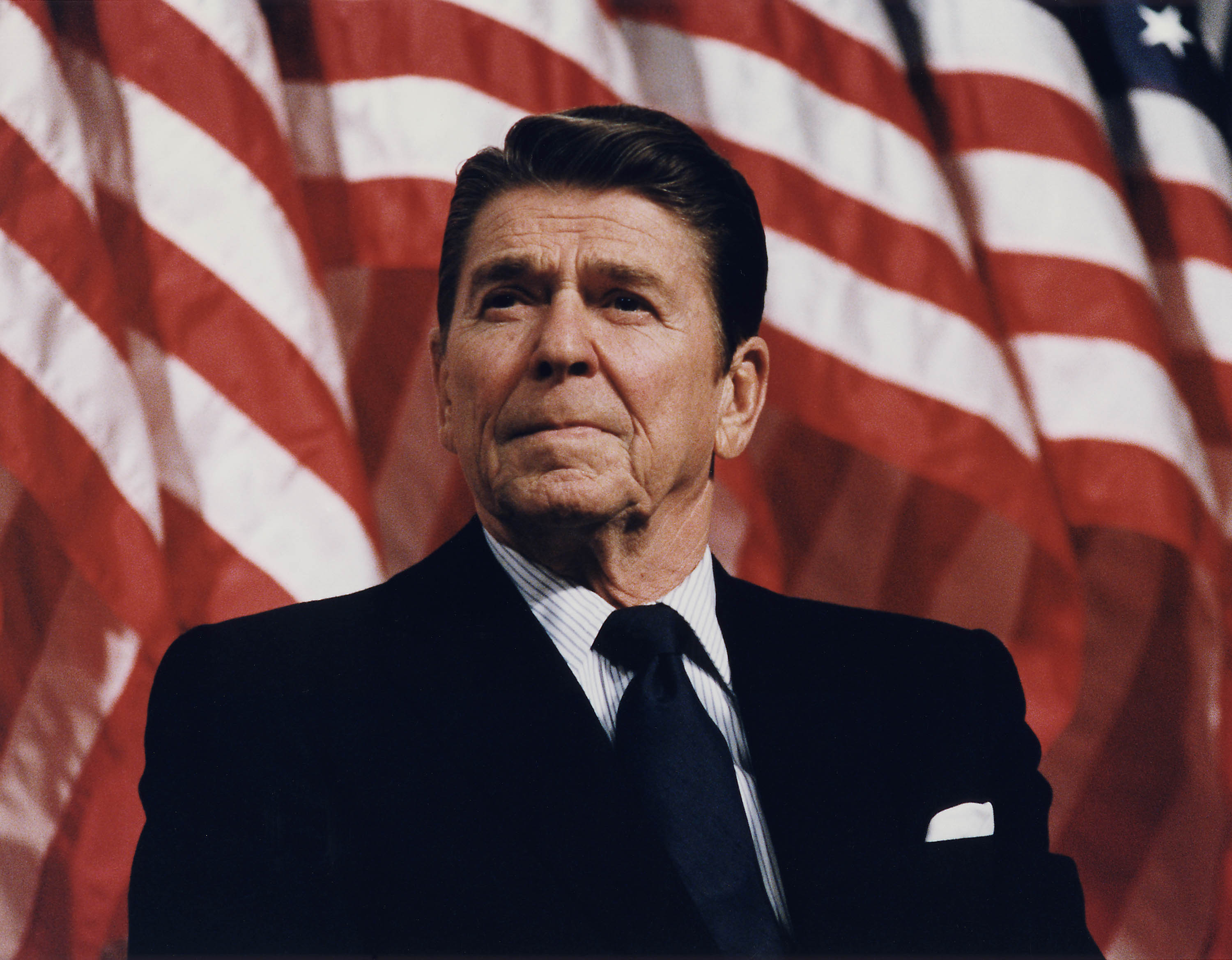
As to the part of the Bush address that made headlines, the “Reagan couldn’t survive in today’s Republican Party”, there is a value in a history lesson, and no one has told it better than Craig Shirley’s two year old book on the 1980 campaign, “Rendezvous With Destiny“. Shirley reconstructs the late seventies as anything but a monolithically conservative climate and the Republican Party as a fractious group that was hardly reconciled to Reagan’s candidacy. Edward Kennedy was the country’s most charismatic political star and promised unabashedly to revive an assertive liberalism that did not intend to be constrained by the era’s inflationary threat. Reagan’s opposition was credible and experienced and moderate alternatives like George HW Bush and Howard Baker commanded the loyalties of a significant element of the Republican funding base. Gerald Ford sat on the sidelines, but ran close with Reagan in Republican preference polls as late as the winter of 1980.
That Reagan won so comfortably seems like historical inevitability now, the natural progression of a country shedding itself of sixties style excess. Shirley’s masterful re-telling of that cycle describes something infinitely more inspiring and complex: a brilliantly tenacious politician who survived through the force of his own personality and who re-imagined conservatism as freedom rather than austerity, as a source of confidence rather than reproach. It does Reagan little justice to shrink him to artificial proportions by suggesting that he was only the sum of the elements of his platform; it shortchanges the ideological instability of the times to interpret Reagan’s victory as a simple instance of a candidate meeting his party’s and a majority of the country’s moods. More than any American figure since JFK, Reagan prospered by shaping that mood himself.
And the notion that Reagan’s governing style was the hallmark of an ambidextrous Great Compromiser who couldn’t thrive in today’s hyper-partisan atmosphere? It would amuse the air traffic controllers union he rolled over, and the congressional Democrats he bludgeoned in his first budget fights, and the communists he confronted in Europe and Central America. The deals Reagan did cut, over Social Security financing, for example, were imperfect then and now, but they didn’t define Reagan or diminish him with movement conservative because the times he was unmovable were actually the moments that built the public’s confidence. And the rebuilding of that confidence in the aftermath of the disastrous seventies is what installed him as a bipartisan presidential icon, much more than the specifics of a legislative track record.
Read the rest of… Artur Davis: Reagan Would Still Win


 Facebook will slowly undermine the effectiveness of negative political advertising.