By RP Staff, on Fri Apr 15, 2011 at 11:00 AM ET Our own Contributing RP, Jeff Smith, may have never dreamed that any good would come from his required stay at a federal prison. But the unlikeliest of environments proved to be an unexpected fountain of entrepreneurial spirit.
Jeff writes about what he learned in this week’s Inc. magazine:
B.J. was one of many fellow inmates with big plans for the future. He vowed that upon his release, he’d leave the dope game and fly straight. He’d recently purchased a porn website targeted at men with a fetish for women having sex on top of or inside luxury cars, with a special focus that explained his nickname. For just $10,000, he had purchased the domain name, the site design, and all of the necessary back-end work enabling financial transactions. The only component B.J. needed to supply were the women, and due to his incarceration, he’d named his 19-year-old son “vice president for personnel and talent development” and charged him with overseeing auditions. Who says a good old-fashioned family business can’t make it anymore?
It was my first week in a federal prison, and I was beginning to see that it was far more nuanced than the hotbed of sex, drugs, and violence depicted on television documentaries. It was teeming with ambitious, street-smart men, many who appear to have been very successful drug dealers on the outside, and some of whom possess business instincts as sharp as those of the CEOs who wined and dined me six months before. Using somewhat different jargon than you might hear at Wharton, they discussed business concepts such as promotional incentives (“I don’t never charge no first-time user”), quality control and new product launches (“you try anything new, you better have some longtime crackhead test your new shit”), territorial expansion (“Once Dude on the East Side got chalked, I had my dopeboys out on his corners befo’ that motherf—er’s body was cold”), and even barriers to entry (“Any motherf—er that wanna do bidness on the West Side know me and my boys ain’t scurred to cap his ass”).
Read the rest of Jeff’s insightful piece here.
By RP Staff, on Fri Apr 15, 2011 at 10:00 AM ET
When Barrack Obama’s parents wed in 1961, interracial marriage was illegal in more than a dozen states. Now, nearly 15% of marriages are “mixed unions.” Will the idea of gay marriage being illegal in most parts of the U.S. seem absolutely unbelievable in 50 years? Yes. Is it unbelievable today? Let us know your thoughts. [Marrying Out]
And speaking of the Mad Men days of familial attitudes and beliefs, new research shows that even some of today’s beliefs about family, marriage, divorce and children may be as misinformed as Don Draper is about what women really want (and the long term effects of heavy smoking and copious amounts of alcohol). [Pew Research Center]
In the Will the Stupid Royal Wedding Between Two Extraordinarily Propitious and Ridiculously Polite Society People EVER Be Over (And Why Do So Many Care) Department, everybody’s trying to make a buck (er, quid) off these two: [Telegraph]
A number of interesting personal essays about the nature of love and domesticity in the 21st Century: [Salon]
There are great movies about love, and then there are whacked-out great movies about love. One of our favorite scenes from one of our favorites. [Sexy Tango]
By Tom Allen, on Fri Apr 15, 2011 at 8:30 AM ET 
How does one recover from a passion, a deep abiding interest and engagement? From a loss, maybe—that can take some work. But I don’t ever want to recover from politics, though I won’t run again.
I may have had less trouble than some recovering from a loss, because I chose after 12 years in Congress to take a long-shot chance at a U.S. Senate seat against Sen. Susan Collins, an incumbent with an approval rating over 60 percent. Those odds, I realize even more today, don’t usually work out, and mine did not.
When my friend Bill Delahunt retired rather than run again for the Massachusetts 10th district, he had a simple explanation: “I have a two-year old granddaughter.” I get it. My wife and I have a three-year old grandson and a one-year old granddaughter—with another on the way.
That’s not much of a prescription for younger recovering politicians, but it works for some of us.
I do miss the people, my constituents in Maine, all over the state. People of all ages and backgrounds from all walks of life; the students, the retired, labor activists, businessmen and women, health care providers, the uninsured, veterans and war protesters, delegates to party conventions and, yes, even (or especially) supporters of mine at political fund-raisers.
I don’t miss the hours, though. I ran into Tom Davis, the respected Virginia Congressman, on the street in Washington in 2009, the year after we had both left Congress. He just looked at me and said, “Weekends!”
Since I work now as the CEO of the Association of American Publishers, the public policy advocacy organization for the book publishing industry, I spend half of most months in Washington. So I still see some of my friends in (and after 2010) out of Congress. Most of those that have left in the last few years have few regrets, because the atmosphere of congressional activity has become poisonous.
As a form of recovery, I am refusing to leave the arena entirely. Within days of losing my Senate race, I started writing a book which has evolved into an attempt to explain the deeper sources of the polarization that cripples our ability to make long-term strategic decisions about our most pressing public issues.
For me, the signature question of my experience was, “Do these guys believe what they are saying?” That’s what we Democrats asked each other when we heard, “Tax cuts pay for themselves,” or “We’ll be welcomed as liberators,” or “Climate science isn’t proven.” We fully understood that many of our arguments made no sense to Republicans. Why not?
I am exploring the attitudes and ideas that shape our thinking on a range of issues. In particular, I want to highlight the enduring tension in American culture and politics between individualism and community. The working title is Dangerous Convictions: Inside a Polarized Congress. 
But spring is coming, the snow is melting in Maine, the birds returning and soon the fish will be moving again. I will pick up my fly rod and go off with my wife, Diana, to one of our favorite Maine sporting camps, casting for brook trout and landlocked salmon during the day and listening to the loons at night.
I will finish the book this year, and like most authors, I live in the hope that it will make a difference in how Democrats and Republicans think about each other, and, just perhaps, work together for the common good.
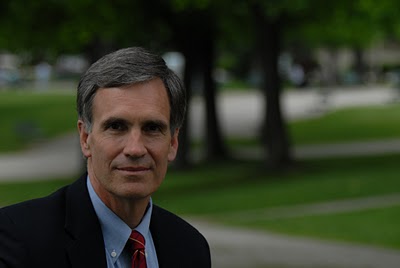
By RP Staff, on Thu Apr 14, 2011 at 5:00 PM ET We wrap up another very successful week (Our readership more than tripled since the week before) by introducing our sixth contributing recovering politician. He was a very successful Congressman who made a long-shot bid for the U.S. Senate against a popular incumbent, and fell a little short. Now in private life, he’s…blissful.
Read his story at 8:30 AM.
We also will feature another hilarious Friday Video Flashback, this time featuring our funniest contributing RP.
Join us tomorrow!
By Zack Adams, RP Staff, on Thu Apr 14, 2011 at 3:00 PM ET
ESPN published its weekly NASCAR power rankings, with Carl Edwards assuming the number 1 position. [ESPN]
More from ESPN, Terry Blount writes about drivers who know less and less about the technology and mechanics of the cars they drive than their predecessors. [ESPN]
Have you ever seen a Chinese man drive two bumper cars (simultaneously) through traffic?? You will have after you click this link! I like to imagine that the guy is completely oblivious to his actions being unusual at all. [autoblog]
For those of you interested in jumping into the new market of electric cars, MSNBC has a list of 10 that you can expect to be available at some point in 2011. [MSNBC]
By Jonathan Miller, on Thu Apr 14, 2011 at 12:30 PM ET The one thing that I miss least about leaving the political arena is the lying.
If there’s one quality that unites Democrats and Republicans, politicians and the press corps; it is their mutual propensity for, and expectation of, fabrication.
Often, it’s the small lies that wise and wary observers can sniff out before they do harm: Sure I’ll raise $10,000 for your campaign. You can count on me to support your cause in the legislature. My, you look way too young to be a grandmother! Don’t worry, I’ve had a vasectomy.
Most common is “political spin” which, all too regularly, is simply a euphemism for lying: Barack Obama is a Socialist. The Republicans want to hurt poor people.
Every now and then, you encounter stone-cold, pathological liars in the business. They’re rarer than the profession’s reputation, but I’ve run into too many elected officials, reporters, and political operatives whose every utterance I’ve learned to disbelieve or suffer the consequences. And I despise it.
But should we put all of these liars into jail? Of course not.
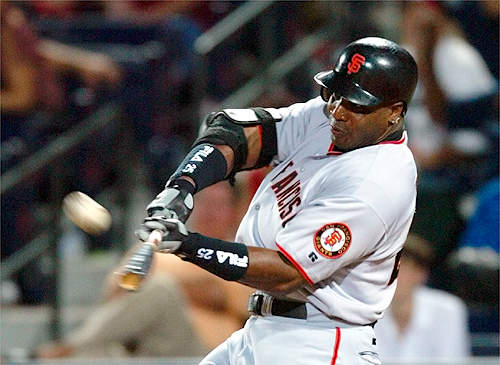
Yesterday, Barry Bonds was convicted for obstructing justice by lying to a grand jury about his personal steroid use. (Which begs the question — asked by Dashiell Bennett — how could Bonds be guilty of obstructing justice for lying when the perjury charges against him were rejected by the same jury?)
Note that Bonds was not convicted of — or even charged with — illegal use of steroids. His entire prosecution was based on his lying about his use, in an ultimately unsuccessful effort to protect his professional reputation.
Bonds is not the cleanest case because steroid use is illegal, and Bonds is such an unlikeable narcissist.
 The most famous example of this controversy is even more polarizing. Like Bonds, President Bill Clinton lied to the American people and gave controversial answers to a grand jury in order to protect his public reputation. But here, the underlying misbehavior was not illegal. As Republicans like Newt Gingrich have been quick to assert, the 1998 impeachment was not about the sexual affair — which is not a crime in the District of Columbia — but rather about the President’s lying about it before a grand jury. While Clinton’s verbal parsing may have technically immunized himself against a perjury conviction, it is clear that he was impeached by the House for lying about underlying behavior that wasn’t a crime. The most famous example of this controversy is even more polarizing. Like Bonds, President Bill Clinton lied to the American people and gave controversial answers to a grand jury in order to protect his public reputation. But here, the underlying misbehavior was not illegal. As Republicans like Newt Gingrich have been quick to assert, the 1998 impeachment was not about the sexual affair — which is not a crime in the District of Columbia — but rather about the President’s lying about it before a grand jury. While Clinton’s verbal parsing may have technically immunized himself against a perjury conviction, it is clear that he was impeached by the House for lying about underlying behavior that wasn’t a crime.
As a former member of the Clinton Administration, I’m biased; but I am comfortable saying that, without any partisan considerations, lying about a perfectly legal action should not be the basis of removal from office. And so did most Americans.
Let’s take an even cleaner case: that of contributing RP Jeff Smith. (Again, I admit bias: Jeff is my friend.) If you’ve read his stunningly candid story on this Web site, you know that Jeff was convicted of lying to federal investigators about whether he had knowledge of a scheme to distribute negative fliers about his campaign opponent. The underlying behavior may have violated campaign finance rules, but surely did not merit a jail sentence. And I argue, neither should his lying about it.
Did Jeff deserve to be punished? Absolutely. Stripped of his public office? Perhaps. But sentenced to serve a one-year term in a jail filled with violent offenders? I believe the punishment overwhelmingly exceeded the crime.
Of course, I am not arguing in any way that perjury and/or obstruction of justice should be considered misdemeanors or civil violations in every instance. Of course, lying to an authority about illegal activity, particularly of a violent nature, must be punished severely.
Nor am I arguing that there should be no punishment whatsoever in these circumstances. Lying to an authority is wrong; and the offender must be held accountable for his or her actions.
But someone who lies about a non-violent, non-criminal activity, in order to protect his reputation and family — a very natural, human instinct — should not be treated akin to a violent criminal.
I will soon be interviewing Jeff for RPTV to discuss this issue. But I’d like to know your opinion first: Does lying to a grand jury or an investigator about a legal activity merit a jail sentence? What are your suggestions for reform? Or do you like system the way it is?
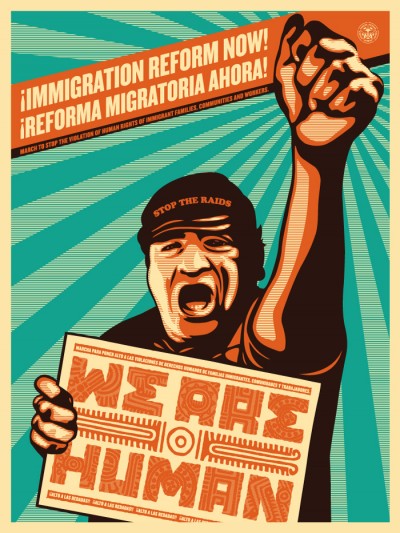
By RP Staff, on Thu Apr 14, 2011 at 12:00 PM ET The Politics of Immigration It’s extremely difficult to accurately estimate the number of people that cross into the United States each year from our southern neighbor. Most estimates are based on apprehension numbers from the border patrol. Clearly, it’s hard to extrapolate from those unlucky enough to have been caught and sent back over la frontera. The solution, it turns out, may be as simple as picking through the garbage. [Nature]
British Prime Minister David Cameron again makes controversial statements regarding immigrants in Great Britain. Apparently, immigrants in the UK have created a “kind of discomfort and disjointedness” in British communities. Whatever your political feelings about immigration are, only a British PM would classify animosity towards immigrants as “discomfort”—that’s what happens when you let your knickers down! [The Guardian]
In case you missed it, France formally banned on Monday the wearing of full veils (niqabs) in public. Although very few Muslim women actually wear full veils (erroneously called burqas by the French) in France, the French government under President Sarkozy (L’Americain) has determined that they are a threat to public safety. A safety issue? Caving to anti-immigrant extremists? Anti-Islam politics at its most cynical? Or a necessary safeguard against the loss of French identity? What do you think? [New York Times]
Hey, do you like Latino music, but get sick of eating chips and salsa to recycled Mariachi songs at your favorite taco stand? There’s mucho más música available from Latin America. Check out [Alt.Latino] ahora!
By Grant Smith, RP Staff, on Thu Apr 14, 2011 at 10:00 AM ET
Jon Stewart bids an emotional (and hilarious) farewell to Glenn Beck. [Hulu]
Kim Kardashian and international politics. [TMZ]
President Obama discusses the downside of fame. [Columbus Dispatch]
Facebook founder Mark Zuckerberg gets an assist from the Federal Courts. [Breitbart]
Steve Jobs agrees to an authorized biography. [Yahoo News]
By Lisa Miller, on Thu Apr 14, 2011 at 8:45 AM ET What I know for sure — now in my mid forties — is that my life doesn’t have to be an uphill climb.
I also know that my happiness — the enduring sort — is right here, all the time, just waiting for me to have it completely; and that it’s all about today, right now.
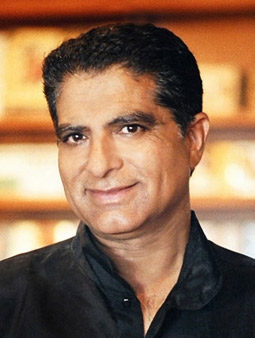
A mentor of mine named David, at the Chopra Center for Wellbeing in Carlsbad posted this on his Facebook page last week, and pretty much sums it up:
Accept this moment exactly as it is because every moment leading up to this very moment is exactly as it is. This can be a toughie but whether you like it or not, the past is carved in stone…however, this moment—this precious moment right now has infinite possibilities. What do you want to choose—the past or the now?
Because we live in a culture fed by the notion that we have to work, work, work, for what we “deserve,” we find ourselves conditioned to believe that we don’t deserve anything without the intellectual sweat, sweat, sweat and tears.
I have to include a quote from the Dahli Lama. When asked what surprised him most about humanity, he answered:
Man. Because he sacrifices his health in order to make money. Then he sacrifices his money in order to recuperate his health. And then he is so anxious about the future that he does not enjoy the present; the result being that he does not enjoy the present or the future; he lives as if he is never going to die; and then dies having never really lived.
It seems this notion of work has spilled over into our beliefs about happiness as well. But the truth is that this Western-culture approach is incomplete, isn’t it? It doesn’t acknowledge the truth that there is a deeper, more pervasive aspect of the human experience that is fed by the powerful natural inclination toward happiness.
When we are happy with our undertakings, they are a lot less like work and a lot more like fulfillment. We’ve all heard the adage, “Love your work and you’ll never work a day in your life.” And, as I think about this I can’t help but ask the question of how. Dr. Chopra puts it best in one of his recent new books, The Ultimate Happiness Prescription:
 The purpose of life is the expansion of happiness. Happiness is the goal of every other goal. Most people are under the impression that happiness comes from becoming successful, accumulating wealth, being healthy, and having good relationships. There is certainly enormous social pressure to believe that these accomplishments are the same as achieving happiness. However, this is a mistake. Success, wealth, good health, and nurturing relationships are by-products of happiness, not the cause. The purpose of life is the expansion of happiness. Happiness is the goal of every other goal. Most people are under the impression that happiness comes from becoming successful, accumulating wealth, being healthy, and having good relationships. There is certainly enormous social pressure to believe that these accomplishments are the same as achieving happiness. However, this is a mistake. Success, wealth, good health, and nurturing relationships are by-products of happiness, not the cause.
Not the cause!
I’ve actually found this to be true: The more time I spend engaged in creative, fulfilling tasks, the more I seem to attract into my life opportunities that keep allowing me to feel creative and fulfilled.
Teaching is a good example of this. I love teaching and have a life long history of it in various ways: from teaching my 5 year old sister to read when I was just 9, to my Sunday School duties with the kindergarten class at 14, to arts camp directorships, to creating mom/daughter workshops as an adult.
The more I’ve engaged in teacher training opportunities just because they feel great, the more opportunities have landed in my lap that feel great. I’m now teaching yoga and mediation to adults and kids; and I’ve gotta say, I didn’t plan it, but it keeps me yoga-ing and meditating myself, which brings the by-product of happiness in general. Ask my family.
And frankly, the better I feel about the bits of time here and there (I’ve been mothering daughters for 17 years; and have been married to a recovering politician for five more than that) that are creative and fun, the more everything else feels fine, including cleaning out the garage and cooking dinner.
Louise Hay puts it beautifuly in You Can Heal Your Life:
 Click on the book cover to sample. The Universe totally supports us in every thought we choose to think and believe. Put another way, our subconscious mind accepts whatever we choose to believe and so what I believe about myself and my lifew becomes true for me. What you choose to think about yourself and about life becomes true for you. And we have unlimited choices about what we can think.
Doesn’t it make sense then to think about enduring happiness?
And like my favorite medicine woman and teacher, Rosalyn Bruyere always says:
“Releasing negative feelings never works, you have to flush them out with good ones.”
Try it! What makes your heart sing? What do you yearn to do, play with, seek? When you think about waking up in the morning, which activities would make you excited to get up and go? In which experiences do you lose track of time?
The answers are the seeds of enduring happiness, and they are as natural to us as breathing, so why not, eh?
It wasn’t too long ago that I was working really hard for happiness–it was an uphill climb and I could never fully appreciate the view along the way. Funny, I’m kinda craving a little mountaineering now if you must know. The real thing. But how’s this for life; I’m planning to climb a a few mountains because it seems like fun (a nice one, with a hiking trail!), and because the air will smell great, and because I’ll enjoy it.
How are you enjoying the mountain, the air, the view, your life? Share your answers here so that others can be inspired.
Namaste and chocolate to yuh.
By Jonathan Miller, on Wed Apr 13, 2011 at 5:00 PM ET Thursday means a new Friend of RP, and this one turns out to be the RP’s closest friend. In fact she’s been married to the RP for more than 21 years. Tune in for all the juicy scoop. Or maybe some profound lessons from a recovering political wife.
We’ll also, of course, have some Weekly Web Gems, and some other great surprises.
See you tomorrow.
|
The Recovering Politician Bookstore
|