By Jeff Smith, on Tue Jan 17, 2012 at 2:00 PM ET  Jeff Smith‘s First Response Jeff Smith‘s First Response
[The RP’s Provocation; Jason Atkinson’s Rebuttal #1; The RP’s First Defense: Jason Atkinson’s First Response; Artur Davis’ Rebuttal #2; The RP’s Second Defense; Artur Davis’ First Response; Ron Granieri’s Rebuttal #3; Jeff Smith’s Rebuttal #4; The RP’s Third Defense; Artur Davis’ Second Response]
Some interesting points from Jonathan and Artur, and some fancy philosophy as well.
And I grant Artur’s point – having represented some of the nation’s poorest and violent census tracts I agree that people just want the dealers off the streets.
And when our nation has the political will to make that happen instead of spending a trillion dollars in the Middle East this past decade, then I’m prepared to entertain arguments about reforming the criminal justice system.
Read the rest of…
The RPs Debate Legalizing Marijuana: Jeff Smith Responds
By Ronald J. Granieri, on Tue Jan 17, 2012 at 12:00 PM ET  Ron Granieri: Rebuttal #3 Ron Granieri: Rebuttal #3
[The RP’s Provocation; Jason Atkinson’s Rebuttal #1; The RP’s First Defense: Jason Atkinson’s First Response; Artur Davis’ Rebuttal #2; The RP’s Second Defense; Artur Davis’ First Response]
I have avoided getting into this talk because, amusingly enough, I really do not have a clear opinion.
Like the RP, I have never really smoked weed, but know plenty of people who have and who have not turned into the giggling dope fiends of Reefer Madness. I appreciate the arguments about enforcing existing law, and also the dangers of gateway drugs, but I can also see the argument that decriminalizing small amounts for personal use and regulating the trade would actually be a net plus for the treasury (combining a new tax revenue stream and lower police costs).
I do think, however, that the debate tends to gloss over the important point of social costs. Legalizing weed will require plenty of regulation, and the need for such regulations tends to get lost in all the talk about how awesome it will be to smoke ’em if you got ’em. Proponents of legalization love to point out all the damage that is done by alcohol, and they have a point.
Read the rest of…
The RPs Debate Legalizing Marijuana: Ron Granieri Rebuts
By Jonathan Miller, on Tue Jan 17, 2012 at 9:30 AM ET The RP‘s First Defense
[The RP’s Provocation; Jason Atkinson’s Rebuttal #1]
Jason Atkinson makes a powerful indictment of legalized medicinal marijuana from his unique vantage point as a legislator in a state (Oregon) that has gone this route.
I couldn’t agree more. As I argued in my initial post, legalizing medical marijuana is a half-measure that while well-intention creates some enormous complications for law enforcement and extraordinary challenges for physicians. That’s why in another state that has legalized medicinal marijuana, the California Medical Association has urged its legislature to move to full legalization.
This illustrates one of the key lessons I’ve learned from the sausage-making factory that is lawmaking. The middle-of-the-road approach that might test best in the polls can often have unintended consequences that create a situation that is worse than the original status quo. Jason vividly illustrates the consequences that Albert Camus spoke of when he said, “good intentions may do as much harm as malevolence if they lack understanding.”
Where I disagree with Jason is in his conclusion that the problems associated with medicinal marijuana suggest that full legalization would fail as well. Indeed, the horrible developments Jason outlines — “patients” gaming the system; medical cards being counterfeited; local law enforcement overwhelmed with violations; drug cartels moving in to handle the illegal traffic — all would be mitigated by full legalization.
If we implement a fully-legal, strictly-regulated domestic marijuana industry, we eliminate all of the crimes and frauds associated with trying to get around the proofs of medical need. No system will be perfect, and we will never be able to eliminate illegal activity. But the folks who fear legalization the most are the mobs and cartels who are getting rich as long as the drug remains legal. That’s the most important lesson the country learned in the Prohibition Era.
Jason does raise one concern that gnaws at me — the notion that marijuana is a gateway drug, a slippery slope to the use of harder drugs which I strongly agree must remain illegal. I’ve spoken to addicts too, and some suggest that the transition from pot to cocaine was made smoother by the fact that both were illegal — if I can handle one illegal drug, I can handle all. Under that reasoning, if we legalize cannabis, the connection is eliminated.
I concede I could be wrong about the gateway issue, and I would love to see some scientific evidence on the issue. But regardless, I still believe the equities fall in favor of legalizing the drug.
By Jason Atkinson, on Tue Jan 17, 2012 at 9:00 AM ET  Jason Atkinson: Rebuttal #1 Jason Atkinson: Rebuttal #1
[Read The RP’s Provocation]
Pot is already legal, or at least hard to enforce beyond medical cardholders, in Oregon. I used to joke in my state camouflaged PVC pipe was sold in local hardware stores. (For those of you who don’t watch “Moonshiners” camo PVC is harder to see from the air.) Sadly though, when the voter’s legalized marijuana has almost become more than jokes.
Massive greenhouses have popped up across the landscape like a teenagers first outbreak of acne. What is not seen everyday is the hundreds of plants being grown with a single marijuana medical card or the thousands of plants being grown illegally by the cartels in the forests.
I understand the arguments from pain-management and from the economics of cutting the profit motive out, however those positions are too narrow for the reality of the modern herb industry:
- Marijuana is a gateway drug. Ask anyone in recovery.
- People on drugs, legal or illegal, should not be driving. From the highway to a forklift: Society pays the price.
- Medical cards are easier to get than fake ids. The ease of getting medical cards is the biggest problem and the hardest to get under control.
- People with grow cards can grow anywhere.
- Mexican drug cartels are using the illegal system to grow and distribute. (Do you think the cartel’s care about your Grandma’s glaucoma? Me neither.)
My local Sherriff does not have jurisdiction, or the manpower to even cruse the legal grow sites, let alone the illegal ones seen from air. Moreover, local law enforcement has no idea when they check on a complaint if they are walking into drug-induced hostility. DEA is trying to crack down, however every instance of a pot bust is with someone who has a card. Citizens call me daily complaining about the rental house in their neighborhood being used as a grow site and distribution.
Every one of these issues we’ve tried to change the law, but to not avail. The pot lobby is strong, well funded, and makes an emotional case for chronic pain. If it were only limited to chronic pain, needing a doctors prescription and manufactured like the drug that it is.
Look man, the Dude Abided- without a card. Lenny Kravitz confessed to Piers Morgan last month he walked around in “wall of fuzz” before he took action to get off the stuff. True the cat is out of the bag. Governments on the left coast need to step in.
However, I am hard pressed to call it a moral choice when the societal consequences are so overwhelming. This debate is akin to state’s getting into, then addicted to gambling. When morality comes crashing in that gambling hurts the poor, government’s answer is “gambling addiction help awareness TV commercials” paid for by lottery revenues.
By Jonathan Miller, on Tue Jan 17, 2012 at 8:30 AM ET Last week, we began a new tradition at The Recovering Politician: a great virtual debate among our recovering politicians; with provocations, rebuttals, responses, and defenses. This week, we ramped up the controversy level by tackling a highly explosive topic: legalizing marijuana. The RP starts off with his provocative article arguing the moral case for legalized cannabis. Tune in every half hour to read what other RPs have to say.
SPOILER ALERT: There will be fireworks.
This week, the contributing RPs take on The RP’s recent controversial call for legalizing marijuana in The Huffington Post. (As well as a Kentucky-centric version dedicated to Gatewood Galbraith, published in the Lexington Herald-Leader).
The RP’s Provocation:
While a recent Gallup poll revealed that a majority of Americans support legalizing marijuana, and Ron Paul — a proponent — has run well in the early GOP presidential primaries, most mainstream politicians still refuse to touch the subject, and many journalists continue to refer to legalization as a “radical” position.
It’s no wonder. The loudest voices for reform usually come from the political margins: the “hippie” Far Left and the libertarian Far Right. And while emanating from different directions, the two extremes share a similar credo: An out-of-control government has no business telling me what I can ingest.
A politically-influential cross-section of Americans, however, disagree. Many associate pot advocacy with the “anything goes” counter-culture of the 1970s that they blame for the decline of personal responsibility. Others worry that the logical extension of the philosophy could lead to legalizing “harder” drugs, prostitution, even polygamy. All of them — liberals, moderates, and conservatives — believe that there must be some moral standards established to guide public policy.
I’m part of that moral majority. But unlike Jerry Falwell’s version, my values system is based on the multi-religious mandate to “love your neighbor as yourself.” I’ve even written a book, The Compassionate Community, which applies Bible lessons and other religions’ texts to advocate for progressive policies that promote the common good.
And I’ve recently concluded that these same enduring moral values compel me to support legalizing marijuana.
Read the rest of…
The RPs Debate Legalizing Marijuana: The RP Provokes
By Grant Smith, RP Staff, on Fri Jan 13, 2012 at 3:00 PM ET
Warren Buffett challenges U.S. Senator Mitch McConnell to help reduce the Federal budget deficit. [CNBC]
Why the Federal government should stay out of the Google vs. Twitter search spat. [Forbes]
Are layoffs coming at Microsoft? [Fortune]
By Jonathan Miller, on Thu Jan 12, 2012 at 8:30 AM ET The RP has written his most provocative piece yet — He argues in favor of legalizing marijuana. Check out an excerpt from his Huffington Post column published this morning:
While a recent Gallup poll revealed that a majority of Americans support legalizing marijuana, and Ron Paul — a proponent — has run well in the early GOP presidential primaries, most mainstream politicians still refuse to touch the subject, and many journalists continue to refer to legalization as a “radical” position.
It’s no wonder. The loudest voices for reform usually come from the political margins: the “hippie” Far Left and the libertarian Far Right. And while emanating from different directions, the two extremes share a similar credo: An out-of-control government has no business telling me what I can ingest.
A politically-influential cross-section of Americans, however, disagree. Many associate pot advocacy with the “anything goes” counter-culture of the 1970s that they blame for the decline of personal responsibility. Others worry that the logical extension of the philosophy could lead to legalizing “harder” drugs, prostitution, even polygamy. All of them — liberals, moderates, and conservatives — believe that there must be some moral standards established to guide public policy.
I’m part of that moral majority. But unlike Jerry Falwell’s version, my values system is based on the multi-religious mandate to “love your neighbor as yourself.” I’ve even written a book, The Compassionate Community, which applies Bible lessons and other religions’ texts to advocate for progressive policies that promote the common good.
And I’ve recently concluded that these same enduring moral values compel me to support legalizing marijuana.
Click here to read the full piece, “The Moral Case for Legalizing Marijuana”
================
What say you, RP Nation?
Please vote in the Votifi Daily Poll in the far right column of this Web site. And let us know your opinions in the Comments section below:
By Jason Atkinson, on Mon Jan 9, 2012 at 3:30 PM ET  Jason Atkinson: Rebuttal #7 Jason Atkinson: Rebuttal #7
[John Y.’s Provocation; The RP’s Rebuttal #1; Ron Granieri’s Rebuttal #2; Rod Jetton’s Rebuttal #3; Krystal Ball’s Rebuttal #4; John Y.’s First Defense; Rod Jetton’s Response #1; Jeff Smith’s Rebuttal #5; John Y.’s Second Defense; Ron Granieri’s Response #1; John Y.’s Third Defense; Artur Davis’ Rebuttal #6; Jeff Smith’s Response #1; Rod Jetton’s Response #2]
Some people just deserve good things in life. Ya, we know Mitt’s daddy owns the car dealership and got a Corvette for his 16th birthday, but after all, he looks like the quarterback. He is not like the rest of the kids in shop class, English, debate or pep-band. He is just a little better. He doesn’t have to one-up, he was born up.
In 1920, Warren Harding looked like Presidential timber too and campaigned on the thriller banner of “normalcy.” Some people just “got it go’n on.” Not like the rest of us who have had to pull our selves up the hard way, make hard calls, and pay the personal price for our political decisions. Mitt has always had someone else pay, or someone else’s money to pay. Mitt Harding has the look and was smart enough to choose the right parents. People want to have their picture taken with him, but don’t really want to talk to him, akin to taking picture at a car show.
So back to Harding: He looked like President, so let’s run him for President. The key to that borrowed historical back room quote is “who” is part of “let’s?” History showed us who with Teapot Dome.
Read the rest of…
The RPs Debate Presidential Leadership: Jason Atkinson Rebuts
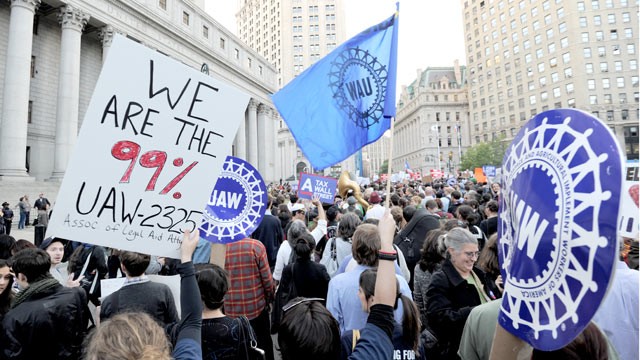
By RP Nation, on Tue Jan 3, 2012 at 12:30 PM ET For decades the 1% has managed to focus our attention on those beneath us financially.
For example, President Clinton’s Welfare-to-Work initiative in 1999 kept us from looking critically at the 1%.
In only a couple of months OWS (Occupy Wall Street) has turned our attention completely around, from looking down on the poor to looking down on the super rich.
Those supporting the 1 % are attempting to denigrate the OWS in many ways, including calling out law enforcement to support them and disperse those who are calling out for justice: economic, social and political.
Our Constitution sides with the 99%, saying that “Congress shall make no law prohibiting the right of the people peaceably to assemble, and to petition the government for a redress of grievances.” (No, it doesn’t mention tents.)
Had the OWS not existed when the Bank of America added a $5.00 fee to credit card holders, the public would have grumbled but would have succumbed. And the same with Verizon’s “Convenience Fee” and November’s “Bank Transfer Day.” But the 99% has encouraged the public to revolt.
Remember, our “Civil Rights” were not successfully achieved in two months.
By Grant Smith, RP Staff, on Fri Dec 30, 2011 at 3:00 PM ET
REDDIT users target supporters of SOPA/PIPA legislation. [Forbes]
A look back at 2011: Taxes, bailouts, and American idiots. [Fortune]
Blocking the Strait of Hormuz would not be nearly as easy as Iran claims. [CNBC]
|
The Recovering Politician Bookstore
|