By John Y. Brown III, on Mon Mar 4, 2013 at 12:00 PM ET
So, is it better to grow up or stay a boy (or girl) forever?
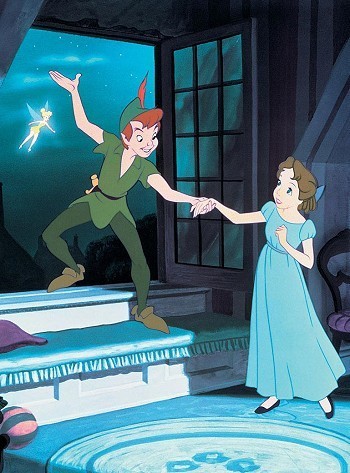
Watching my daughter this weekend in the play Peter Pan made me a proud dad (so score one–a very big one–for growing up).
But focusing on the merits of the characters, Wendy vs Peter Pan, had me leaning ever-so-slightly in favor of Peter at the end of the play.
I mean, let’s look at their legacies. Wendy had a nice run for several decades when the play was first published and performed. She’s viewed today as a “good girl” and “model daughter.” More Jan than Marcia in Brady Bunch terms. But has she ever had a book written about her neurosis titled “The Wendy Syndrome”?
Nope.
Do we know who played Wendy opposite who played Peter Pan?
Nah. We just know Sandy Duncan played Peter.
And what about having your own line of peanut butter?
Ever heard of Wendy’s peanut butter?
No. Never happened.
And don’t try slipping in Hamburgers. Different Wendy. Different family. I saw her father in the play this weekend and he looks nothing like Dave Thomas.
So, on balance, would the world be better off if Wendy caved and never grew up?
Who’s to say? We would at least probably have another pop-psychology book and additional brand of peanut butter. But as the Wendys of the world would quickly –and correctly–point out, we have plenty of pop-psych books and peanut butter as it is and don’t need more. And note that Wendy grew up to have a nice family in a middle upper class neighborhood.
That’s all true of course. But the Peter Pans of the world would quickly note, Peter has an entourage of lost boys –just like the awesome HBO series! And, of course, Peter is always the last one to bow and gets the most applause –after flying in for his final bow as he drops fairy dust on the audience who is cheering him on.
And you got to admit –even if you are a Wendy—that may not be very mature, but it is pretty cool.
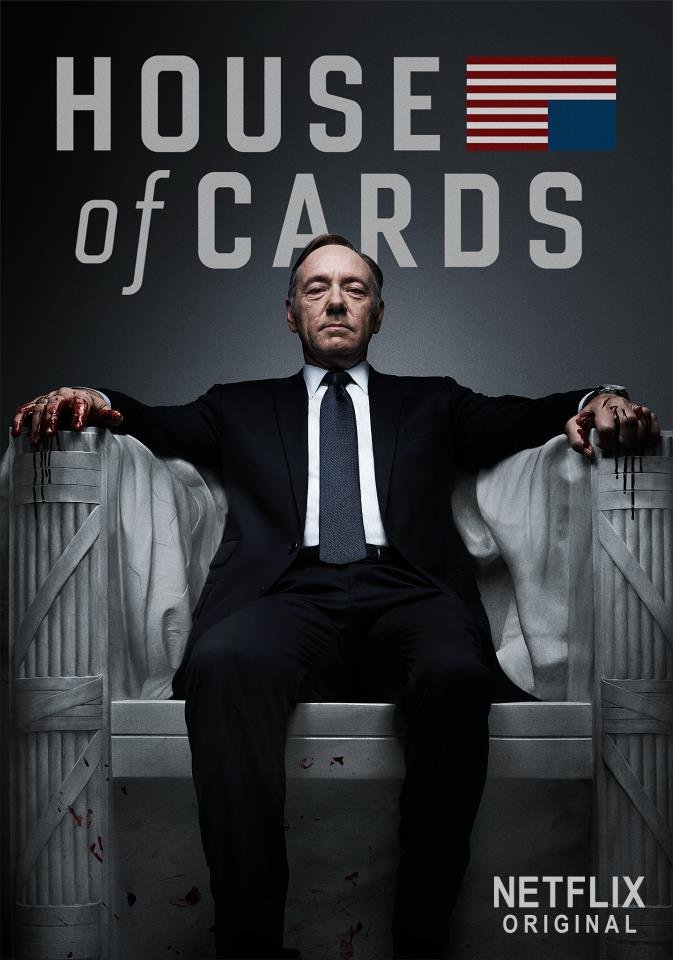
In one exemplary scene in Beau Willimon’s highly addictive ‘House of Cards’ series, House Majority Whip Frank Underwood visits his sometime paramour, ambitious reporter Zoe Barnes. Within 20 seconds of his climax, she demands the vote count on a pending bill. Frank resists, and a mild disagreement ensues during which he asserts that, despite being twice her age, she “always seems to leave satisfied.”
“How do you know I’m not faking it?” asks Zoe. “Are you?” he asks.
“Doesn’t it say a lot that you can’t tell?” she replies.
Several ‘House of Cards’ reviewers have alluded to the show’s verisimilitude. And the New York Times just started a series about the realism (or not) of the show’s portrayal of journalism. But I haven’t seen any current or ex-legislator analyze its depiction of legislative life – the hits and the misses. As with sex, it’s not always easy to know what’s real and what isn’t.
As a former lawmaker and Missouri Congressional candidate, I’m somewhat acquainted with this world. Let me try to clear some of this up.
Here’s what the show gets right
There’s a thin line between transactional sex and actual prostitution.
In the culmination of a first season theme, an impassive Zoe tells post-coital Frank, “As long as we’re clear about what this is, I can play the whore. Now pay me” (with information). Although I doubt the terms of most arrangements are quite that explicit, I saw transactional sex as a legislator. However, the journalist/legislator pair strikes me as unlikely; legislator/staff and legislator/lobbyist were more frequent pairings, and you could often see the dividends it paid for both parties.
District life and legislative life occupy parallel universes – but when problems arise, district issues come first.
Often legislators face simultaneous crises in parallel spheres – one policy-oriented, one constituent-related. Successful legislators – no matter how high-ranking – address district crises first. An example came in Episode 3 when a young constituent of Frank’s dies in a car accident after being distracted by a phallic roadside sculpture whose erection Frank had supported. A local official who covets Frank’s seat pushes the girl’s parents to sue, dragging Frank into the mess. Despite being deep in Hill negotiations on a critical bill, Frank spends two days back home negotiating a settlement. The untimely death of a constituent may not seem capable of bringing the nation’s business to a halt. But savvy legislators understand that absent re-election, no other goal can be fulfilled.
Being a legislator requires extraordinary multitasking skills.
These days, everyone multitasks. But legislators are often required to multitask on a more emotionally and/or intellectually demanding level. Viewers saw a dramatic example of this during the above storyline, when Frank negotiates with the chief lobbyist for the teachers’ unions while making a tray of sandwiches he was about to share with the bereaved parents. He threads the needle, giving just enough ground to keep the negotiations alive, while maintaining focus on his distraught guests.
Constituents do not mince words.
After Rep. Peter Russo takes a dive and allows a military base in his district to close without putting up a fight, he returns to his office to find a deluge of hate email, with constituents calling him, for instance, a traitorous piece of shit. I can promise that I was called that and far worse by constituents, as were many of my close colleagues. Indeed, a bitter enemy of mine only wrote me one pleasant email in my career – the day I resigned.
Like golf, politics is a game of inches.
The shift of just two votes on Russo’s job creation bill leads to a series of events which spiral out of control, leading to tragedy. Had those two fence-sitting votes gone the other way, the bill would’ve passed and Russo would’ve been a hero back in his district, rather than an embarrassment. I can think of several presidents – or near-presidents – who could confirm this. Kennedy beat Nixon by less than one vote per precinct. George W. Bush beat Al Gore by a butterfly ballot. And Clinton was impeached because of a dress that wasn’t laundered in a timely fashion.
Here’s what they get wrong
Except in very intimate settings, legislators do not tie campaign donations to pending legislation in such bald terms.
As Episode 9 opens, Frank convenes 15 to 20 legislators – along with a dozen staffers – to push Russo’s job creation bill. When asked to explain their apprehensions, one legislator says, “I’ve already been approached by Sancorp with re-election funds.” Another chimes in: “They offered me a donation package with eight different drilling companies.”
Any legislator who said something like this would appear to be for sale – and could be risking serious legal trouble if they ultimately voted with the company in question. With few exceptions, legislators publicly pride themselves on their inability to be bought, and would not – especially in a room of 30 people, including others’ staff – blurt out links between campaign donations and specific legislation, even if they know such links exist. A legislator would either say it privately to another trusted legislator or aide or, in a larger group, would couch it in acceptable terms, code language such as “Sancorp approached me as well, and made it clear that this bill is extremely important to them.” Pork-barrel bills that reach the floor offer funds to at least 218 districts.
Read the rest of… Jeff Smith: What “House Of Cards” Gets Right — And What It Doesn’t
If politics is just like show business, Ashley Judd’s possible run for senate could be a success. What does it take to make the transition and will we take her seriously?
By John Y. Brown III, on Mon Feb 25, 2013 at 9:15 AM ET
The fall that launched a thousand applauses.
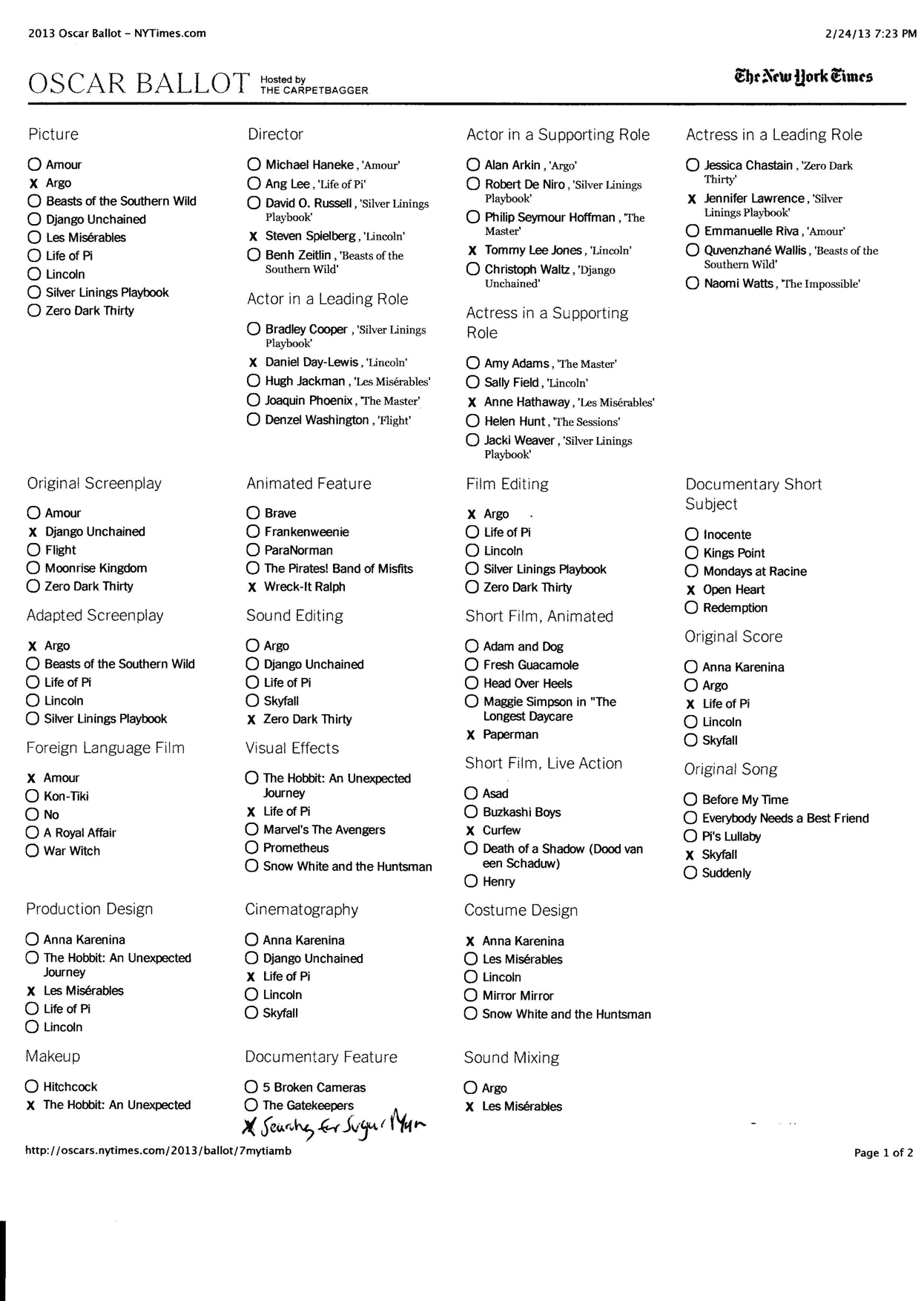
Jennifer Lawrence’s fall will become an Oscar trivia question and a perfectly defining moment for one of our greatest actresses.
What makes Jennifer Lawrence so appealing is her accessibility. What makes her so compelling is her naturalness. And what makes her acting so convincing is her authenticity.
No actress I can think of could fall as they ascend the steps to receive their Oscar without being embarrassed and lightly ridiculed. Because of the vanity quotient Hollywood demands.
But tonight we saw an exception. A lady who falls graciously and gracefully “up hill” –again. She fell….as we would fall (we relate) and she gets up for us naturally, authentically, and accessibly– and wasn’t acting at all. And brings this same transparency, energy and charisma to her acting roles.
Tomorrow I can even imagine a few young female fans practicing falling upstairs with the charming aplomb of their heroine.
The acting talent Jennifer Lawrence has isn’t something uniquely special or even uniquely extraordinary. It is, in my view, rather uniquely ordinary–and uniquely refreshing. It’s a realness and substantive lightness that is unaffected and vanity-free.
Here’s wishing her well and hoping she never loses the great gift that allows her to fall uphill. And that she keep doing so.
By John Y. Brown III, on Mon Feb 18, 2013 at 3:00 PM ET
I saw the movie Side Effects last night
A powerful and timely critique if our country’s over reliance on the pharmaceutical industry –and the literal and figurative side effects we experience, and try to deny or (in this film’s case, try to manipulate).
The film refers to about a dozen popular–and actual—mainstream meds prescribed today (from Zoloft to Adderall). But the tragedy in the movie plot centers around a drug called Ablixa.
We are told it is a new drug just approved by the FDA but not told it, unlike other meds referenced, is a fictional drug. Ablixa supposedly is a miracle drug in the film but with potentially worrisome side effects.
And so, we are left to wonder what the ultimate impact if this movie will be on our medicated society–partly healed, partly experimental volunteers, partly risking side effects impossible to rationally justify. Or whether the script option available to our mental health doctors will become once again more of the brilliant medical tool originally intended or increasingly the too-easy crutch to short-circuit dealing with complicated patients and circumstances.
And, finally, and perhaps most poignantly, whether “customers” (aka patients) will stop relying more on the “pitch” of pharmaceutical commercials to deliver miracles than on their doctors to deliver slow but real improvements.
If my reaction is indicative, the answer to all these questions is less encouraging than I had hoped.
I went home and Googled Ablixa —to see if it was a medication I should learn more about. Only to learn it is a fictional drug. And then –chastened and disappointed in myself—checking to see if any new Ablixa-like meds had come out recently. Just in case.
My guess is that if the Netflix political drama “House of Cards” had improbably gotten the backing of a network, it would have swiftly drowned at the hand of Nielsen ratings, and that hiatus or cancellation might have set in before Frank Underwood got to offer his sermon on the nature of forgiveness in a South Carolina church. There is no pop heroine like Kerry Washington’s Olivia Pope (“Scandal”) for a particular audience demographic to root for. And there is no precedent for ratings behind a plotline that doesn’t just include but hinges on the minutiae of governmental details. There may be the requisite sex and adultery and prostitution but they are for major stretches overshadowed with much grayer material: a would-be secretary of state whose nomination unravels over his reference as a college newspaper editor to “illegal occupied Israeli territories” and an impasse over performance metrics in an education bill.
So, this is a show that is destined to be read about more than it is actually watched (the number of viewing souls who know the toxic nature of testing standards for teachers unions and who get that the combination of illegal and occupied are fighting words is, thankfully, small). And then there is the inconvenience for a subscribed series depending on buzz that much of its fan base will not shout their allegiance from the rooftops, or the cultural equivalent that is Facebook: the show’s core of politically engaged people is culturally disposed to deny that it has time to watch television, much less engage in the binge viewing that a simultaneous download of the whole season invites.
But for the politically obsessed collective of Hill staffers, journalists, campaign operatives and ex politicians who have already watched, a decisive verdict: for all of the clichés it spouts about politicians, for all of the little implausible plot engines it relies on (of course, nothing so fanciful as the idea of a first lady enduring a presidential sex scandal and making her own run for president or a black state senator riding a speech to the White House in four years time) this is uncommonly good stuff, for the risks it executes and the vivid story it tells about things that are not inherently vivid.
The central figure, an oily Southern congressman named Frank Underwood (Kevin Spacey), is nothing new, nor are his penchants for lowball tactics and outwitting his peers by playing to their vanity or weaknesses. But the novelty is that for all 13 episodes, Underwood stays an unredeemed rogue–not the morally ambiguous striver who starts noble and turns bad, not the hero who has a dark side that he is trying to suppress, but an unmitigated, blissful damager of people. There is a deliberateness to the fact that for all of the specific policy detail that embroiders the narrative, there is never a moment when Underwood shows a flicker of interest in any of it for its own sake. And if David Fincher trusts his audience to wrestle with an array of shifting events and relationships (that would blur had these episodes been laid out over three months) he ventures even more faith in its capacity to stay absorbed in a villain whose only source of suspense is how low he will descend.
Underwood is not the only character whom the audience has to engage while being turned off by their sins. All of his intimates are caught in their own level of moral vacancy: Underwood’s wife Claire (Robin Wright), who cashes in on her husband’s status to run a not-for-profit whose agenda she will sell out without much compunction, just for the thrill of a score; the loyal chief of staff (Michael Kelley) who is Underwood’s henchman and whose only prize is a place in the orbit of a boss who keeps him at arm’s length and calls him by his last name; a young congressman, Peter Russo (Corey Stoll, brilliantly erasing the memory of a weak stint on a failed “Law and Order” remake), whose past is ridiculously compromised and whose only real interest in his career is that it seems to provide an organizing principle for his day; the young reporter (Kate Mara) who entangles herself professionally and sexually with Underwood to fuel her own career, and whose snideness and ethical carelessness make her almost as unsympathetic as Underwood. The relative paragons of decency: a young aide to Russo who tries to save him from his spiral, is still framed as a staffer covertly sleeping with her boss to climb the office ladder; another, a high level aide to Claire Underwood who acknowledges lying about the terms of her dismissal to exact revenge for her boss’s horse-trading with a lobbyist.
What producer David Fincher assumes is that a group of people wallowing in dirt and dysfunction are still watchable. Of course, he is right about that, as television routinely establishes, but Fincher’s gamble is that for most of this series, his characters’ routines are their own contained universe with no one to root for, no mystery to solve, and none of the contrived simplicity of a single narrative conflict.
In that way, “House of Cards” takes a chance that even the notably risk-taking “Homeland” doesn’t: for example, for 11 episodes of the show, there is not an obvious end in sight that Underwood’s machinations are meant to achieve (and when it materializes, it seems accidental); and for about the same stretch, most of the other characters have no endgame of their own. (Unless you fell for the unlikely scenario of Peter Russo’s continued sobriety, and Fincher squashes that rooting interest in some of the series’ few heart-wrenching moments). Imagine if “Homeland” were just a story about the torpor of a deceitful, embittered, returning POW instead of a spy saga about a sleeper terrorist. It is doubtful it would have lasted. Fincher, with great audacity, assumes a show about unappealing people climbing career ladders can work as a dramatic force and it is a large feat that he pulls it off—and doubly impressive that his material is the stereotypical vista of Washington vice, not the relatively exotic venue of mobsters in the “Sopranos” or the creative twist of everymen turned drug dealers in “Breaking Bad”.
At least one critic, Atlantic’s Ari Melber, has made the observation that the other unique perspective of this show is its intuition that it is the culture of politics that attracts flawed people, and that the familiar scapegoats, money and special interests, are only symptoms of the wasteland rather than the causes of it. It’s a cynically appealing perspective, but a short-sighted one. The more substantial reality is that the conniving side of politics is identical to the back-stabbing that goes on in academia and law firms, that the sordid compromises are not so different than doctors peddling medicines they have side deals on, or architects shortchanging some clients to favor others, or traders short-selling their investors’ stocks. The difference is that moral obliviousness in politics resonates while its professional analogues seem mundane (unless there is a lot of sex crammed in).
By Nancy Slotnick, on Tue Feb 12, 2013 at 8:30 AM ET
“The only way you could meet my crazy was by doing something crazy yourself.” –Bradley Cooper as Pat in Silver Linings Playbook
We all bring our crazy to a relationship. Silver Linings does a beautiful job of writing a relationship where both participants are crazy but they take turns. They meet each other where they’re at. They end sentences with a preposition. They scream and throw dishes in public. They hug people whom they have a restraining order against or from. They end sentences with a preposition again. Did I mention that people call me crazy? They think I’m dreaming my life away, just like John Lennon wrote.
I struggle with how to let people into my life without letting them take over. How to embrace my crazy without getting caught up in it. How to recognize someone else’s crazy when they’re telling you it’s you. And when it’s also you. So complicated.
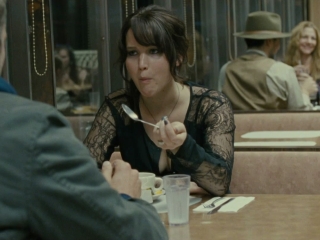
Spoiler alert- I’m going to talk about Silver Linings some more- I just loved it so much. It is rare for a romantic comedy (nay, romantic comedy/drama) to get it right without being trite. One of my favorite scenes was at the diner. Tiffany (Jennifer Lawrence) opens up about herself and seems to be having a moment with Pat. She offers to help her out and then he insults her by not wanting to be associated with her in the context of his ex-wife.
Rather than crying and running out of the restaurant (at first, at least), which I would have done, she balks. That’s the best word for her face. She looks at him, condescendingly, and says; “You actually think I’m crazier than you.” Not in the form of a question, but as a statement of disbelief. It’s great. I admire that. I wish that in the midst of a heated argument I could have the composure to do that. It was awesome. And then she smashes all the dishes off the table in one fell swoop and runs out of the restaurant, crying. I kind of wish I could do that too. The dishes part. The crying part I’m good at.
The beauty of it is that Pat realizes in that moment that he’s crossed a line and then he comes to the rescue on her crazy. They go back and forth on this as their relationship blooms. And that gives new meaning to the phrase the “dance of intimacy.”
Read the rest of… Nancy Slotnick: People Think I’m Crazy


 And what about having your own line of peanut butter?