By John Y. Brown III, on Tue May 28, 2013 at 12:00 PM ET
How can they be so sure?
Quantifying things can be a way of creating the illusion of certainty when it really doesn’t exist.
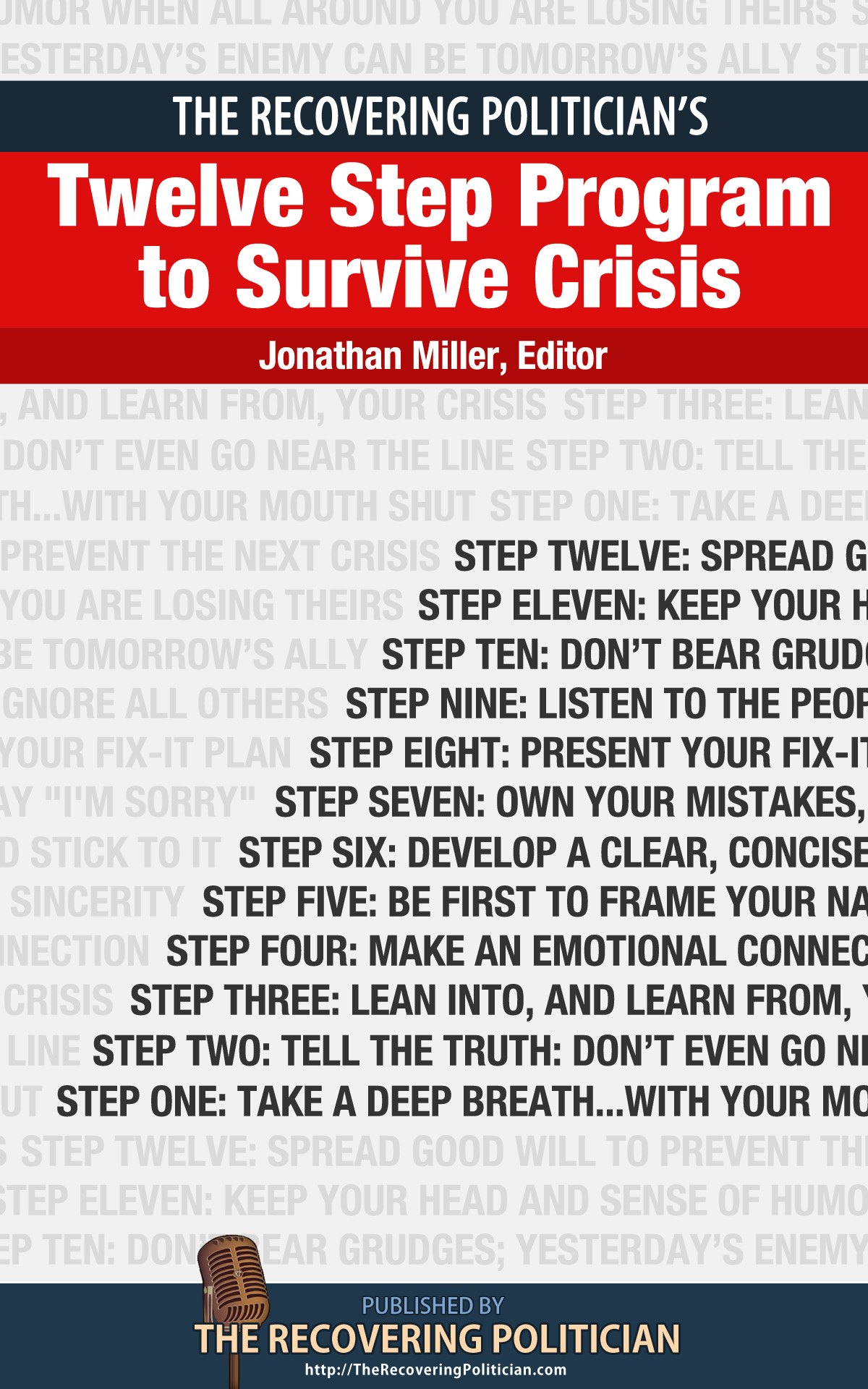
Take for example all these helpful and often wonderfully written advice advice books and articles (on business and life) that have titles with the exact number of some uncovered mysterious truth that is about to be divulged to the reader.
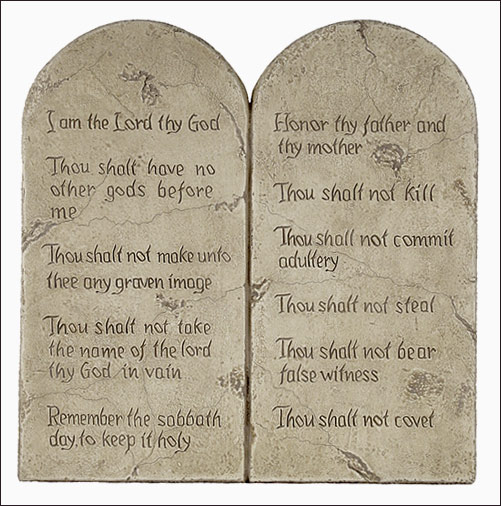
The 7 Secrets; 21 Immutable L…aws, 12 Principles, or 8 Cardinal Rules (see below), and so on.
How do they know that is the exact and final ultimate number of whatever secrets, rules, laws, etc that is being disclosed?
Are they sure?
Have they looked for and ruled out a possible 8th Secret, 22nd Immutable Law, 13th Principle or 9th Cardinal Rule? Or are they lazy or perhaps had an editor pressing them with a publishing deadline and they had to stop with whatever number they had at the time?
I would be really peeved if I bought a book on the 11 Rules of Success and paid full price only to find out later there are actually 16 Rules of Success. Or, God forbid, even more? Could we get a pro-rata amount of our money refunded on such books? If it turns out we only got half the “Secrets” then it stands to reason we should only pay half the price for a book claiming to possess them all and distilled down to a single number.
And what if the Universe is less precise than these authors think? What if in some instances a happy life is comprised of both secrets and habits? It’s conceivable that the formula for a happy life could involve, say, 11 habits, 14 secrets, 3 laws, and 9 immutable truths. I’m not saying it does. I’m just saying it could. And if anyone ever proves that, book authors dispensing advice are going to have to entirely re-think they way they organize and deliver their great ideas. And might even find themselves faced by some sort of class action law suit by their readers on fraudulent claims about the exact number of important items that make up an entire truth.
What about a book titled, “Here’s a bunch of randomly culled ideas I wrote down that may or may not be helpful to you and I’m charging you $15 for it”?
It’s not a catchy title but I think I might buy it anyway. Whatever is inside the book, I at least have a good feeling about the author being trustworthy and not forcing me to risk getting entangled in some complicated class action lawsuit in the future I’ll probably never get any money back from anyway.
By John Y. Brown III, on Mon May 27, 2013 at 12:00 PM ET
How grown-ups behave. When they have to.
My business partners and I last week sat down to make a presentation to a potential client. As we were getting started I began thinking what would be a nice topic to open the meeting on as I excitedly gave in to my nervous habit of twisting back and forth in my chair (when I am sitting in a chair that allows twisting).
It’s a nervous energy thing.
I was doing some supporting commentary on a news show about a year ago and one of my daughter’s teachers saw me. Her comment to Maggie the next day was something along the lines of, “I saw your father last night on television. He did a nice job but I almost got woozy watching him twist back and forth in his chair the entire show. He must have Attention Deficit Disorder.” They both laughed.
And I was up to my old ways again as our business meeting opened. But not for long. I hit a snag or brake of sorts–but wasn’t sure what it was. I turned and saw my partner’s hand steadying the chair. She whispered to me, “You are twisting.” I didn’t understand at first but then thanked her for the heads up. Of course, I was thinking to myself, “I kinda like to twist in my chair.” It helps calm my nervousness in some odd distracting way. But it also appears a little sophomoric to others and can have even more severe effects on those prone to motion sickness. So I did the mature thing and stopped.
Until it was my turn to speak.
I figured since I had the floor it would be more difficult for Laura (see post below) subtly to subdue my nervous movements. So I twisted just enough to satisfy the little boy in me that wanted to have his way and calm himself down —but not enough for Laura to feel it necessary to steady me from seeming childlike.
We make a good team in that way.
We made a nice presentation even though I forgot to wear a tie, which Laura reminded me of in the parking lot. I joked I used to keep a tie in the car but hate tying them and just wish they still sold clip-ons, which are a lot less complicated to figure out.
Right now I’m twisting back and forth in my chair at home as I type. And am making bigger swings than usual since it’s the weekend and no one can see me. And on Monday I’ll have to start acting more like a grown-up again.
====
Laura Emberton Owens is an extraordinary Kentuckian committed to serving her state in a variety of ways.
She’s a lady who has an abundance of charm, intelligence, and beauty (both inside and out) who is devoted to her family and community and who I have the great good fortune to call my business partner.
Here’s a wonderful piece posted about her on a national blog last week that captures beautifully her personality and love of life–and her knack for leaving everyone she meets a little better off than she found them.
By Jonathan Miller, on Fri May 24, 2013 at 2:00 PM ET
As the U.S. Senate continues to debate the Farm Bill, which pro-hemp advocates are hoping to amend with legalization lanaguage, Stephen Colbert takes to task Kentucky Senators Mitch McConnell and Rand Paul — Colbert calls them “Mitch and Chong” — for supporting industrial hemp legalization.
By John Y. Brown III, on Wed May 22, 2013 at 12:00 PM ET
Life advice.
Never do anything that you can’t successfully apologize your way out of
If you aren’t a good apologizer, don’t even think about it.
If you are a good apologizer, make sure you are assessing yourself accurately.
Ask a friend beforehand if they think you are a good enough apologizer to apologize your way out of doing something bold (or daring….or reckless, depending on hindsight).
If your friend tells you “No. You aren’t a good enough apologizer.” ask two more friends. If those two friends agree with the first, ask four more friends.
And so on.
Eventually, if it is truly a bad idea, you will spend so much time trying to get a majority of your friends to support you that you will forget what it was you were thinking of doing in the first place.
By Lauren Mayer, on Tue May 21, 2013 at 3:00 PM ET
Americans have always had a love-hate relationship with France. On the one hand, we use “french” as a positive adjective, applied to everything from kissing to toast, and we admire French cuisine and fashion. (I’ve always had this image of impeccably chic French women with a spartan wardrobe of 3 perfectly fitted sweaters, a pair of slacks, a pencil skirt, and 2 Hermes scarves, out of which they create 300 different, equally stunning outfits. As well as never getting fat despite enjoying daily champagne and truffles.) But we also use being French as a symbol of snobbery and effete-ness (remember how John Kerry was attacked during the 2004 election for speaking fluent French?, which was supposed to reflect everything that was wrong with his privileged background). And there was that unfortunate episode in 2003 when France’s refusal to participate in the Iraq war resulted in Congress renaming a familiar side dish – anyone remember “freedom fries”?
So France’s latest news will probably cause some mixed reactions, but I for one am thrilled that the country we associate with ooh la la and romance has now opened up official recognition of romance (i.e. marriage) to same sex couples. Sure, France is a largely Catholic country, but it’s also a place we associate with l’amour, toujours l’amour. (Madame Popejoy, my high school french teacher, would be proud of me, I didn’t even have to look up the spelling!)
Quick disclosure – I was actually born in France. (I have no french roots, but my dad was in the airforce about to be stationed in Labrador; he & mom had a whirlwind courtship and he swore the last thing he would do before he shipped out was to get her pregnant. And it was. So she went to France, where her parents were on sabbatical and which was at least a little closer to Labrador. So while I have no recollection of my 3 formative months in France, I have a soft spot for the country.) (And my parents checked, as a US citizen born in an Air Force Hospital, I could run for President. Of course, at the time they checked, Donald Trump wasn’t around. . . . )
Anyway, here’s this week’s song in celebration of France joining the increasingly large list of countries that have legalized same sex marriage:
We’ve all heard the saying, “It’s better to win the war, not the battle”. But what defines a battle, and what defines a war? When are you seen as wise, and when are you seen as a chicken? Better yet, as a female – which of your actions revere you respected, and regretfully, what of your behavior leaves the all too familiarized impression of being “hormonal”?
When I am mad, REALLY mad, I cry. I cry because I spend 50 percent of my day internalizing the raw emotion felt by others. That “responsibility” as I’d like to call it, leads me to subsequently ration it into specific places as to find a way to improve the entirety of the situation. I do not spend enough time thinking of myself…not even a small piece from the left over pie. Instead, I work diligently, compartmentalizing and structuring a plan that will result in enjoyable, elated coworkers leading to extremely profound results. So, when 50 percent of my time – time dedicated to a quiet, diligent effort to sustain a respectable, productive existence for those around me crumbles, well, I cry.
Crying is most always seen, regardless of sex, as weak (unless you are Jennifer Lawrence who literally burbs rainbows, Mathew McConaughey or in recent years, Justin Bieber). Crying is never depicted as a strong attribute. You can be winning battles and wars, slaying dragons, closing deals, negotiating people right out of their skin…but the only carnage you create that truly gets noticed is if you cry.
Yet, and I have no source to site or reference to footnote, I truly believe it is the strongest form of passion and compassion for one’s job that can truly be witnessed. Hand me a reason to care about my job, my co-workers, my bosses, the betterment of all and the betterment of those we serve – and guess what? From time to time, you will see me cry.
Give me a situation where I don’t care? Well, chances are, if I haven’t cried at least once – and publicly – I won’t be there long. If I find my tear ducts dry for too long, that is my signal: CODE BLUE! We have a problem. ABORT MISSION. This isn’t worth crying over.
Why? Because there really is no use crying over spilled milk. And as a woman, I think I should know what’s worth a tear or two. If this makes me weak in the eyes of the many? Eh, so be it. I’m going to remain steadfast on this principal and work hard to command attention and gain respect one battle dissolved, one war won, one tear shed at a time.
By John Y. Brown III, on Tue May 21, 2013 at 12:00 PM ET
Me and all the things I can do with my second phone
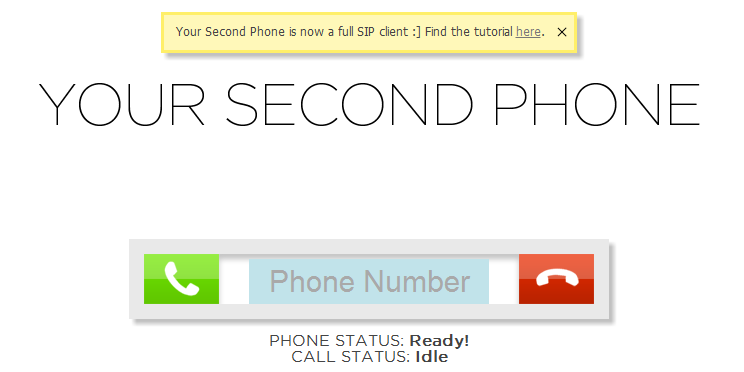
I have a second phone. I use it as my back-up phone. For situations like when I lose my primary phone. I have my back-up, or secondary phone, to call my first phone and help me find it by hearing the ring.
Sometimes my main phone has fallen under my car seat. Sometimes I’ve slipped it into my laptop bag and forgotten where I put it. Other tim…es, I’ve placed it in my pocket or in the holster for my back-up phone. But the great thing about my back-up phone is that I don’t lose my main phone for long.
It helps me save time that way.
This past Sunday I lost my phone that morning. And found it quickly, of course. Just how I always do.
But later in the day, after a few phone calls, I noticed an unusual number that I had tried to call me earlier in the day. Not once, but twice!
Technology is great. I didn’t have to wonder “Who called me?” I could simply Google the number. After Google turned up no results, I went to a service called Spokeo. Spokeo helps you identify people based on a strange phone number. They don’t always get it right but they do have a pretty impressive record of past owners of that phone number.
I plugged in the strange number than had called me and up came a name I wasn’t familiar with —but it was a name. I had what appeared to be the current (or previous but recent) owner of the number.
After Googling the name and coming up empty handed, I went to Facebook and typed in the name. Bingo! There he was. Looking right at me. And we had 4 mutual friends. I looked at his business but didn’t recognize it. Then on the mutual friends to try to solve the purpose of this mystery caller. I sort of knew them but not well. I knew a little about one of their businesses but couldn’t figure out why they would be calling me.
I then looked at some of the mutual friends of the mutual friends for more clues, but nothing was jumping out at me. I looked through some pictures of their Facebook pages and finally realized I was going to have to cave in to my curiosity—and just call back the unrecognized number. I decided I would call and whoever answered, I would explain that I saw they had tried to call me earlier in the day and I am sorry I missed their call –and was calling now to see how I could help them. And ask, “And whom do I have the pleasure of talking to?”
I dialed the number, fearlessly, and waited for the ring.
By John Y. Brown III, on Mon May 20, 2013 at 12:00 PM ET
I just failed to prove I am not a bot trying and failing repeatedly to sign in to LinkedIn after forgetting my password yet again.
I typed about 15 random combination of made up words and failed each time to read these sign-in word forms correctly. 15! This was not something I took lightly.
Which means….I suppose, that I am a bot!
Which does explain a few things about me I’ve never understood like being drawn to HAL’s voice in 2001 A Space Odyssey when I was just a child.
But doesn’t explain why I would be so eager to sign in to LinkedIn at this hour.
Maybe I’m a bot with a heart.
Or at least a bot with a networking gene that lives on despite my automaton ways.
It’s my own way of railing against the machine. I suppose. ; )
By John Y. Brown III, on Fri May 17, 2013 at 12:00 PM ET
Watching great flick, The Perks of Being a Wallflower.
Thank goodness we only have to go through high school once.
We need the 50 years after high school to work through all the illusions we leave high school with.
And also need 50 years to let go of the delusions we take from high school
High school is where we come to misunderstand ourselves and the world we live in–while simultaneously learning to navigate the world we so confidently misapprehend. And after the glorious misadventure of high school only slowly and inadequately begin to see life a little more clearly and a little less confidently.
And the wallflowers of high school, the quiet ones, may say the least…. but they feel the most and see things most deeply and clearly. And make the truest friends and best all around human beings.


 I’m not saying it does. I’m just saying it could. And if anyone ever proves that, book authors dispensing advice are going to have to entirely re-think they way they organize and deliver their great ideas. And might even find themselves faced by some sort of class action law suit by their readers on fraudulent claims about the exact number of important items that make up an entire truth.