By Sandra Moon, RP Staff, on Mon May 2, 2011 at 1:30 PM ET
The Politics of Faith
Imitating a Lenten tradition observed by German monks hundreds of years ago, one man survives 46 days on beer alone. After midnight on Easter Sunday, he broke his beer-only fast with a bacon smoothie. [CNN Belief Blog]
Secular political groups in Egypt prepare to give Islamist groups some competition in the parliamentary elections scheduled for September. [Reuters.com]
A religion without God: Humanism challenges traditional views of religion and the roles that it plays in society. [The Taunton Gazette]
A church in Toledo, Ohio boldly asserts that being gay is not a sin, but rather a gift from God. [Christianpost.com]
By Sandra Moon, RP Staff, on Mon Apr 25, 2011 at 1:30 PM ET
The Politics of Faith
Forgiveness is emphasized in many world religions, but in this unforgiving world, what does it mean to forgive someone? [BBC News Magazine]
Yesterday, many people celebrated Easter with baskets full of candy, pictures with the Easter bunny, and Easter egg hunts. Write Anne Lamott reflects on what the holiday means to her, and what it means to be “Easter people living in a Good Friday World.” [NPR]
More on the Easter theme–was the resurrection of Jesus physical or spiritual, and does it matter? [Patheos.com]
A church in Louisville, Kentucky takes a bold stand on the issue of same-sex marriage by voting to end the practice of signing marriage licenses. Until homosexual and heterosexual couples are afforded the same legal rights of marriage, the church will only perform religious ceremonies. [WHAS11.com]
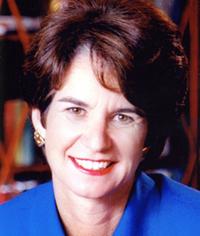
By Kathleen Kennedy Townsend, on Wed Apr 20, 2011 at 8:30 AM ET
I want to thank Jonathan Miller for giving me the chance…as a recovering politician…to contemplate this week on the relation between faith and politics.
After my eight years as Lt. Governor of Maryland, I wrote “Failing America’s Faithful: How Today’s Churches are Mixing God with Politics and Losing Their Way.” I thought that many churches that had once served as a counterweight to a nation overly obsessed with money were no longer were fulfilling this critical function.
Religious communities were strong and vocal during the Civil Rights era, and in the protests against the Vietnam war, following a strong tradition which began in the First and Second Great Awakenings, during which ministers preached to thousands (and this was the time before microphones!!) demanding justice.
The Abolitionist movement and the Suffragette movement both grew out of the Second Great Awakening. The late 19th century was the time of the Social Gospel activists, who asked “What would Jesus do?” as a way to urge the end of child labor, and to promote safe working conditions, a strong union movement and fairness for prisoners. FDR compared the New Deal to the “Sermon on the Mount” enacted into law. In the thirties and forties, Jesuits ran over 300 labor organizing schools.
This Holy Week — Passover, Good Friday and Easter — is the perfect time to reflect on our lives. What have we done? What should we be doing? Questions of justice and fairness permeate our conversations.
As an added bonus, this spiritual moment coincides with the fierce debates about the budget. We can and should engage in examination of conscience and examination of country. My fear is that the religious communities will not play the vigorous role in this debate as they have in our past.
Unfortunately today, may churches seem to have shrunk God, so that rather than a Deity who cares for the whole nation, this God is concerned with only “me”. They ask: “What is my relationship to God?” not “What is my duty to be concerned with all God’s children?” God seems to be created in the image of the believer, not a large God who is concerned with everyone.
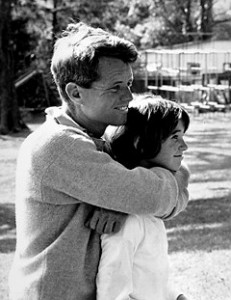
Kathleen and her dad. Click on the picture to watch a video on RFK's South Africa trip.
When my father, Robert Kennedy, returned from South Africa, he wrote an article for Look magazine entitled, “Suppose God is Black?” He knew that God cared about justice for all, not just the few. He knew that Christ had said it was easier for a camel to get through the eye of the needle than for a rich man to enter heaven.
Today, America seems to celebrate the rich and famous. We tax work at higher levels that we tax wealth. There are some wonderful leaders such as Jim Wallis of Sojourners and groups that are concerned with the Common Good, with the proper relation between faith and politics.
I hope that we use this time to use our religious teachings to inform questions of public policy. And, of course, I am interested in any response to these ideas.
By Jonathan Miller, on Mon Apr 18, 2011 at 4:15 PM ET
Tonight begins the eight-day long celebration of Passover, one of the most religiously significant Jewish holidays. (Far, far more significant than Chanukah — but we’ll get back to that in December.)
Jews around the world celebrate tonight with a family seder, a dinner in their homes during which they read the story of Moses, the Pharaoh, and the exodus from Egypt.
What would the exodus have looked like if it happened with today’s technology and social media? The following video (h/t to my sister Jennifer for finding it) tries to answer that question. Enjoy and Chag Sameach (Happy Holiday!):
By Sandra Moon, RP Staff, on Mon Apr 18, 2011 at 1:30 PM ET
The Politics of Faith
Studies show that atheists in western society tend to be younger and male, with higher incomes and levels of education. [Guardian.co.uk]
Is a national budget a moral document? More than 36,000 Americans and 28 members of Congress have joined the HungerFast.org movement, which is committed to “fasting, prayer, and personal sacrifice to protect vulnerable people from budget cuts that lack conscience.” [HuffingtonPost.com]
If you wear a burqua in France and refuse to remove it, you could face a 150 Euro fine. The Burqa ban in France took effect this week, sparking controversy and protests. [CNN.com]
Lady Gaga confronts a Christian fundamentalist protesting one of her shows. [YouTube.com]
I am writing this while spending spring break with my family driving through North Carolina and Virginia visiting colleges with my sixteenyear-old daughter, Catherine. As we were driving from Lexington,Kentucky, to Charlotte, North Carolina, to begin our college search at Davidson, we began to discuss previous family spring break trips – Hilton Head, California, and skiing in Utah. I then asked my family what trip was before Utah and my family responded that I was still in politics before Utah and then reminded me that we seldom, if ever, went on spring break trips while I was a part of the political world.
That response is a perfect example of how my family discusses our family experiences: during politics and after politics. My children favor the after-politics period. A few months after my forced exit from public life, my son and I were heading home from the golf course and my son out-of-the-blue told me to not take it the wrong way, but he was glad I had lost my Supreme Court race. Although I wish that I had won the election, I, like my family, have loved my life after politics. I am probably still a recovering politician, but I think I may be in the final steps of recovery. In fact, I have traveled full circle.
I have known the founder of Recovering Politician since high school. When Jonathan Miller returned to Kentucky in the 1990s to run for State Treasurer, we had lunch together. I still remember our conversation. I had lost faith in the political system and I believed that it was generally a waste of time. I wrote Jonathan a small contribution and got my law partners to also write small contributions in support of Jonathan’s campaign. Jonathan had only Democratic opposition and this fact made it very easy to support my friend.
A few years later, I had become disenchanted with my law practice and in early 2000 I agreed to run Scott Crosbie’s 2002 Lexington, Kentucky, mayoral campaign. Although I had grown up around politics, I had never worked in a campaign full-time. Scott and I discussed that I may need to find some sort of campaign school or seminar to attend. It turned out that there was no need to find training because in April 2000, then-Congressman Ernie Fletcher asked me to run his 2000congressional campaign. Former Congressman Scotty Baesler had decided to try to take his seat back and I was thrust into one of the top-five targeted races by the Democratic Congressional Campaign Committee and the AFL-CIO. I was convinced that the Lord had opened this door to provide me the skills necessary toget Scott Crosbie elected Mayor in 2002. Congressman Fletcher went on to crush Baesler in the fall of 2000. I then returned to the law firm for a brief period and began to get ready for the Lexington mayoral campaign.
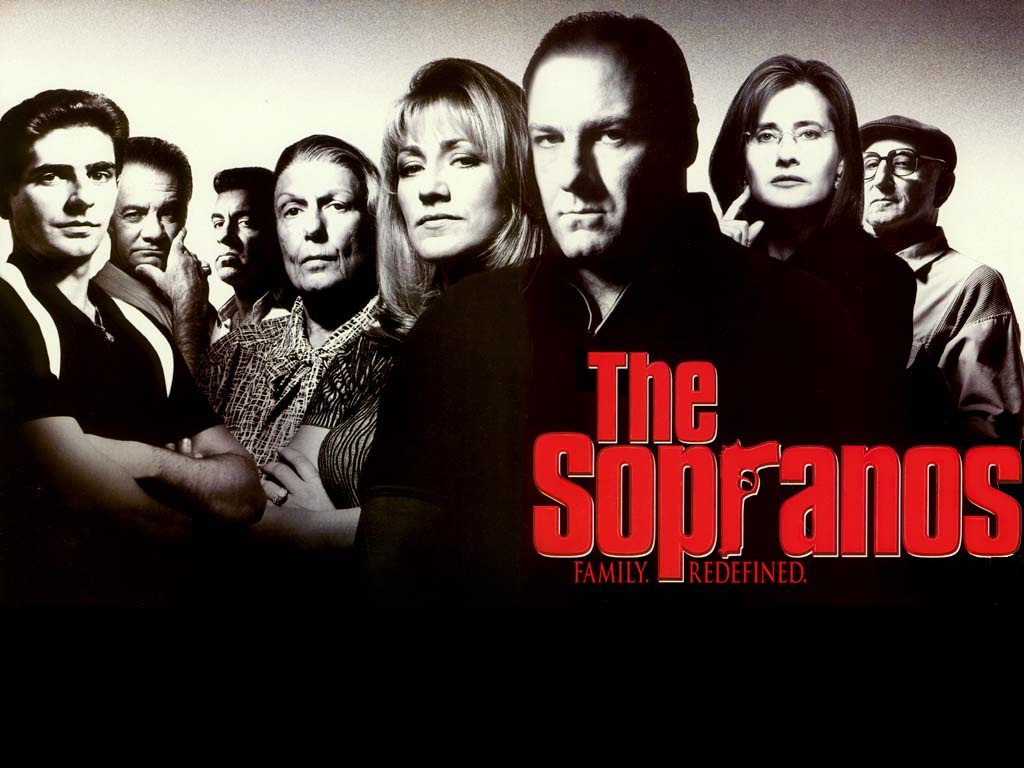
The 2002 mayoral election began in 2001 and for over eighteen months Scott and I experienced the highest highs and the lowest lows. We suffered at the hands of abiasednewspaper, with its seeminglydaily negative coverage of our campaign. We survived a three-way primary and then ultimately lost the general election by 1300 votes. The loss was one of the most difficult periods of my life. I was convinced that the Lord had brought Scott and me together to help change Lexington and I was extremely disappointed. After election night I had no idea what was next. I spent the next three weeks watching Season 1 episodes of “24” and watching multiple seasons of the Sopranos at all hours of the night.
By late 2002 Congressman Fletcher was running for Governor of Kentucky and I did not believe that I could participate in another campaign. I was extremely tired, and I spent much too much time away from my family. Instead, I became the district director of his congressional office. After Ernie’s victory in the fall of 2003, Governor Fletcher asked me to be General Counsel to the Governor. I was thrilled. I had grown up in the Democratic bastion of Frankfort, Kentucky, and was excited to be a part of changing the culture of Frankfort and our state. Ernie Fletcher is the most impressive and genuine person I ever had the privilege to meet in politics. He was smart and driven to make Kentucky more economically competitive. It was an honor to be his lawyer and the head lawyer for his administration.
The first year of the administration required a tremendous commitment of time. My family still reminds me of the 7 1/2 hour conference call while we were on vacation at Martha’s Vineyard in June of 2004. Our administration not only had to deal with the normal challenges of a first-year administration but also had to plan and defend running the government without a legislatively enacted budget. Ultimately, after my work schedule caused me to cancel a one-day family trip, I decided in early 2005 that I was ready to leave public service behind. I told Governor Fletcher that I would stay until the end of 2005.
A few months after that decision, Justice James Keller announced his retirement from the Kentucky Supreme Court. I gave the vacancy an initial passing thought but did not give it serious thought. However, that would soon change. Before oral argument at the Kentucky Supreme Court concerning the power of the Governor to run the executive branch without a budget, one of my law classmates who was representing State Treasurer Jonathan Miller in the litigation came up to me and said that I should pursue the appointment. He was a Democrat and indicated he would publicly support me. After prayer and discussions with my wife, I decided to inform Governor Fletcher of my interest. Governor Fletcher asked what had changed my mind about leaving public service. I responded that the Supreme Court position was a dream position and I decided it would be worth the sacrifices of public service.
Ultimately, I was appointed to the Kentucky Supreme Court. I loved my job. I loved the research and the writing and I believed that everything that had happened in my professional life had prepared me for the position. However, the dream would end in over seventeen months when I was defeated in an election to keep my position. What was most surprising about the defeat was that I did not enter into the same post-election mood that I suffered through when I was Scott Crosbie’s campaign manager. In fact, I got up the day after the election and I went to my chambers and worked on judicial opinions.
What was the difference between 2002 and 2006? Although I have miles to go, I believe that my faith had matured. By 2006, I understood that if God is sovereign on the day you were appointed to the Supreme Court he is also sovereign on the day you lost.
I returned to my old law firm in late 2006 and I am still with Ransdell & Roach PLLC. For the first time since I became a lawyer, I truly enjoy private practice. Since my forced early retirement from politics I have had little to do with politics and feel much like I did at my lunch meeting with Jonathan Miller in 1999. However, I must confess I stayed up most of the night during the election night coverage in November, 2010. I guess you are never fully recovered.
Terry Jones, the Quaran-burning preacher who has sparked violence in Afghanistan, compares himself to Martin Luther King Jr. [Miami Herald]
While Western religious traditions may focus on questions like why the earthquake in Japan happened, Eastern religious traditions focus on behavior in reaction to tragedy. [CNN Belief Blog]
In this Lenten season, Christian pastor posits that churches should stop making such a big deal out of Easter worship. [Huffington Post]
By Jonathan Miller, on Tue Apr 5, 2011 at 2:30 PM ET
Since I travel quite a bit, I’m introducing a new feature to The Recovering Politician — borrowing with gratitude from PBS, the Today show, and The Daily Dish — Where in the World is the RP?
To win, you must be the first person in the comment section to name the location where I am standing in the pictures below. Identifying the city is not good enough — please give a more precise location within the city.
The winner receives a free signed copy of The Compassionate Community. My family, close friends, and business associates who already know my whereabouts are disqualified.
Speaking of my book about faith and public policy, today’s contest features pictures of me meeting new friends and sharing the multi-faith, love-your-neighbor message of The Compassionate Community.
Guess away in the comment section below!
UPDATE 3:52 PM Winner, winner, chicken matzoh ball soup dinner: John Hawkins correctly guessed that the RP was standing in the right-wing, conservative hot bed of Union Square, San Francisco. John will collect an autographed copy of The Compassionate Community, as soon as the RP escapes from the clutches of his new friends.
By Sandra Moon, RP Staff, on Mon Apr 4, 2011 at 1:30 PM ET
The Politics of Faith
1040 for Peace: Is tax season an opportunity to protest war? Some are doing just that. [Soujourners]
Fiscal v. Social Conservatism: Can the Tea Party’s flavor satisfy Iowa’s Religious Right? [NY Times]
Westboro Baptist Church branches out from their usual routine of protesting military funerals and decides to picket Elizabeth Taylor’s funeral. [Huffington Post]
Presbyterian Minister who used to preach against homosexuality now supports and speaks out for same-sex marriage rights. [Salon.com]
In contrast to an earlier congressional hearing focusing on Islamic radicalism, recent Senate hearing focuses on protecting civil rights of American Muslims. [USA Today]
By Jonathan Miller, on Mon Apr 4, 2011 at 12:00 PM ET
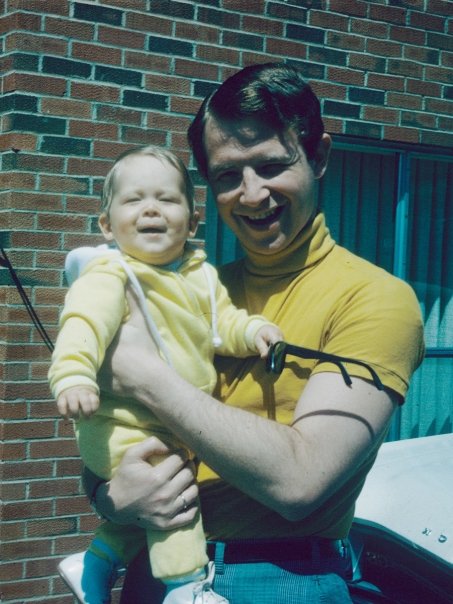
My dad and I circa 1968
Today — as on every April 4 — as the nation commemorates the anniversary of one of the worst days in our history; as some of us celebrate the anniversary of the greatest speech of the 20th Century; my mind is on my father. And my memory focuses on a winter day in the mid 1970s, sitting shotgun in his tiny, tinny, navy blue Pinto.
I can still remember my father’s smile that day.
He didn’t smile that often. His usual expression was somber, serious—squinting toward some imperceptible horizon. He was famously perpetually lost in thought: an all-consuming inner debate, an hourly wrestling match between intellect and emotion. When he did occasion a smile, it was almost always of the taut, pursed “Nice to see you” variety.
But on occasion, his lips would part wide, his green eyes would dance in an energetic mix of chutzpah and child-like glee. Usually, it was because of something my sister or I had said or done.
But this day, this was a smile of self-contented pride. Through the smoky haze of my breath floating in the cold, dense air, I could see my father beaming from the driver’s seat, pointing at the AM radio, whispering words of deep satisfaction with a slow and steady nod of his head and that unfamiliar wide-open smile: “That’s my line…Yep, I wrote that one too…They’re using all my best ones.”
He preempted my typically hyper-curious question-and-answer session with a way-out-of-character boast: The new mayor had asked him—my dad!—to help pen his first, inaugural address. And my hero had drafted all of the lines that the radio was replaying.
This was about the time when our father-son chats had drifted from the Reds and the Wildcats to politics and doing what was right. My dad was never going to run for office. Perhaps he knew that a liberal Jew couldn’t get elected dogcatcher in 1970s Kentucky. But I think it was more because he was less interested in the performance of politics than in its preparation. Just as Degas focused on his dancers before and after they went on stage—the stretching, the yawning, the meditation—my father loved to study, and better yet, help prepare, the ingredients of a masterful political oration: A fistful of prose; a pinch of poetry; a smidgen of hyperbole; a dollop of humor; a dash of grace. When properly mixed, such words could propel a campaign, lance an enemy, or best yet, inspire a public to wrest itself from apathetic lethargy and change the world.
Now, for the first time, I realized that my father was in the middle of the action. And I was so damn proud.
– – –
Click above to watch my eulogy for my father
My dad’s passion for words struck me most clearly when I prepared his eulogy. For the past two years of his illness, I’d finally become acquainted with the real Robert Miller, stripped down of the mythology, taken off my childhood pedestal. And I was able to love the real human being more genuinely than ever before. The eulogy would be my final payment in return for his decades of one-sided devotion: Using the craft he had lovingly and laboriously helped me develop, I would weave prose and poetry, the Bible and Shakespeare, anecdotes and memories, to honor my fallen hero. In his final weeks of consciousness, he turned down my offer to share the speech with him. I will never know whether that was due to his refusal to acknowledge the inevitable, or his final act of passing the torch: The student was now the author.
While the final draft reflected many varied influences, ranging from the Rabbis to the Boss (Springsteen), the words were my own. Except for one passage in which I quoted my father’s favorite memorial tribute: read by Senator Edward Kennedy at his brother, Robert’s funeral:
My brother need not be idealized, or enlarged in death beyond what he was in life, to be remembered simply as a good and decent man, who saw wrong and tried to right it, saw suffering and tried to heal it, saw war and tried to stop it.
Read the rest of… The RP: My Dad, RFK & the Greatest Speech of the Past Century