By Jeff Smith, on Mon Sep 12, 2011 at 12:00 PM ET 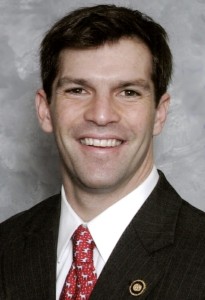 If Romney’s problem were the health care law, per se, then I’d attempt to answer this question directly. But I don’t think it is. His problem is that too many Republicans primary voters neither like nor trust him. If Romney’s problem were the health care law, per se, then I’d attempt to answer this question directly. But I don’t think it is. His problem is that too many Republicans primary voters neither like nor trust him.
The list of his flip-flops is well-known. In his ’94 Senate bid, he said he would be more pro-gay rights than Teddy Kennedy. At various junctures over the course of the next decade, he took mildly progressive positions on immigration, abortion, guns and most prominently, health care.
It is one thing to flip-flop on an issue, and then apologize unequivocally for it. Before his implosion, Edwards did it effectively on Iraq (the “I Was Wrong” Washington Post op-ed), and Pawlenty is following a similar model on climate change.
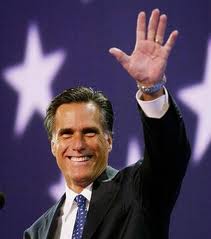 It is quite another thing to flip-flop on nearly every major social issue of concern to primary voters, and then a) claim that you have been consistent, and b) have the audacity to attack your primary opponents on said issues, as Romney did throughout ’08 – earning special enmity from his competitors in the process. It is quite another thing to flip-flop on nearly every major social issue of concern to primary voters, and then a) claim that you have been consistent, and b) have the audacity to attack your primary opponents on said issues, as Romney did throughout ’08 – earning special enmity from his competitors in the process.
The sad thing (for him, not for the country) is that the economic collapse beginning in late ’07 and climaxing in late ’08 had voters thirsting for a capable steward of the economy — exactly his profile had he simply been true to himself and not taken the cultural red meat detour. That has to gnaw at him.
The New New Romney might actually be the Real Romney. But it’s too late now, because he does not have a health care problem. He has a credibility problem. That’s why — even though his argument for health care federalism actually makes some sense – most people will merely see it another episode in a long series of flip-flops and pandering.
(Cross-posted, with permission of the author, from Politico’s Arena)
By Jonathan Miller, on Thu Sep 8, 2011 at 8:30 AM ET While Americans seem bitterly divided over political issues, there’s one that seems to unite most of us: We all hate negative political TV ads.
So for this week’s Huffington Post column, I try to defend the indefensible: I argue that truthful negative ads can be quite valuable to voters and can help strengthen our democracy.
Call me crazy, but read on:
Recently, a close friend and early political supporter of
mine confided that she would no longer contribute to political campaigns that engaged in negative advertising.
And really, who could blame her?
Every election season, the television airwaves are barraged by a seemingly endless succession of 30-second jeremiads that manipulate the facts and embitter the public. Worse yet, many of the most vicious advertisements are paid for by shady, vanilla-named cartels who’ve maneuvered through loopholes in the Swiss-cheese-like election finance law to poison our politics without ever revealing the sources of their funding.
But all negative ads aren’t equally offensive. Indeed, some are critical to preserving public confidence in our political system.
Sound counterintuitive? A political campaign featuring only positive advertisements that focus on “the issues” might seem to be ideal.
But sometimes, the gauziest, most emotion-laded, goose-bump-inspiring advertisements can be the most deceptive, and can do the greatest disservice to the public dialogue. As with marketing for any product, positive political ads tend to exaggerate a candidate’s merits while ignoring his flaws. And the worst of them can paint a thoroughly misleading — or sometimes even completely inaccurate — picture of an official’s character, virtues and record on issues of import.
While the press can serve a mitigating role — calling out false claims and exposing whitewashes — a large and continually growing proportion of voters no longer follows the mainstream media, and many that do no longer trust what they see. Further, on the local level, decimated budgets have crippled the ability of many daily newspapers to engage in the necessary level of scrutiny of candidates and campaigns.
Accordingly, it’s often up to truthful negative ads to expose corruption and hypocrisy and to properly educate the public on the worth and merits of particular candidates.
Click here to read the entire article which offers an example of a prototypical valuable negative ad.
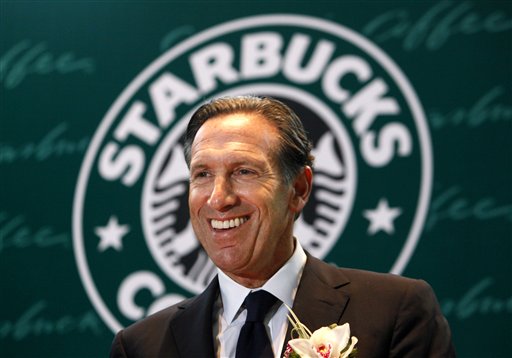
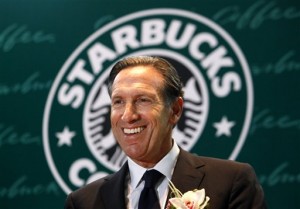
By RP Staff, on Tue Sep 6, 2011 at 12:00 PM ET  This evening, No Labels will host a “Conversation with America,” featuring Starbucks CEO Howard Schultz, to have a serious conversation about the problems of hyper-partisanship in Washington and the actions needed to break the political gridlock. This evening, No Labels will host a “Conversation with America,” featuring Starbucks CEO Howard Schultz, to have a serious conversation about the problems of hyper-partisanship in Washington and the actions needed to break the political gridlock.
No Labels Co-Founder John Avlon, Maya MacGuineas, President of the Committee for a Responsible Federal Budget, and Rob Kaplan, Professor of Management Practice at Harvard Business School, will lend their expertise to our conversation on the fiscal crisis.
Click here to RSVP for the call and obtain call-in information.
Since announcing our national telephone town hall last Friday, No Labels has created a stir in the media, capturing the attention of all the major television networks, prominent newspapers and local media outlets.
In Sunday’s New York Times a full-page ad ran from Howard Schultz announcing the call, as well as in USA Today.
 We expect even more success as the post-call analysis influences the conversation this week with the GOP presidential debate and the President’s address to a joint session of Congress about job creation. We expect even more success as the post-call analysis influences the conversation this week with the GOP presidential debate and the President’s address to a joint session of Congress about job creation.
I encourage you to invite interested friends and family members to participate. If you have any questions, please feel free to contact Sarah from No Labels at 202-588-1990 or Sarah@NoLabels.org.
By RP Staff, on Thu Sep 1, 2011 at 2:00 PM ET Apparently, the RP’s great radio face is in high demand. He was interviewed today by MyTechnologyLawyer radio about the debt crisis, the No Labels philosophy, and his hopes for future bipartisanship.
Click here to listen to the interview.
By RP Staff, on Thu Sep 1, 2011 at 12:00 PM ET Check out this wonderful piece in the Christian Science Monitor that chronicles the efforts being made by contributing RP and Oregon State Senator Jason Atkinson to promote bipartisanship in American politics:
There’s something unnervingly genuine about Jason Atkinson. Unnerving because he’s a politician – once a member of the Oregon House of Representatives, today a member of its Senate, in between a determined but failed candidate for governor – but he doesn’t sound anything like one.
His speech lacks curated sound bites, and he tends to talk about solving problems, rather than who’s to blame for them.
This could be subjective. I met Mr. Atkinson only once; we had several conversations over four days this summer at the Aspen Global Leadership Network’s ACT II conference. (The AGLN paid for my travel and accommodations.)
He is an Oregonian, and I’m an East Coaster, far more comfortable with irony than sincerity.
But with all the blather on cable news, what explains his reasons for practicing politics in a time of intense partisanship like this?
“I used to tell people that I was the guy who actually believed the commencement speech,” he says.
Atkinson, a Republican, has taken some stands considered controversial in Oregon political circles; by his account, that’s at least in part because he thinks of public service before politics. For a long time, these were important but mostly invisible battles guys like him waged in their hearts and souls – or in the proverbial back rooms where political deals are cut.
That changed, for Atkinson, in January, when Rep. Gabrielle Giffords (D) of Arizona was shot at a “town hall” style meeting. Atkinson knew Ms. Giffords – the two had been in the inaugural class of the ALGN’s Rodel Fellowship in Public Service.
Click here to read the entire piece.
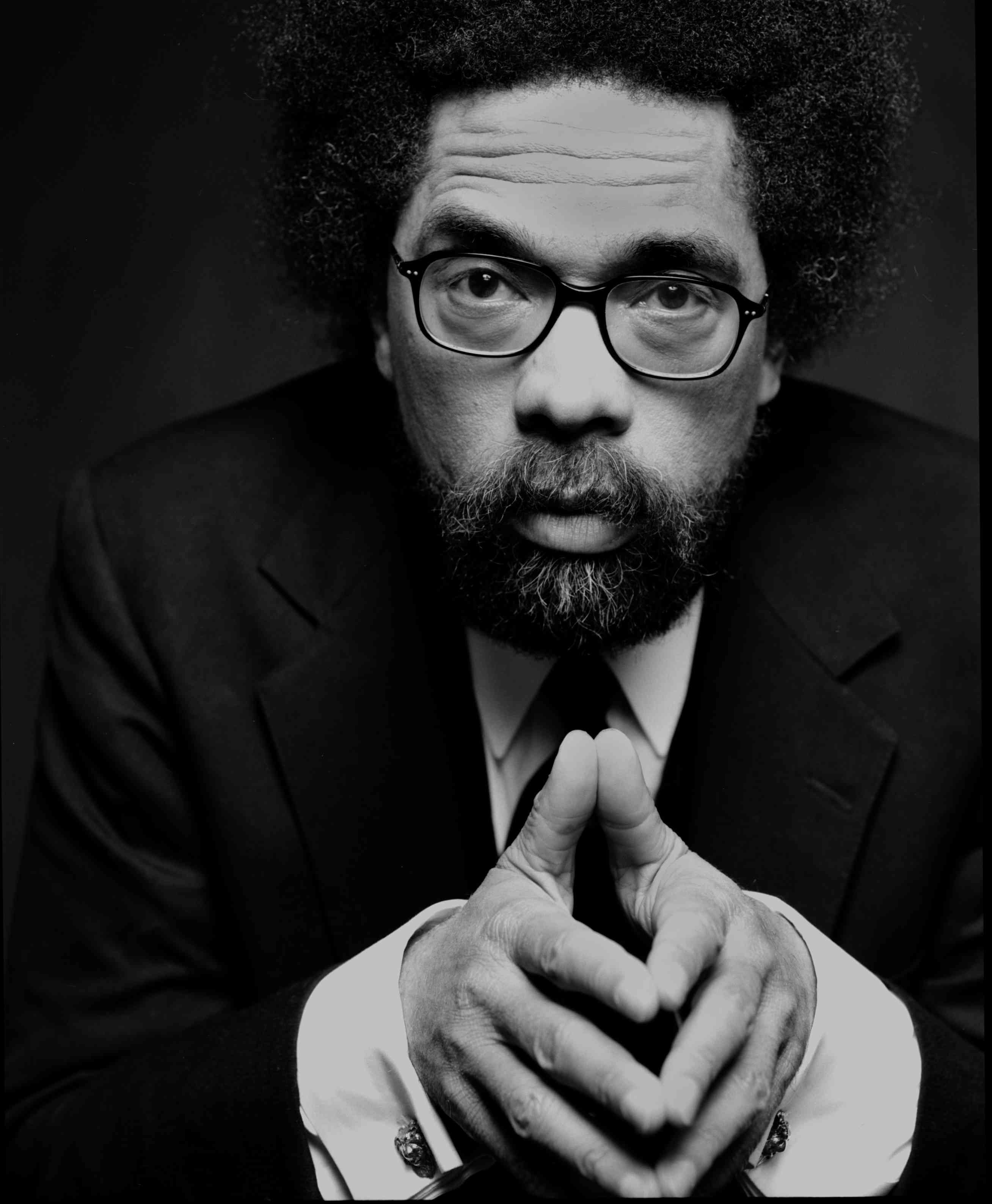
By Artur Davis, on Thu Sep 1, 2011 at 8:30 AM ET 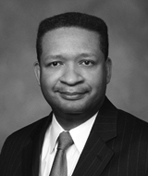 Let me damn Cornel West with some praise that is hardly faint: the Princeton philosopher writes with the lift of poetry even when he is describing something as unsentimental as the nature of American power. He also has the virtue of barbed honesty and has never let the lure of traveling among political princes and celebrities restrain his candor. Let me damn Cornel West with some praise that is hardly faint: the Princeton philosopher writes with the lift of poetry even when he is describing something as unsentimental as the nature of American power. He also has the virtue of barbed honesty and has never let the lure of traveling among political princes and celebrities restrain his candor.
Not surprisingly, those traits–candor and grace–explain why his essay in the New York Times on August 25, 2011, “Dr. King Weeps From His Grave”, has touched nerves in all manner of places.
West’s critique is best captured in one scathing, beautiful sentence: “the recent budget deal is only the latest phase of a 30 year, top-down, one-sided war against the poor and working people in the name of a morally bankrupt policy of deregulating markets, lowering taxes and cutting spending for those already socially neglected and economically abandoned”.
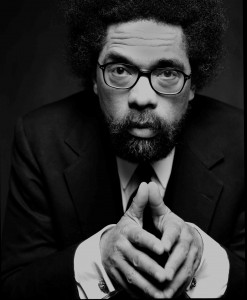 Dr. Cornel West These are arrows aimed at Republicans from Ronald Reagan to John Boehner for the contraction they have forced in the social contract, and at Democrats from Bill Clinton to Barack Obama, who in West’s view have left that contract too thinly defended and have done their own damage by trying too hard to sample conservative rhetoric on deficit reduction and taxes. To put a crescendo on the point, West, an early Obama supporter, calls the “age of Obama” a time that has “fallen tragically short of fulfilling King’s prophetic legacy”.
West is absolutely right about this much: the season of our first African American chief executive has most certainly not reshaped the foundations of our politics in the way that a million plus freezing bodies aligned on the National Mall on January 20, 2009 imagined it would. More Americans self-describe as conservative today, and fewer call themselves liberals, than on the day Obama shattered his glass ceiling, and the net effect is a nation that by roughly two to one leans right rather than left. That is not exactly, in West’s words, a place that sustains a “radical democratic vision.”
Read the rest of…
Artur Davis: King Would Have Understood Obama’s Civility
By Jeff Smith, on Tue Aug 30, 2011 at 12:00 PM ET When LBJ was a young legislator burning with ambition, the famed Georgia powerhouse Richard Russell cautioned him not to lose his Southern accent as he maneuvered on Capitol Hill. The accent, counseled Russell, helped ensure that the Yankee liberals would underestimate him. During my first year in the Missouri Senate, I was a stereotypical urban liberal who got hoodwinked just that way by more than a few canny country boys.
So: do I think Rick Perry is as smart as LBJ? Of course not. But I think he probably has some similar qualities. Intelligence isn’t just about who can mark up a bill at a granular level, although that’s a great quality for a legislator to possess. Rather, the ability, on any given issue, to understand the critical leverage points with another legislator or interest group or agency is the most important trait for those seeking to obtain, accumulate, and wield power. And my gut is that Perry has plenty of that wiliness.
Does that mean he’d be a good president? No. Does it offset what appears to be a rather parochial world-view? Definitely not. But the fact is that unlike GWB, Perry didn’t have an instant leg up over his opponents in all his races. He’s skilled at reading people, polls, and situations and should not, as the longtime observer notes in Jonathan Martin’s piece this morning, be underestimated.
(Cross-posted, with permission of author, from Politico’s Arena)
By RP Nation, on Fri Aug 26, 2011 at 12:00 PM ET We used to start our day in grammar school by standing up, facing the flag, and saying the “Pledge of Allegiance” TOGETHER, IN UNISON. It was a great way to start a day of working together, playing together, and learning together as American children with no hyphenated distinctions separating us.
By RP Staff, on Fri Aug 26, 2011 at 8:30 AM ET Contributing RP and former GOP Congressman Sherwood Boehlert was recently interviewed by his local paper about the debt ceiling crisis. Here’s an excerpt:
Former Congressman Sherwood Boehlert didn’t mince words when asked about Congress’ handling of the recent debt crisis.
“I think it was an embarrassment to the country,” he said.
Boehlert, a Republican, retired in 2006 after serving the area for 24 years as a U.S. Representative from New Hartford.
During his time in office, he said, he’d never seen a situation like the possible default that plagued the debating heads of Congress the last few weeks. And, he added, he couldn’t have thought of a worse way to handle it.
“I think it’s an anomaly, and I hope it’s a temporary anomaly,” he said.
Click here to read the full article in the Utica Observer-Dispatch.
By RP Staff, on Thu Aug 25, 2011 at 2:30 PM ET Earlier this week, No Labels released a report demonstrating how a majority of Congressmen were not holding town hall meetings during their August recess and urging them to do so or to take other action to empower their constituents and hear their concerns.
After a media uproar, many Members of Congress now are holding meetings and others are complaining that they always intended to. Check out the following story:
No Labels, a new political group that says it’s trying to find a new center for political discourse, took members of the U.S. House to task this week for ducking town hall meetings during the August recess.
All well and good. The problem is that there are doubts about the accuracy of its survey finding that 60 percent of the representatives aren’t holding an open town hall where constituents can come and question them on the issues.
At least that’s the case if Oregon is any indication.
The group claimed that only one of Oregon’s four congressman — Democrat Peter DeFazio — is holding town hall meetings this month. But it doesn’t take much looking to figure out that isn’t the case.
Democrat Kurt Schrader listed two town halls on the front page of his website, one that he held Tuesday morning in West Linn and another Wednesday morning in Keizer. I received an email advertising both events on Aug. 11, long before the No Labels survey came out. (After I contacted No Labels, they updated their survey to show that Schrader had indeed held a town hall).
Similarly, Republican Greg Walden, shows on his website that he held a town hall in Heppner on Aug. 11 and “community meetings” in Long Creek the same day and in LaPine on Aug. 10. David Sykes, publisher of the Heppner Gazette-Times said the event in his community was advertised beforehand, and Walden did indeed show up and spoke to about 30 people.
“We wrote a big story about it,” said Sykes.
Democrat Earl Blumenauer is arguably the one Oregon congressman who didn’t hold the kind of town hall that No Labels is looking for. One of his aides, Willie Smith, said Blumenauer did hold an open meeting with residents of the Mirabella retirement community in Southwest Portland as well as local businesspeople in the Multnomah and Sellwood neighborhoods.
Smith said Blumenauer prefers to hold meetings focused on a particular issue instead of general town halls. “Earl doesn’t think they are necessarily productive,” he said, adding that they too often involve “you yell a talking point, I yell a talking point.”
Rep. Greg Walden, R-Ore.
Jonathan Miller, a former Kentucky state treasurer and a founder of No Labels, said his group believes the town halls are indeed important for building trust with voters. If nothing else, they show voters that members of Congress are actually working during the August recess.Miller said he was confident of the survey’s overall findings but conceded it could contain some mistakes.
What do you think? Should Congressmen hold town hall meetings, or was last summer’s experience an indication that they no longer serve a useful purpose?
|
The Recovering Politician Bookstore
|


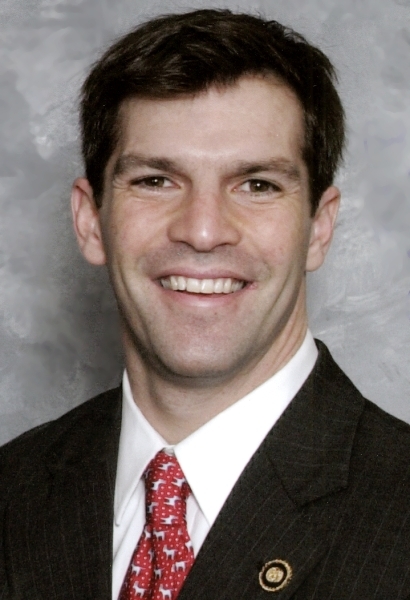 If Romney’s problem were the health care law, per se, then I’d attempt to answer this question directly. But I don’t think it is. His problem is that too many Republicans primary voters neither like nor trust him.