The RP is back on the air this week — interviewed for 20 minutes by Abigail Romaine of “Center: Uncensored” for WNZF Radio, serving Central Florida. The RP discusses The Recovering Politician and the No Labels national grassroots organization which he co-founded to promote civility and bi-partisan action on the nation’s critical issues.


 |
|||
|
Next July, more than 10,000 Americans will join together in Orlando, Florida to make their voices heard. Democrats, Republicans, Independents — liberals, conservative, moderates — each with their own distinct views on matters of public policy. What they have in common is the joint belief that on occasion — particularly during moments like these when our nation is in economic crisis — it is critical to shed our labels, to work together, and to do what is right for the country.
You can be there at the beginning. To learn more about the No Labels movement, click here. And to join 10,000 strong in Orlando next summer, click here.
If you are awake — and not celebrating Yom Kippur — you can listen to the live stream tomorrow (Saturday) at 8:00 AM EDT by clicking here. For everyone else, we will provide a link to a recording of the broadcast on Monday. I pray that our representatives act like intelligent adults. While I personally support President Obama’s re-election — and you may as well, or perhaps prefer one of the candidates seeking the GOP nomination — I ask you to consider supporting the Draft Dave Walker campaign in the Politico presidential primary. Politico is running a “parlor game” to select five picks who readers want to run as independent candidates for president. No Labels is entering the game by trying to draft former U.S. Comptroller General and No Labels Co-Founder Dave Walker to enter the race. Supporting “Draft Dave Walker” will help No Labels raise awareness for its critical cause — urging our leaders to put aside their labels on occasion to work together, forge compromise, and do what is good for the country. Watch this video to see why we think Dave would be a great candidate to enliven the debate and give voice to the millions of citizens across the country who have been muted for so long: To participate, click here. On the website, type “Dave Walker” into the box at the right of the screen and click submit. You will be taken to a page with a tweet saying “I nominate Dave Walker in the #POLITICOprimary because…” Complete the sentence and spread the word.
For a medley of reasons, Herman Cain’s ascension in the polls is not going to lead him to the Republican nomination for president. He has never won an election, has shown no capacity to run any massive public institution, much less America, and his campaign has been operated in a chaotic, haphazard fashion: all of the above are equal opportunity disqualifiers, regardless of race. But it is no small thing that a steady, dedicated stream of white conservatives are embracing Cain’s candidacy and that he is still standing strong when more accomplished rivals have fallen or are lagging. My guess is that Cain will end up mattering, for the same reason other losers like Howard Dean, Jesse Jackson and Mike Huckabee have made a difference. Just as Dean foretold the emergence of the internet as a campaign tool, and Jackson paved the way for a black/progressive alliance, and Huckabee discovered early traces of the Tea Party, Cain may be onto something too: the eventuality of the next serious minority candidate for national office arising in the party of Lincoln instead of the party of Jefferson and Jackson.
The very thought will rankle some of the liberal hierarchy, which views the right-wing’s loathing of Obama as racial antipathy. But the facts are inconvenient for Democrats: the 2010 primary cycle was atrocious for black Democratic candidates running statewide in Alabama and Georgia as moderates, and the general was a graveyard for worthy black candidates in Florida and Georgia who campaigned as conventional liberals. Even the exceptions are weighted with qualifiers: Kamala Harris, an incomparably gifted candidate, won as California’s Attorney General only after lagging well behind the rest of the Democratic ticket, and Governor Deval Patrick’s reelection would likely not have happened without a conservative independent siphoning Republican votes. The breakthrough artists in 2010 were Republican minorities who won large shares of the white vote in a variety of different environments: Tim Scott and Allan West in the House; Marco Rubio in the Senate; Nikki Haley, Susanna Martinez, and Brian Sandoval in statehouses. 2012 promises to continue the trend. No plausible Democratic minority has surfaced in any competitive district or state in this cycle, while Ted Cruz is a first tier Latino Republican Senate contender in Texas. Read the rest of…
The former missed his chance to strike while the iron was hot, passing up a race in 1996 when he likely could’ve taken the nomination from the laconic Bob Dole. The latter went back on his pledge not to run in 2008 because he understood how quickly and ruthlessly media churns through its sensations. You can only be Bieber for a while (although if you have any actual talent or savvy you may be able to reemerge a decade later a la Timberlake). I don’t think Christie will have the opportunity to re-emerge in four years, though; my sense (as a recent transplant to Jersey) is that he will not be reelected here. All of the adulation of the national conservative intelligentsia doesn’t seem to have affected folks here; indeed, I’ve heard a few call him too big for his britches (not sure if pun was intended). And so while he could pull a Romney, quit the governorship w/o contesting re-election, and begin running for the 2016 nomination in the last year of his term, I wouldn’t advise it. You can’t catch lightning in a bottle twice. (Cross-posted, with permission from the author, from Politico’s Arena)
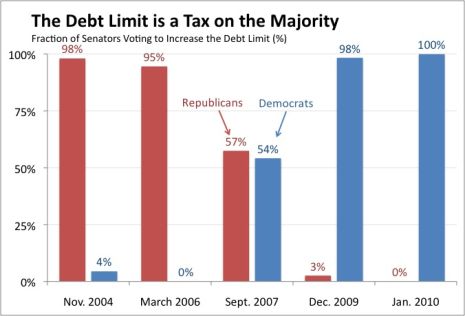
Watching the Republicans and the Democrats tear each other apart would be a lot more funny if their decisions did not have such serious consequences on us poor average citizens. What is so infuriatingly funny is the hypocrisy. Let’s start by looking at the debt ceiling debate. Normally, raising the debt limit or borrowing money is a no-brainer for elected officials. Politicians are heroes when they spend money. They are given awards, trips and plaques, for just spending your money. Sometimes they even get buildings and bridges named after them, even before they die all because they spent someone else’s money. I still have a few of my old plaques hanging on the wall. It doesn’t take long for even a stupid politician to learn that spending money, not cutting budgets, is the path to admiration, love and that most important priority of all, winning re-election. There are two ways to get the money everyone wants them to spend. They can raise taxes (not a very popular option), or borrow the money. As you can imagine, borrowing the money is very popular because most citizens don’t care or understand borrowing or deficits, and the majority of elected officials are more worried about the next election than the future re-payment plan.
But this year was different. With deficit spending exploding faster than anyone thought possible, along with Republicans throwing out the Democrats in November, the stage was set for a showdown. Normally, the President could have cut a deal to increase military spending or throw a few key projects in big highway bill, and they would have increased the debt limit; but because these pesky tea party “crazies” have the general population stoked up over deficit spending, the Republicans were forced to play hardball. Read the rest of…
Scott Brown is clearly charismatic and formidable. But Warren’s no Coakley, too good to shake hands with the common folk. She’s a gritty working-class girl made good. And having lived through Coakley she has a playbook of what not to do. I think that the toughness, candor, and populist passion that turned off (Cross-posted, with permission of the author, from Politico’s Arena)
But unless you are an avid reader of Tom Friedman’s columns at the New York Times, or Matt Miller at the Washington Post, you’ve likely never heard of Americans Elect and their audacious plan to qualify for the 2012 ballot in all 50 states. They are well-heeled, based on starting capital from some major hedge-fund players; respectable enough to have caught the attention of serious people like Friedman and Miller; and essentially still an anonymous blip on the public radar.
All true. Yet, the national atmosphere lately has been unsettled enough that the past has ceased being the predictor of the future in politics. The grip of Democrats and Republicans on voter loyalty is weaker than it has traditionally been. We are also on the cusp of a double dip recession handmade by dysfunctional two-party politics. Read the rest of… |

| ||
| Copyright © 2026 The Recovering Politician - All Rights Reserved | |||



 The RP just taped an interview with Abigail Romaine of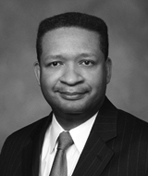

 If he’s ever going to be president, now’s the time. He doesn’t have to look very far for two case studies: Newt Gingrich and Barack Obama.
 some D.C. elites will play quite well with independent Massachusetts voters. It will be a great race to watch.