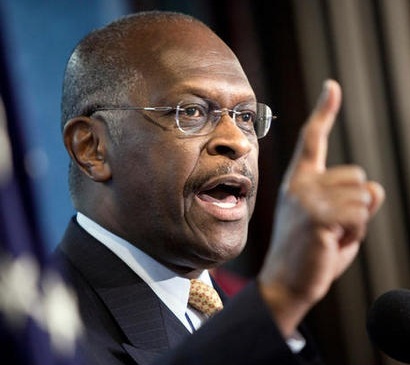
A fourth woman steps forward to accuse republican presidential Herman Cain of sexual harassment. [National Journal]


 |
|||
|
A fourth woman steps forward to accuse republican presidential Herman Cain of sexual harassment. [National Journal]
That doesn’t mean I think he’ll get the nomination. At some point, common sense will prevail. (Cross-posted, with permission of the author, from Politico’s Arena)
Below is the RP’s initial proposal — to address the horrible backlog of Presidential appointments for critical federal positions. To comment on the RP’s proposal, or to suggest your own ideas, click here.
Our government works well only if good people are in the right positions. But what happens if many of the top positions in government are left empty?
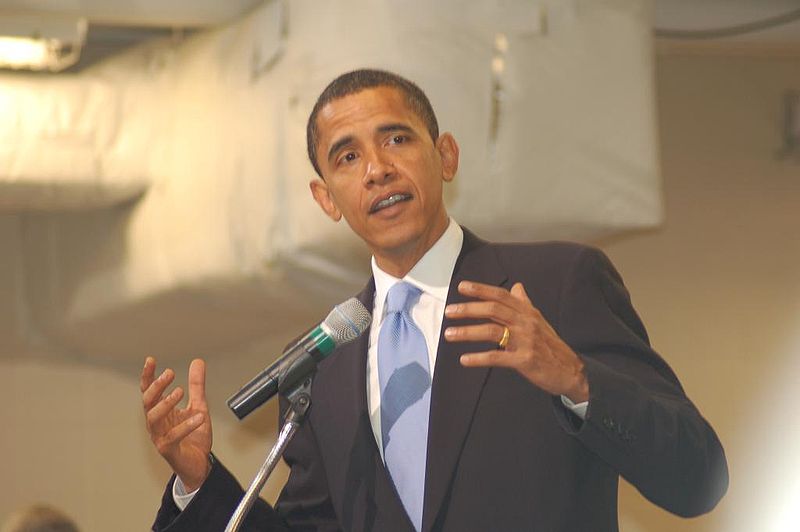
When a nomination comes to the Senate floor, Senators can vote in favor of the nomination, against the nomination, without recommendation, or choose to do nothing. Inaction is often the path of political expediency. But political expediency often leaves American citizens without a fully staffed and functioning government. Former Ohio Attorney General Richard Cordray is a case in point. In July, President Obama nominated Cordray to head the Consumer Financial Protection Bureau, a new agency designed to increase oversight of the much-maligned financial sector. Although Cordray’s nomination was approved by the Senate Banking Committee in early October, it has not been scheduled for a vote in the full Senate. Without a confirmed director, the bureau is powerless to protect consumers from abuses by the same non-bank financial institutions that left America vulnerable to its worst financial crisis since the Great Depression. President Obama is not the first president who has faced confirmation problems — during the Bush administration, America went without a confirmed national security team for six months. Presidents have struggled to staff the government for as long as politicians have put political games ahead of the country’s best interests. For real change to occur, America must commit to clear and efficient voting processes and not continue to be sidelined by petty delays. To ensure Americans receive the government they pay for, No Labels proposes that all presidential nominations that require Senate confirmation receive an up or down confirmation vote within 90 days of submission. This will ensure government positions will be filled with qualified people. And if the Senate votes against a candidate, presidents can move on and find someone else to fill the role in a timely manner. Read the rest of…
Republican presidential candidate Herman Cain fights against accusations of sexual harassment. [Real Clear Politics] Can a candidate survive allegations that are roughly 15 years old, that are apparently not corroborated, and that resulted in relatively small settlements with his organization? Probably, but there are a catalogue of ifs: if he is straightforward and composed in his denial of the claims of harassment; if the women don’t come forward and put a compelling face on the charges, and if this is not just the tip of the iceberg around claims as to how he treats women under his supervision. In other words, this really falls on Herman Cain: does he have grace under fire and what kind of man, and boss, has he been?
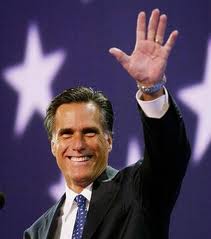
The Cain team needs to study up on some recent history: how effectively the McCain campaign handled a New York Times story hinting at his infidelity with a lobbyist, and how Gov. Nikki Haley fended off even more lurid allegations in South Carolina last year. McCain and Haley both understood that the Republican base distrusts these kinds of blows as a political hit job, and Cain is already stoking the same flames. (Cross-posted, with permission of the author, from Politico’s Arena.) The Milwaukee, Journal Sentinel, Wisconsin’s largest newspaper, has quoted “The Recovering Politician” in a recent round-up of political articles about Wisconsin. The blog entry in question referred to a Journal Sentinel article about two State Senators, Dale Schultz and Tim Cullen (Republican and Democrat respectively) touring the state in support of bipartisanship. Wisconsin, of course, has been in rather short supply of that asset, especially after tense union fights early this year. [Milwaukee Journal Sentinel] Yesterday, the RP took the airwaves at Fox News to spread the gospel about No Labels’ plans to introduce a comprehensive government reform package in December. To learn more about No Labels, click here. And watch the RP below: 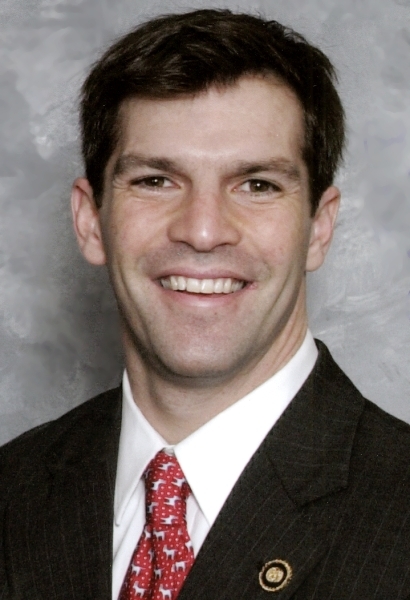 Jeff Smith Perry’s attack itself may not have been that effective, but the reply he elicited from Romney was sure damaging: “I’m running for office, for Pete’s sake,” Mitt said he told his contractor. “I can’t have illegals!” Debates are about moments that (appear to) crystallize candidates as human beings. After the hostage crisis and other blows to American prestige, people craved strength in 1980, and so when Reagan boomed, “I paid for this microphone!”, it suggested that he could be provide America the backbone it wanted at that moment. When George H.W. Bush looked at his watch in the 1992 town hall, it indicated that he just wasn’t that concerned with people’s plight – as opposed to the famed Clinton empathy to which a recession-weary nation responded. A simple gesture spoke volumes, because it comported with what Americans suspected was true: Bush was out of touch with their suffering. In that vein, “I’m running for office, for Pete’s sake – I can’t have illegals!” Romney offered a window into his character: ambitious, practical, hands-on, and utterly lacking in principle. Let’s see if Perry can capitalize on this gift in the coming days. (Cross-posted, with permission of the author, from Politico’s Arena)
Many if not all readers of this post likely agree that they prefer to live under a system of representative government based on democratic elections. Nevertheless, I wonder how many have taken seriously the structural problem of how democracy encouraging homogenization and its implications for the future. I have to admit it worries me more each day. My inspiration for such worry is not the impending presidential election (which gets more impending all the time as states fall over themselves to push their primaries back into 2011) but rather the approaching Election Day in my own back yard, Philadelphia. This year, as in 2007, the November Mayoral election is a complete afterthought, since it is obvious that Democratic incumbent Michael Nutter will sail to victory over the underfunded and barely noticed Republican challenger (and former Democrat) Karen Brown. The lack of excitement is even greater this time, since in 2007 at least the Democratic primary in May was a close-fought race among several viable candidates, whereas this year Nutter won the Democratic primary handily over token resistance. Then as now, however, commentators have to keep reminding themselves and their readers/listeners that Nutter has not officially been (re-) elected yet, even though there is no doubt. 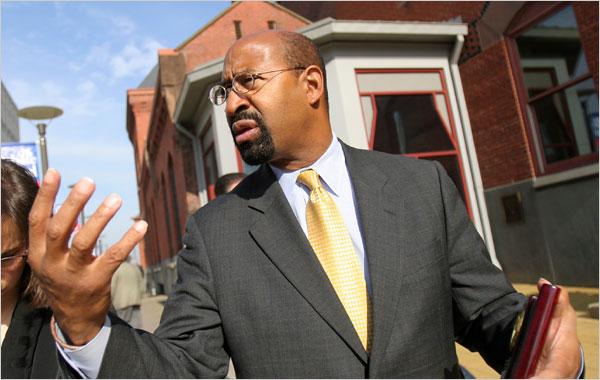 Mayor Michael Nutter My point here is not to attack Philadelphia (which I have come to like very much, as only the son of a different but eerily similar gritty post-industrial city) or Michael Nutter, who strikes me as an earnest and honest man. Nor is this a purely partisan complaint—I happen to agree with those Philadelphia Republicans who argue that their leadership is complicit in this situation. The problem is not that the Democrats will win in November. The problem is that, no one even pretends that the election will be competitive. I have seen this same development from the other side, when I lived in the lovely town of Greenville South Carolina, where all the action was in the Republican primary, while the general elections were a foregone conclusion. (That the one-party system was especially entrenched in Chicago, where I lived for the second through seventh years of the Reign of Richard II, goes without saying…) Read the rest of…
Debates are about moments that (appear to) crystallize candidates as human beings. After the hostage crisis and other blows to American prestige, people craved strength in 1980, and so when Reagan boomed, “I paid for this microphone!”, it suggested that he could be provide America the backbone it wanted at that moment.
In that vein, “I’m running for office, for Pete’s sake – I can’t have illegals!” Romney offered a window into his character: ambitious, practical, hands-on, and utterly lacking in principle. Let’s see if Perry can capitalize on this gift in the coming days. (Cross-posted, with permission of the author, from Politico’s Arena) |


| ||
| Copyright © 2026 The Recovering Politician - All Rights Reserved | |||