He should have played a more active last fall by working with Sens. Durbin and Coburn – both friends of his – to build some modicum of bipartisan consensus around the recommendations of the Simpson-Bowles commission that he created.
It’s not inconceivable to think that something could’ve passed during the 2010 lame duck session, when “Don’t Ask, Don’t Tell” was repealed with the support of several Republicans. By the time the supercommittee got down to work, it was probably too late; opinion had congealed on both sides.
The RP’s Huffington Postcolumn about Israel this week has sparked considerable interest at this site and over the rest of the Internet tubes as well. (Already more than 650 comments have been made over at HuffPo).
For another perspective on one of the central issues at stake — LGBT rights in the Middle East, we turn to the RP Nation’s Scott Piro who submitted the following piece. We would love your feedback, as always.
In 2007, the Israel Ministry of Foreign Affairs initiated a nation-branding campaign informally known as ‘Beyond the Conflict.’ The goal was to change people’s perception of Israel from a war zone populated by the ultra-religious into a more normal place – rich with culture, dominated by high-tech and scientific achievement and grounded in identifiable, Western values.
American nonprofit organizations joined the effort by making sure non-conflict stories saw the light of day – everything from Israeli companies being listed on the NASDAQ and Israeli-made computer chips powering everyday products, to stories about Tel Aviv’s nightlife and Israeli model Bar Rafaeli gracing the cover of Sports Illustrated’s Swimsuit Issue.
Nation-branding is practiced by many states, from established democracies like the U.S., Canada, France, Japan, South Korea, South Africa and New Zealand to developing countries like Tanzania, Colombia and Guatemala. It’s not unique to Israel.
In addition to the cultural and technology stories, the Israel Ministry of Foreign Affairs sought ways to emphasize Israeli values. Israel’s record on LGBT rights was smartly identified as a way to highlight its societal tolerance and diversity, and draw contrast with more repressive regimes in the region and around the world. In reality, Israel is the only Middle Eastern country where people are not persecuted because of their sexual or gender identity. Here are the facts for LGBTs in Israel:
Anti-discrimination laws protecting LGBTs
Recognition of same-sex marriages performed abroad
Legalized LGBT adoption rights
LGBT soldiers serve openly in all military branches, including special units; discrimination is prohibited
Same-sex couples have the same inheritance rights as heterosexual, married couples
LGBTs enjoy these rights nowhere else in the Middle East. In fact, every other Middle Eastern country makes homosexuality a crime punishable by death (Iran, Saudi Arabia, Sudan, United Arab Emirates, Yemen) or jail time (Gaza, Egypt, Syria, Lebanon, Kuwait, Qatar, Oman, Morocco, Algeria), or LGBTs face risks of violence, torture and “honor killings” by militias or their own families (the West Bank, Iraq, Turkey) or harassment and crackdowns from the government and non-state actors (Bahrain, Jordan). In fact, when compared to states outside the region – including most Western democracies – Israel has one of the strongest records for LGBT rights in the world.
Read the rest of… Scott Piro: “Pinkwashing” Deconstructed
Our very own contributing RP, Oregon State Senator Jason Atkinson, was featured in yesterday’s Christian Science Monitor’s cover story, “The Myth of the Maverick.” Here’s an excerpt:
It has become a ritual of American elections for politicians to pretend as if they’re anything but politicians, and polls suggest voters like them better when they believe that. But this isn’t simply a political phenomenon. From business to medicine to technology, America loves a visionary outsider willing to follow a dream – and break a few rules, maybe even make a few sacrifices, on the way.
“There are some people who are wired differently to say, ‘Hey, I’ve got this thing in my heart, this opportunity in my profession, and I’m going to shake things up,’ ” says Jason Atkinson, an entrepreneur-turned-Republican state senator in Oregon. “That leadership style is quintessentially American”…
Though you probably haven’t heard of him, Senator Atkinson is something of a local maverick in Oregon – or at the very least not a stereotypical Republican. Earlier this year, for example, he cosponsored bills to ban plastic bags in Oregon stores. But his most personally meaningful maverick moment came last January, when his friend Gabrielle Giffords, a Democratic congresswoman from Arizona, was shot at a public meeting in Tucson.
The shooting came just months after the 2010 elections – marked nationally, as well as in Oregon, by militant rhetoric and bitter fighting, Atkinson remembers.
“We had just come off of very, very dirty campaigns, and there was a lot of really raw emotion,” he says. “You had a lot of very upset and wounded people serving in the Oregon Senate.”
The Giffords shooting resonated with Atkinson, who had himself been accidentally shot nearly three years before. Atkinson weighed whether to speak out against the extremity of political rhetoric, locally and nationally.
“Nobody wanted to say anything because everybody understands the anger” that was in the air after fierce campaigns on both sides, he says. “If you say something, you know you’re going to get beat up on talk radio, and by the critics…. But in my mind, something had to be said.”
Without consulting party leadership, Atkinson gave an impromptu, impassioned speech on the Senate floor asking for greater civility in politics. He wanted to see a conversation between politicians about ideas, rather than reducing debates, as he said in his speech, to “the idea that I am right, and you are evil.”
If his fellow politicians were listening, they missed his point. “The blowback for that decision was nothing I had ever experienced,” he says. He received hate mail and threatening telephone calls. “For weeks I had the sheriff’s office parked outside my house,” he says.
Some of that backlash, he thinks, was simply because some politicians thought they could score points by disagreeing with Atkinson. But he thinks there may also have been something else: guilt.
“The big bullies in politics don’t make up 50 percent of one side and 50 percent of the other, so why is that driving everything?” he says. “I think there was a pretty big chunk of guilt.”
Nearly one year later, though, he also thinks that speech made a difference. For starters, the sheriff’s cars are gone and people are being a lot nicer to him. “People who talk to me now want me to think they’re being civil. It’s kind of like, you don’t swear in front of the pastor,” he says with a laugh.
He’s also received dozens of invitations to speak about civility to groups across the state. He’s been sought out for conversations about meaningful bipartisanship. The local conversation, he says, has begun to change.
By Grant Smith, RP Staff, on Tue Nov 29, 2011 at 9:15 AM ET
Herman Cain
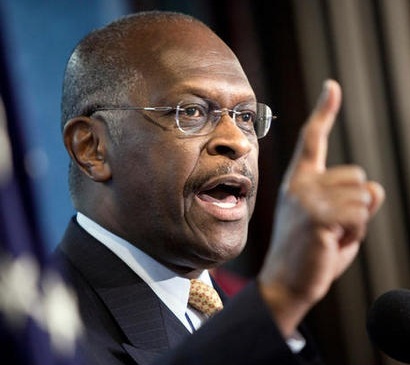
A third woman comes forward against republican presidential hopeful Herman Cain. Ginger White, of Atlanta, GA, claims that she had a 13 year affair with Cain. [Fox News Atlanta]
By Andrei Cherny, on Tue Nov 29, 2011 at 8:30 AM ET
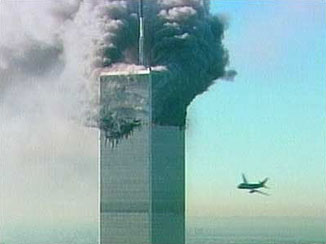
In those days before kids, I was fast asleep when the phone by my bed rang at about half past six in the morning. It was my father calling. Planes had flown into the World Trade Center. America was being attacked. I knocked on the door of my guest bedroom to awaken a visiting friend. Together, thousands of miles from New York and Washington, we experienced the day—the fall of one tower and then the other, the attack on the Pentagon, the confusion, the rumors, the terror—the way most Americans did: watching television in stunned silence. It’s not just that we all still remember where we were when we heard; it’s that at that very moment we knew we would always remember.
But even as it was already clear on September 11, 2001 that the attacks were a turning point in American history, no one could have foreseen the direction of that pivot. The terrorists struck an ascendant America that had seen a period of unprecedented peace and prosperity. While so much was destroyed that day, our confidence was unshaken. Most Americans anticipated a long war in Afghanistan with many casualties, but were certain of victory.
In the days after 9/11, according to a poll conducted by Harris Interactive, two-thirds of Americans said they had prayed and a similar number admitted to having wept. Eighty percent told someone they loved them as a result of the attack, and 60 percent kept in closer touch with relatives. Seventy percent had sung “God Bless America” and 63 percent sang the national anthem. But by September 27, 2001, 60 percent of Americans believed life had returned to normal. Looking back after ten years, we were clearly wrong. September 11 ushered in a sorry, sad, low decade. Ten years later, we are a nation that has been humbled abroad and felled at home. In a Time poll conducted this summer, only 6 percent of Americans now believe the country has fully recovered from the attacks.
It is more than the tragedies of Iraq or the sorrows of economic stagnation that have beset America in the ten years since 2001. It is the widespread sense that we are no longer the young, brave nation that brushes off adversity and charges forward—the America that went from Sputnik to Apollo in 11 years and from “malaise” to “Morning in America” in five. It is the belief that we are a slower, older country—an America stuck in its ways, no longer able to tackle big challenges and make big changes. More than a hundred years ago, the transition into the Industrial Age saw the rise of the Progressives and a new approach to public action. But now America moves into an individualized economy while politicians still repeat the familiar arguments of a bygone era. The Great Depression brought about the New Deal and a transformation of government while the Great Recession has produced little more than tinkers to an ossified system. In the wake of Pearl Harbor, America mobilized its manpower and machinery to win a global war against fascism. We invaded North Africa and Normandy. Four years after the attack, Hitler lay dead and Tojo was in chains. The occupations and transitions to democracy of Germany and Japan began and would succeed. Ten years after 9/11, the case for victory is far more muddled—at best.
In a nondescript house on a leafy street in a medium-sized city in Pakistan, Osama bin Laden—surrounded by porn and Pepsis—met his long overdue end on May 1. With the news, cheering crowds poured into Times Square and gathered in front of the White House. It had the feeling of a victory celebration, a national relief after a decade of frustration. But, in many ways, it was the Arab Spring—as much as a Navy SEAL’s bullet—that closed the chapter on bin Laden. And it is the impulse that led to that Arab Spring—for all its contradictions and uncertainty—that provides the best hope for a regeneration of an optimistic, forward-looking American spirit at home and around the world.
The RP was back at it yesterday afternoon on national television, discussing political dysfunction and promoting the work of the national movement he co-founded to promote bipartisan dialogue and action: No Labels.
This time, he was joined on a CNN live broadcast by fellow contributing RP and fellow No Labels co-founder, Lisa Borders. TV critics unanimously declared that Lisa whupped up on the RP, even though they took the same side of the debate.
Watch it for yourself and let us know what you think. And if you like what you hear about No Labels’ plans to “Make Congress Work,” click here to join No Labels:
By Zack Adams, RP Staff, on Tue Nov 22, 2011 at 8:30 AM ET
This is just the tip of an oppo iceberg that would make Herman Cain’s look like a pebble.
With the prospects of a vulnerable president and a Senate that’s clearly within reach, I just can’t imagine Republicans nominating someone so noxious among independents, someone with so much baggage. But Newt’s boomlet is yet another sign of the fact that this was really Rick Perry’s nomination to lose – something Perry’s worked diligently to do almost since the day he entered.
Every day this media-manufactured boomlet persists is another day that some enterprising journalist will dig a little deeper into Newt’s past. Like Cain, he’ll claim that the liberal media is trying to bring him down, when in reality, it will be his own pattern of reckless personal, political, and profit-seeking behavior that will do the trick.
By Jonathan Miller, on Mon Nov 14, 2011 at 12:00 PM ET
“We’ve been waiting for the House to conduct their business and they’re having trouble conducting it.” – Senate Majority Leader Harry Reid (D-NV); July 29, 2011.
“The only thing standing in the way of the House proposal…is the president and Sen. Reid.” – House Speaker John Boehner; July 30, 2011.
America’s leaders are playing the blame game — and citizens across the country are bearing the consequences.
America’s Congressional leaders have always held enormous influence in both chambers of Congress. While all lawmakers are involved in drafting and voting upon legislation, the central role of the Speaker of the House, the president pro tempore of the Senate, and majority and minority leaders in both bodies, cannot be underestimated.
However, the people with the most responsibility and capability to move legislation forward, rarely meet in-person. How can Congressional leadership pilot a nation together if they’re never in the same room with one another?
To fixing this glaring deficiency, No Labels proposes bringing our leaders together by creating a Bipartisan Congressional Leadership Committee.
Read the rest of… The RP: Ending the Blame Game on Capitol Hill
We never stop fretting over race and politics, largely because neither side of the political divide will let the subject go. Most Democrats I know are convinced that Barack Obama’s struggles are related partly to his race and anxieties over the rise of a multi-cultural power base. The accusations that Herman Cain harassed or aggressively propositioned at least four white women have stirred a new tempest, with conservative defenders of Cain suspecting race is at the bottom of the uproar, and liberals assuming that in the words of one pundit, “the layer of black sexuality” is what will kill off Cain with Republicans
Powerful stuff in a climate that was supposed to be “post-racial”. It’s a vexing enough subject that absurdities are flourishing on both sides: attributing Obama’s slide to race rather than the economy ignores the color-blindness descendants of Confederate soldiers displayed In Virginia and North Carolina in voting for Obama in 2008, or for that matter, the 50% plus approval ratings Obama enjoyed in Alabama and Mississippi in the spring of 09. Is the theory that they just didn’t look hard enough at Obama’s photos? Similarly, asserting that Cain is in a predicament because of race assumes Mitt Romney would get a pass if it was discovered that multiple women at Bain Capital had accused him of harassment and that Bain had paid money to resolve the claims.
There are obvious straw-men at work here who are pretty easy to knock down. I generally agree with Ross Douthat of the New York Times, a smart, thoughtful center right columnist, who writes this week that in politics, “race matters, but ideology matters much, much more.” But I do find myself agreeing with one argument in circulation and it is worth addressing because it will matter long after Cain is done and collecting lecture fees.
Yes, Cain does inspire a special kind of loathing on the left for reasons that have something to do with his skin color. Full disclosure: I’ve been through a few of these fires, as the only black congressman who opposed Obamacare, as the rare African American politician who supports voter ID laws. I’ve seen it up close–there is a predisposition in some liberal circles to think that a black politician who deviates from the liberal line is “inauthentic” and dishonest, that he is deceptively trying to curry favor with white conservatives at the expense of his own. There is also a perverse kind of resentment that the “strategy” may work, that a black who can win conservative support can cut in line and therefore advance more quickly, that such a candidate will be spared the need to court certain power-brokers.
Read the rest of… Artur Davis: What the Cain Scandal Reveals About Race & Politics