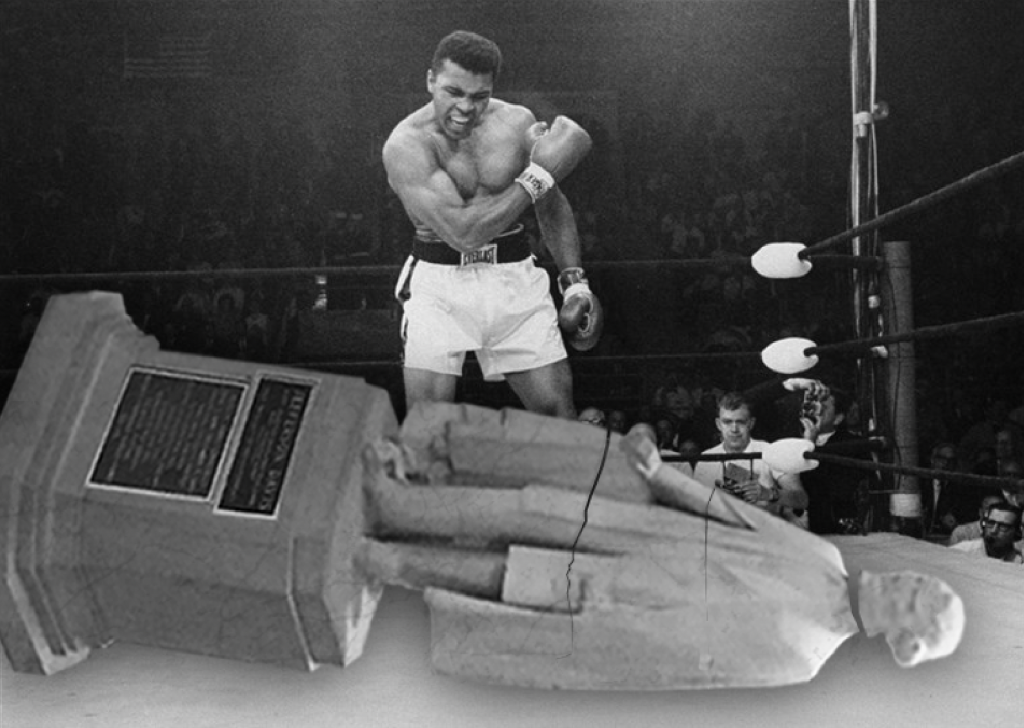
Please sign the petition below to remove the statue of Jefferson Davis currently in Kentucky’s Capitol Rotunda, and replace it with a tribute to Muhammad Ali, “the Louisville Lip” and “the Greatest of All Time.”
I just heard from the Ali family: It is the Champ’s belief that Islam prohibits three-dimensional representations of living Muslims. Accordingly, I have adjusted the petition to call for a two-dimensional representation of Ali (a portrait, picture or mural) in lieu of a statue.
UPDATE (Tuesday, December 2, 2014)
In this interview with WHAS-TV’s Joe Arnold, Governor Steve Beshear endorses the idea of honoring Muhammad Ali in the State Capitol (although he disagrees with removing Davis). Arnold explores the idea further on his weekly show, “The Powers that Be.”
Click here to check out WDRB-TV’s Lawrence Smith’s coverage of the story.
And here’s my op-ed in Ali’s hometown paper, the Louisville Courier-Journal.
UPDATE (Saturday, June 4, 2016)
In the wake of the 2015 Charlestown tragedy, in which a Confederate flag-waving murderer united the nation against racism, all of the most powerful Kentucky policymakers — U.S. Senator Mitch McConnell, Governor Matt Bevin, Senate President Robert Stivers and House Speaker Greg Stumbo — called for the removal of the Davis statue from the Rotunda. Today, as we commemorate last night’s passing of Muhammad Ali, there is no better moment to replace the symbol of Kentucky’s worst era with a tribute to The Greatest of All Time.
UPDATE (Wednesday, June 8, 2016):
Great piece by Lawrence Smith of WDRB-TV in Louisville on the petition drive to replace Jefferson Davis’ statue in the Capitol Rotunda with a tribute to Muhammad Ali.
UPDATE (Thursday, June 9, 2016):
Excellent piece on the petition drive by Jack Brammer that was featured on the front page of the Lexington Herald-Leader.
Highlight of the article:
Miller said he has received a few “angry comments” on his call to honor Ali.
“One of them encouraged me to kill myself,” he said. “You can quote me that I have decided not to take their advice.”
UPDATE (Friday, June 10, 2016)
The petition drives continues to show the Big Mo(hammed): check out these stories from WKYU-FM public radio in Bowling Green and WKYT-TV, Channel 27 in Lexington:
UPDATE (Saturday, June 11, 2016):
Still not convinced? Check out this excerpt from today’s New York Times:
By Sandra Moon, RP Staff, on Mon Jun 20, 2011 at 1:30 PM ET
The Politics of Faith
Ministers in the North Alabama Conference of the United Methodist Church write an open letter to Governor Robert Bentley, Senator Scott Beason, and Representative Micky Hammon protesting what they describe as “the meanest immigrant legislation bill in the nation” and “an embarrassment to our state” that “does not represent the spirit of hospitality of our churches.” [North Alabama Conference of the United Methodist Church Blog]
While public protests in Saudi Arabia are rare, women are challenging a religious edict that prohibits them from driving. [Sky News]
The United Nations Human Rights Council has adopted a resolution that seeks equal rights for gays and lesbians. The resolution states “no one should be subject to discrimination or violence due to their sexual orientation or gender identity.” In response, U.S. Ambassador to the UN Eileen Chamberlain Donahoe said “the right to choose, who we love and to share life with those we love is sacred.” [VOA News]
GOP candidates and their Simpsons character look a-likes. [Huffington Post]
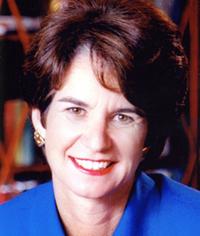
By Kathleen Kennedy Townsend, on Mon Jun 20, 2011 at 12:00 PM ET
I recently spoke in Pesaro, Italy at a conference on new ways of measuring the well-being of nations and communities. For the past half-century, the yardstick for measuring national progress has traditionally been GDP. But in the last few years, a growing number of economists, concerned citizens, and even heads of state have been asking whether there is more to happiness than a big pile of dollar signs.
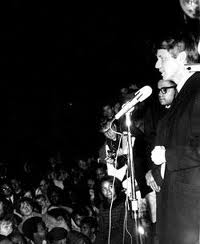
Politicians, at times, see what should be done, but can’t quite persuade citizens to act–as when Franklin Roosevelt, despite the terrible threat Hitler presented, couldn’t convince Americans they should fight. Right now we’re on the cusp of taking seriously an insight about GDP that my father, Robert Kennedy, originally had more than 40 years ago.
For those who haven’t been reading speeches from 1968, let me remind you what my father said a few days after he announced his candidacy for the presidency. Speaking to students at the University of Kansas, he said:
Click here to watch RFK's Eulogy for King, April 4, 1968
Too much and for too long, we seem to have surrendered personal excellence and community values in the mere accumulation of material things. Our gross national product, if we judge the United States of America by that, counts air pollution and cigarette advertising and ambulances to clear our highways of carnage. It counts special locks for our doors and the jails for people who break them. It counts the destruction of the redwood and the loss of our natural wonder in chaotic sprawl. It counts napalm and counts nuclear warheads and armored cars for police to fight the riots in our cities. It counts Whitman’s rifle and Speck’s knife and the television programs which glorify violence in order to sell toys to our children.
Yet the gross national product does not allow for the health of our children, the quality of their education, or the joy of their play. It does not include the beauty of our poetry or the strength of our marriages, the intelligence of our public debate or the integrity of our public officials. It measures neither our wit nor our courage; neither our wisdom nor our learning; neither our compassion nor our devotion to our country; it measures everything, in short, except that which makes life worthwhile. And it can tell us everything about America except why we are proud that we are Americans.
For years, my father’s words were viewed not as a practical challenge to the use of GDP but as an affirmation that a nation, like individuals, needs a purpose that is not merely material but spiritual. His policy insight didn’t catch on. With little dissent, we’ve continued to measure the success of a nation by a single number, its GDP.
Read the rest of… Kathleen Kennedy Townsend: What Makes Life Worthwhile? GDP Won’t Tell You
By Jonathan Miller, on Mon Jun 20, 2011 at 8:30 AM ET
Veteran political reporter Jack Brammer revealed in this morning’s Lexington Herald-Leader that Larry Forgy, the 1995 GOP nominee for Governor in Kentucky and a leading supporter of State Senate President David Williams’ 2011 bid for that same office, made the following statement:
The “only reason” Kentucky Governor Steve Beshear picked former Louisville Mayor Jerry Abramson to be his running mate was “to attract New York and Hollywood Jewish money” for the campaign.
The Williams campaign has not issued a comment on Forgy’s statement.
I have.
The Huffington Post published my response — as well as my analysis of the state of anti-Semitism in Bible Belt politics. Here’s an excerpt:
Seven years ago, when former GOP U.S. Senator Jim Bunning’s huge re-election lead was in free fall due to a series of missteps made by the cantankerous Baseball Hall of Famer, State Senate President David Williams rode to the rescue, armed with a slew of gay-baiting innuendos about Bunning’s then-single, heterosexual opponent.
It worked. Bunning’s numbers steadied, and he squeaked out a 1 point victory.
Alas, gay-baiting won’t stick this time: The Governor’s been happily married for more than four decades.
Instead, at least one of Williams’ most high-profile supporters appears poised to try a much older strategy, one that’s been used successfully for centuries: highlighting the Jewish faith of Beshear’s running mate, former Louisville Mayor Jerry Abramson.
By Jonathan Miller, on Sun Jun 19, 2011 at 6:15 PM ET
I hope you enjoyed today’s posts as much as I did. Our RP Nation is filled with some outstanding writers with some beautiful stories.
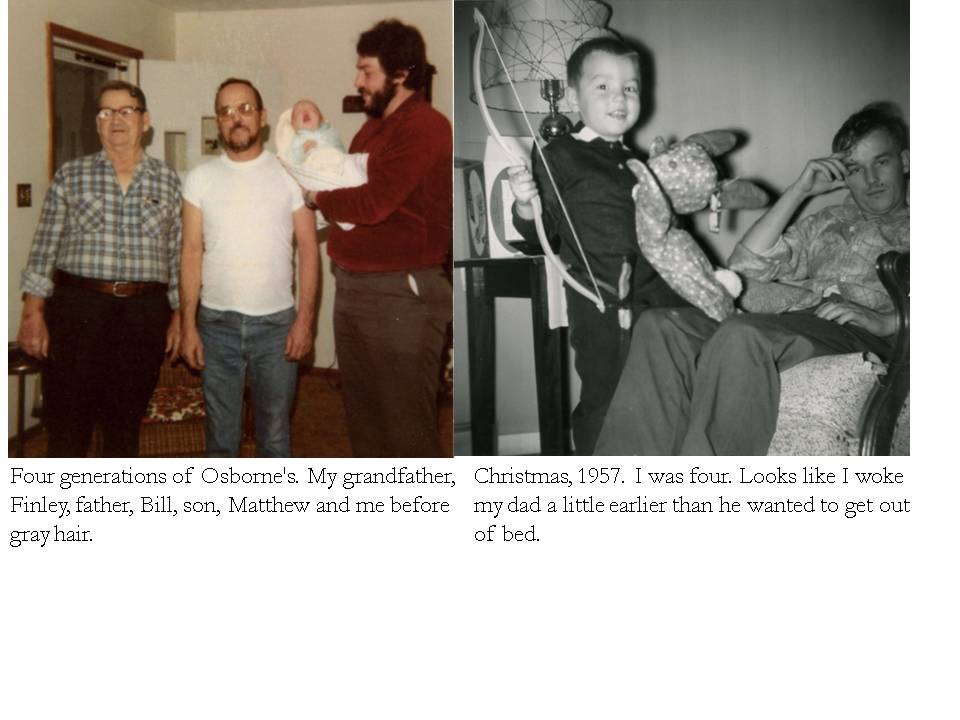
We ended a few minutes ago on an important note. As Phil Osborne suggests, don’t forget to tell your father (and all of your loved ones) how much you love them. If you are lucky enough to have Dad still in your life, make sure to tell him today.
Say it now. You may not have the chance to say it tomorrow.
This is the second Father’s Day I’ll spend without mine. He passed away in March 2010. He would have been 79 last month.
We had an interesting, and sometimes tumultuous relationship. He was an absentee dad because he had to be. That’s where his jobs were. Long-haul trucker, construction worker, shift worker at factories, military service. You get the picture.
But when he was home, I have fond memories of hours at Fultz’s pay lake in Carter County where we’d fish for bluegill and mud cats.
Or the special Christmas gifts that my sister and I would make like cutting little ovals into a carton of cigarettes to insert our latest class photos. Low budget production.
But we were never really close. And now we’ll never have the chance to be.
He grew up in Carter County, as did my mother. He dropped out of school at 16 and lied about his age to get into the Army. He was a decorated veteran of the Korean War and was stationed in Alabama in 1953 when I was born. When he was discharged, he came back to Carter County and held a series of jobs before we moved to Ohio when I was four.
There, we lived in what is euphemistically referred to now as federally subsidized housing. We called them the projects. That’s when the call of the road came and he started trucking. So between truck driving and some factory work my mother took on, we made it through three years in Warren, Ohio.
Then, back to Carter County and the little community of Globe. More trucking, but then he landed a construction job in Winchester. Sometimes he would come home on weekends; sometimes we would visit him staying with my aunt and uncle in the Clark County version of the projects at Stephenson Heights. But income was more predictable.
We moved to Winchester when I was in fourth grade and moved out of the projects and into our own modest little house the next year. I graduated from high school in that house.
When he secured a good paying and steady job at Rockwell, we were set. No more worries about absentee fatherhood, which put us in the house together to argue, fuss, fight and fume. All fathers and sons have their issues. We had enough for two families on occasion.
I’m not writing this as a “woe is me” bit of narrative. I got some lucky breaks in my life that my father never did and I’m thankful for it. And I’m thankful that life’s lessons have made me a better person because of who we were and what we did while I was under his roof.
I loved my father. Problem is, I never told him. And I know he loved me, he just didn’t say it.
Nearly every conversation with my wife, mother or any of our four children ends with “Love you.”
That never happened with my dad. The only time I told him was when I kissed him on the head at Clark Regional Medical Center and said goodbye for the last time after he had passed away.
Say it now. You may not have the chance to say it tomorrow.
By Zack Adams, RP Staff, on Sun Jun 19, 2011 at 5:30 PM ET
My dad was born Clyde Shelly Adams to Clyde and Nancy Adams on December 12, 1956. He was raised an only child and an Army brat. My dad met my mom when she was Denise Ferguson and they married in 1985 (26 years later and they are still going strong). Two years later, I became their first child.
My dad has been in my life from the beginning until now. Everything I wrote about his father in the Memorial Day tribute can also be applied to him (they are practically the same person). He is loving, loyal, smart, and hilarious.
The most important thing I can say I have learned from my dad is something I don’t think I learned at all, at least not consciously. That thing is the ability to talk and communicate with people. I would say I inherited this talent and grew into it. Being raised by my dad simply enhanced it.
I love talking to interesting people and examining them, something I observed my father do from a young age. I happen to regard this as one of the most important things a father can impart to his son. What else could be better than teaching your son how to communicate properly and respectfully? I believe this one of the biggest factors for being successful in life.
As this is The Recovering Politician I would be remiss if I did not say that as I’ve grown I’ve realized that I disagree with my dad on most, if not all, political topics. However, that in no way stops me from loving him and remembering all he has done for me.
Life is all about expressions and completing transactions. Every emotion, thought, action or a change creates a new debt or a favor that needs to re-balanced. Obviously we cannot reciprocate the favors in full, but we have been able to do that with a thank you in the most simplistic way or ratcheting up with complications.
One of the incomplete transactions of my life was not being able to do the things I wanted to do for my father. As a kid I would step in and take over the work from him so he can take rest, an Indian tradition that I cherish. When I moved to Saudi Arabia on an assignment, I sent my first check to him with which he started paying off my loan. With the next check I asked him to buy clothes for the family and wanted him to replace his old black Jacket he wore forever with a new one. He said no, first things first. In the first week of December 1977my check paid off all my loans, and with the next check I asked him to oblige me. Man, I am feeling a deluge of emotions as I am writing this, darn, my eyes are welled up.
He did not get the check, he just had to live his words, “Until my last breath, I will be earning my living and take care of my family.” Darn it, he did it. I was angry for my helplessness, and was happy that the man kept his word. But that created a huge gap in my life and I continue to recover my balance by serving the senior friends in whatever little way I can. You can always count on me to drop everything off to attend to a senior’s request.
Talking about keeping one’s word; in the late sixties he decided to go back to till his father’s land abandoned some forty years ago, when the whole family died in the influenza that had killed millions around the world. He sold a thriving property we had and sunk the money in the farm and I was on it for six months. He gave his word to someone to sell for quick cash and told us about it in the evening, three of his friends descended at our house with three times the money, my father refused; he said no, I have given my word to that man. My mother and I were angry; he said he would rather lose the money than his word. I did not value it then, but when I left home, it all meant so much to me and yes, I have lost quite a lot for that, then I realized no one will take the wealth with them either.
My father is my hero and opened the doors of wisdom to us. Pluralism indeed runs in my family. He taught one of the biggest lessons of my life in social cohesiveness and dealing with extremism that I continue to reflect in my talks, acts and write ups.
During the communal riots in Jabalpur (India) in the early the sixties, both Muslims and Hindus were killed in the mayhem. I wish every father in India, America and elsewhere teaches this lesson to his kids. He was crystal clear on his take; He told us the “individuals” are responsible for the bloodshed and not the religions; he would emphasize that you cannot blame the intangible religion and expect justice, we must blame the individuals who caused it and punish them accordingly for disturbing the peace and thus bring a resolution to the conflict by serving justice. He said you cannot annihilate, kill, hang or beat the religion, then why bark at it?
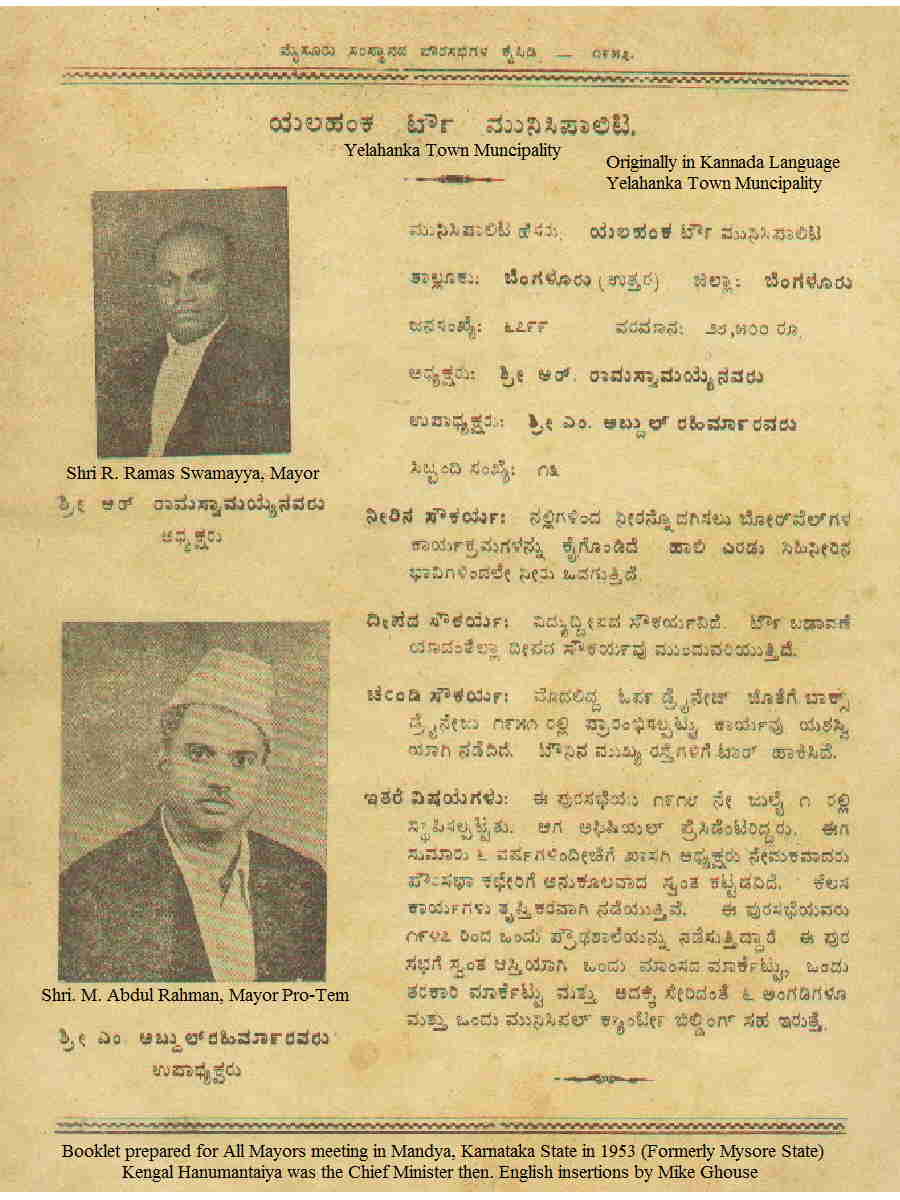
My father was a Mayor of the Town of Yelahanka (The town gave birth to Bangalore in 1537) and served the council for many years. He was also the president of the Islamic Association of the town. We grew up with no barriers between us and another soul. He broke all traditions of the society; during the early sixties India was pretty much like the US in the way she treated her “Harijan – God’s chosen people as Mahatma Gandhi termed the “untouchables”. The African Americans endured such treatment here. My father would invite them in our home and my mother would serve tea and food in the same glasses and plates that we drank and ate. Many people opposed him with unsavory words, but my father stood his ground. I see that streak in me playing it out all the times.
He treated all of us kids with dignity and I am pleased I got to be disciplined at least once. I guess I replicated that with my children to the point my kids would actually say, Dad, you should have disciplined us. I did not see the need for it. I am fine and they are fine too.
Read the rest of… Mike Ghouse: A Tribute to my Pluralist Father
My Dad, whose nickname was “Boz” could be a character.
As a child, I really did not think it unusual to have a father with the name –Boz which was actually the shortened nickname given to him by his brother Allen. Allen had called him “Bozo” which Daddy liked better than his given name of Elza.
During the summer’s Daddy like to take us “fishing” on a creek which was branched off the Licking River in Harrison County. These fishing trips focused more on purchasing junk food like sardines, and when rather than waiting to catch something, he would often jump into the water and splash around. All thoughts of fishing ended due to Dad and all seven of us kids scaring off the fish with our splashing and swimming.
Daddy liked candy and sweets and on occasions, us kids would raid his stash and finish it up. While he would be upset about us getting into his candy and ice cream bars, his greatest words of advice to us was — “If you are going to eat all the candy, throw away the wrapper!”
Dad always liked to see how far he could go on a tank of gas. On more that one occasion, he ran out of gas.
On a return trip on the Western KY Parkway (soon after it was built) from Pennyrile State Park back to our home in Lexington, he ran out of gas somewhere west of Elizabethtown.
I remember walking with him climbing a couple of fences until we got to a farm house where he was able to buy a can of gas which would allow us to get to E-town for a fill-up.
After Dad’s funeral one of the limos broke down on the way to the cemetery reminding us of the times when Dad ran out of gas.
At left is a photo of my dad, Boz Whalen taken in Venezuela. After serving in the USAF in the early 1950s he worked for British American Tobacco Co. teaching immigrants to Venezuela how to grow tobacco. This is prior to marrying Mom and finishing his last year at UK .
Dad,
You taught me to be humble for most things,
To be proud of a few things
And to be grateful for all things.
You gave me life.
You gave me strength.
You gave me roots.
You gave me wings so I could fly on my own.
And you were always there to catch me when I fell.
You kissed my tears away and fixed me up when I scraped my knee riding my bike.
And then you fixed the bike, too.
You told me stories and taught me how to laugh.
You showed me the world through your eyes
And taught me to believe in magic.
Thank you for all you taught me,
All you gave me,
All you did for me,
All you fixed for me,
All you showed to me;
And most of all, for making me who I am
And for loving me through it all.
Always your baby girl
With more love than you can ever imagine.


 Blog this!