By Jonathan Miller, on Thu Apr 7, 2011 at 8:30 AM ET As Charlie Sheen might have said, “music is the gin and tonic of the soul.”
Of course, there’s no denying the redemptive impact of song. Whether to soothe, pacify, or even offer catharsis, we’ve all turned to music during times of recovery — from an illness, a professional setback, or, quite often, a breakup.
Last week, I ended an 11 1/2 year relationship…with state government. Neil Sedaka was accurate when he crooned that “Breaking Up is Hard to Do,” but the dissolution of any relationship is much too complex to be captured by 60s-era bubblegum pop.
For my own personal recovery process, I have loaded my trusty iPad with some of my favorite healing music. And in the spirit of Nick Hornby’s “High Fidelity” (read the book; it’s much better than the movie), I share below My Top Five Breakup Songs: (Click on the album covers to sample and/or download to your MP3 player)
#5: "Rolling in the Deep" by Adele
5. Adele, “Rolling in the Deep” My daughters introduced me to the sulky smooth, blues-laden stylings of the unbelievably young (she just turned 22?!?) Adele. Her newest masterpiece drew my attention to an early stage of my recovery from politics: denial, tinged with exasperated anger: “We could have had it all/Rolling in the deep/You had my heart inside of your hands/And you played it to the beat.” Dreams of higher office squelched by the vagaries of politics — it certainly bears some resemblance to the unexpected implosion of a relationship with that “perfect” soulmate. “We could have had it all,” voters! But alas…
#4: "I Can't Make You Love Me" by Bonnie Raitt
4. Bonnie Raitt, “I Can’t Make You Love Me”
While Raitt had already secured her place in rock history by helping to discover Bruce Springsteen, this classic resolutely establishes her as the bard of melancholy self-pity. With a haunting melody and a voice that aches with trenchant agony, Raitt sets the perfect mood for an evening of painful introspection: “Turn down the lights/Turn down the bed/Turn down these voices inside my head.” Instead of those blaring, patriotic anthems that accompany a losing candidate’s walk to the concession podium, this ballad should be required listening for Election Night audiences: I worked my heart out to win your support, then you broke it into pieces. Dear voters, why can’t I make you love me?
 #3: "You Oughta Know" by Alanis Morissette
3. Alanis Morissette, “You Oughta Know”
Of course, self-pity soon can metastasize into vengeful anger, and there’s no better theme song for the dumped than Morissette’s breakout hit, the song that established a whole new genre of “tough chick rock” (See Pink, Avil Lavigne, etc.) Alanis’ scorned lover caustically captures the false promises of lust disguised as love–or in the case of a recovering politician, the fickleness of the body politic: “And every time you speak her name/Does she know how you told me you’d hold me/Until you died, till you died?/But you’re still alive.” (And isn’t it ironic that in each primary that I’ve lost, the voters chose “an older version of me”? Hmmmmm…)
 #2: "Romeo and Juliet" by Dire Straits 2. “Romeo and Juliet” by Dire Straits: A truly transcendent song, on one of rock’s most underappreciated albums. With a nod to both Shakespeare and Leonard Bernstein’s stage and screen adaptation, Mark Knopfler sets the romantic legend in the late 70s and reveals the core of its message; one that can reassure a jilted lover (or politician) that the failure wasn’t your fault — as fate or the Good Lord would have it, it just wasn’t your time: “There’s a place for us/You know the movie song/When you gonna realize, it was just that the time was wrong?” Hey, there’s more fish in the sea/elections to win! (Oh, and Taylor Swift: I love your music, but when you were on the road with your English tutor, did y’all skip the last act of Shakespeare’s play? Romeo and Juliet didn’t exactly have a happy ending.)
 #1: "I Will Survive" by Gloria Gaynor 1. Gloria Gaynor, “I Will Survive” OK, disco haters; go ahead and scoff. But Gaynor’s anthem for the final stage of breakup recovery — acceptance and transcendence — is the ideal background music for a recovering politician who’s realized that there’s more to life than temporal adulation and ephemeral power. And when that political fever threatens to re-infect you, Miss Gloria reminds you to reject the sweet succor of narcissism, empowering you with her personal mantra: “And you see me/somebody new/I’m not that chained up little person still in love with you/And so you felt like dropping in and just expect me to be free/Now I’m saving all my loving for someone who’se loving me…”
OK, that’s five for fighting about.
What am I missing? What have I misunderstood? How will my life go on?
(Speaking of…For goodness’ sake, NO CELINE DION!!)
Please leave below your comments, critiques, and most importantly, lists of your top five breakup songs:
By Jonathan Miller, on Wed Apr 6, 2011 at 5:00 PM ET While The Recovering Politician‘s primary contributors are former elected officials who’ve entered the second act of their lives, it’s certainly true there are so many other folks in other walks of life that have stories of recovery that can enlighten and entertain the rest of us. And it’s clear that politics infects every line of work, be it academia, the law, or even the clergy.
That’s why tomorrow, we launch a new feature — Friends of RP: great storytellers from a wide variety of fields who will share their tales of recovery, as well as comment on their fascinating areas of expertise and interest.
Thursday, we will spotlight a college professor who was caught in the middle of a highly-publicized tenure battle: On one side his department and the student body; on the other, the university administration, guided by anonymous critics. It is a story that illuminates larger truths about how anonymous voices can sometimes drown out reason and intellect.
Tomorrow, I also will unveil my hidden expertise as a music critic. Well, not really…You’ll just have to tune in to find out. See you (virtually) in the morning.
By Jonathan Miller, on Wed Apr 6, 2011 at 12:00 PM ET For those of you from the hinterlands (read: somewhere other than Kentucky), you are probably not familiar with Kentucky Educational Television (KET), one of the crown jewels of the nation’s public broadcasting system. If ever you doubt the benefits of federal funding in this area, check out the KET web site to discover the incredible range of educational programming that the network makes available in every corner of the state.
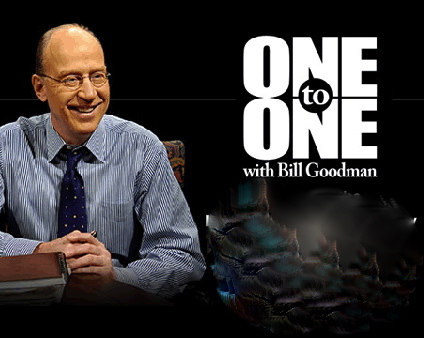
KET anchor Bill Goodman, a widely respected journalist, interviewed the RP last week upon the launch of The Recovering Politician.
You can watch the 28-minute video by clicking here, or on the picture below:
By Jonathan Miller, on Tue Apr 5, 2011 at 5:00 PM ET We open up Wednesday with the debut of our second contributing recovering politician. And since we started with a Democrat on Monday, we’ll feature a Republican tomorrow morning.
This contributing RP is literally a recovering politician: recovering from a gunshot wound that ended a promising gubernatorial campaign. He has dealt with other hardships — personal and political — but I think you will find his wicked sense of humor to be fully intact.
We have much more in store as well, so tune in tomorrow. Same RP time; same RP channel.
By Jonathan Miller, on Tue Apr 5, 2011 at 2:30 PM ET Since I travel quite a bit, I’m introducing a new feature to The Recovering Politician — borrowing with gratitude from PBS, the Today show, and The Daily Dish — Where in the World is the RP?
To win, you must be the first person in the comment section to name the location where I am standing in the pictures below. Identifying the city is not good enough — please give a more precise location within the city.
The winner receives a free signed copy of The Compassionate Community. My family, close friends, and business associates who already know my whereabouts are disqualified.
Speaking of my book about faith and public policy, today’s contest features pictures of me meeting new friends and sharing the multi-faith, love-your-neighbor message of The Compassionate Community.
Guess away in the comment section below!
UPDATE 3:52 PM Winner, winner, chicken matzoh ball soup dinner: John Hawkins correctly guessed that the RP was standing in the right-wing, conservative hot bed of Union Square, San Francisco. John will collect an autographed copy of The Compassionate Community, as soon as the RP escapes from the clutches of his new friends.
By Jonathan Miller, on Mon Apr 4, 2011 at 5:00 PM ET I hope you enjoyed today’s posts.
Perhaps Jeff Smith’s piece gave you a new, unique perspective on political scandal, while reminding you that in a highly polarized, hyper-partisan system, the players are manifestly human.
Maybe my essay on Bobby Kennedy will change the way you view April 4; not simply a day of grief, but also one of transcendence.
Tomorrow, we will launch a new feature on The Recovering Politician: RPTV. In 15 Minutes of Fame, I’ll interview David Sirota, the New York Times-bestselling author, who has just published a new book, Back to Our Future: How the 1980s Explain the World We Live In.
If you were alive during the 80s, are a pop culture fan, and are interested in the decade’s political ramifications, you’ll love it. If you want to get a head start, click the link below:
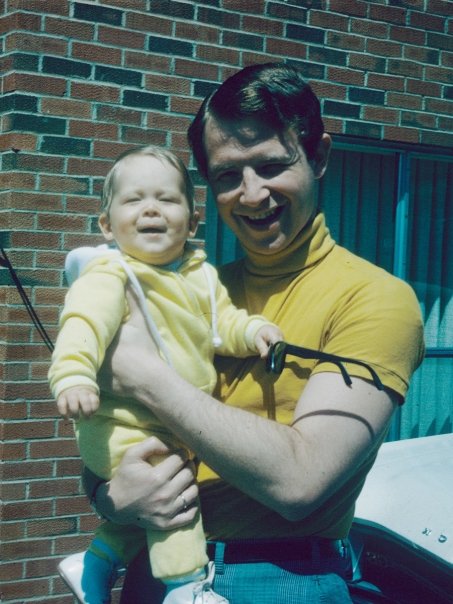
By Jonathan Miller, on Mon Apr 4, 2011 at 12:00 PM ET 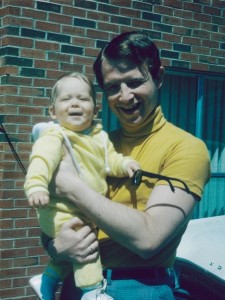 My dad and I circa 1968 Today — as on every April 4 — as the nation commemorates the anniversary of one of the worst days in our history; as some of us celebrate the anniversary of the greatest speech of the 20th Century; my mind is on my father. And my memory focuses on a winter day in the mid 1970s, sitting shotgun in his tiny, tinny, navy blue Pinto.
I can still remember my father’s smile that day.
He didn’t smile that often. His usual expression was somber, serious—squinting toward some imperceptible horizon. He was famously perpetually lost in thought: an all-consuming inner debate, an hourly wrestling match between intellect and emotion. When he did occasion a smile, it was almost always of the taut, pursed “Nice to see you” variety.
But on occasion, his lips would part wide, his green eyes would dance in an energetic mix of chutzpah and child-like glee. Usually, it was because of something my sister or I had said or done.
But this day, this was a smile of self-contented pride. Through the smoky haze of my breath floating in the cold, dense air, I could see my father beaming from the driver’s seat, pointing at the AM radio, whispering words of deep satisfaction with a slow and steady nod of his head and that unfamiliar wide-open smile: “That’s my line…Yep, I wrote that one too…They’re using all my best ones.”
He preempted my typically hyper-curious question-and-answer session with a way-out-of-character boast: The new mayor had asked him—my dad!—to help pen his first, inaugural address. And my hero had drafted all of the lines that the radio was replaying.
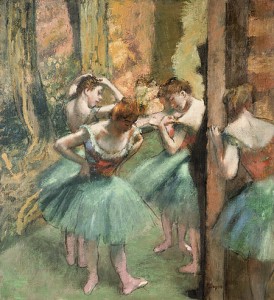 This was about the time when our father-son chats had drifted from the Reds and the Wildcats to politics and doing what was right. My dad was never going to run for office. Perhaps he knew that a liberal Jew couldn’t get elected dogcatcher in 1970s Kentucky. But I think it was more because he was less interested in the performance of politics than in its preparation. Just as Degas focused on his dancers before and after they went on stage—the stretching, the yawning, the meditation—my father loved to study, and better yet, help prepare, the ingredients of a masterful political oration: A fistful of prose; a pinch of poetry; a smidgen of hyperbole; a dollop of humor; a dash of grace. When properly mixed, such words could propel a campaign, lance an enemy, or best yet, inspire a public to wrest itself from apathetic lethargy and change the world. This was about the time when our father-son chats had drifted from the Reds and the Wildcats to politics and doing what was right. My dad was never going to run for office. Perhaps he knew that a liberal Jew couldn’t get elected dogcatcher in 1970s Kentucky. But I think it was more because he was less interested in the performance of politics than in its preparation. Just as Degas focused on his dancers before and after they went on stage—the stretching, the yawning, the meditation—my father loved to study, and better yet, help prepare, the ingredients of a masterful political oration: A fistful of prose; a pinch of poetry; a smidgen of hyperbole; a dollop of humor; a dash of grace. When properly mixed, such words could propel a campaign, lance an enemy, or best yet, inspire a public to wrest itself from apathetic lethargy and change the world.
Now, for the first time, I realized that my father was in the middle of the action. And I was so damn proud.
– – –
 Click above to watch my eulogy for my father My dad’s passion for words struck me most clearly when I prepared his eulogy. For the past two years of his illness, I’d finally become acquainted with the real Robert Miller, stripped down of the mythology, taken off my childhood pedestal. And I was able to love the real human being more genuinely than ever before. The eulogy would be my final payment in return for his decades of one-sided devotion: Using the craft he had lovingly and laboriously helped me develop, I would weave prose and poetry, the Bible and Shakespeare, anecdotes and memories, to honor my fallen hero. In his final weeks of consciousness, he turned down my offer to share the speech with him. I will never know whether that was due to his refusal to acknowledge the inevitable, or his final act of passing the torch: The student was now the author.
While the final draft reflected many varied influences, ranging from the Rabbis to the Boss (Springsteen), the words were my own. Except for one passage in which I quoted my father’s favorite memorial tribute: read by Senator Edward Kennedy at his brother, Robert’s funeral:
My brother need not be idealized, or enlarged in death beyond what he was in life, to be remembered simply as a good and decent man, who saw wrong and tried to right it, saw suffering and tried to heal it, saw war and tried to stop it.
Read the rest of…
The RP: My Dad, RFK & the Greatest Speech of the Past Century
By Jonathan Miller, on Fri Apr 1, 2011 at 5:00 PM ET I hope you enjoyed our first day of posts on The Recovering Politician. Please take seriously my request to offer your critiques, suggestions and ideas in the comments section below. And if you like what you read, please recommend this site to your friends via the buttons in the upper right of every post, and share it through the buttons below every post.
As we work out the kinks of this grand new experiment, and as other recovering politicians join the fray, I promise that the best is yet to come.
Speaking of which…
Next week will feature the debut post of three new recovering politicians. On Monday, we will lead off with the remarkable story of a young elected official — identified by many, including a well-respected documentarian, as a national rising star — who made an enormous mistake that abruptly stalled his political career. Now that he has paid an extraordinary price for his misdeed, he is sharing his story with The RP’s readers to help ensure others avoid the same pitfalls, as well as to offer comprehensive reforms for the toxic system which enveloped him. Tune it at 8:30 AM EDT on Monday.
Later that morning, I will offer my thoughts on the anniversary of what I believe is the greatest political oration of the 20th Century. A hint: Look at your calendar for Monday’s infamous date.
And of course, we will have more Weekly Web Gems, and robust debate and conversation in the Comments section.
Have a great weekend.
And…oh, yeah…to my readers in Connecticut, I give you my most heartfelt condolences in advance of your big loss Saturday night. Go Cats!
By Jonathan Miller, on Fri Apr 1, 2011 at 12:00 PM ET An uninformed visitor to my old Kentucky home this week might conclude that they’d mistakenly walked onto the compound of a Prozac-fueled utopian cult. An odd but euphoric delirium had descended upon the hills, hollers and hamlets of the Bluegrass State. Men and women walking more upright, a bounce in their steps, a huge grin on their faces. You couldn’t meet a stranger: In grocery stores and city parks and shopping malls, neighbors who months before felt nothing in common were now greeting each other with warm words, high fives, and fist bumps. Weeks from now, we’ll return to our regional camps, our partisan corners. But for now, we’re united; the sun’s shining just a bit brighter.
The Wildcats have once again made the Final Four. March Madness matters.
Smack Laettner with your mouse click to watch the worst moment, well, in all of history I’m often asked by my friends from urban America how a Jewish pischer like me could win statewide election in an inner notch of the Bible Belt. It’s simple: There’s only one state-sanctioned religion in the Commonwealth, and that’s Wildcat basketball. Besides, Kentucky features some of the most rabid anti-Christian hatred in the country. Anti-Christian Laettner, the aptly nicknamed Duke Blue Devil, that is.
It’s been common cause of that same coastal elite to declare the recent demise of college basketball. Just last week, the expositor of all that is right and just — the New York Times — asked “Does College Basketball Really Matter Anymore?” Much blame for the sport’s so-called march towards irrelevancy is directed at the National Basketball Association’s controversial “one and done” rule that permits pro teams to draft 19 year olds who are at least a year out of high school. Since many exceptional underclassmen leave for the NBA instead of staying all four years to graduate, the argument goes, the college talent pool is drained thin, diluting the excitement of the sport.
Dicky V just hates "one and done." Even the over-polished-teeth-gnashers who make bank by hyping the sport have decried the rule’s impact on the game: Cue lovable loudmouth broadcaster Dick Vitale, who termed the one-and-done system — in his own inimitable style — as an “absolute joke and fraud to the term ‘student-athlete.’” Meanwhile, the rest of the chattering class’ perennial echo chamber lambasts Kentucky coach John Calipari for daring to master the rules he was given and actually recruit players with the expectation that they would leave for the pros after a year in college. As the Final Four approaches and smaller schools such as Butler and Virginia Commonwealth are adopted by the rest of the country, the Cats are branded with a scarlet “W” and charged with undermining the Athenian ideal of amateur athletics, as well as contradicting the purity of the sport, the value of higher education in general, and the American Way. Quipped Washington Post political reporter/conventional wisdom decoder Chris Cillizza on the eve of an NCAA tourney ballgame last year, tongue lodged only partly in tweet: “Is there anyone in America not rooting for Cornell over Kentucky tonight? And if so, can they rightly be called American?”
 George (at left, above) is VERY young looking, for a 50-year-old A Sarah Palin-like appeal on behalf of a New York-based Ivy League squad?! Just slightly more serious and playful is the needling I’ve endured from my decades-long “frenemy” George—an insufferable Dukie, natch. He asks how can I, a progressive, Harvard-educated, policy-wonk, invest my emotional well-being in a semi-pro team of mercenaries with a league-lagging 2.02 GPA and a pitiful 31 percent graduation rate?
The truth is that since middle school, much of my kind—the jump shot-challenged intelligentsia, that is—have scoffed at the popularity, coddling, and public financing of the jock culture. College is our sacred realm—for academics, scholarship and research, not professional sports-grooming. Like Major League Baseball, why can’t the NBA establish its own minor league system that encourages talented high school athletes to bypass college entirely? Ironically, this argument was advanced on Op-Ed pages nationwide by Richard Hain, a mathematics professor at…wait for it…Duke University.
There’s no question that colleges need to do a better job of preparing student-athletes for the postgraduate work force, particularly since the vast majority will never gasp a whiff of sports-related riches. But scrapping the current system and replacing it with a glorified intramural product would suffocate an invaluable national asset.
For while the literary and media elite have branded cerebral baseball and primal football as our national pastimes; college basketball, particularly here in the heartland, really does matter. And flaws and all, big-time, big-money college roundball is not only the people’s sport; it’s also good public policy.
Read the rest of…
The RP: Why March Madness Matters
By Jonathan Miller, on Fri Apr 1, 2011 at 8:30 AM ET Mark Twain once quipped: “Everyone talks about the weather, but no one does anything about it.”
The same can be said about the turbulent storm that’s been hailing down on our country’s discourse. Particularly after a national tragedy — Oklahoma City, 9/11, Tucson — the hyper-partisan politicos, cable TV screaming heads and ideological flamebloggers all pledge to tamp down their rhetoric as they wax poetically about civility. And then, inevitably, they return to their partisan corners, crucifying the other side over the next urgent issue.
Today, we launch The Recovering Politician to provide a civilized forum as an antidote to our nation’s toxic addiction to vitriol and demonization. Here is a place for debating and discussing the issues of the day — politics, sports, pop culture, religion, you name it — without the finger-pointing and blame-assigning that’s all too typical on the Web and among our more crass media.
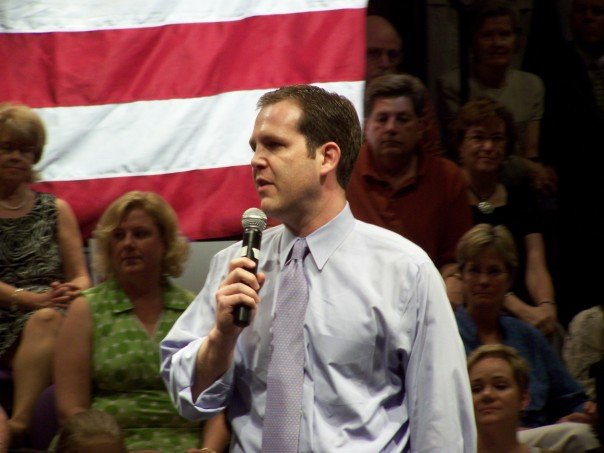 Your host and frequent commentator is Jonathan Miller, the Recovering Politician. The RP is a proud progressive Kentucky Democrat, but he’s learned that we must put aside our labels on occasion to work for the common good. Your host and frequent commentator is Jonathan Miller, the Recovering Politician. The RP is a proud progressive Kentucky Democrat, but he’s learned that we must put aside our labels on occasion to work for the common good.
The RP does not belong to a traditional 12-step program, but as a great admirer of friends who have battled real addictions, and a proud advocate of programs that empower them (see Recovery Kentucky), the RP has learned that many of the same principles espoused in recovery — candor, humility, compassion — can be a valuable tonic for our system at large and the players within.
The RP will be joined by dozens of other contributors — recovering politicians who’ll offer their own ideas about how to fix America’s most intractable problems: climate change, skyrocketing health care costs, our multi-trillion-dollar debt, crowning a college football national champion, celebrity idolatry, mom jeans, yadda, yadda, yadda. (OK, maybe not mom jeans; too polarizing…)
Like The RP, the site’s contributors are in the process of trying to prove F. Scott Fitzgerald wrong: that there are second (and third, and fourth…) acts in American lives. You’ll get the perspective of those who’ve survived the arena, and now are free to offer their critiques, unburdened by political pressures. You’ll hear from all sides of the spectrum, as well as from folks who’ve already carved their niche in the real world to share their expertise.
Every week day, the site will also feature a handful of “The RP’s Weekly Web Gems”: a set of links focused on a particular issue (i.e., the environment, health care, fashion. the NFL), culled by the RP’s crack staff, that reflect the best civil discourse on the Web.
Be forewarned: civility does NOT imply preciously-sincere, campfire-style appeals for spiritual unity. Nor does it require compromising core beliefs, watering down faith or appeasing bullies. Expect passionately-opinionated, controversial, imagination-provoking posts. Get ready for vigorous, rigorous debate. But all within the spirit of mutual respect and a determination to advance us all to workable solutions.
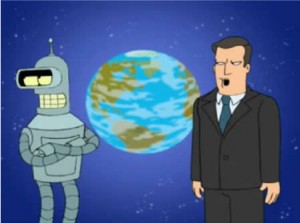 Click on Al Gore's face for an instructive video on how to affect the weather And you’re encouraged to join the fray and make some helpful noise: Please share your comments, early and often, through your Facebook account. It’s easy.
At a minimum, please share your thoughts on the site itself through your comments. And if you like what you read, please recommend articles via the buttons at the upper right of every post and share them with your friends through the buttons at the bottom.
One last admonition: Please be patient. It may take us a few days to complete our mission to rescue the nation from its polarizing, paralyzing discord. Then, and only then, will we try to do something — finally! — about improving the weather around here…
|
The Recovering Politician Bookstore
|