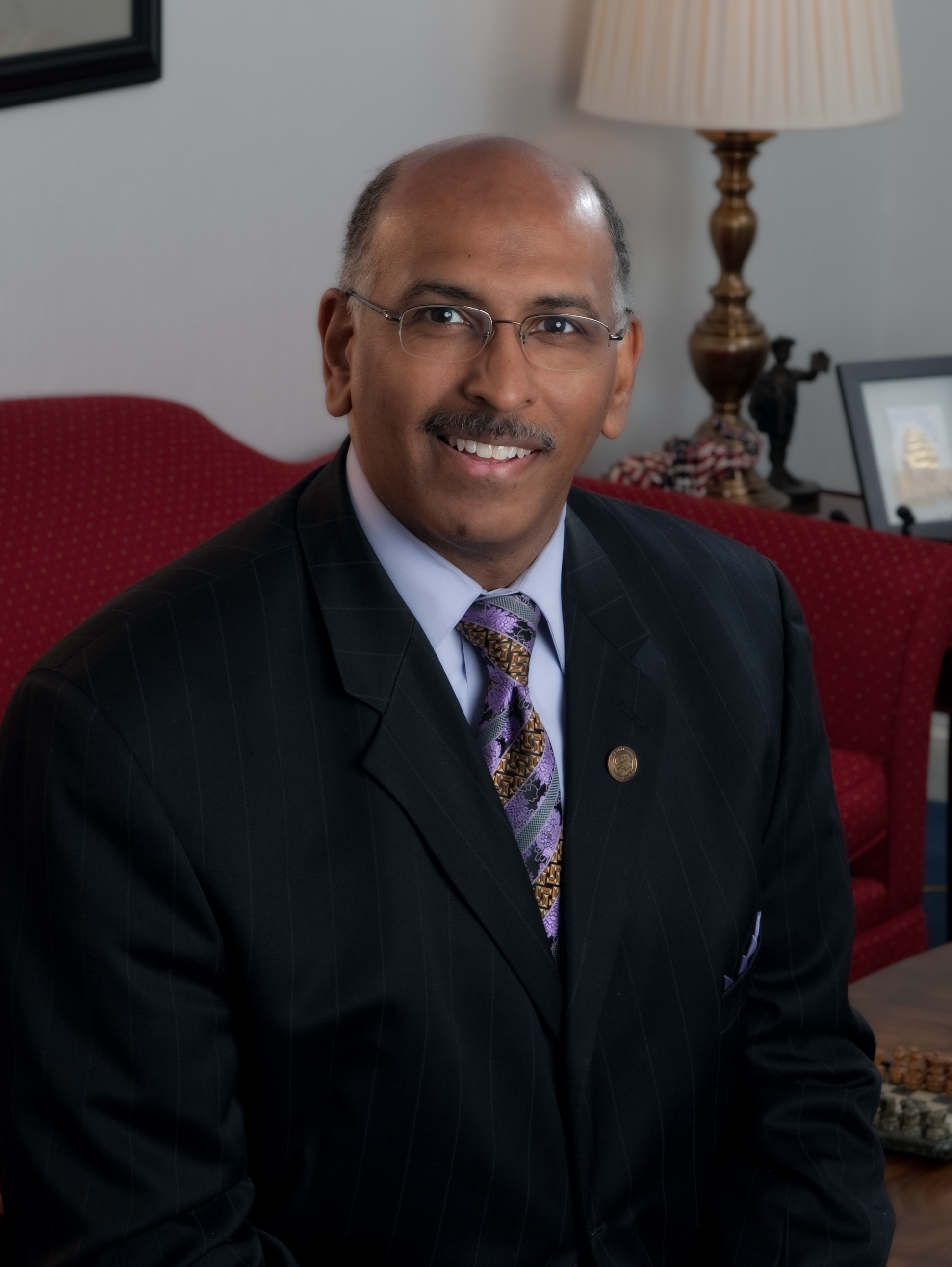
By Artur Davis, on Wed May 16, 2012 at 10:00 AM ET  Mark Schmitt has just written a solid critique in the New Republic of the failing political enterprise that is Americans Elect. On this site and elsewhere, I’ve echoed Schmitt’s point that the putatively grassroots organization has turned into little more than a society of well connected K Street/Wall Street donors and establishment types who are steering toward some amorphous “center.” I‘ve also argued that this center is a socially liberal, deficit conscious, selectively pro big business zone that reflects the worldview of any lobbyist-paid lunch table at the Palm or Bobby Vann’s. In other words, less a coherent middle ground than a hodgepodge of views that are already well represented in American discourse, especially at elite levels. Mark Schmitt has just written a solid critique in the New Republic of the failing political enterprise that is Americans Elect. On this site and elsewhere, I’ve echoed Schmitt’s point that the putatively grassroots organization has turned into little more than a society of well connected K Street/Wall Street donors and establishment types who are steering toward some amorphous “center.” I‘ve also argued that this center is a socially liberal, deficit conscious, selectively pro big business zone that reflects the worldview of any lobbyist-paid lunch table at the Palm or Bobby Vann’s. In other words, less a coherent middle ground than a hodgepodge of views that are already well represented in American discourse, especially at elite levels.
As Schmitt documents, the group has lagged in its audacious plan to elevate a third party presidential candidate. Its goal of securing ballot access in 50 states, which was supposed to have been accomplished last fall, has barely crossed the halfway point. The top contenders in their online virtual primary—Buddy Roemer and an unauthorized rump of Ron Paul diehards– are compiling embarrassingly low numbers that look like single precinct caucus totals. And the veil of indifference about the identity of an eventual candidate has been lifted in favor of a not so covert push for former Comptroller General David Walker, a serious man but one whose flirtations with running have yielded 360 online votes and an occasional Google alert.
 The failure is not surprising: the two occasions in which a third party has genuinely broken through in our politics have involved either a national catastrophe—the Republicans who were born from the disintegration of the country over slavery in the antebellum era—or the galvanizing presence of a charismatic former president, Theodore Roosevelt, who was denied a comeback by his party’s retrograde machine. For all of the angst over our current partisanship, America circa 2012 is not remotely a nation in fundamental disarray, or one whose political institutions are unraveling. The Tea Party on the right has already realigned into what amounts to a populist wing within the Republican Party while Occupy Wall Street on the left has quickly faded into irrelevance and incoherence. The failure is not surprising: the two occasions in which a third party has genuinely broken through in our politics have involved either a national catastrophe—the Republicans who were born from the disintegration of the country over slavery in the antebellum era—or the galvanizing presence of a charismatic former president, Theodore Roosevelt, who was denied a comeback by his party’s retrograde machine. For all of the angst over our current partisanship, America circa 2012 is not remotely a nation in fundamental disarray, or one whose political institutions are unraveling. The Tea Party on the right has already realigned into what amounts to a populist wing within the Republican Party while Occupy Wall Street on the left has quickly faded into irrelevance and incoherence.
Read the rest of…
Artur Davis: Americans Elect, Going, Going, Gone?
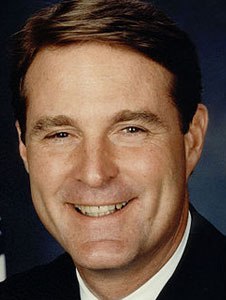
By Evan Bayh, on Wed May 16, 2012 at 8:30 AM ET In his Pulitzer Prize-winning book, “Profiles in Courage,”John F. Kennedy wrote admiringly of U.S. senators who put the national interest ahead of partisanship, ideological purity and regional parochialism. Many sacrificed their careers because of their stands, but Kennedy held them aloft as examples to be emulated for their moral courage, intellectual independence and public candor.
Judging by Sen. Richard Lugar‘s defeat in the Indiana Republican primary last week, today’s most partisan voters would give the book an unfavorable review.
Lugar served the people of Indiana in the U.S. Senate for 36 years. My father was a colleague of his for four years, and I served with him for another 12. My father and I saw the world differently from Sen. Lugar in many respects, and we often voted differently. But Lugar is a statesman in the best sense of the word. He was thoughtful, civil and willing to find common ground when doing so served the best interests of our nation.
Those characteristics made him a great senator, but they also turned him into a soon-to-be ex-senator last Tuesday when he was soundly defeated in his Republican primary by the tea party-backed Indiana Treasurer Richard Mourdock. Lugar was undone by the antithesis of what Kennedy so admired.
Read the rest of…
Evan Bayh: Profiles in Partisanship
By Artur Davis, on Tue May 15, 2012 at 4:30 PM ET [Click here to follow the entire RP Debate]
Jeff Smith’s response to my position is a thoughtful clarification. It deserves the following clarification on my part: first, I do think there is room to criticize the termination of Grenell as a needless concession to anti-gay sentiment on the right; there is also as much room to view it as a legitimate reflex in a campaign that has had a consistent issue with staffers who draw too much attention to themselves (remember the debate coach who was sacked last fall after talking out of school about his role in Romney’s debate prep?). My point is simply that it is a fit subject for debate and not a closed, easy case, and I should have expended the time in making that clear.
Second, on the much broader observation that Jeff makes, I actually agree with his point that those of us who aren’t there on gay marriage have an obligation to ground those criticisms in themes that resonate beyond the evangelical community, and that don’t just reflect animus against one class of citizens. I have made that point in a posting on my own blog, officialarturdavis.com last week. I quote part of my observations below:
“The media-filtered reaction to President Obama’s endorsement of gay marriage has been predictable: an undercurrent of exaltation in the newsrooms that have long ceased to think of homosexuality as anything but another form of freedom; cherry-picked evangelical leaders who fit that same media’s expectations of what social conservatism looks and sounds like. To be sure, the networks and cable have brought forth their share of high profile African American ministers and Catholic bishops, but they aren’t the woman in that southern church running a youth group, trying to grapple with how social change shapes fatherless neighborhoods: the preachers and clerics are speaking in the accents of scripture and biblical text, which most Americans are in the custom of preaching not practicing.
It would be a healthy thing if more of the debate featured voices like the woman I described. It would be equally healthy if more conservatives (and frankly, conservatives disagree with each other on this issue, liberals are entirely of one mind) had weighed in not with jibes at Obama’s timing or the sincerity of his original, pre-”evolving” mindset, but with an honest declaration that the argument over gay marriage does not have the same contours today as it did ten years ago. The fight for most Americans going forward is whether the legal future of same sex marriage is determined state by state, with voters and democratic processes deciding this issue, and not by federal judges deploying an elastic construction of the equal protection clause; and secondly, whether sectarian institutions like Catholic adoption agencies will preserve their own freedom of conscience or lose it to public and elite opinion.
While I don’t couch it as a character defect, just a blown tactical opoortunity, Romney did miss a moment last week to make the kind of statement of purpose that Jeff alludes to here, and that I touched on last week, but not in the context of the Washington Post’s hit job. He could have used his speech at a relligious college last weekend to make the point that principled Americans can differ on the definition of marriage; that his reading of the Constitution and his preference for states to decide their own social cultures leads him another way, but that he respects the voices of those who think the issue is a clear-cut matter of justice. He also might have added that conservatives should take comfort from the fact that after decades of marriage attracting some cultural derision in smart, chic circles, its a good thing that the institution is being embraced by a cultural left that was skeptical to say the least in the seventies, when Gallup showed all time lows in faithfulness and expectations of monogamy.
Had Romney gone that route, he would have been criticized on the left and the right for trimming on a moral point. But he would have evoked the tones around a lot of dinner tables last week, and he would have sounded like a leader whom the people at those dinner tables could get used to seeing on their screens for four years.
By Jeff Smith, on Tue May 15, 2012 at 3:00 PM ET  [Click here to follow the entire RP Debate] [Click here to follow the entire RP Debate]
Artur writes that “if one’s perspective is that Mitt Romney’s opposition to gay marriage and his parting of ways with a staffer whose public position was at odds with his own both amount to homophobia or bigotry,” then there is no room left for civil debate.
A bit of sophistry there. I never said that Romney’s position or his pushing out of Grenell amounted to homophobia and bigotry. I said that it amounted to a weakness of character.
While out, loud, and proud, Grenell worked for eight years for George W. Bush, serving as spokesman to Ambassadors Bolton and Negroponte, as well as John Danforth and Zalmay Khalilzad. Bush, of course, also strongly opposed gay marriage and pushed a constitutional amendment to ban it. The point is that Grenell was at odds with Bush too but Bush understood that not every member of your administration will agree with every single one of the administration’s positions; it is, however, critical that employees agree with those positions in the realm in which they work.
But as Jonah Goldberg from Artur’s own NRO writes, Romney should understand that if you’re going to oppose gay marriage, you will have zero chance of convincing anyone your position isn’t driven by anti-gay animus if you’re also opposed to gays working in policy areas that have nothing to do with gay marriage.
By Greg Harris, on Tue May 15, 2012 at 2:30 PM ET  [Click here to follow the entire RP Debate] [Click here to follow the entire RP Debate]
I truly hope discussion about the Post piece doesn’t turn into debate about its timing versus substance.
Reporters are digging into Romney’s post, just as they dug into Obama’s (Rev. Wright, etc). In doing the digging, they came upon the recollections of grown, prosperous men about a bullying incident that haunted them through the years. A peer at their school was harassed, held down and sheared. The prosperous son of a Governor/Big 3 CEO committed the act. That’s pretty damn mean.
What concerns me all the more is that Romney seems to acknowledge the incident, though with faint memory. I think a human being should remember something like that–that is, unless they are wired differently.
Of course, this wouldn’t be as relevant if Romney’s policy positions didn’t reveal callous attitudes towards the GLBT community. Physically restraining a “different” student is one things; policy prescriptions that restrain an entire population from military service, the right to marriage or even civil unions, brings such dehumanization to scale.
By John Y. Brown III, on Tue May 15, 2012 at 1:30 PM ET  [Click here to follow the entire RP Debate] [Click here to follow the entire RP Debate]
Robert,
Great point about Romney’s response needing to be honest and opening inroads for an important dialogue.
Like so many instances of public discussion of a public figure’s heretofore private life incidences , it’s the response –not the act—that’s the thing. The teen behavior by Romney, if true, is reflective of a narrow and hurtful view of homosexuality while he as a teen. But if he deliberately deceived the public about the incident as a 65 year old candidate for president, that would bother me quite a bit more.
I believe that if a candidate is comfortable with themselves and their past, it allows the public (voters) to be comfortable with them—and their past. They trust the person who stands before them today that their prior mistakes were duly noted, reconciled, and learned from. But if the person has not made this peace with their past bad acts and integrated them into their present selves, they are merely managing a public image not reflective of who they really are. And will struggle to gain credibility with the voters who they seek to lead.
Artur,
Touche regarding the Washington Post’s coincidental timing. Perhaps a form of selective and sophisticated journalistic bullying?
By Artur Davis, on Tue May 15, 2012 at 1:00 PM ET [Click here to follow the entire RP Debate]
Having gotten lost in this thread long ago, I will re-enter only to make a few observations:
-If one’s perspective is that Mitt Romney’s opposition to gay marriage and his parting of ways with a staffer whose public position was at odds with his own both amount to homophobia or bigotry, there is not much room for civil debate. I would beg to differ, and would only urge that a topic on which the country seems almost evenly split deserves a less absolutist frame.
-On the larger question of relevance, I side with the Miller/Steele way of looking at this episode: too long ago, too hard to separate from the context of juvenile foolishness, too hard to invoke against Romney without setting a standard that would scorch too many others. I also found intriguing one line of comments to the effect that the whole business of background mining to determine character would have wreaked havoc with a lot of good presidencies. It’s not that character has nothing to tell us about the potential misuses of power, but that it requires much more depth of knowledge and much more texture than today’s weakly sourced media snapshots can generally provide. And surely there is some statute of limitations.
-As to the other nagging charge, that Romney’s handling of this episode is revealing of some lack of empathy, I plead confusion. Should he have really waxed eloquent about a thing that he likely barely remembers, and that he reasonably contends has not much to do with his current values? Should Barack Obama have shown more anguish in describing the costs of teenaged drug use, or George Bush more passion in describing the wages of alcoholism? I’ll side with whoever said that the passions of these candidates on where they plan to take the country are worth more than their passions about their life lessons.
-Final point: I’ll confess disappointment that no one has bothered to address the timing of the Washington Post story, especially on a blog where more than a few of us have been at the mercy of press selectiveness in our past political lives. Timing is a huge power in journalism and the choice to run this story the day it ran is hard to qualify as anything other than a hit job. It was a pretty-clear cut instance of a news organization trying hard to link a 48 year old account to a current position on an issue. That is advocacy, not balls and strikes journalism; fine for a Huffington Post blogger, not fine for the second political paper of record in the country.
By John Y. Brown III, on Tue May 15, 2012 at 12:30 PM ET [Click here to follow the entire RP Debate]
I agree with Michael Steele’s assessment.
(A sentence I had not anticipated writing since joining the RP blog. But well put, sir.)
Some people like to drive slowly past an accident to see what happened. I hate to admit it, but I’m guilty of this more often than I wish I were. But I don’t want to be someone who drives by a fender bender and slows down to imagine an accident that I wish had happened but didn’t.
I can’t help but feel that’s an appropriate analogy for Mr Romney’s alleged anti-gay bullying behavior. Even if it happened as provocatively as some have reported, I don’t feel the behavior is much more than pubescent pseudo-masculine posing.
Embarrassing? Yes.
Regrettable? Sure.
Like a fender bender. But grounds for revocation of a license to be president, so to speak, 45 years later? I say we should take Michael Steele’s advice and keep driving.
Something to see and note, perhaps, but nothing worth staring at for very long.
By Michael Steele, on Tue May 15, 2012 at 12:15 PM ET 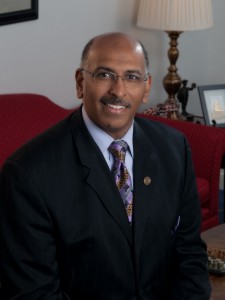 [Click here to follow the entire RP Debate] [Click here to follow the entire RP Debate]
It’s amazing what you miss when you turn off the TV or stop reading the newspaper. But, unfortunately, since that’s not what I did this week, I’m stuck like the rest of you trying to put some rational context to an almost fifty year story about a bunch of preppy high school boys in the 1960s doing what all preppy high school boys do—haze the hell out of each other.
And because one of those preppy high school boys is running for president we’re supposed to judge his actions to be more egregious, offensive and disqualifying because this happened in 1965?
If the Washington Post broke the story that five weeks ago Mitt Romney and a bunch of aides wrestled an Obama supporter to the ground and Romney sat on his chest and started cutting his hair off, now that would be something worth reading (and seeing). But since that’s not what happened, this story like the incident itself bears no relevance to the man, his campaign for the presidency or what people think or feel about him (except maybe for a few old preppy high school boys who may think he’s cool—but not quite like “The Fonz”).
Just like the most minor of fender benders that ties your life up in a knot of traffic because someone has to slow down and look—don’t look, don’t even pause. Just keep moving because there’s nothing going on here worth reading about or seeing.
By John Y. Brown III, on Tue May 15, 2012 at 12:00 PM ET  Too much texting? Too much texting?
Last night I started a text message and stopped in mid sentence and put away phone to finish message later….but it got sent anyway.
Here’s the exchange– which indicated to me I may be over-texting:
Me: Hey there….I waLMOXXX1OKKQ
Recipient: What does this mean?
Me: Sorry. I put phone in breast pocket and it just typed these letters. Ha!
Recipient: Yeah, my kids call it butt dialing.
Me: Right.
Recipient: What was your message?
Me: Never mind. It’s unimportant and actually makes less sense than what I sent.
|
|