 News that deep-pocketed Las Vegas casino owner Sheldon Adelson gave a whopping $10 million to a pro-Mitt Romney political action committee makes it the largest advertising buy since the Republican candidate became the putative challenger to President Barack Obama. Certainly, such generosity contributed to the Romney campaign-Republican National Committee-Victory Fund troika’s massive $106 million haul last month.
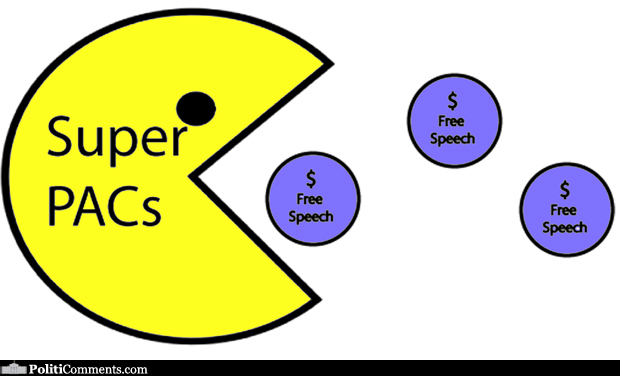
But it is the donations to the “super PACs” that have whipped Democrats into a frenzy and spurred the news media to turn their spotlight on the growing role and influence of these PACs and the individuals who fund their activities.
Such big donations lead some politicians and pundits to paint super PAC donors as nefarious agents corrupting the political process. The political left has especially been critical of the role that these organizations and their donors play since the U.S. Supreme Court handed down its decision in Citizens United v. Federal Election Commission in 2010.
Specifically, the high court ruled that “the Government may not suppress political speech based on the speaker’s corporate identity.” In other words, PACs that did not make contributions to candidates, parties or other PACs could accept unlimited contributions from individuals, unions and corporations (both for-profit and not-for-profit) for the purpose of making independent expenditures for “express advocacy or electioneering communications purposes.” Citizens United essentially ensured that corporations would have the right to free speech, just as the unions were enjoying.
The Supreme Court gave little credence to the government’s argument that the First Amendment does not cover corporations because they are not “persons.” Corporations are, after all, the court would note, just “associations of people,” and the First Amendment should protect their right to petition the government.
That being said, most donations to super PACs have come not from corporations but from the wealthy individuals who run them. According to the Center for Responsive Politics, the top 100 individual super PAC donors in 2011-12 made up just 3.7 percent of contributors but accounted for more than 80 percent of the total money raised.
 Given that labor-union political activities and money favoring Democrats had previously been dominant in federal campaigns, it is interesting to hear the screams of indignation now that Republican-leaning corporate moguls are stepping up their political and financial support.
Of course, super PACs are being criticized specifically for engaging in heavily negative campaign advertising. Yet, like them or not, such attack ads often work to drive up the negatives of opponents. Ironically, despite calls for less negative campaigning by the presidential candidates as well as their respective super PACs, research early in the 2012 campaign indicated that most voters found negative advertising informative and that candidates benefited from negative advertising sponsored by PACs.
The Citizens United case and its aftermath, however, have nothing to do with the fact that the campaign-finance-reform law passed by Congress and from which the Citizens United case was born woefully neglected to include an effective donor-reporting mechanism that could have been an adequate check on the mega-donations made to such PACs. Simply put: Congress should have written full disclosure into the law.
By January 2010, though, at least 38 states and the federal government had come around to requiring disclosure for all or some independent expenditures or election communications — stipulations intended to deter potentially corrupting donations. Yet, despite these laws, many voters go to the polls not knowing who funded those political commercials running incessantly for the past three weeks. In fact, in federal elections, PACs have the option of filing reports on a monthly or quarterly basis, which often means that funds are collected and spent long before the legal filing disclosure is required.
Read the rest of…
Michael Steele: What’s So Bad About Super PAC-Men?