Great points, John Y. I really was not taking shots at you for having feelings. Clearly, I need to soften up a bit myself. I very much enjoyed your post and definitely can relate to switching from running the race to just coaching. Although, I still like to tell everyone how fast I used to be.
But on Romney, I think the “he’s out of touch, or not one of us” analysis is too deep. I’m not saying in a general election independent voters may feel that way, but Republican primary voters are simply wary of a guy who said he was pro-choice and OK with gun control.
Additionally, his Mormon faith is hard for many evangelicals to swallow. Most of us have been taught all our lives that Mormonism is a cult. So for many evangelicals, getting past that takes a lot of work. They will vote for anyone who is even close to their views before picking a Mormon.
Maybe some voters feel it makes him different from them as you and Krystal noted, but most primary voters who have a problem with his religion will admit he is great at business, and he is good on the issues but…
Great commentary and insights and I feel the Alpha-male urge to jump in and defend my original point. No sucker punches. Promise. But possibly some territorial markings.
First, Rod, please forgive my depth and seeming over-analysis. I try not to reflect in mixed political company because it’s bad manners. Reflectiveness, I feel, is the liberal counter-point to Republican toughness. George Bush II, Rudy Giuliani, Dick Cheney and much of the Republican leadership class for the past decade ran the electoral tables with the tough guy brand. By contrast, we Democrats fought back with candidates that promised to out-reflect and out-analyze their republican opponents. This Democratic approach has not worked well electorally.
In fact, it was observing Republican campaign tactics over the past couple of decades that led me to conclude the key to electability isn’t an intellectual exercise or the sum and substance of a campaign platform — but rather a successful visceral appeal. And that Democrats needed to find a way to connect with voters in a more raw and basic way than reeling off data and exuding likability.
Read the rest of… The RPs Debate Presidential Leadership: John Y. Defends
I want to start where Rod’s insightful and very honest post (particularly for someone who worked for the candidate!) left off. Rod said he wished Romney would “walk into a room with his hair messed up in a t-shirt and jeans grab the mike and say, ‘I’m a heck of a good businessman and I’m going to kick Obamas butt and fix this country. You can either get on board my train or I’m running you over!’”
Rod’s right. This is exactly what Republican voters want to hear this year. Unfortunately for Governor Romney, it’s also exactly the kind of line that with or without actual swearing, Romney is completely incapable of delivering in a non-cringeworthy way. Mitt’s problems have less to do with the ins and outs of his flip-flops and more to do with the fact that those flip-flops feed the narrative of what everyone suspects: Romney is a privileged, out of touch, overly ambitious guy whose positions are poll-tested and designed to reflect what the electorate wants to hear, not what Romney actually believes. In fact, I’d go so far as to say that they suspect he holds no core beliefs. Jeff described Romney as “perfect.” Voters don’t see perfect though, they see too good to be true.
The fact that Mitt doesn’t share the religion of the vast majority of Republican primary voters is also not the problem per se. The problem is that Governor Romney’s religion feeds another narrative that voters suspect is true of Romney: that he’s fundamentally unlike you and your neighbors. You can’t relate to him and he can’t relate to you. How can you trust this guy to get what your family is going through when he seems so unlike you? How can you trust him to fight for you?
Machiavelli says that it is critical for leaders to be either feared or loved and between the two, it’s better to be feared. In America though, I think we prefer to have something like 3 parts love to 2 parts fear in our Presidents. Obama, even now with the initial luster worn off his persona, is loved by his base. But he has another side that’s on display when he says: “Ask Osama Bin Laden if I engage in appeasement.” George W. Bush, Clinton, and Reagan all were loved and feared. In fact over the past several decades, I would argue that the two one-term Presidents, Carter and Bush 41, failed to win reelection because they were neither really loved nor really feared. Could America love Romney? Fear him?
Read the rest of… The RPs Debate Presidential Leadership: Krystal Ball Rebuts
John Y’s post was deep. All the psychological stuff is a bit too touchy feely for this Marine. I don’t know if he was a psychology minor in college or if his wife has him watching too many chick flicks. Either way, it was too deep for me. But as I think back to comments from the important women in my life, maybe I need to learn from John Y. or watch more chick flicks.
That being said, I agree with the RP and think analyzing Romney’s problems with Republican voters is much easier. I ran Romney’s 2008 Missouri campaign and I’m still pulling for him, but he has two basic problems.
First, he is a Mormon. I know it’s not politically correct (PC) to admit that a candidate’s religion can hurt them, but reality pays no attention to PC. There are many evangelicals who have a major problem with Mormons. They like the family values, but they have a serious mistrust of the Mormon faith. Evangelicals are a important part of most Republican primaries. Iowa is a good example both in 2004 and 2008.
His second problem are his flip flops. Politics is a crazy business and most successful politicians massage their views depending on the situation or audience. The Internet has made it harder than it used to be, but each week we hear about some comment a politician made at a fundraiser or event that rubs the other party and Independents the wrong way.
Romney’s problem is he has changed his mind on some really important and big issues for Republicans. The top 2 are probably abortion and gun control, but the health care issue ranks up at the top as well.
Most realistic political observers realizes that to win a Governor’s race in Massachusetts as a Republican, a candidate has to be a bit more moderate. But we all know that the most hardcore primary voters in each party are anything but realistic. When running for Governor, Romney took some moderate stands that helped him win and later govern. That was then, but the presidential primary is now, and those past views are not helpful today.
The flip flops allow conservative Republicans who already have concerns about Romney’s faith to justify distrusting him. I know this because I talked to hundreds of them 4 years ago.
We need to fight against the persistent myth that being universally respected and loved is the essence of leadership. Obama’s real or feigned belief that he could triumph over all disagreement and be adored by being adorable was doomed from the start. Doomed for the simple reason that making policy means dealing with disagreement. We all want to believe that the positions we take on issues are so self-evidently reasonable that any honest and rational person HAS to agree with us. But that is just a convenient and comforting fiction. More than that, it is also a backhanded way to belittle and insult people who think differently than we do by dismissing them as either stupid or mean-spirited or both.
There are many possible answers to any policy question, and (at the risk of sounding more like a relativist than I am) many of them can be right at the moment. Only in retrospect can we say for certainty what worked and what did not. In the meantime, we will disagree. And that is a good thing, because disagreement is the life blood of a competitive electoral system. It is pure folly to believe that you will get your way because your opponents like you. You get your way by taking clear positions and defending them within the existing system. (Though of course the system itself needs to function properly—that’s my shout out to No Lablesl!) You need to show what you believe, and what you are willing to do in pursuit of those beliefs, not wait for other people to agree with you before you take a position. Your opponents will criticize you no matter what you do (they will call you weak when you defer, and arrogant when you push forward), so why surrender pre-emptively? It is risky to take positions, but there is no reward without risk. True leaders take risks.
This myth of being universally loved is fostered by the hagiographies that come after a famous politician dies. The best example here is President Reagan. Upon his death all we have heard is how terrific he was, and both media personalities and politicians of all stripes have downplayed the controversies of the Reagan era. Frankly, that is an insult to his memory and to anyone with actual historical sense. For all his sunny optimism, Reagan was intensely controversial, and neither his fans nor his detractors do him justice by pretending he was not. Indeed, his opponents often hated him most of all because he was so goddam genial. He pushed hard for things he wanted, made compromises when he thought it made sense to do so, but he did not shy away from decisions in hopes that his opponents would agree with him before he made a move. Anyone who lived through the 1980s knows what the political debates of those years were like.
Read the rest of… The RPs Debate Presidential Leadership: Ron Granieri Rebuts
By Zack Adams, RP Staff, on Mon Jan 9, 2012 at 9:30 AM ET
Romney’s still the frontrunner, but it doesn’t feel nearly as good as a tie for first should’ve felt for him.
Santorum has a window here. As has always been the case, Romney is in deep trouble in a two- or three-way race, assuming one of the others is Paul and the third is a strong social conservative. Perry and Bachmann will drop out before New Hampshire, I think. Perry made sure that 2/3 to 3/4 of their votes don’t go to Romney or Paul; they go to Santorum or Newt. But since AngryNewt will be running a kamikazi mission to damage Romney, not many will go to him.
A couple other side notes: the Santorum working-class contrast vs. the Mitt/Bain “guy who laid you off” could be effective in the battle for votes in what is, at the rank-and-file level, a largely downscale party.
Finally, Huntsman’s mini-boomlet in New Hampshire combined with Paul’s continued strength could deny Romney the big New Hampshire that the press has already discounted. So, Santorum has a shot here. He needs to do a few things: 1) find the best online fundraising team in Republican politics and sign them up; 2) Convince a few national conservative leaders to step up this week and try to unite conservatives nationally around him which means coaxing Bachmann out if she won’t decide herself; 3) Make sure he gets on the ballot everywhere and avoids Newt-like logistical screw-ups; and 4) Soft-pedal New Hampshire and focus on South Carolina; the Mormon issue is not going away in the Deep South.
All in all, the night couldn’t have gone much better for Santorum, and the most important piece of it was Perry all but announcing his departure.
John Y.’s provocative piece had me ruminating for hours. Probably as much as when I first watched that particular episode of The Sopranos — one reason why it’s my favorite television series of all time.
Then, in a telling irony (Mrs. RP assures me that there are no coincidences), I clicked on an email from my rabbi who was sharing with his congregants his thoughts about this week’s Haftorah portion (readings from the Prophets that amplify the Torah portion from that particular week).
To quote Rabbi Klein directly:
This final Torah portion [from the Book of Genesis] deals with the end of the patriarchy and creation of a nation. This final Haftarah seems to tell the same tale in a different generation, but its subtle and difficult side message cannot go unnoticed and unexamined.
On his death bed, the wise and beloved King David admonishes his son Solomon (whose ascension to the throne was not intended), to make killing all of David’s enemies his first royal act. “I go the way of all the earth; you shall be strong, therefore, and show yourself a man (1 Kings 2:2). To show himself a man, Solomon must remember the people who wronged David and kill them. And the descriptions of these deaths are violent. “And you shall do according to your wisdom, and do not let his hoary head go down to the grave in peace (2:6).
The very same message — from King David to Tony Soprano. Literally, from the sacred to the profane.
And certainly, it was a lesson taught many millions of years before Biblical times. Among the animal kingdom in the wild, the survival of the fittest is not merely a metaphor. The alpha dog (or lion, or dinosaur, yadda, yadda, yadda) is the one who demonstrates the greatest strength, often at the expense of the weaker members of the tribe. Even in today’s modern culture, our evolutionary instincts remain ever-present.
Read the rest of… The RPs Debate Presidential Leadership: The RP Rebuts
By John Y. Brown III, on Mon Jan 9, 2012 at 8:30 AM ET
Today, we launch a new feature at The Recovering Politician: The RPs Debate. In this format, one of our contributors will make a provocative post, and others will jump in with their responses. We will publish a new response every half hour. If you like it, we’ll try it again soon. If not, at least some of us had a fun weekend arguing.
When women kiss it always reminds me of prize fighters shaking hands. — HL Mencken.
I thought of this quote watching the Iowa presidential primary returns last week. I was thinking about the basic competitiveness among the men and women–with their own sex.
That quote made me laugh when I read if for the first time as a college student because, as a guy, I was just starting to notice that women were often more competitive than they seemed. Of course, women know this all along but young men– who tend only to notice round objects that can be thrown or resemble the shape of a sandwich or remote control — often miss subtler body language.
Fast forward another 20 years, and I begin to notice the subtler competitiveness among men. Oh, I suppose I always sensed it but never paid full attention to it — until recently. The put down, the standing slightly taller, the one upsmanship stories, the sarcastic joke that makes you a bad sport if you don’t laugh at yourself But there is another level…that is more concerning and more important among men. Fear of being replaced by a younger man….that mixes envy and fear and pride. The mature man becomes generative….a mentor. He accepts his new role with gusto and doesn’t try anymore to win foot races against younger men but to help coach him and teach him not only how to run faster but to be a better man, husband and father. Women, of course, experience this too but I’ve been thinking more about the male reaction to this pressure and it’s significance — to individuals, to families, and even to nations.
So, what does it look like in it’s most basic form? Like this (watch clip below)
Read the rest of… The RPs Debate: Presidential Leadership — John Y Provokes
I will always remember Mr Galbraith with respect and admiration.
I first met him when I was an undergraduate at the University of Kentucky in the late 1970s, and we met again in 2010 when I was an expert witness in a trial during which he cross-examined me. He was thorough, incisive, of good humor, and a gentleman.
I will miss him and his particular brand of insights and the way he expressed them.
I knew Gatewood for many years and always enjoyed running into him, wherever it might be.
He was always upbeat and had something interesting to say. He was the kind of person who could make your day a little brighter just by speaking with him briefly.
His eternal optimism was always refreshing. You have to admire a man who stood up for what he believed was right (not a trait of a lot of politicians) and had no hesitation in expressing to you his opinion.
I remember running into him at Good Foods Co-Op on Southland Drive during the 2007 gubernatorial race, and he gave me an autographed copy of his book. I asked him how his campaign was going, and he said “we’re going to win this thing.”
I remember seeing him during prior campaigns standing on Versailles Road after the races at Keeneland with his campaign sign in hand, waving to everyone, as all of the traffic was going by, and I remember thinking it was a shame he was unable to raise more money so he would have a real shot.
I remember seeing him at Keeneland in October of last year, and I asked him how the campaign was going, and he said it was going well. “We’re going to beat Williams.”
I for one will miss seeing Gatewood, and I am sorry he never won one of his races. I believe he would have done a good job in public office, and he certainly would have “stirred the pot.” I also wish he had lived to run at least one more time.


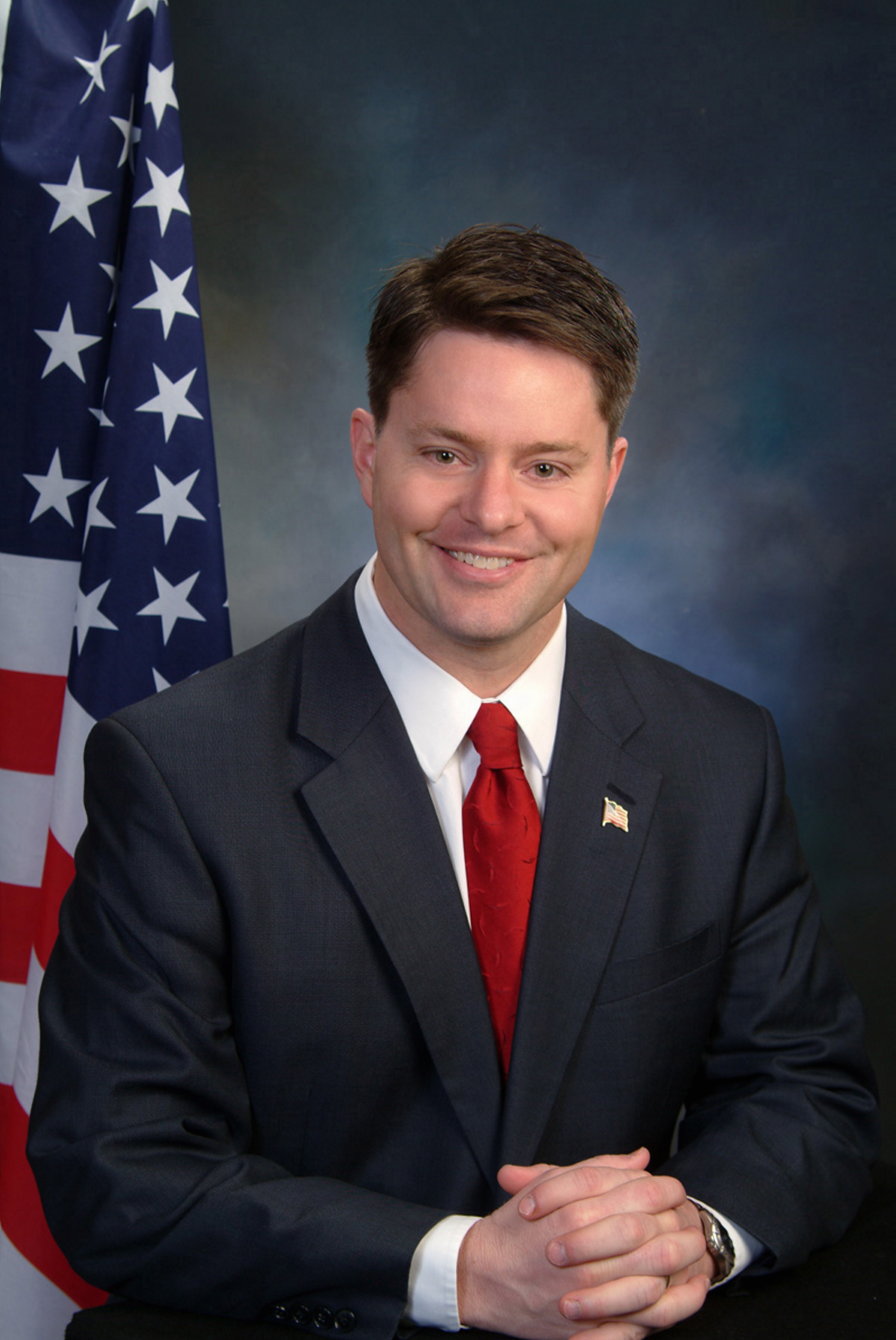



 Romney’s still the frontrunner, but it doesn’t feel nearly as good as a tie for first should’ve felt for him.
 So, Santorum has a shot here. He needs to do a few things: 1) find the best online fundraising team in Republican politics and sign them up; 2) Convince a few national conservative leaders to step up this week and try to unite conservatives nationally around him which means coaxing Bachmann out if she won’t decide herself; 3) Make sure he gets on the ballot everywhere and avoids Newt-like logistical screw-ups; and 4) Soft-pedal New Hampshire and focus on South Carolina; the Mormon issue is not going away in the Deep South.