The column published this morning here at The Recovering Politician by The RP and his No Labels co-founder, Mark McKinnon, headlines the influential Real Cleafr Policy web site. See below:



 |
|||
|
The column published this morning here at The Recovering Politician by The RP and his No Labels co-founder, Mark McKinnon, headlines the influential Real Cleafr Policy web site. See below:
The RP and his fellow No Labels co-founder Mark McKinnon (George W. Bush’s campaign manager) offer the following thoughts on the presidential appointment process: This is what a broken government looks like. Over a year after the 2008 financial crisis, the Treasury Department still didn’t have an assistant secretary for financial markets. In the middle of fighting wars in Iraq and Afghanistan, there was no Secretary of the Army. And on 9/11, the Bush administration still didn’t have a full national security team in place. These are the consequences of a broken presidential appointments process. In recent years, the Senate is taking more time to confirm more people, and the problem is especially glaring at the beginning of new administrations. The number of positions requiring Senate confirmation has grown from 280 to 1,400 over the past 50 years, while the average length of time for confirmation has grown from two-and-a-half months to more than 10. The confirmation process has developed into an embarrassing charade, with highly qualified nominees often held up for petty or purely partisan reasons. No matter who the next president is, we need a smarter, more efficient system to ensure he can staff his administration with the best people in a timely fashion. No Labels has a three-part solution. 1. Reduce the number of appointees subject to Senate confirmation: The Senate’s “Advice and Consent” on nominations is an important check on presidential power, but it’s not needed for every mid-level official and presidential commission. We should give new presidents more authority to fill less urgent positions and let the Senate focus on the most important nominees who deal with more pressing matters. Encouragingly, a bipartisan bill to do just that has already passed the Senate and awaits action in the House. 2. Identify a “slate that can’t wait” of critical nominees for expedited confirmation: Within a few days of the election, the president should be prepared to name a group of nominees for especially crucial positions, who would be subject to both speedier background checks and Senate review and confirmation. 3. Up or down vote on presidential appointments: All presidential nominations should be confirmed or rejected within 90 days of the nomination being received by the Senate. This time frame includes both committee and floor action. If a nominee’s name is not confirmed or rejected within 90 days, the nominee would be confirmed by default. Our next president will have plenty of problems to deal with – and worrying about whether he can hire good people should not be one of them. It’s time to fix the presidential appointment process and fix it now. Click here to read the intro post to our Make the Presidency Work! action plan
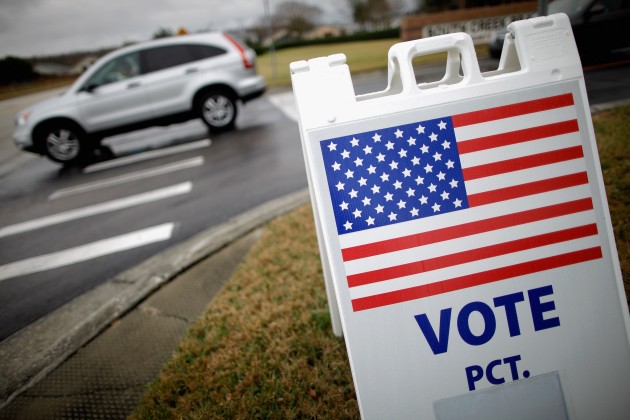
One reason for poor turnout is that voters are often ignorant of the importance of primaries. For any office that is safe for a particular party, whoever wins the primary office contest has, in effect, already won the office. The office contest in the November general election is virtually meaningless. In the District of Columbia, almost all of the elected officials are Democrats. The primary election literally determines the DC government. The November DC election is a waste of time and money. Unfortunately many voters are unaware of this, and, by not showing up for the primary, they simply have no say in the selection of the candidate(s) who will represent them. A second reason for poor turnout is that voters don’t understand primaries and are intimidated by them. Each State can hold a primary election in numerous ways. And, each State has its own rules in the actual execution of its primary. For voters, this makes for a confusing mess. They don’t know what party primary they can vote in. They don’t know how many different ballots there will be. They don’t know what party ballot(s) they can request. They don’t know what will be on the ballot(s). They don’t know what party identification they need. They simply don’t know what is going to happen when they show up at the polls. Worst of all, they can’t even get answers to these questions in advance on the State’s election website. I challenge you to try!
Read the rest of…
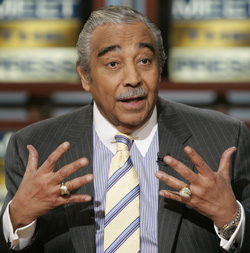
In the 2010 primary, only 18% of voters turned out for the New York Primary. The turnout this year could be even worse because, in January, a Federal judge moved up the primary from Sept. 11 to June 26. New York voters became accustomed to having a primary after Labor Day. The change in date can only further hurt turnout. So, possibly fewer voters will determine who might be elected to Congress. Currently three-quarters (21 of the 29) of New York’s U.S. House seats are currently held by Democrats and only one-quarter (8 of the 29) by Republicans. Of the 27 newly-created districts, there are 10 traditionally held Democratic seats (Districts 5, 6, 7, 8, 9, 13, 16, 18, 19, 23) being hotly contested. Many contests have between 3 to 5 candidates seeking a place on the November ballot. The Republicans will only have 5 contests on the primary ballot and they are a lot simpler with only 2 candidates in each contest. Three Republican US House district races are selecting a candidate who will attempt to unseat an incumbent Democrat. Two races are selecting a Republican for a traditionally-held Republican district. They also have three candidates hoping to unseat Democratic incumbent senator Kirsten Gillibrand. Probably the most interesting contests in the New York Primary is New York’s 13th Congressional District, where Democrat Charles Rangel, who was the incumbent from the pre-redistricted 15th District now has to win the primary in the new 13th District. The old 15th District was basically the Harlem neighborhood. The new 13th District, which is still centered in Harlem, is no longer primarily African-American and has changed dramatically. The District has ballooned to cover all of Upper Manhattan, and extends into the Bronx. The old 15th District was close to 80% African-American, while the new 13th is only about 36% African-American and has a majority-Hispanic voting-age population.
In the new 13th District, Rangel is facing one of the toughest campaigns of his political life. He faces four very strong candidates. Probably Rangel’s biggest threat comes from Adriano Espaillat. Espaillat is a Dominican-American and the only elected official among Rangel’s four challengers. He probably will obtain the majority Latino/Hispanic vote in the District. El Diario, the oldest Spanish language newspaper in New York, and is one of the most read publications in the 13th Congressional District, has endorsed and praised Espaillat’s work on behalf of poor and middle-class New Yorkers and said he would be a strong voice on immigration, healthcare, and other critical issues. Also, helping Espaillat is former candidate Vince Morgan. He withdrew from this race and endorsed Espaillat on April 10th. But, Joyce Johnson also poses a significant challenge. Johnson ran against Rangel and came in third to Rangel and Adam Clayton Powell IV in the 2010 primary. At that time, The New York Times editorial board endorsed her over Rangel. She is a long-time activist, a former local Democratic district leader, and has spent many years in New York City government. She’s smart and is a graduate of Howard University with a degree in microbiology. Another worthy opponent is Craig Schley. Schley is a highly-motivated 48 year old NYU Dean’s List Scholar and Harlem activist who built his reputation by opposing the 125th Street rezoning in 2008. This is his third time challenging Rangel. His campaign theme is to oppose the status quo. It may be dangerous to under-estimate an African American Bobby Kennedy type candidate. Read the rest of…
Exactly proving our point. It’s time to change the game. We’re from different parties, with widely diverging political philosophies, supporting different candidates. We, like the American people, are divided on many things. We don’t agree, for example, about raising taxes, repealing health care reform, legalizing gay marriage or other issues that divide liberals and conservatives. But we share a strong passion for what the country needs. Polls show that most of the American people agree: They want to hear Obama and Romney debate the issues and tell us their solutions — not attack each other. Over the past 10 years, we have watched political leaders in Washington free-fall from one decision to the next. Whether on jobs, our nation’s debt, spending cuts or entitlement programs, the partisan excuses, outright misrepresentations and the blame game have grown old. 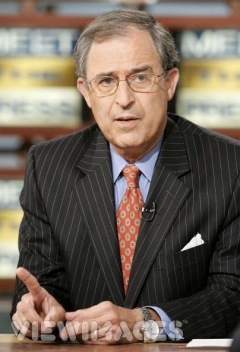 Lanny Davis As the Obama and Romney presidential campaigns gear up, it is already assumed that the American people will just accept the inevitable bile of negative, personal attack ads (after all, “they work”) and half-truths about each candidate and his record. During the Republican nomination campaign, Romney ran an ad last November taking Obama’s statements about the economy during the 2008 presidential campaign out of context, distorting their meaning. Obama had actually been quoting Sen. John McCain. When asked, Mr. Romney replied, “What’s sauce for the goose is now sauce for the gander.” The Obama campaign recently ran a misleading ad, saying Mr. Romney’s leadership at Bain Capital caused the loss of jobs after the steel company it had acquired went bankrupt. Then the truth came out that Romney had left Bain two years before this bankruptcy. In fact, the person in charge of Bain at the time is now a big Obama fundraiser. The partisan game of “gotcha” and outright misrepresentations has grown old and, frankly, we’re sick of it. As Newark Mayor Cory Booker, talking about misleading, personal attack ads on both sides, said recently, they are “nauseating. … Enough is enough.” We urge both campaigns to repudiate these negative personal attack ads and, instead, instruct their campaigns to tell us the candidates’ ideas and specific answers to the problems that Americans care about most. The American people want a great debate between Obama and Romney on big solutions for the economy, health care, Social Security and Medicare. They want to hear about each candidate’s ideas that could spur the private sector to create more jobs; address the problems of the poor and seniors; reduce our $15 trillion national debt and ensure the long-term solvency of Social Security and Medicare. For too long, too many have preyed on the fears of red and blue America. But now is the opportunity for Obama and Romney to embrace the hopes of a purple nation. Read the rest of…
“In recent weeks, we have seen Sen. Lindsay Graham and Tom Coburn decry the Americans For Tax Reform pledge, and it’s not hard to see why,” said No Labels Co-Founder and former U.S. Comptroller General David Walker. “Pledges to the ideological right and left put a straitjacket on elected officials. They prevent them from thinking for themselves and from working across the aisle to reach reasoned and reasonable compromises. And ultimately, these pledges serve special interests a lot more than the longer-term interests of the American people.” Walker added, “The proliferation of pledges has gotten out of control. Right now, over 80% of Congress has signed a pledge to either never raise taxes or never reduce Social Security benefits. What that basically means is that Congress has signed away its ability to ever seriously address our country’s fiscal problems. They are elected to solve problems not to stonewall solutions.” Eliminating single-interest pledges is reform no. 8 in No Labels Make Congress Work! action plan.
Geez. Never been tailgated so closely for so long. It felt like part reckless driving; part sexual assault. Well, it just makes such good sense, though. By tailgating me by seeming millimeters, my friend arrived nearly 0.2 seconds earlier at Starbucks, which apparently was very important to him. And here’s the beauty part. I was in front of him at Starbucks. And moved ahead very slowly in line. He got the point.
54 Percent of Voters Say They Will Choose Candidates Who Emphasize Problem-Solving Over Party Affiliation Problem Solving Voters Also Twice as Likely to Change Mind Before 2012 Elections According to a new No Labels poll, a majority of American voters can be characterized as problem solving voters (PSVs), defined as individuals more likely to support candidates focused on solving problems than those who align most with their parties. 33 percent of PSVs also say they are likely to change their vote between now and November, compared to only 15 percent of non-PSVs. A total of 94 percent of independents identify as PSVs, along with 30 percent of Democrats and 33 percent of Republicans. Only 16 percent of PSVs believe current leaders in Washington are able to get things done. “This poll reveals that there are more than just independent voters up for grabs in this election. Significant percentages of Democrats and Republicans say they value problem-solving over partisanship,” said No Labels Co-Founder Mark McKinnon, who discussed the poll results on MSNBC’s Morning Joe today. “This is a huge voting bloc that absolutely cannot be ignored. Candidates who embrace the message of problem-solving in working across the aisle are likely to find a very receptive audience among voters.” The poll was taken through a phone survey of 1,004 registered voters with a margin of error of 3.1 percent. For more information on the poll or to arrange an interview with a No Labels co-founder, please contact Sarah Feldman at press@nolabels.org or (202) 588-1990. To learn more about No Labels, please visit www.NoLabels.org.
Interestingly, Hajnal and Lee don’t view it as distressing. They speculate that there is actually a virtue in this kind of politics, in that it would supplant the alternative of one racialized party matched against one white, homogeneous one. It is also striking that they describe their approach of “tightly packaged appeals to targeted [minority] electorates” as a strategic novelty, when it is anything but: even a cursory glance of modern politics yields, on the right, Richard Nixon’s cultivation of Catholics and white ethics, George W. Bush’s deploying of an anti gay marriage initiative to shift black votes in Ohio in 2004; and of course, what Hajnal and Lee describe is a fair rendition of the current Democratic pattern of wedge politics from the left: courting Hispanics with opposition to restrictive local immigration laws, blacks with protective rhetoric about voter ID requirements and, increasingly, with defenses of affirmative action in higher education (an issue the conservative dominated Supreme Court has committed to revisit in the next term). 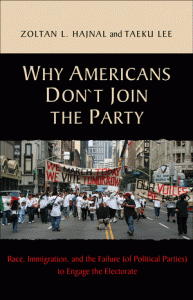 Click here to review/purchase book I can cite any number of arguments from both ends of the spectrum why more of the above is hardly a political panacea. From the liberal perspective, there is a quality of cheap symbolism that is really studied avoidance of more contentious ground like African American poverty or citizenship status for illegal immigrants. On the right, policy minded conservatives might lament that the temptation for the GOP to wield gay marriage and perhaps abortion to offset the Democrats’ advantage with blacks and Latinos is at the expense of more substantive initiatives on education and entrepreneurship. My gut reaction is that the two authors end up in such a curious place—treating old fashioned racial interest group politics as cutting edge and prescribing more of it despite the obvious costs—because they are trying to make sense of a not widely known phenomenon that their research uncovered: the surprisingly high levels of disengagement from among ethnic minorities from both parties. Their data suggests, for example, that among Asian Americans and Latinos, a majority don’t vote, and almost sixty percent of both groups are independent or don’t identify with either party; even within the monolithically Democratic black community, roughly a third express reservations that their interests are not adequately articulated by Democrats or Republicans. Read the rest of… This is the most lucid explanation I’ve read of the absurdity of politics these days, from Mark Barabak of the Los Angeles Times:
Click here to read the entire piece. |


| ||
| Copyright © 2026 The Recovering Politician - All Rights Reserved | |||