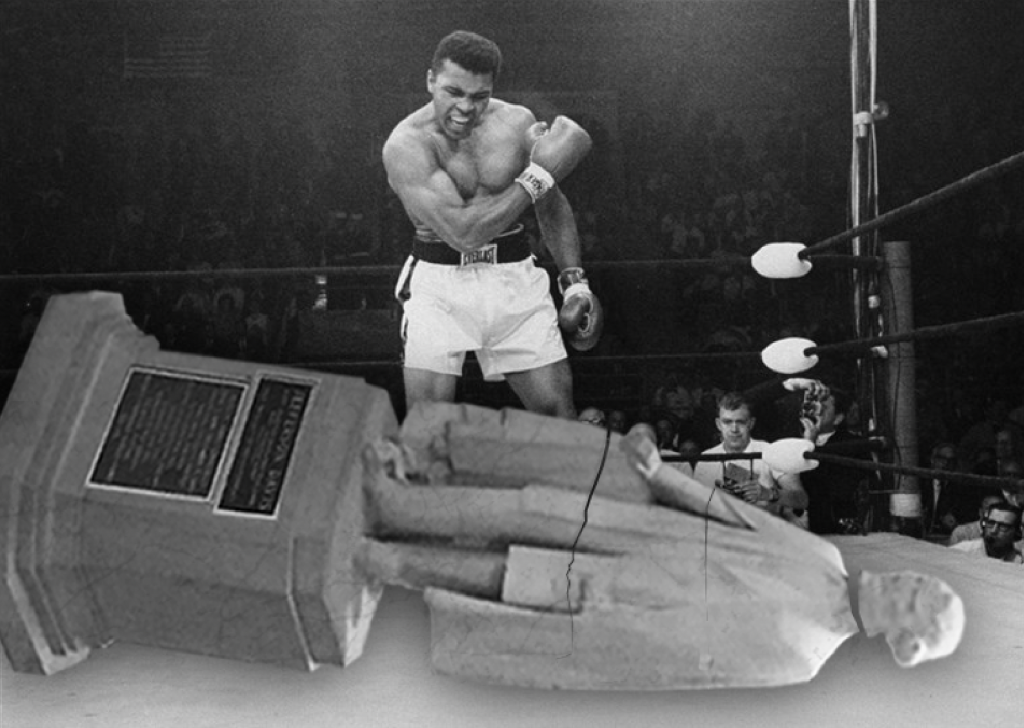
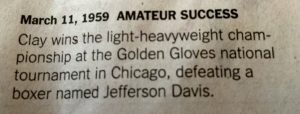
Please sign the petition below to remove the statue of Jefferson Davis currently in Kentucky’s Capitol Rotunda, and replace it with a tribute to Muhammad Ali, “the Louisville Lip” and “the Greatest of All Time.”
I just heard from the Ali family: It is the Champ’s belief that Islam prohibits three-dimensional representations of living Muslims. Accordingly, I have adjusted the petition to call for a two-dimensional representation of Ali (a portrait, picture or mural) in lieu of a statue.
UPDATE (Tuesday, December 2, 2014)
In this interview with WHAS-TV’s Joe Arnold, Governor Steve Beshear endorses the idea of honoring Muhammad Ali in the State Capitol (although he disagrees with removing Davis). Arnold explores the idea further on his weekly show, “The Powers that Be.”
Click here to check out WDRB-TV’s Lawrence Smith’s coverage of the story.
And here’s my op-ed in Ali’s hometown paper, the Louisville Courier-Journal.
UPDATE (Saturday, June 4, 2016)
In the wake of the 2015 Charlestown tragedy, in which a Confederate flag-waving murderer united the nation against racism, all of the most powerful Kentucky policymakers — U.S. Senator Mitch McConnell, Governor Matt Bevin, Senate President Robert Stivers and House Speaker Greg Stumbo — called for the removal of the Davis statue from the Rotunda. Today, as we commemorate last night’s passing of Muhammad Ali, there is no better moment to replace the symbol of Kentucky’s worst era with a tribute to The Greatest of All Time.
UPDATE (Wednesday, June 8, 2016):
Great piece by Lawrence Smith of WDRB-TV in Louisville on the petition drive to replace Jefferson Davis’ statue in the Capitol Rotunda with a tribute to Muhammad Ali.
UPDATE (Thursday, June 9, 2016):
Excellent piece on the petition drive by Jack Brammer that was featured on the front page of the Lexington Herald-Leader.
Highlight of the article:
Miller said he has received a few “angry comments” on his call to honor Ali.
“One of them encouraged me to kill myself,” he said. “You can quote me that I have decided not to take their advice.”
UPDATE (Friday, June 10, 2016)
The petition drives continues to show the Big Mo(hammed): check out these stories from WKYU-FM public radio in Bowling Green and WKYT-TV, Channel 27 in Lexington:
UPDATE (Saturday, June 11, 2016):
Still not convinced? Check out this excerpt from today’s New York Times:
By Andrei Cherny, on Tue Oct 25, 2011 at 8:30 AM ET
The American Jobs Act is dead. It’s time for the “Steve Jobs Act.”
In the wake of the Senate’s blocking of his jobs package last week, President Obama took to the road to campaign for passage of smaller chunks of his plan. While Congress should do just that, this piecemeal approach highlights a deficiency at the heart of Obama’s plan: it is a series of good ideas disconnected from any big idea.
True, Americans struggling to put food on the table and pay the mortgage are not looking for grand notions; they need the kind of immediate relief Obama’s proposals would provide. However, an America struggling to find its way in a bewildering, humbling world needs something more — a sense of larger purpose and direction.
The eulogies and encomiums delivered to Apple founder Steve Jobs seemed to capture some of this longing. They were celebrations of greatness and vision in a middling, small moment. At the end of a decade that saw Iraq, Katrina, and Lehman Brothers become watchwords of American weakness, they were paeans to someone who believed, with Thomas Paine, that we had it “in our power to begin the world over again.” But, perhaps most of all, in a floundering economy, they spoke to a sense that it is entrepreneurs and innovators — and not merely infrastructure spending and payroll tax cuts — that are needed to rebuild the engine of economic growth.
Read the rest of… Andrei Cherny: The Steve Jobs Act; Why It’s Time to Invest in Entrepreneurs
By Zack Adams, RP Staff, on Mon Oct 24, 2011 at 3:00 PM ET
The Politics of Pigskin
This week in the Monday Morning Quarterback column, Peter King writes about Tim Tebow, Matt Ryan, the new biography on Walter Payton, and much more. [Sports Illustrated]
There is some hoopla surrounding the actions of Ndamukong Suh following the Lions vs. Falcons game on Sunday. Is it justified? What exactly occurred? Check it out. [Deadspin]
Here is some interesting, running commentary on the Week 7 games. [Football Outsiders]
Kyle Boller had a rough day as the starting QB for the Oakland Raiders. They brought Carson Palmer in to replace him and he was just as bad. They combined for 0 TDs and 6 INTs. [ESPN]
Annnnnd Pacman Jones is back once again. [Fox Sports]
Here is your preview for the Monday night game between Baltimore and Jacksonville. [USA Today]
By Sandra Moon, RP Staff, on Mon Oct 24, 2011 at 1:30 PM ET
The Politics of Faith
In Egypt, a man has been sentenced to three years in prison for mocking Islam on Facebook posts. [Washington Post]
The Bank Transfer Day grassroots movement is an effort to get Americans to leave major banks for regional banks and credit unions. A church in California transfers its $3 million from Bank of America to a local credit union–the church leader stated that this transfer was made as a way to say no to the bank’s investing in bad loans and unfair negotiations. [Good.is]
A Florida public elementary school teacher’s promotion of a weekly on campus prayer session is stirring up debate. [LA Times]
By Patrick Derocher, on Mon Oct 24, 2011 at 12:30 PM ET
Along with Republican counterpart Dale Schultz, Democratic Wisconsin State Senator Tim Cullen is touring his state in support of bipartisanship and civility.
Good… news out of Wisconsin this past weekend, as State Senators Tim Cullen, a Democrat, and Dale Schultz, a Republican, hit the road in their “Common Ground Tour,” an effort to promote bipartisanship while cris-crossing Wisconsin in their own cars. Cullen, whose hometown of Janesville is represented in Congress by controversial Republican House Budget Committee chairman Paul Ryan, was one of the 14 Democrats who left the state during the teachers’ union showdown earlier this year, but he is quoted as saying “Bipartisanship is not an evil.” On the Common Ground Tour, Cullen and Schultz aim to bring civility and cooperation to a state torn asunder by recent political battles. [Milwaukee Journal Sentinel]
In other good news, the Ohio state auditor’s office was given high marks for keeping the state’s financial house in order, despite Ohio’s infamous political fights over public-sector unions. [Columbus Dispatch]
In a vivid example of what can happen when partisan gridlock envelopes the system, a stalled Missouri legislature led to effectively no progress in a recent special session, leaving the state, especially the foundering city of St. Louis, in a lurch. If, as expected, the session collapses, efforts to turn St. Louis’s airport into a trading hub and handing the city’s police department back to the city itself (it has been under state control for the past 150 years) wil be left hanging for the second year running, while a state economic development bill will be in a lurch for the fourth year running. [St. Louis Post-Dispatch]
Proving that nasty state-level political tussles are not limited to the politicians, retail giant Costco and the WIne & Spirits Wholesalers of America are engaged in a battle of funding over a Washington state ballot initiative to privatize liquor sales, whereas the state currently controls all such commerce. Last week, Costco donated another $9 million in favor of privatization, bringing the total amount of money raised up to $34 million. In comparison, next year’s hotly contested gubernatorial race between Democratic Representative Jay Inslee and Republican Attorney General Rob McKenna is expected to cost about $25 million. [Seattle Post-Intelligencer]
Former Florida governor Reubin Askew, whose 1971-1979 tenure is widely regarded as among the best in recent Florida history, chastised Florida lawmakers for “blind partisanship” on Thursday. Speaking at an event with Martin Dyckman, who was promoting a book about Askew’s time as governor, the Democrat said that politicians in Tallahassee have jettisoned compromise and even socialization in favor of partisan balkanization, which he compared very unfavorably with the political environment in the 1970’s. [St. Petersburg Times]
Efforts to repeal California’s recently enacted DREAM Act have already begun… and are already highly partisan. Spearheaded by Tim Donnelly, who represents parts far-suburban Los Angele, received permission to begin collecting signatures to put the bill up for a referendum, giving him until January 6 to collect some 504,760 signatures. Donnelly, a Republican, has said that he plans to build support for the movement through social media and talk radio. [Sacramento Bee]
Perhaps disproving the belief in strong parallels between Occupy Wall Street and the Tea Party (or just confirming their partisan tilts), a Siena Research Institute poll shows residents of New York state supporting Occupy Wall Street by a margin of 49 to 38 and opposing the Tea Party by a margin of 60 to 28. If forced to choose between populist, anti-status quo movements, New Yorkers prefer Occupy Wall Street 49 to 28. [Albany Times Union]
By Zack Adams, RP Staff, on Mon Oct 24, 2011 at 12:00 PM ET
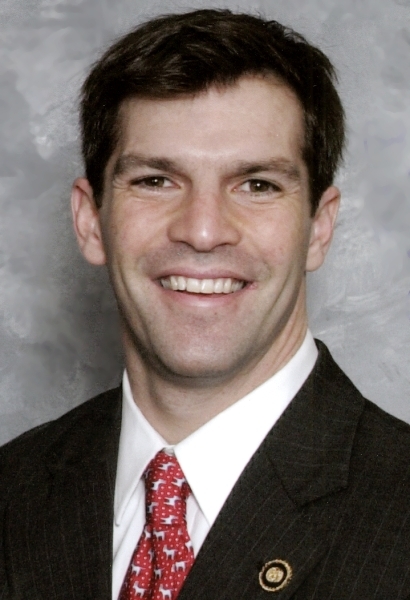
Jeff Smith
Perry’s attack itself may not have been that effective, but the reply he elicited from Romney was sure damaging: “I’m running for office, for Pete’s sake,” Mitt said he told his contractor. “I can’t have illegals!”
Debates are about moments that (appear to) crystallize candidates as human beings. After the hostage crisis and other blows to American prestige, people craved strength in 1980, and so when Reagan boomed, “I paid for this microphone!”, it suggested that he could be provide America the backbone it wanted at that moment. When George H.W. Bush looked at his watch in the 1992 town hall, it indicated that he just wasn’t that concerned with people’s plight – as opposed to the famed Clinton empathy to which a recession-weary nation responded. A simple gesture spoke volumes, because it comported with what Americans suspected was true: Bush was out of touch with their suffering.
In that vein, “I’m running for office, for Pete’s sake – I can’t have illegals!” Romney offered a window into his character: ambitious, practical, hands-on, and utterly lacking in principle. Let’s see if Perry can capitalize on this gift in the coming days.
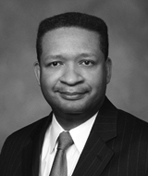
By Artur Davis, on Mon Oct 24, 2011 at 12:00 PM ET
Yes, the CLASS program is a narrow feature of Obamacare that most Americans knew nothing about.
But scrapping the program validates some of the central critiques of health care reform – that it is overly complex, is unsustainable financially, and is too experimental and bureaucratic. And none this is hindsight – it is exactly what critics of the law argued would happen if the White House insisted on a systems overhaul of health are rather than a targeted attack on pre-existing illness exclusions and a federally-funded expansion of Medicaid.
The travails of the CLASS program also illustrate the degree to which congressional Democrats and private sector interests inserted a backlog of frustrated policy goals into the fine print of “Obamacare.” Hill staffers who were distrustful of the efficacy of the private insurance market fixated on CLASS as an eventual wedge into a “public option”, and in private meetings made no bones about their thinking.
Read the rest of… Artur Davis: Is Obamacare Crumbling?
By Jonathan Miller, on Mon Oct 24, 2011 at 8:30 AM ET
In this week’s column for The Huffington Post, the RP comments on a fascinating personal story within an otherwise boring Kentucky Governor’s race: the relationship between GOP nominee and State Senate President David Williams and his father-in-law, Terry Stephens, who has pumped in nearly $2.5 million of his own fortune — some through dubious means — to help his son-in-law. Here’s an excerpt:
As the proud papa of two extraordinary teenage girls, I know that there is nothing more unshakable, pure, and enduring than a father’s love for his daughter. Where that unqualified adoration extends to her husband as well, I imagine that such a family is truly blessed.
But as the Kentucky governor’s race approaches its inexorable denouement this November, it seems apparent that a father-in-law can love a bit too much.
The father-in-law at issue is Terry Stephens, a highly successful businessman in rural southern Kentucky. And his son-in-law, Kentucky Senate President and GOP gubernatorial nominee David Williams, is having a very, very bad year.
Indeed, during the first decade of the new millennium, David Williams was the most powerful and influential figure in the Kentucky Capitol. While never offering a discernible policy agenda of his own, Williams was a master of statehouse politics, successfully thwarting the grand legislative ambitions of three consecutive governors, of both parties.
Williams, however, failed to comprehend that his insider influence would not necessarily translate into statewide electoral success. And after eking out a GOP primary victory against two dramatically underfunded opponents, his general election bid — marred by a Keystone-Cops, revolving-door campaign team and the seemingly weekly release of new allegations about the misuse of taxpayer funds by Williams and his running-mate — has been nothing short of a disaster. The most recent polls show Williams running around 30 points behind the incumbent Governor, Steve Beshear. Even Trey Grayson, the former GOP Secretary of State and current Director of Harvard’s Institute of Politics — and, like Williams, a protegée of U.S. Senator Mitch McConnell — has publicly declared the race over, predicting an electoral “blowout.”
Perhaps Williams’ overwhelming popular rebuke can be attributed to the recent media exposure of the many hypocrisies of his candidacy and career: The steadfast opponent of expanded gaming who incurred tens of thousands of dollars in losses at riverboat casinos in neighboring states. The leading advocate of cutting public pensions who has voted to double his own legislative pension while in office. The self-defined fiscal conservative (proclaiming, a la JFK in Berlin, “I am a Tea Partier“) who has emerged as the very symbol of government waste by spending more than $50,000 to renovate his Senate office with items such as a big-screen, plasma TV.
But the most popular theory blames Williams’ precipitous decline on the Senate President’s dislikable personality. While for years in Frankfort circles and on editorial pages, Williams has been widely and consistently portrayed as a “bully,” it was only through the spotlight of a statewide campaign that many of Williams’ critics have felt empowered to come forward and give public testimony. (In one powerful example, state Senator Tim Shaughnessy, who described himself as once close to Williams, declared: “He is just not a very nice person.”) Even Williams himself admits that his disesteemed personal image has damaged his candidacy.
Still, to Williams’ credit, those closest around seem to really love him. His wife, Robyn, has forcefully defended her husband against political attacks, and her beautiful visage graces much of Williams’ campaign propaganda.
And Robyn’s father, Terry Stephens has been — by leaps and bounds — Williams’ largest financial supporter. Stephens gave the Williams campaign the maximum financial contribution provided under state law, and then held a fundraiser at his home that generated around $50,000 in contributions. In June, Stephens contributed $1 million to the Republican Governors’ Association, which in July ran about $1 million of television ads supporting Williams’ candidacy.
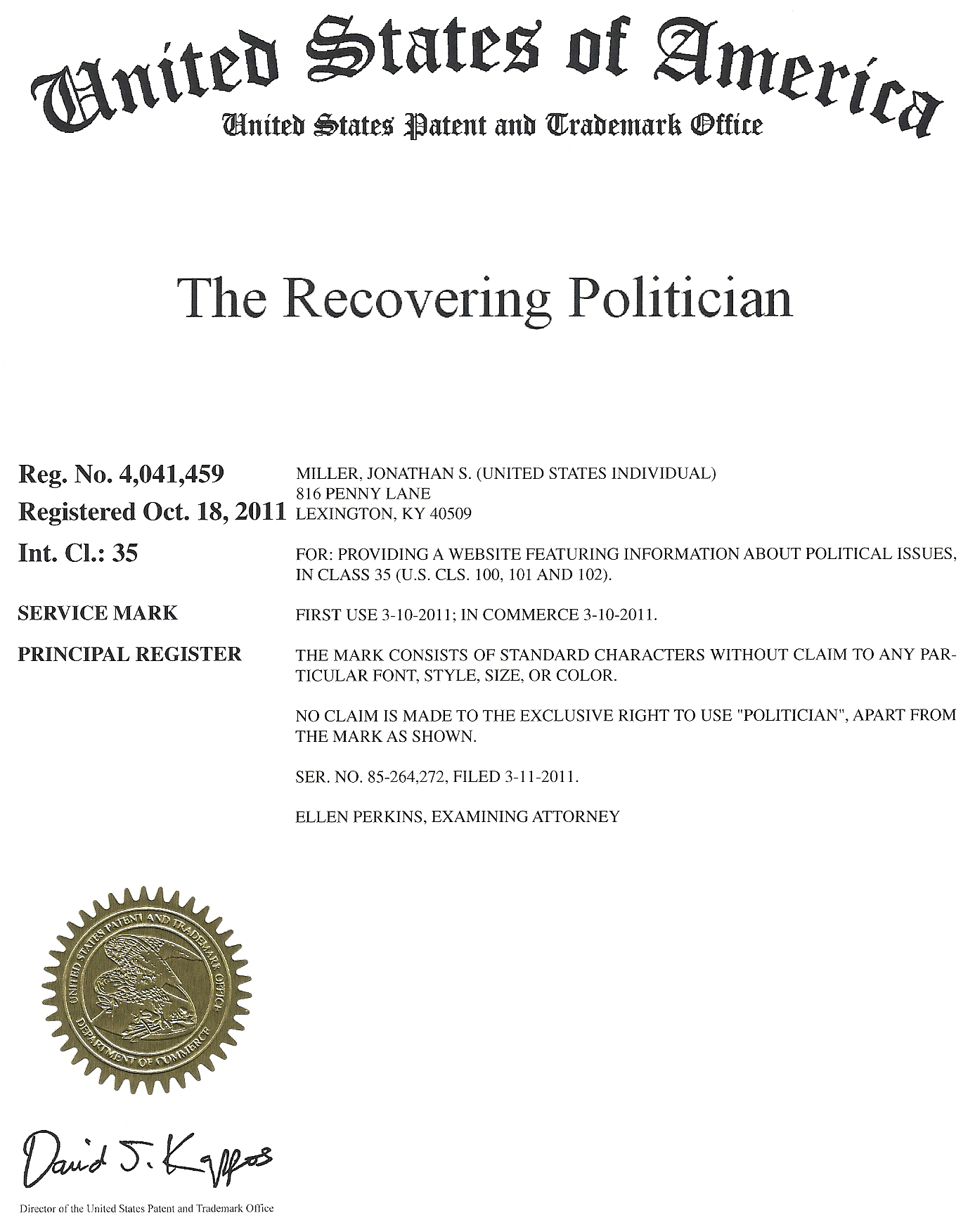
The Recovering Politician is now officially The Recovering PoliticianTM.
The U.S. Patent and Trademark Office has officially certified our trademark. (See below)
So, RP Nation, we enlist you in a critical investigative effort. If you hear of anyone else claiming themselves to be “The Recovering Politician,” contact us immediately. It could make the difference between life and death. Thank you.
By Artur Davis, on Fri Oct 21, 2011 at 11:30 AM ET
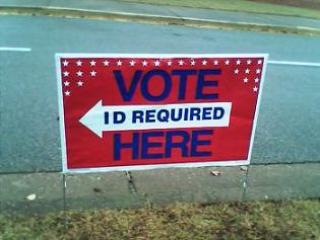
The Internet tubes are abuzz over a highly controversial op-ed piece penned by contributing RP and former Alabama Congressman Artur Davis in the Montgomery Advertiser. As you can read below, Davis has changed his mind from formerly opposing a voter identification law in his home state. As always, we encourage a healthy debate, and your opinions are welcome in the comments section below:
I’ve changed my mind on voter ID laws — I think Alabama did the right thing in passing one — and I wish I had gotten it right when I was in political office.
When I was a congressman, I took the path of least resistance on this subject for an African American politician. Without any evidence to back it up, I lapsed into the rhetoric of various partisans and activists who contend that requiring photo identification to vote is a suppression tactic aimed at thwarting black voter participation.
The truth is that the most aggressive contemporary voter suppression in the African American community, at least in Alabama, is the wholesale manufacture of ballots, at the polls and absentee, in parts of the Black Belt.
Voting the names of the dead, and the nonexistent, and the too-mentally-impaired to function, cancels out the votes of citizens who are exercising their rights — that’s suppression by any light. If you doubt it exists, I don’t; I’ve heard the peddlers of these ballots brag about it, I’ve been asked to provide the funds for it, and I am confident it has changed at least a few close local election results.
There is no question that a voter ID law, in order to pass legal muster and in order to be just, must have certain characteristics. It should contain exceptions for the elderly or disabled who may not drive, and as a consequence lack the most conventional ID, a driver’s license. There should also be a process for non-drivers to obtain a photo ID, and the process has to be cost-free, for the simple reason that even a nominal financial impediment to voting looks and feels too much like a poll tax.
It is my understanding that the Alabama statute contains each of these exceptions and a few others, including a provision for on-site polling officials to waive the requirement if they attest that they know the voter.
The fact that a law that is unlikely to impede a single good faith voter — and that only gives voting the same elements of security as writing a check at the store, or obtaining a library card — is controversial does say much about the raw feelings in our current politics. The ugliest, hardest forms of disfranchisement were practiced in our lifetimes, and its still conventional rhetoric in black political circles to say those times are on the way back. Witness a last-minute automated call to black voters in the 2010 general election by state Sen. Hank Sanders, an ingenious lawyer and a skillful legislator who knew better, but who also knew the attack would resonate.
Read the rest of… Artur Davis: I Should Have Supported Voter ID Law


 Blog this!