By Andrei Cherny, on Mon Sep 12, 2011 at 11:00 AM ET
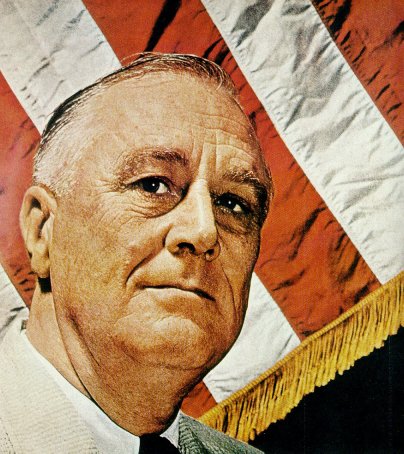
It has become a universally acknowledged truth in coverage of the 2012 presidential campaign, one repeated with increased fervor with each dismal jobs report, that no president has won reelection with an unemployment rate above 7.2 percent. But always there is the caveat: . . . since Franklin Roosevelt in 1936.In the aftermath of Thursday night’s presidential address on jobs, that caveat should be more than an afterthought. FDR’s victory three-quarters of a century ago has important parallels to the situation in which President Obama finds himself and provides vital lessons if he is to be similarly successful.
While Roosevelt had been elected in 1932 during a period of economic collapse, four years later the economy was still struggling. Unemployment in 1936 was 16.6 percent. The moment of national unity that marked Roosevelt’s first hundred days had petered out, leaving behind a general dissatisfaction with large-scale, inefficient government bureaucracies and their stratospheric levels of federal spending and debt.
Newspapers had coined the term “boondoggle” to describe the high-end dog shelters, city zoo monkey houses, safety pin studies and other New Deal projects that attempted to stimulate the economy. New entitlement programs such as Social Security had been passed, over strong opposition, but had yet to take effect.
While Obama might confront the propaganda machine of Rupert Murdoch’s Fox News, Roosevelt faced off against a relatively more powerful William Randolph Hearst and his newspaper empire. In 1936 two-thirds of Americans read newspapers, which were vociferously anti-New Deal. Today, the Tea Party and a network of organizations funded by the Koch family and others focus their attacks on Obama. In 1936, charges of creeping socialism and the savaging of the Constitution were launched by the Liberty League and its affiliated groups, funded by a flood of money from the du Pont family and major corporations.And yet when Election Day arrived, Roosevelt won by a landslide of historic proportions.
The differences between Roosevelt’s era and Obama’s are too numerous to list. Nevertheless, Obama and his advisers have much to learn from Roosevelt’s triumph.
First, Roosevelt constantly underscored the contrast between his plan and his opponents’ fealty to the policies and ideas that, in the decade before his election, had led directly to the Great Depression.
Read the rest of…
Andrei Cherny: FDR’s Lessons for Obama
By Grant Smith, RP Staff, on Fri Sep 9, 2011 at 3:00 PM ET
Mad Money’s Jim Cramer says President Obama “doesn’t understand capital formation.” [The Street]
Is SAAB going the way of the Studebaker? [Fortune]
Companies that are hiring despite the current economy. [Forbes]
The Federal Reserve can still help, if necessary says Bernanke. [CNBC]
Monica Lewinsky: how her life has been going since…well, you know. [The Daily Mail]
By Robert Kahne, RP Staff, on Tue Sep 6, 2011 at 12:30 PM ET
I was never a kid to dream big. I never wanted to be an astronaut, or the President, or a rock star or anything. When I was young, I thought it would be nice to be an engineer like my grandfather, because he always had enough money to provide for his family and always seemed happy. When I got to high school, I realized that math was hard, and that I was really much more interested in social studies. I went to college and got a couple of degrees (BA, Economics; BA, Political Science), and then went straight to graduate school and got a Masters degree in Public Policy. I thought that if I followed my passions and worked hard in school, some firm out there would find my credentials appealing and hire me. Even when the economy went south in 2009, I thought that getting an advanced degree would help me out, and that I had worked hard enough and done enough of the right things to find a job somewhere. That hasn’t turned out so well for me.
There is this theme that runs through American mythology that goes something like this — “If you are willing to work, you will find a job in America.” There are several corollaries to this idea–sometimes “work” means “work yourself through college” or “get involved in extra curricular activities” or, in the most cynical iteration “Nothing is promised to you in this world, you have to go out and take it for yourself.” I am not so sure if any of that is true. It might have been at one time, but I cannot look out into the world in which I live and say that anyone can do that. I only have myself as an example, but I am utterly willing to work. Job I have done for money include: making pizza (4 years), hauling recyclable refuse (which was gross-2 years), waiting tables (1 year), and working in a pharmacy clinic (one summer). In addition to that, I stated in school in 1990, at Middletown Methodist Preschool.
 I did this 3 times. I’ve been in school for 20 years straight, and throughout that whole time I’ve worked hard and gotten the grades I needed to advance. I got good grades in elementary school to get into a good middle school, did well enough at that middle school to get into the best high school in my city, and then got into my state’s flagship public institution where I did well enough to get into a top-10 graduate school for my field. Furthermore, I have been active in good causes my whole life. I was the President of clubs in high school and undergraduate. I was selected to serve on a Presidential Advisory Committee in graduate school. I worked to get a student fee passed for sustainability throughout college, and served on the committee which spent that money while I was in school. I even teach Sunday School every other week. I did a lot of stuff–a lot of stuff which I thought would help me out when it came time to make my own living. I really believed in the idea that working hard would mean I could get a job. I even had some assurance that if need be, I had the skills to “take” my lot for myself. Nope.
Read the rest of…
Robert Kahne: The Politics of Unemployment
By Grant Smith, RP Staff, on Fri Sep 2, 2011 at 3:00 PM ET
Is the government’s lawsuit against the ATT and T-Mobile merger an attempt at saving jobs? [CNBC]
New study suggests that it is unlikely “King Coal” will be replaced by natural gas. [Forbes]
Pick your own business dream team: who would be your CEO, CFO, CIO, et cetera? [Fortune]
The latest victim of government austerity: The Capitol Page Program. [Washington Post]
The benefits….and costs, of the OnStar system in GM vehicles. [New York Times]
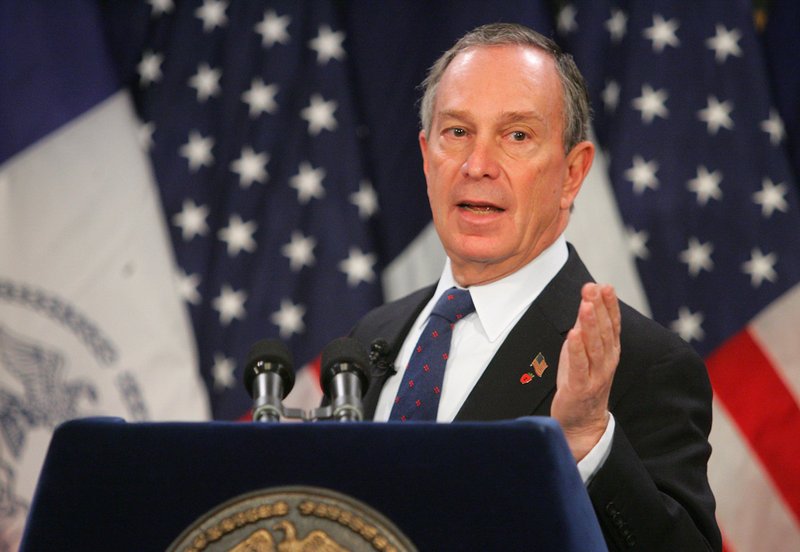
By Artur Davis, on Fri Sep 2, 2011 at 8:30 AM ET 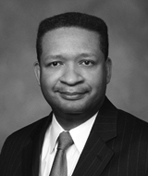 Michael Bloomberg is not running for president, but he is about to engage a presidential size problem -the intractable poverty and alienation of young black and Latino men in the inner city. Michael Bloomberg is not running for president, but he is about to engage a presidential size problem -the intractable poverty and alienation of young black and Latino men in the inner city.
The New York mayor has just announced a comprehensive campaign on several fronts, including the location of job recruitment centers within public housing complexes, revamping supervised release programs to confront recidivism, establishing parenting classes for new fathers, and most controversially, the city’s Education Department will be directed to factor in the performance and graduation rates of black and Latino boys in its annual assessment of schools. A school that lags in graduating black and Latino teenagers will now be at risk of being closed.
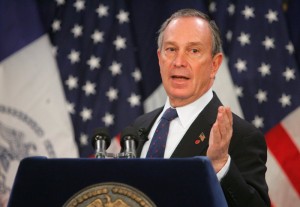 It is a smart strategy that is typical Bloomberg – funded two thirds by his own money and the money of his billionaire ally, George Soros, and one third by realigning public resources from less successful efforts; and unafraid to poke at some sacred cows in New York politics. As in most communities, the decision to close a school touches nerves, and Bloomberg’s accountability measures will shutter schools that can’t lift up their most vulnerable students. It is a smart strategy that is typical Bloomberg – funded two thirds by his own money and the money of his billionaire ally, George Soros, and one third by realigning public resources from less successful efforts; and unafraid to poke at some sacred cows in New York politics. As in most communities, the decision to close a school touches nerves, and Bloomberg’s accountability measures will shutter schools that can’t lift up their most vulnerable students.
Read the rest of…
Artur Davis: Bloomberg’s Campaign for Minority Men
By Kathleen Kennedy Townsend, on Tue Aug 30, 2011 at 8:30 AM ET 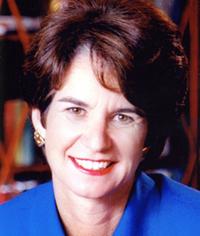 Ayn Rand has a large and growing influence on American politics. Speaking at an event in her honor, Congressman Paul Ryan said, “The reason I got involved in public service, by and large, if I had to credit one thinker, one person, it would be Ayn Rand.” Ayn Rand has a large and growing influence on American politics. Speaking at an event in her honor, Congressman Paul Ryan said, “The reason I got involved in public service, by and large, if I had to credit one thinker, one person, it would be Ayn Rand.”
A few weeks ago, Maureen Fiedler, the producer of the weekly radio show, Interfaith Voices, asked me to participate in a debate with Onkar Ghate, a senior fellow at the Ayn Rand Institute. I eagerly accepted. I wanted to hear how a follower of Rand would defend proposals to cut Medicare, Medicaid, and food stamps while exempting the wealthy from paying their fair share.
 Ayn Rand In one sense there was agreement. Maureen, a Sister of Loretto, argued that Republican budget proposals turned their back on Christ’s admonition to care for “the least among us,” the hungry, the sick, the homeless. Ghate did not dispute that. Rand, he said, was an atheist who did not believe in government efforts to help those in need.
Ghate countered Sister Maureen’s religious position with a moral argument. He maintained that redistribution of wealth was unfair to the rich and weakened the ambition of the rest. I wasn’t surprised by this position, since I’d heard it repeatedly during the fight on welfare reform.
What I did find startling was Ghate’s insistence that just as there should be a separation of church and state, so there should be a separation of economics and state. That notion really got me thinking.
I’ve always understood that one’s loyalty to God should take precedence over one’s patriotic duty. Churches are exempt from taxation, and conscientious objectors aren’t required to serve in war. Our high regard for the First Amendment shows the preeminence of faith in the American consciousness.
But to place economics on the same level as religious freedom seemed to me almost blasphemous. Are we really to believe that the freedom to make money should stand on the same level of religious liberty? Are the words of Milton Friedman equal to the Sermon on the Mount? I don’t think so. But maybe in the eyes of Ayn Rand and Paul Ryan, they are.
Read the rest of…
Kathleen Kennedy Townsend: Ayn Rand vs. America
By Grant Smith, RP Staff, on Fri Aug 26, 2011 at 3:00 PM ET
Is famed investor Warren Buffet an enabler of “too big to fail?” [The Street]
Forbes releases its list of the world’s 100 most powerful women. [Forbes]
Ever wonder how Apple is run from the inside? A look inside the halls of the world’s most popular tech company. [Fortune]
Fears grow that August employment data will reveal a net loss in jobs. [CNBC]
Disappearing money. A look at economics and the Federal Reserve from the left. [Huffington Post]
By RP Staff, on Fri Aug 26, 2011 at 8:30 AM ET Contributing RP and former GOP Congressman Sherwood Boehlert was recently interviewed by his local paper about the debt ceiling crisis. Here’s an excerpt:
Former Congressman Sherwood Boehlert didn’t mince words when asked about Congress’ handling of the recent debt crisis.
“I think it was an embarrassment to the country,” he said.
Boehlert, a Republican, retired in 2006 after serving the area for 24 years as a U.S. Representative from New Hartford.
During his time in office, he said, he’d never seen a situation like the possible default that plagued the debating heads of Congress the last few weeks. And, he added, he couldn’t have thought of a worse way to handle it.
“I think it’s an anomaly, and I hope it’s a temporary anomaly,” he said.
Click here to read the full article in the Utica Observer-Dispatch.
By RP Nation, on Tue Aug 23, 2011 at 12:00 PM ET Most would agree that “economic growth” is essential to our recovery. And implicit is the notion that without growth we will not significantly create jobs and reduce unemployment.
First let’s look at the most commonly proposed answer to our twin deficits.
- Cut taxes. Let’s get serious. Cutting taxes on the income of the rich just isn’t going to happen and even if it did opinion is divided is to whether it is effective at stimulating growth. (Pretend you’re a multi-millionaire and you receive an increase in income from reduced taxes. Would you buy more stock on the market or make a job producing investment?) And if we cut taxes on the lower income brackets, conventional wisdom says the propensity to spend the resulting income is much higher than for the wealthy. Such spending however may be most likely to wind up being spent at Walmart, Sam’s, Kohl’s, Costco, and Macy’s. End result? Buying more goods manufactured in China, India or Mexico with a commensurate increase in the deficit in our balance of payments. Tax cutting will only be productive if it results in channeling the increased taxpayer disposable income into channels that create jobs and stimulate growth!
- Historically, the saying was: “what’s good for General Motors is good for the country” or as “home building goes, so goes the nation”. The reason behind such platitudes was valid. For each dollar spent in both industries, there is a great multiplier effect from increased employment not only of the basic industries but from the myriad of suppliers. However, today, the TARP (troubled asset relief program) program has already done it’s thing for the auto industry. And, stimulating homebuilding today is impossible as long as the overhang exists of the huge inventory of unsold houses including those in foreclosure.
Thus what we need is a new approach and here it is:
I. Put the construction industry back to work by a nationwide new construction program to house the homeless.
II. Tens of thousands of bricklayers, electricians, contractors, welders, framers go back to work. And as a direct result, so to will growth be restored to appliance manufacturers, wall paper manufacturers, and such manufacturers of related ingredients as wiring, faucets, fireplaces, paint, fertilizer, nurseries ad infinitum. Unemployment roles will be reduced, tax revenues increased and growth restored.
III. But from whence commeth the money to fund this enormous program of land acquisition and construction? From two sources (to be mandated by legislation): philanthropic organizations and from pension profit sharing, IRA’s, and other tax exempt retirement plans.
IV. But how do these plans recoup their investment and earn a return on their investment. After a period three years, each homeless project will be converted to Section 8 Housing for the elderly and handicapped. This is a Housing and Urban Development Program for Elderly and Handicapped for low income people. Under the program the Tenants pay essentially 30% of their income (usually just social security income) as rent and HUD subsidizes the balance of the rent to bring such rent to “fair market rent” for the locality in which each project is located. The organization for the HUD program is already in place, is exceedingly organized and administered (though not without potential for improvement). The shortage of available housing for the elderly and handicapped is enormous and there are long waiting lists for housing among eligible people. But, most important, well managed projects make a reasonable return on investment for their owners and have potential to increase in value. Moreover, the aging of the US population is well known and indisputable: thus the ongoing need for increasing the available supple of suitable housing is incontrovertible.
V. Finally, rules would have to be established that would required construction standards to be followed that will ease the eventual conversion of each project from “Housing for the Homeless” to “Housing for the Elderly and Handicapped.”
Summary: Thus in one simple to understand plan is at least a partial solution to not just one but several urgent national problems: (a) restoring growth to the economy, (b) reducing unemployment, (c) providing living with dignity accommodations to the homeless, and (d) providing reasonable and necessary housing to our aging populace and disabled citizens. Updates to this proposal may be found at the author’s website: https://sites.google.com/site/wealthcreationretention/home
By Jason Grill, on Tue Aug 23, 2011 at 8:30 AM ET 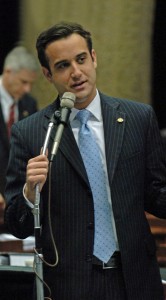 1. Fix the political redistricting system once and for all – States across this nation are currently going through the process of redrawing State Representative and State Senate lines. In the end members from both parties and appointed party loyalists will not be able to agree on a map and the court system will be prompted to step in. This process takes place every ten years and is truly outdated and way too political. Why not save time and take the human element out of the process? In an age where people do almost everything electronically why are nonpartisan computers not setting these lines? Start the new process with a checkerboard pattern covering the whole state. Then the computer will adjust the squares based on population so every Representative and Senator represents the same amount of people. A grid with large and small squares that has nothing to do with which neighborhood has nicer houses, who votes the most, where a golf course is located, or what school district is where will decide rational districts once and for all. It is an absolute joke and truly unfair to the citizens of this nation for political gerrymandering to continue to go on in 2011. How great would you feel at the start of an election cycle if whether you would have a Republican, Democrat, or Independent elected official was not in a sense predetermined? Leave this up to computers and not partisan individuals who are protecting themselves and their party when drawing geographically ridiculous political district lines. Isn’t this about fair democratic representation? Instead of backroom bickering and fighting over half of a small suburban neighborhood or which urban corridor is more important, we should be asking is there an app for that! 1. Fix the political redistricting system once and for all – States across this nation are currently going through the process of redrawing State Representative and State Senate lines. In the end members from both parties and appointed party loyalists will not be able to agree on a map and the court system will be prompted to step in. This process takes place every ten years and is truly outdated and way too political. Why not save time and take the human element out of the process? In an age where people do almost everything electronically why are nonpartisan computers not setting these lines? Start the new process with a checkerboard pattern covering the whole state. Then the computer will adjust the squares based on population so every Representative and Senator represents the same amount of people. A grid with large and small squares that has nothing to do with which neighborhood has nicer houses, who votes the most, where a golf course is located, or what school district is where will decide rational districts once and for all. It is an absolute joke and truly unfair to the citizens of this nation for political gerrymandering to continue to go on in 2011. How great would you feel at the start of an election cycle if whether you would have a Republican, Democrat, or Independent elected official was not in a sense predetermined? Leave this up to computers and not partisan individuals who are protecting themselves and their party when drawing geographically ridiculous political district lines. Isn’t this about fair democratic representation? Instead of backroom bickering and fighting over half of a small suburban neighborhood or which urban corridor is more important, we should be asking is there an app for that!
2. Blanket primaries – Shouldn’t the goal of any election to be to elect the best candidate regardless of political party or persuasion? Some states have already implemented top-two, non-partisan blanket primaries with success. The city of Kansas City, Missouri currently does this with its Mayoral election. Just last winter this system resulted in the two most qualified candidates for the job reaching the general election. Basically, this election method puts all candidates, regardless of party affiliation, on the same ballot in the primary. The top two voters then face off in a general election to be held usually in the next one to three months after the primary election. I can’t count the number of times Republicans came up to me and said they were sorry they couldn’t vote for me because I wasn’t on their primary ballot. This system would also stop candidates from running so far to the right or left to win the votes of party primary voters. We all know voter turnout is low in primaries. Most Americans are sick of voting for extreme candidate 1 or extreme candidate 2 in general elections. They want common sense solutions and are tired of partisan rhetoric. It doesn’t have to be a nonpartisan election; candidates can voice their party affiliation, but why not just have the two best candidates face off in the general election based on the issues of the day and ideas. Blanket primaries will solve many of our general election malaise.
 3. Get rid of term limits – Many states and voters have implemented term limits for elected officials such as legislators. In Missouri, State Representatives can serve four two-year terms and State Senators can serve two four-year terms. The reasoning, legislators become fat and happy, become too close to lobbyists, and run out of creative ideas and motivation. The problem is that just the opposite has happened. Legislators are running for reelection before they even find the bathroom in the capitol, they are forced to think about their next elected position they will run for up the ladder, lobbyists begin to have more influence on the process because there are so many new people every two years, and legislators are so wet behind the ears they have no idea how to effectively legislate. Would you tell your family doctor or specialist that you could only see them for a limited amount of time even though they are great at what they do? Would you tell an amazing teacher that after 8 years they could no longer teach in your community? Would you tell a successful small business owner, sorry buddy I have to shut down your incredible entrepreneurial endeavor? Lastly, would you tell a world-class athlete that they could no longer dominate a sport and bring a smile to a fan’s face because they can only play for awhile? I want the best people running and holding political office. For some reason I think you would agree. Elections are held every few years where people can elect or vote individuals out of office. We saw a Republican “Tea Party” tidal wave in 2010 where many incumbents were voted out of office. The pendulum could and probably will swing back and many of these same individuals will be put back into elected office in 2012, 2014, or sometime down the road. This is the great thing about the process; we don’t need arbitrary numbers of years to police the system. I want the best people running my community, my state, and my country. If someone is doing a good job or excelling at their job let them face the voters not time. 3. Get rid of term limits – Many states and voters have implemented term limits for elected officials such as legislators. In Missouri, State Representatives can serve four two-year terms and State Senators can serve two four-year terms. The reasoning, legislators become fat and happy, become too close to lobbyists, and run out of creative ideas and motivation. The problem is that just the opposite has happened. Legislators are running for reelection before they even find the bathroom in the capitol, they are forced to think about their next elected position they will run for up the ladder, lobbyists begin to have more influence on the process because there are so many new people every two years, and legislators are so wet behind the ears they have no idea how to effectively legislate. Would you tell your family doctor or specialist that you could only see them for a limited amount of time even though they are great at what they do? Would you tell an amazing teacher that after 8 years they could no longer teach in your community? Would you tell a successful small business owner, sorry buddy I have to shut down your incredible entrepreneurial endeavor? Lastly, would you tell a world-class athlete that they could no longer dominate a sport and bring a smile to a fan’s face because they can only play for awhile? I want the best people running and holding political office. For some reason I think you would agree. Elections are held every few years where people can elect or vote individuals out of office. We saw a Republican “Tea Party” tidal wave in 2010 where many incumbents were voted out of office. The pendulum could and probably will swing back and many of these same individuals will be put back into elected office in 2012, 2014, or sometime down the road. This is the great thing about the process; we don’t need arbitrary numbers of years to police the system. I want the best people running my community, my state, and my country. If someone is doing a good job or excelling at their job let them face the voters not time.
Read the rest of…
Jason Grill: Five & a Half Steps to Fix American Politics
|
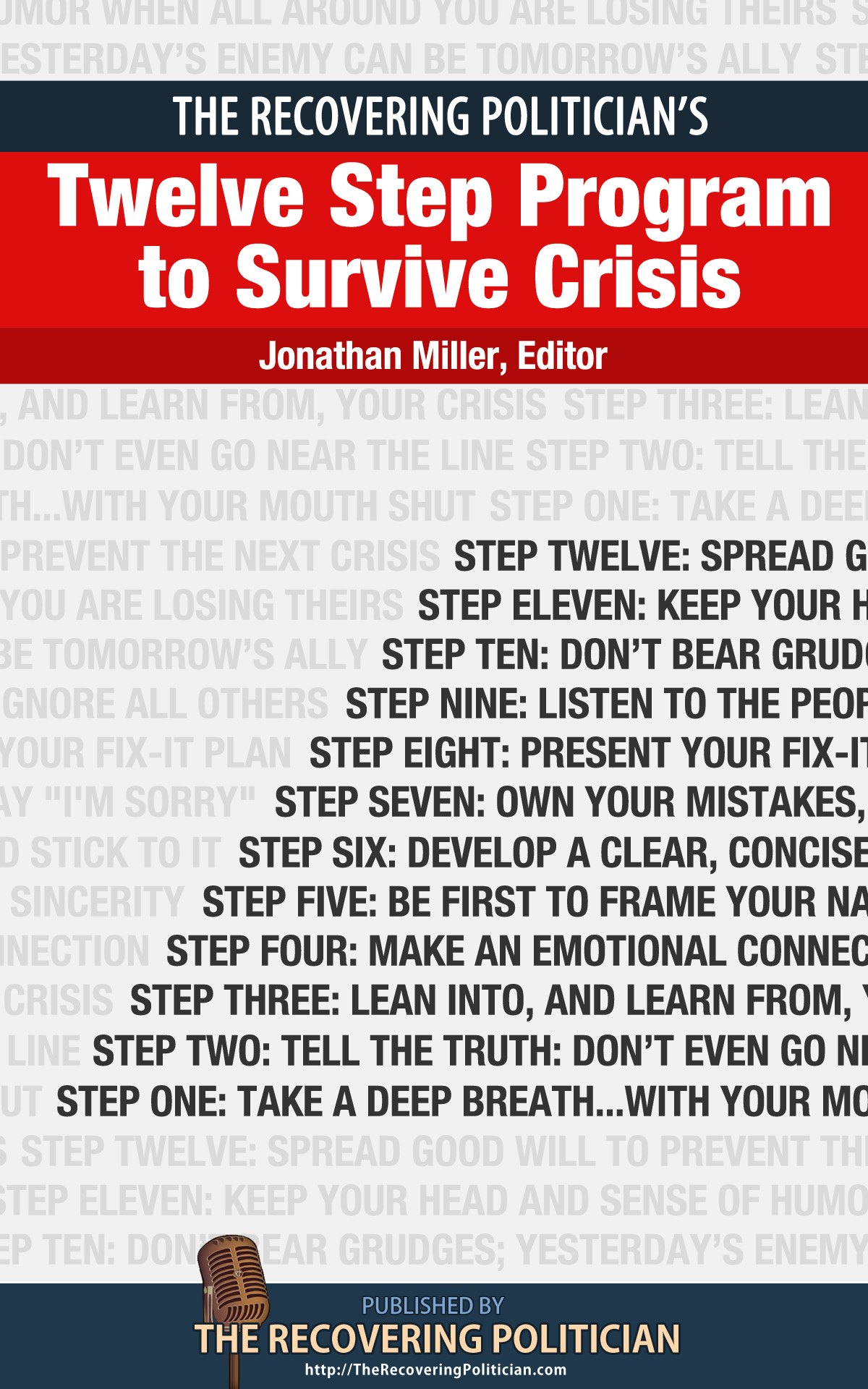
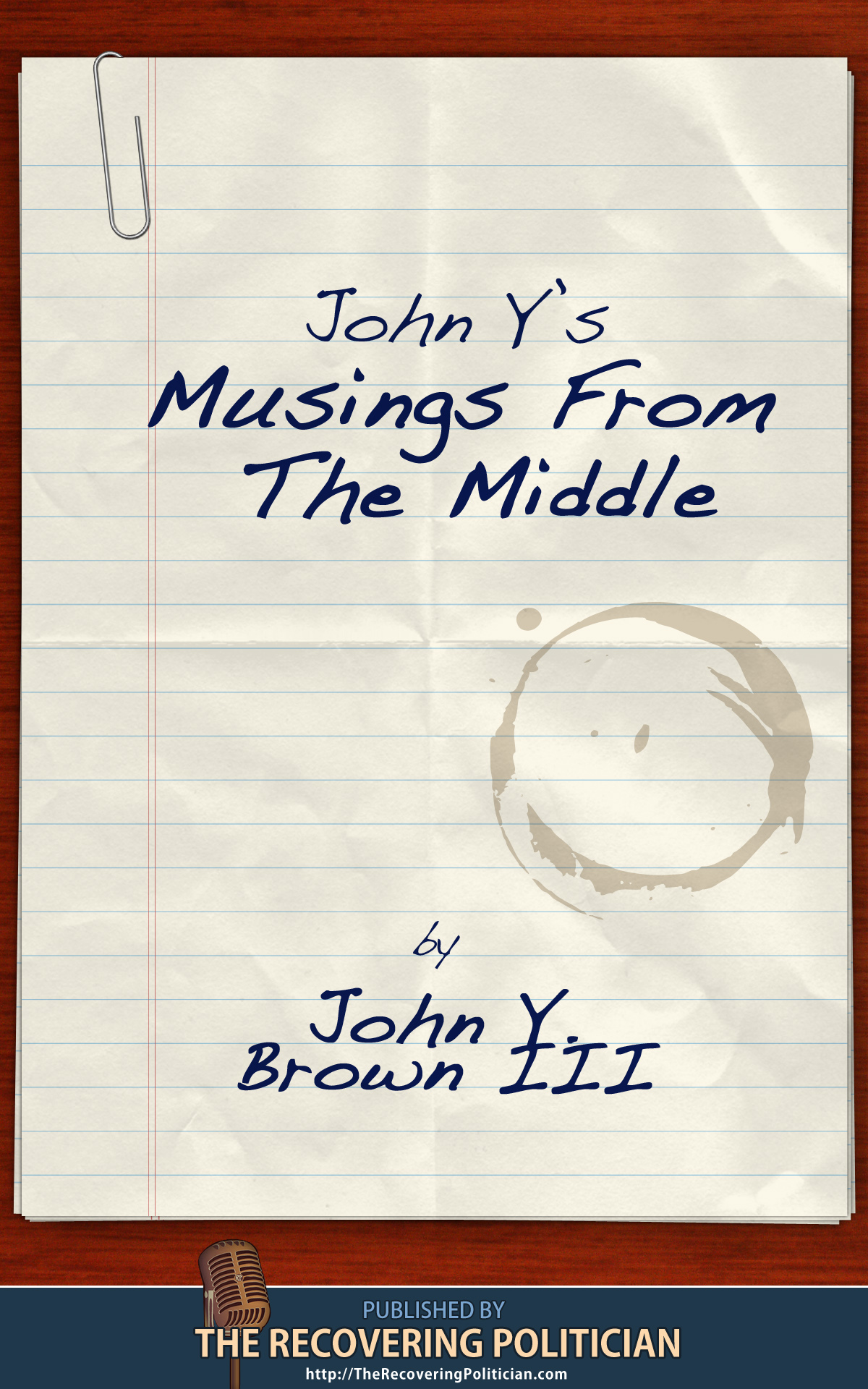
The Recovering Politician Bookstore
|