By RP Staff, on Tue Nov 29, 2011 at 12:00 PM ET Friend of RP Steven Schulman, best known to the world as “Pro Bono Dude,” was quoted in a CNN story, “Hard Times for Lawyers Spell Pro Bono Cuts”:
At Akin Gump, a prominent law firm in Washington, D.C., Steve Schulman, head of the pro bono practice, notes, “as a firm, we are a bit leaner, so, of course, pro bono hours are down.” A firm restructuring trimmed nearly 200 attorneys from its roster since 2007, which has resulted in a reduced pro bono case load, Schulman says.
Akin Gump lawyers have racked up 48,000 free hours so far this year, and the firm expects to be close to last year’s 57,000 total hours. Such work, he says, “is still a draw to recruit top law students.”
Larger firms also have deeper pockets to cover expenses, such as travel, to pursue a pro bono case. But, Schulman maintains, that while “our attorneys are on salary, which is a fixed cost, and it doesn’t cost that much to generate an extra free hour, the cost to the firm of these hours is not zero.”
Click here to read the full story.
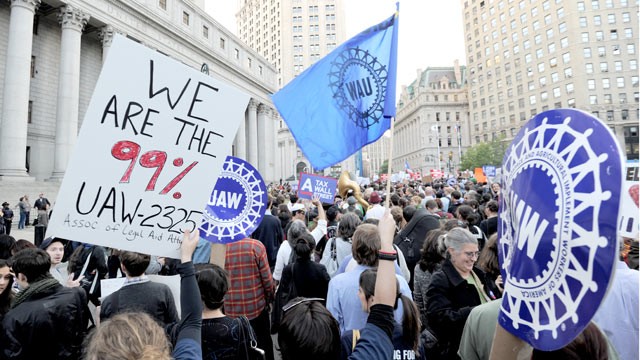
By Artur Davis, on Mon Nov 28, 2011 at 8:30 AM ET  Occupy Wall Street is, in its current state, visible, noisy, and not terribly relevant. How can you stay relevant when the first major policy item on your agenda – student loan forgiveness for the unemployed and the low-income – is already law, and the second–substantial tax hikes for the wealthy – has already been claimed by one of the major political parties? Occupy Wall Street is, in its current state, visible, noisy, and not terribly relevant. How can you stay relevant when the first major policy item on your agenda – student loan forgiveness for the unemployed and the low-income – is already law, and the second–substantial tax hikes for the wealthy – has already been claimed by one of the major political parties?
Two other gripes with OWS: first, every modern progressive movement has derived its moral authority from its efforts to elevate some marginalized class of Americans. This is the first left leaning movement whose rhetorical goal is to pull one class of Americans down to size. It is self-consciously divisive in a way that blacks, women and gays never were.
Finally, while the 99 percent is a glib, clever phrase, it literally links the interest of a hungry child in the Mississippi Delta to those of a six figure accountant whose mortgage is underwater. If you are going to mimic the symbols of Dr. King’s Poor Peoples Campaign, at least have the depth to say something specific about poor people.
(Cross-posted, with permission of the author, from Politico’s Arena)
By Zack Adams, RP Staff, on Tue Nov 22, 2011 at 8:30 AM ET 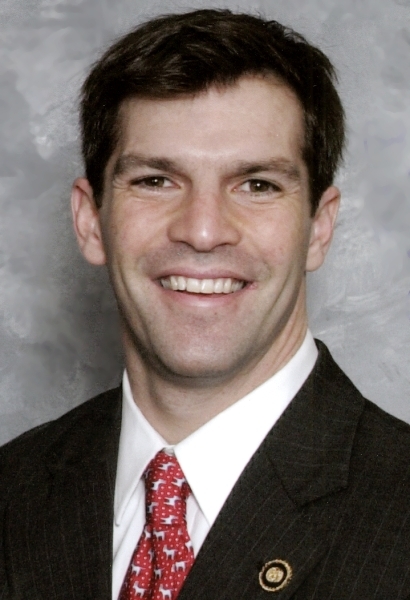
This is just the tip of an oppo iceberg that would make Herman Cain’s look like a pebble.
With the prospects of a vulnerable president and a Senate that’s clearly within reach, I just can’t imagine Republicans nominating someone so noxious among independents, someone with so much baggage. But Newt’s boomlet is yet another sign of the fact that this was really Rick Perry’s nomination to lose – something Perry’s worked diligently to do almost since the day he entered.
Every day this media-manufactured boomlet persists is another day that some enterprising journalist will dig a little deeper into Newt’s past. Like Cain, he’ll claim that the liberal media is trying to bring him down, when in reality, it will be his own pattern of reckless personal, political, and profit-seeking behavior that will do the trick.
(Cross-posted, with author’s permission, from Politico’s Arena)
By Grant Smith, RP Staff, on Fri Nov 18, 2011 at 3:00 PM ET
The Obama Administration is dropping the “Christmas Tree Tax.” [Politico]
How America should adjust to the coming “Pacific Century.” [The Financial Times]
20 job rules for Millenials. [Forbes]
What makes Apple’s “Siri” so interesting? She understands us. [Fortune]
By Artur Davis, on Thu Nov 17, 2011 at 8:30 AM ET
When approval of Congress barely crosses the 10% Mendoza line–an old baseball slang named after a journeyman player who consistently batted .100–it’s safe to say that improving their stock portfolio should not be a major fixation for senators and representatives. Recent press reports regarding stock trading by congressmen has touched one more nerve for a public that already believes politicians operate in their own gilded, privileged world.
I am still, however, a bit torn here–not because I did the same thing (for what its worth, I never owned stocks during the time I served in Congress) and not because I think it’s a good thing to use an elected office to further personal profit. The problem I have is that the controversy, in all its unseemliness, spares us some needed introspection: about how narrow some of our financial laws are, and about what some ill-timed trades say about a larger culture that virtually all us aided and abetted.
First, the laws and their relatively limited state. The misconceptions around insider trading are extensive, even in informed circles. Its not well known, for example, that you can search the whole federal criminal code and never find the term “insider trading”; the concept is a creation of how judges and regulators have interpreted the securities fraud laws (which were written in the thirties, before E-Trade, before money markets flourished, before stocks became a middle class instrument to fund colleges and cushion retirements).
 The prevailing myth is that “insider trading” means you can’t buy or sell stocks based on “confidential information”. That’s actually wrong–the courts and regulators have focused on only one class of violations–hinging on individuals who have a specific legal or fiduciary duty to the source of the information. It’s true that you can be on the hook for criminal liability if you get information from someone that you know breached their fiduciary responsibilities–but it can be tough to prove what a trader knows about the ties between his source and the company whose confidences are being breached. The prevailing myth is that “insider trading” means you can’t buy or sell stocks based on “confidential information”. That’s actually wrong–the courts and regulators have focused on only one class of violations–hinging on individuals who have a specific legal or fiduciary duty to the source of the information. It’s true that you can be on the hook for criminal liability if you get information from someone that you know breached their fiduciary responsibilities–but it can be tough to prove what a trader knows about the ties between his source and the company whose confidences are being breached.
Read the rest of…
Artur Davis: On Congressional Insider Trading
By Grant Smith, RP Staff, on Fri Nov 11, 2011 at 3:00 PM ET
Thanksgiving Dinner will be 13% more expensive this year. [CNBC]
The ten worst pieces of “good” career advice. [Forbes]
Blackberry’s business problem. [CNN Money]
More secret Nixon tapes are released: his testimony before a grand jury. [New York Times]
By Jonathan Miller, on Thu Nov 10, 2011 at 11:30 AM ET
By Lisa Borders, on Thu Nov 10, 2011 at 8:30 AM ET This column, written by contributing RP Lisa Borders and former Comptroller General David Walker, appeared in yesterday’s Washington Examiner. We re-print with Ms. Borders’ permission.
This summer, the country was issued a warning. When Congress failed to deal with our growing national debt in a comprehensive and responsible manner, our debt was downgraded. We were lucky to get the warning.
The country was told to come to terms with its spending habits, escalating deficits, and growing debt burdens or risk a debt crisis that would do serious harm to our already tottering economy.
We were given a second chance. Our second chance comes in the form of a so-called “supercommittee” of 12 members of Congress who must recommend at least $1.2 trillion in deficit reduction by Thanksgiving, and then sell its plan to the full Congress.
Given that a debt crisis will push up interest rates and make our weak economy and high unemployment and under employment levels even worse, you might think Americans would be thankful for the opportunity to make a few sacrifices to avoid it. But no.
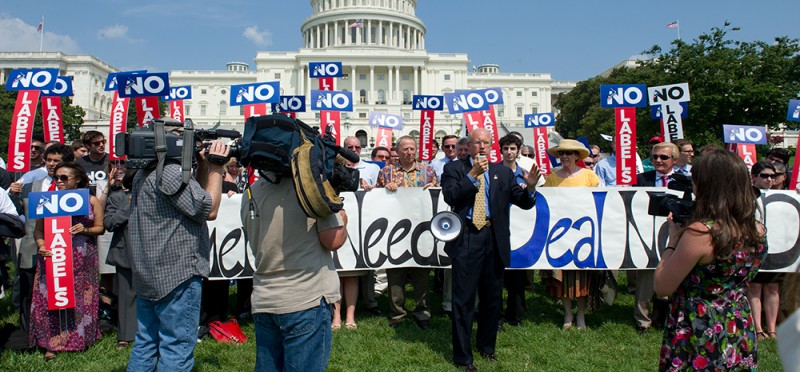
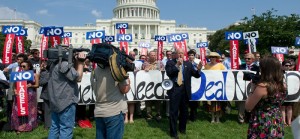 Dave Walker leading a No Labels rally Two hundred lobbying groups and special interests are reportedly trying to reach the supercommittee with essentially the same message: “cut everyone else but me; it’s all about me.”
The special interests don’t seem to care that every serious bipartisan group that’s studied ways to reduce our growing debt burden has come up with the same conclusions: 1) We need way more than $1.2 trillion in deficit reduction to prevent a crisis; 2) we need to cut costs and raise revenues to restore fiscal sanity, and 3) sky rocketing health care costs are the primary driver of our imbalance. We simply can’t fix our economy without reigning in our national health care programs, including Medicare.
Read the rest of…
Lisa Borders: Budget Battle is Not All About Me
By Jonathan Miller, on Wed Nov 9, 2011 at 8:30 AM ET
Since its spontaneous generation a few months ago, Occupy Wall Street has made me cautiously optimistic.
“Optimistic” because I’m thrilled that there’s finally a highly visible effort to shine a spotlight on one of our country’s worst modern tragedies: the cancerous spread and increasing metastasization of income inequality.
“Cautious” because I’ve feared, as have many others, that the movement’s uber-anti-hierarchical — some would say anarchistic — organizational structure would frustrate the emergence of any meaningful, concrete reforms that could actually tackle the worthy issues OWS is raising.
Fortunately, here in my hometown of Lexington, Kentucky, local OWS organizers have developed a concrete, comprehensible platform: They have formed “Invest in Kentucky,” which they describe on their Web site as “a grassroots initiative calling on the Kentucky State Treasurer to reinvest the Commonwealth of Kentucky’s public funds into a financial institution that is headquartered in Kentucky.” They’ve also specifically called upon the Treasurer to divest the state’s funds from J.P. Morgan Chase, an out-of-state financial institution which was at the center of the country’s 2008 financial collapse, and are asking interested citizens to sign a petition to that effect.
Unfortunately, however, “Invest in Kentucky” is aiming its rhetorical weapons at the wrong target.
The Kentucky State Treasurer has absolutely no authority — administrative, legal, or political — to take the action “Invest in Kentucky” is demanding. And while I don’t pretend to be the expert on many state policy matters, I’m pretty familiar with this one: I served in that office for eight years.
The good news is that there is another, viable path for meaningful reform, should “Invest in Kentucky” choose to take it. And I’m happy to show the way.
But first a little history is in order.
Read the rest of…
The RP: Occupy Wall Street’s “Invest in KY” — Worthy Cause; Misplaced Tactics
By Grant Smith, RP Staff, on Fri Nov 4, 2011 at 3:00 PM ET
Greek Prime Minister to resign if he wins a confidence vote on Friday. [CNBC]
Facebook v. Google: The battle for the future of the web. [Fortune]
Which companies are doing the most hiring this holiday season? [Forbes]
IBM’s chief gives advice on corporate longevity and success. [New York Times]
|
The Recovering Politician Bookstore
|