By Lisa Miller, on Tue May 15, 2012 at 9:45 AM ET  [Click here to follow the entire RP Debate] [Click here to follow the entire RP Debate]
While it’s true that Science reassures us that the human brain (and some decision making) isn’t mature until age 25, we’re not talking about the average citizen here. We’re discussing the past hate crime behavior of a person running for president of the United Sates of America.
The character of such a person can not, should not, be questionable. Character is developed over time, and, we’re discussing a hate crime.
For me, this is not about a lack of understanding/forgiveness for mistakes (Goodness knows I believe wholly and holy, that mistake making is essential for the growth of the human soul), but this is about choosing from a pool of leaders who have demonstrated, over a lifetime, qualities of honor and strong internal moral compass. We are not running low on a supply of those.
Should he be forgiven? If he is truly repentant from the heart and soul, yes! Should we consider instead OTHER candidates who don’t have hate crime backgrounds (for current and future races), yes! Should our standards and expectations come from a realm of excellence, yes!
One who runs and takes on office at this level should feel that personal honor is everything. And we should expect this. Who we are personally is who we are publicly, and vise versa.
Looking at the big picture here is key. Is this someone who demonstrates a genuine embracing of diversity?
We can elect leaders for whom this isn’t questionable. Our standards will set the standard.
By Artur Davis, on Tue May 15, 2012 at 9:30 AM ET  [Click here to follow the entire RP Debate] [Click here to follow the entire RP Debate]
I am in the camp that faults almost everything about this story: its timing–posting it the day after President Obama’s endorsement of gay marriage was a thinly veiled effort to link Romney’s opposition to a pattern of bigotry; its placement as a stand-alone piece when the details merited at best inclusion in a longer profile; its strained attempt at making nearly 50 year old events relevant; and its effort to exaggerate the perennial cruelties of adolescence into the systematic brand of bullying that we have become sensitized to today.
That a major newspaper got so many things so wrong is hard to justify as anything other than an agenda. Somewhere along the way, a major section of the press has absorbed the idea that Romney is a hollow kind of character without empathy or conviction, who has sold his soul to a hard-right clique in his party,and whose election would reverse the dawn of a new multi-cultural, tolerant America.
Having convinced itself that Romney is so flawed, much of that press has fed virtually every inspection of his record and past through such an unforgiving filter. The effect is that too much of the coverage of Romney looks exactly like the chain-letter attacks the DNC spits out every day.
Its one thing for a blogger or a columnist to develop a character thesis and dig away at it. Its another thing for an established press organ with a neutral face to go that route.
By Ronald J. Granieri, on Tue May 15, 2012 at 9:15 AM ET [Click here to follow the entire RP Debate]
My first impulse when I heard this story was, I admit, “Wow, what a spectacular piece off oppo research. Now Mitt Romney can be pigeonholed by people who were never going to vote for him anyway as both a gay-basher and the guy who strapped his dog to the roof of his car.”
[Recent self-serving protestations by the WaPo ombudsman aside, no one can deny that there were reasons why playing up particular aspects of this story made sense in the midst of our current debate.]
My second impulse, which I shared in a personal message to the RP, was “Having known some rich privileged [jerks] in high school I am not surprised to hear that rich, privileged Mitt Romney was a [jerk] in high school.”
Neither of those impulses, however, completely expresses my mature thoughts on the matter. Which gets back to the RP’s original point (and Steve’s) that there is a big difference between the impulsive acts of idiot teenagers and the (hopefully) mature positions of thoughtful adults.
Upon mature reflection, the story of Mitt Romney’s actions makes me feel a combination of anger, disgust, and sadness.
I attended an elite boys’ high school myself, though it was not a boarding school like Cranbrook, and I graduated high school exactly twenty years after Willard did. Things had changed somewhat in the intervening decades, and have changed even more since then. So the experiences are not identical, but they do rhyme: I saw and experienced the kind of casual sneering cruelty that adolescent boys can mete out to each other in a culture of macho preening and rigid social hierarchy. A few times I was on the direct receiving end of it, though most of the time I was a bystander.
Thankfully I never witnessed or experienced the kind of physical attack described in the recent newspaper accounts. Nevertheless, certain memories still bother me 25+ years later, and it is also true that I can never look at some of my former classmates (especially those now more active in public life) without at least some bitterness. If any of them were to be on a ballot, I would have a hard time voting for them. So I can understand that some of Romney’s classmates continue to have ambivalent feelings about him so many years after Cranbrook.
Does that mean that one’s behavior in high school reveals permanent and enduring elements of one’s character and should completely shape our view of the adult? God, I hope not. If we can credit other people with “evolving,” then we should all be able to accept that people can overcome the callow idiocy of youth and become more well-rounded and empathetic human beings.
But because we accept that people can learn from their youth and grow beyond it, we should expect, even demand, that when a public figure is confronted with questionable deeds and words from his/her past, that public figure will own the past and explain how it fits into the present. Complaining about the story’s publication is pointless at best, and pretending that the past does not matter is even worse. If Mitt Romney wants to run for president, and to make use of his personal history in his campaign, then he has to accept that the darker shades of his personal history will be discussed as well. The challenge for him, and for those who would defend him, is not to get lost in semi-denials and hemi-demi-apologies, but to own his past actions and explain how if at all they contribute to making him the man he is today.
Just as the history of nations includes both light and dark chapters, both of which need to be analyzed and understood honestly and completely, an honest assessment of a personal history should not try to evade unpleasant topics. It is Romney’s responsibility to address the past, and the responsibility of the rest of us to listen to his story and decide how to evaluate both the boy he was and the man he is. Forgetting is never the proper approach. Honest, even painful, remembrance of the past is the only way to build a better future.
By Steven Schulman, on Tue May 15, 2012 at 9:00 AM ET  [Click here to follow the entire RP Debate] [Click here to follow the entire RP Debate]
Well, I know *I* never would write and produce a song like that about Jimmy (much less memorize the lyrics and continue to sing it 25 years later). But we have all done things we regret as teens, particularly in groups.
So, given the commonality of this experience, why is it relevant to the presidential race?
The reaction to it by Romney is what is most relevant, and can give us some clues about how he views “the other.”
Ironically, for a person from an insular and sometimes persecuted minority, he does not seem to have much empathy for the “other” — particularly gay men and women. The last GOP administration suffered greatly from this kind of lack of empathy, and led us into some horrible human rights abuses against Muslims and those perceived to be different. Abu Ghraib and racial profiling at airports were only some of the more obvious symptoms, but that lack of empathy also contributed to the polarized atmosphere in Washington.
By Jonathan Miller, on Tue May 15, 2012 at 8:30 AM ET
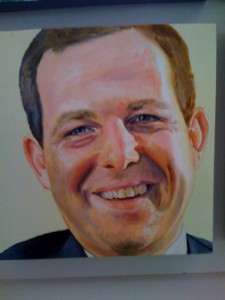
The worst and most shameful thing I have ever done was as a teenager.
I was the ringleader of a group of friends that wrote, sang and produced a parody song about a younger kid with whom we attended camp. For purposes of privacy, I will call him Jimmy.
In those pre-autism, pre-Asberger days, Jimmy was simply considered strange, bereft of the many of the social and inter-personal skills shared by most teenagers. None of our gang ever made fun of him to his face, but in the conspiracy of a friend’s basement music studio, we sang about his perceived deficiencies to the tune of a then-popular song. At the time, it seemed brilliant and hilarious. And today, it reveals itself as unrelentingly cruel.
I console myself with the confidence that Jimmy never heard the cassette tape we recorded. (Thank God there was no Facebook). I don’t think he even heard about it. I also understand that my own episode of bullying was related to the extensive bullying I underwent in middle school — both physical and verbal — for my strange faith, my short stature, and my own personality issues.
But none of that excuses my behavior. I was wrong. I was awful.
I’ve been thinking a lot about Jimmy this week when I heard the story of Mitt Romney’s own episode of teenage bullying. If you’ve been on another planet in the past week, the press has been consumed with the story first reported by The Washington Post that Romney tackled and forcibly cut the hair of a fellow student who reveled in his nonconformity and was presumed gay.
In one sense, I am grateful that the story has been revealed. As I’ve written extensively at this site, I believe that gay rights is the most important civil rights issue of this generation, and anything that enables discussion of teenage bullying, and the horrible impact it has on gay children, is a positive development.
But while this discussion is important, I do not believe that the story is relevant for judging the character of Mitt Romney.
We all have done stupid and cruel things as teenagers. While my own episode did not involve violence, nor did it directly involve the victim, it was awful nonetheless. But I don’t think my character today is defined by that moment.
Indeed, science has demonstrated clearly over the past few decades that teenagers are wired much different that grown adults. Their brains are still developing, and they are prone to move more impulsive, emotional and destructive behavior.
For those of you who disagree with me — those who think that we should hold this 50-year-old incident against Romney — think about your own Jimmy story. I know you have one. We all do. The important thing is not what we did as a teenager, but whether or not we learned from it.
Romney’s record on gay rights and bullying as an adult must be carefully scrutinized. It is very much fair game.
But as much as I’m happy that the nation is focused again on the horrible crime of teenage bullying against gays and lesbians, I do not agree that any one should cast a vote against Romney because of this incident.
By Artur Davis, on Mon May 14, 2012 at 9:30 AM ET The most eloquent, poignant argument I ever heard against same-sex marriage came from an African American woman in her late fifties who organized youth groups at a black mega-church in the South.
I can’t quote her verbatim but it went something like this: “in the black community, gay marriage is a source of worry because we struggle so hard, and against so many cultural forces, to make even conventional marriages work. We don’t buy into officially recognized alternative relationships because we can’t even win the battle to make the standard kind of marriage look appealing: not when our boys want the music video lifestyle—a different girl at every stanza in the song—our girls get degrees and can’t find men who can support them; and our teenagers think a baby is what happens when you become a woman or a man. Yet another alternative to men and women building families together? That’s a luxury we can’t afford.”
 There’s a heap of generalization there, and reasonable minds may or may not agree. In fact, I’ve heard more than a few blacks argue that legal marriages between black homosexuals beats the closets in the black community, which often have the unfair, reverse effect of making any heterosexual black man who stays single look suspect. There’s a heap of generalization there, and reasonable minds may or may not agree. In fact, I’ve heard more than a few blacks argue that legal marriages between black homosexuals beats the closets in the black community, which often have the unfair, reverse effect of making any heterosexual black man who stays single look suspect.
But the woman I mention was utterly free of malice and not at all reliant on Old Testament allusions to make her case. If you think she is in spite of that a beacon of intolerance, you’ve just indicted a thoughtful representation of about 60 percent of the African American community.
The media-filtered reaction to President Obama’s endorsement of gay marriage has been predictable: an undercurrent of exaltation in the newsrooms that have long ceased to think of homosexuality as anything but another form of freedom; cherry-picked evangelical leaders who fit that same media’s expectations of what social conservatism looks and sounds like. To be sure, the networks and cable have brought forth their share of high profile African American ministers and Catholic bishops, but they aren’t the woman in that southern church running a youth group, trying to grapple with how social change shapes fatherless neighborhoods: the preachers and clerics are speaking in the accents of scripture and biblical text, which most Americans are in the custom of preaching not practicing.
Read the rest of…
Artur Davis: The Gay Marriage Aftermath
By Michael Steele, on Mon May 14, 2012 at 9:00 AM ET 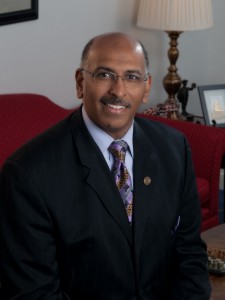 Evolution is a funny thing. It takes time; things change but ultimately wind up in the right place. So, when President Obama demurred in the early days of his administration that his views on gay marriage were still “evolving,” most of us gave the president a respectful amount of space to work it out. Given the many social, political and personal realities (and implications) attached to the issue of gay marriage, everyone, including the president should be allowed to wind up in the right place for them on this issue. Evolution is a funny thing. It takes time; things change but ultimately wind up in the right place. So, when President Obama demurred in the early days of his administration that his views on gay marriage were still “evolving,” most of us gave the president a respectful amount of space to work it out. Given the many social, political and personal realities (and implications) attached to the issue of gay marriage, everyone, including the president should be allowed to wind up in the right place for them on this issue.
In what appeared to be a hastily arranged interview with ABC News, the president finally announced his personal views on gay marriage stating “at a certain point I’ve just concluded that for me, personally, it is important for me to go ahead and affirm that I think same sex couples should be able to get married.” Indeed, many of the president’s allies spoke of his “courage” in doing so — never mind the president had just announced a major reversal in his evolution.
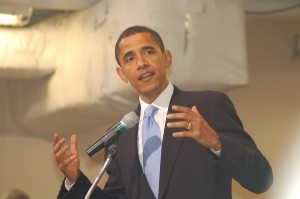
Of course, Mr. Obama has been evolving on this issue for some time. In 1996, as a candidate for the state Senate in Illinois, Mr. Obama stated “unequivocal” support for same-sex marriage but by the time he spoke at the Democratic National Convention in 2004 he had evolved against same sex marriage because as “such arrangements contravened his religious faith.” But then in 2008 there was further evolution on this issue when the president said he supported civil unions but still opposed same-sex marriage.
Read the rest of…
Michael Steele: Obama Finally Jumps the Broom on Gay Marriage
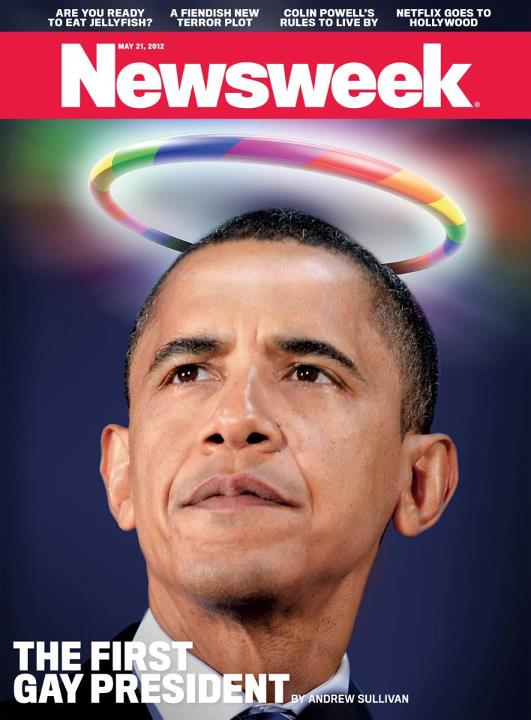
By RP Staff, on Mon May 14, 2012 at 8:30 AM ET Newsweek seems to think so.
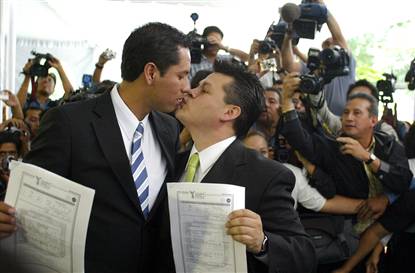
This morning, the RP, former Congressman Artur Davis, and former RNC Chairman Michael Steele weigh in about last week’s announcement by President Obama of his support for marriage equality.
Please let us know how you feel in the comments section below.
By Artur Davis, on Tue May 8, 2012 at 8:30 AM ET It is Lyndon Baines Johnson’s fate that as much as he was venerated during his career for his raw skills, he is remembered today largely as a colossal blunderer, by the right as a prototype of excess who spent taxpayers’ money profligately, and by the left as an adventurer who made a catastrophe out of a molehill called Vietnam. His own party, while framing the signature achievements in his domestic record–Medicare, the Voting Rights Act–as a secular temple that Republicans must be kept from dismantling, simultaneously avoids awarding Johnson much of the credit. His image is as grainy as the black and white television reels of his era, as harsh and remote as the perpetual grimace on his face in the footage from those reels.
Robert Caro’s latest entry in his opus on LBJ, “Passage to Power”, will do something to revive the 36th president’s reputation. It spans from Johnson’s inept, misconceived effort to win the presidency in 1960—a race which he never embraced and never seemed to think he should, much less would, win—to the stretch in the wilderness as John Kennedy’s vice president; to Johnson’s frenetic succession to power after November 22, 1963. Unexpectedly, the narrative stops in the spring of 1964, short of the demolition of Barry Goldwater, and well short of the 1965 legislative season that was Johnson’s epic moment. Caro’s readers will recognize that he has rarely felt bound by the precision of a conventional biographical framework and has stopped and started these volumes based on his own sense of rhythm and his perspective on which details best illuminate his much misunderstood subject.
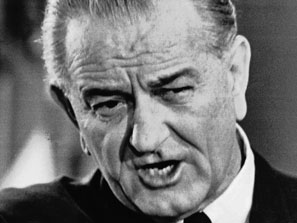 So, the last and next edition is the one that will take on the well worn tale of Johnson going up and down Mt. Olympus between the 64 election and the fall from grace in 1968. This narrative dwells on the less familiar struggles of a politician who was unsuited to the changes that television and the atrophy of the establishment were effecting during the 1960 election; and to the almost as forgotten description of a president seeking to convert an unprecedented public moment, the assassination of a leader with an unfulfilled and active agenda, into a legislative program on Capitol Hill, in a political climate that was decidedly more right-leaning and resistant to change than is currently appreciated. So, the last and next edition is the one that will take on the well worn tale of Johnson going up and down Mt. Olympus between the 64 election and the fall from grace in 1968. This narrative dwells on the less familiar struggles of a politician who was unsuited to the changes that television and the atrophy of the establishment were effecting during the 1960 election; and to the almost as forgotten description of a president seeking to convert an unprecedented public moment, the assassination of a leader with an unfulfilled and active agenda, into a legislative program on Capitol Hill, in a political climate that was decidedly more right-leaning and resistant to change than is currently appreciated.
Read the rest of…
Artur Davis: The No Longer Practiced Politics of LBJ
By Artur Davis, on Wed May 2, 2012 at 8:30 AM ET I have a suspicion that the loathing toward John Edwards in Democratic circles is a kind of remorse toward a path that was almost taken. Another two days of campaigning in Iowa in 2004 and he might well have won there instead of coming in a close second; Iowa was in his reach again four years later and could have fallen his way had the late Obama surge been just a little weaker, or if the Jeremiah Wright tapes had more timely surfaced. Politics is made of those hair-length turns of fate; but there was more to it than some near misses with Edwards. For tantalizing moments in his career, he seemed unstoppable—a preternaturally smooth orator, but also a walking narrative of middle class aspiration who breathed passion into the old liberal idea that the powerful are lording over the powerless. The man who collapsed in a sex scandal came quite close to seducing a party to make him its savior.
Many Democrats know just how close, and in a complex way, they hate Edwards for it. The anger is compounded by the fact that part of his lie involved a marriage to a woman who died valiantly; and then there is the pathological depth of the lies, and the determined way he repeated them.
 But the most legitimate disdain and righteous anger is not a calculus that should drive prosecutorial discretion. If it were, the investment banks who jiggered their books to disguise their leveraged, insecure portfolios, and who helped wreck an economy, would have long faced their day in the criminal dock. The lending institutions who subsidized loans with no documentation, and whose underlings fudged signatures, would have surely faced fraud charges. The executives who told Congress that Fannie and Freddie steered clear of subprime, the senior Goldman management team whose testimony about their securitization of risk has been so undercut by the facts, would all have been hauled off on perjury charges. The fact that the sordid trail just described has not generated one prosecution is defended, and excused, on the ground that the power of indictment is not for morally clear but gray legal areas. But the most legitimate disdain and righteous anger is not a calculus that should drive prosecutorial discretion. If it were, the investment banks who jiggered their books to disguise their leveraged, insecure portfolios, and who helped wreck an economy, would have long faced their day in the criminal dock. The lending institutions who subsidized loans with no documentation, and whose underlings fudged signatures, would have surely faced fraud charges. The executives who told Congress that Fannie and Freddie steered clear of subprime, the senior Goldman management team whose testimony about their securitization of risk has been so undercut by the facts, would all have been hauled off on perjury charges. The fact that the sordid trail just described has not generated one prosecution is defended, and excused, on the ground that the power of indictment is not for morally clear but gray legal areas.
Read the rest of…
Artur Davis: The Troubling Choice to Try John Edwards
|
The Recovering Politician Bookstore
|


 [Click here to follow the entire RP Debate]