The eulogies for George McGovern, who just died at 90, have taken a predictable form: plaudits from the left for his inspirational effect on a class of aspiring liberal politicos combined with an acknowledgment that he was a singularly ineffective, disastrous candidate whom the same left never needed or cared to rehabilitate. To be sure, the evidence of McGovern’s incompetence and irrelevance is a narrative that Democratic analysts have had their own reasons to spin over the last two generations. It can’t possibly be, so the conventional wisdom goes, that a 49 state loser who spectacularly blundered the selection of a running mate and who is still synonymous with epic loss, was much more than an incidental character in a decade of unusual turbulence. And if McGovern’s legacy is just ineptitude, it is easier to dismiss him as a blip, an anomaly, in the liberal tradition.
But the theory of McGovern as a woeful bumbler has always shortchanged two features of the South Dakotan: the first is the novelty of the liberalism that McGovern helped foist on the Democratic Party in the early seventies, and the second is its durability in a party that putatively disowned him while absorbing most of his ideological sensibilities.
To grasp the novelty, it’s worth noting what post-war liberalism was prior to McGovern’s insurgency: a populist sounding, rhetorically lofty politics that had a transactional, anything but radical reality at its core. Adlai Stevenson was more of a trimmer on school desegregation than Eisenhower era Republicans. John Kennedy and Lyndon Johnson pursued conventionally growth oriented economic policies with tax cuts and balanced or near balanced budgets at the centerpiece. The Great Society’s vaunted anti-poverty initiatives were invariably complements to urban political machinery, as Geoffrey Kabaservice documents in his work on the erosion of moderate Republicans, “Rule and Ruin”. Hubert Humphrey disavowed interpretations of the Civil Rights Act of 1964 that endorsed mandatory hiring goals for minorities. And on foreign policy, the liberal vision was enamored enough of American power that Robert Kennedy’s announcement of his presidential candidacy styled the campaign as a contest to claim the “moral leadership of the planet”, even while pledging to wind down the conflict in Vietnam.
By Jonathan Miller, on Thu Oct 25, 2012 at 3:00 PM ET
As always, Nate Silver cuts through all of the conflicting poll data and screaming head spin to give a true snapshot of the race as it stands today. Here’s an excerpt:
The term “momentum” is used very often in political coverage — but reporters and analysts seldom pause to consider what it means.
Let me tell you what I think it ought to mean: that a body in motion tends to stay in motion. That is, it ought to imply that a candidate is gaining ground in the race — and, furthermore, that he is likely to continue to gain ground.
As a thesis or prediction about how polls behave, this notion is a bit dubious, especially in general elections. In races for the United States Senate, for instance, my research suggests that a candidate who gains ground in the polls in one month (say, from August to September) is no more likely to do so during the next one (from September to October). If anything, the candidate who gains ground in the polls in one month may be more likely to lose ground the next time around.
(Where might there be clearer evidence for momentum, as I’ve defined it? In primaries, especially when there are multiple candidates in the race and voters are behaving tactically in choosing among them. But there is little evidence of it in general elections.)
The way the term “momentum” is applied in practice by the news media, however, it usually refers only to the first part of the clause — meaning simply that a candidate has been gaining ground in the polls, whether or not he might continue to do so. (I’ve used this phrasing plenty of times myself, so I have no real basis to complain about it.)
But there are other times when the notion of momentum is behind the curve — as it probably now is if applied to Mitt Romney’s polling.
Mr. Romney clearly gained ground in the polls in the week or two after the Denver debate, putting himself in a much stronger overall position in the race. However, it seems that he is no longer doing so.
Many voters are frustrated and outraged by the $6 billion being spent in deceptive political advertising, attack ads, and robo calls. Unfortunately, there is only a meager counter balance to this massive expenditure.
Only three organizations — Project Vote Smart, League of Women Voters, and Vote USA — currently are available to provide voters with non-partisan information. A fourth, eVoter.com, recently terminated due to lack of money. The three still standing attempt to provide voters what they need to vote their interests, not those of special interests groups spending the $6 Billion. Unfortunately, all three are grossly underfunded and out gunned. Yes, voters may only have a sling shot against this Moneyed Goliath but, if they use it well, it may make a substantial difference.
The first, League of Women Voters (LWV.org) is a league of 51 different LWV organizations, one for each state and DC. It was founded in 1920 to ratify the 19th amendment to the U.S. Constitution providing women the right to vote at the convention of the National American Woman Suffrage Association. League members were encouraged to be political themselves, by educating citizens about, and lobbying for, government and social reform legislation. Another objective is to provide non-partisan voter information and, for decades, LWV has been mailing sample ballots to voters. With the advent of the Internet, LWV developed a single Vote411 website where it attempts to provide voters with targeted information about the candidates in each voter’s various Federal and State contests. When this information is not available on its website (probably due to redistricting), it provides links to State and county voter guides.
Read the rest of… Ron Kahlow: The Meager Counter Balance to Money in Politics
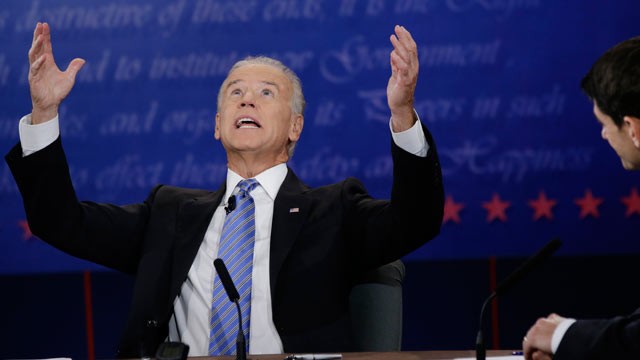
Joe Biden’s alternately snarling, eye-rolling, interrupting, grinning, occasionally weird performance seems to have traded off two conflicting outcomes: temporarily motivating Democrats who were unsettled by Barack Obama’s passivity in the first debate while repelling independents who got a florid reminder of just what it is they find distasteful about political combat.
But Biden unleashed revealed something about what has happened to the liberal political mood in this season. Beneath the back and forth over the quality of Obama’s economic stewardship, and the predictable jabs at the wealth and tax records of the first nominee since 1940 who has substantial private sector experience, there has been another context to this campaign, that is both retrograde and novel at the same time: namely, the left’s strategy of attack by caricature and ridicule, and the implicit worldview that conservatism is an oddball blend of plutocracy, racial resentment, sexual backwardness, and selfishness.
The backward leaning part of the theme is the resemblance to Franklin Roosevelt’s and Harry Truman’s exuberant Republican bashing, at least in the brutal depiction of the GOP agenda. But FDR’s tongue-lashing had a notable high-mindedness: the broadside in his 1936 acceptance speech about mastering the forces of greed in a second term was exquisite rhetorical theater of a kind Barack Obama as president has utterly failed to master. Moreover, the New Deal’s anti-Republican barbs were accompanied by a raft of prospective domestic legislation.
The core of the modern liberal sneer strategy, and Biden made it fairer than ever to describe it that way, is much more novel, not terribly high-flown, and not at all forward-looking. The technique unfurls itself daily behind the desks in MSNBC’s studio, where all but a select few anchors (Joe Scarborough, Chuck Todd) moderate rolling denunciations of all things Republican, without much pretense at balance, in the august editorial pages of the New York Times, which has traded in its vanishing profits as the paper of record for the mantle of intellectual enforcer of the left, and in a coherent, organized blogosphere which ritualistically strikes at every conservative pretense imaginable. Missing is any sustained rationale for what an Obama second term might look like, beyond the standard fare hike in upper income tax rates and a generalized commitment to more “investments” in conventional Democratic objectives.
The novelty is in the reversal of a generation of Democratic attempts to soften Republican/conservative opposition through persuasion. During the Clinton era, Democrats regularly sought to co-opt Republicans by shifting right on welfare and budgets, and moved back and forth between partisanship and outreach. Nor is there much trace of the feints liberals made a decade ago toward evangelicals, much less Obama’s 2004/2008 emphasis on reducing partisanship.
Spared the tactical imperative of persuading even mainstream conservatives, or crafting a legislative portfolio that could overcome gridlock, liberalism circa 2012 is largely a negative project aimed at dismissing the Right’s substantive and intellectual credibility. Nancy Pelosi’s eye-rolling at doubts about the constitutionality of the healthcare law, the establishment media’s persistent denunciations of the Tea Party as Neanderthal relics of George Wallace, the African American media’s trope that conservatism is racial backlash are all of a piece with Biden’s tactic of describing conservative economic policies as discredited claptrap.
By Nancy Slotnick, on Tue Oct 23, 2012 at 8:30 AM ET
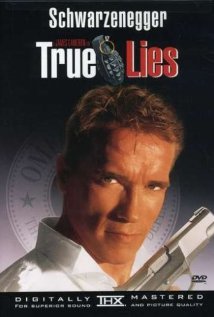
One of my husband’s favorite movies is True Lies. (You must say it with the Ahrnold accent.) Of course the irony of the casting of that film didn’t become so readily apparent until recently. I saw Arnold interviewed about how he lied about his audio malfunctioning when Matt Lauer once asked him a question that he didn’t want to answer. Even though he admitted to this lie in his recent memoir, he still didn’t want to own up to the lie when asked about it on Meet the Press. And they had video footage! A lie wrapped in an enigma wrapped in fudge factor. It’s called acting I guess.
Of course, everyone lies in some form or another. I had this conversation with my 7 year old the other day. (yes, Mom, I flossed my teeth.) But when someone flat out lies about everything, blanketly denying things that they have already admitted to be true, then that is someone you don’t want to date. Or vote for, in my opinion.
How can you tell? If someone like Maria Shriver, an extremely smart and astute woman, can be fooled, then how on earth can the rest of us figure it out?
Well, you can start by avoiding the worst kind of lie- lying to yourself. A first date can tell you about 80% of what you need to know about a person if you pay attention. And a month of dating someone bumps it up to 90%. But how well can you listen when they tell?
You get this feeling, in the pit of your stomach and you can’t make sense of it. So you ignore it and do what feels good. We all do this and I’m not trying to say that you can’t be human and act on impulse. But before you do, try to make sense of that sinking feeling- it has 2 distinct heads to it that you can try to decipher. And then when you act, act deliberately with the cognizance of whether you are making a decision for 4 hours or 4 years.
As Barack Obama and Mitt Romney duke it out, several of our contributing RPs — including Krystal Ball, Michael Steele, Jeff Smith, Rod Jetton, Jason Grill, John Y. Bornw, III, and The RP himself — will be providing their live commentary of the debate. Read below.
And you too can join the fun. Simply go to your normal Twitter account and use the hashtag #RecoveringPol. Your tweets will appear below LIVE!
Feel free to interact with the RPs by using their handle (i.e. @JeffSmithMO) in your tweets. They are likely to respond and engage.
<Tweets from @RecoveringPol/rps
With a little more than two weeks until Election Day, GOP Senate candidate Todd Akin’s Saturday fundraiser was highlighted by a questionable analogy.
Two months after his “legitimate rape” comments sparked a firestorm of criticism, PoliticMo captured audio of Akin in Springfield, Mo., comparing Democratic incumbent Sen. Claire McCaskill’s work in office to that of a dog.
“She goes to Washington, D.C., it’s a little bit like one of those dogs, you know ‘fetch,’” Akin said. “She goes to Washington, D.C., and get all of these taxes and red tape and bureaucracy and executive orders and agencies and she brings all of this stuff and dumps it on us in Missouri.”
“It seems to me that she’s got it just backwards,” Akin added. “What we should be doing is taking the common sense that we see in Missouri and taking that to Washington, D.C., blessing them with some solutions instead of more problems.”
After a successful debut of our new virtual debate feature last week during the second presidential debate, we’ve decided to try it again — bigger and better.
Tonight, at 9 PM EDT, when President Obama and Governor Romney square off for the third and final time, more than a half dozen of our contributing RPs — ranging from Michael Steele to Krystal Ball to Jeff Smith to Rod Jetton to Jason Grill to John Y. Brown, III to The RP himself — will be offering their contemporaneous comments via Twitter, and The Recovering Politician’s home page will provide a live feed of their tweets.
Even better, you are asked to join in. Simply go to your own Twitter account, make your statement and be sure to type the hashtag #RecoveringPol somewhere in your tweet. Your tweets will also be broadcast live here at The Recovering Politician. If you agree or disagree with a point a certain RP is making, you are encourage to call them out — type in their handle (i.e. @JeffSmithMO) to your tweet. In all likelihood, they will respond to you.
So, please join us tonight for some fun civil dialogue as the presidential candidates make their final case to the American people.
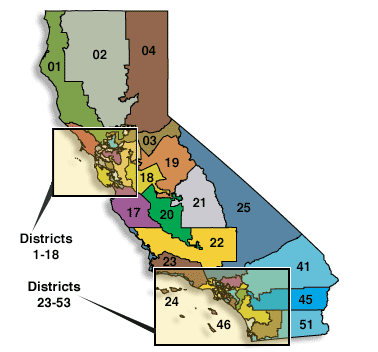
In June 2010 via Proposition 14, California radically changed the way candidates are elected to public office. Previously, candidates running for office appeared only on their party’s ballot in the primary election. Then, the winner from each political party and any independents who qualified for ballot access would move on to the general election. Then, for the general election in November, voters could choose between one Republican, one Democrat, and any number of third party and independent candidates for almost every office contest.
Proposition 14 changed all that. Now, under the “Top-Two Open Primary Act,” all candidates desiring to run for public office, regardless of party affiliation or preference, will appear on a single combined ballot in the primary election. Likewise, all voters, regardless of party affiliation or preference, are permitted to vote for any candidate on this combined ballot. Then, only the two candidates who receive the highest and second-highest number of votes move on to the general election. So, for the general election in November, voters can only choose between two candidates. Both candidates could be in the same party, different parties, or with any combination with independent candidates. Also, the candidates can choose whether or not to list their party affiliation on the primary and general election ballots. In other words, the top two overall vote-getters, not the top vote-getter from each political party, get on the general election ballot.
Interestingly, the change does not apply to all offices. It only includes State-oriented offices, like U.S. Senate, U.S. House, State-wide offices, State Senate, and State House. It does not include U.S. President, county, and local offices. Nonetheless, the new election process could be a seismic change in California’s democratic process. But was it?
ICYMI, yesterday afternoon, The RP was the special guest on MSNBC’s hot new afternoon talk show, The Cycle, co-hosted by The RP’s friend — and contributing recovering politician — Krystal Ball.
After Krystal kindly promoted a certain spectacular year-and-a-half-old Web site, The RP gave a spirited defense of No Labels, the grassroots movement he co-founded that now involves more than 500,000 Americans in efforts to promote bi-partisan problem-solving as a means to fix our broken political system.
If you haven’t had the chance, please be sure to check out the No Labels Web site, and if you support their mission, sign on to the important cause.


 The eulogies for George McGovern, who just died at 90, have taken a predictable form: plaudits from the left for his inspirational effect on a class of aspiring liberal politicos combined with an acknowledgment that he was a singularly ineffective, disastrous candidate whom the same left never needed or cared to rehabilitate. To be sure, the evidence of McGovern’s incompetence and irrelevance is a narrative that Democratic analysts have had their own reasons to spin over the last two generations. It can’t possibly be, so the conventional wisdom goes, that a 49 state loser who spectacularly blundered the selection of a running mate and who is still synonymous with epic loss, was much more than an incidental character in a decade of unusual turbulence. And if McGovern’s legacy is just ineptitude, it is easier to dismiss him as a blip, an anomaly, in the liberal tradition.
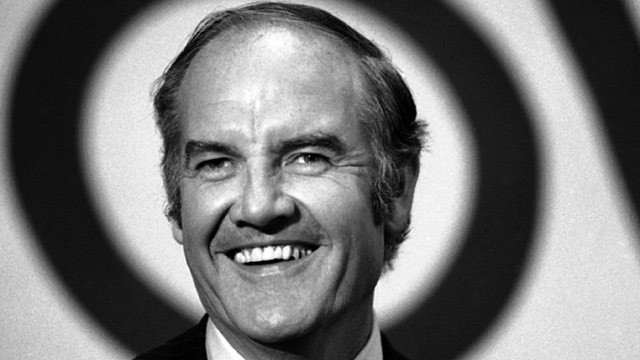 But the theory of McGovern as a woeful bumbler has always shortchanged two features of the South Dakotan: the first is the novelty of the liberalism that McGovern helped foist on the Democratic Party in the early seventies, and the second is its durability in a party that putatively disowned him while absorbing most of his ideological sensibilities.



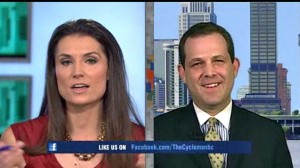 ICYMI, yesterday afternoon, The RP was the special guest on MSNBC’s hot new afternoon talk show, The Cycle, co-hosted by The RP’s friend — and contributing recovering politician — Krystal Ball.