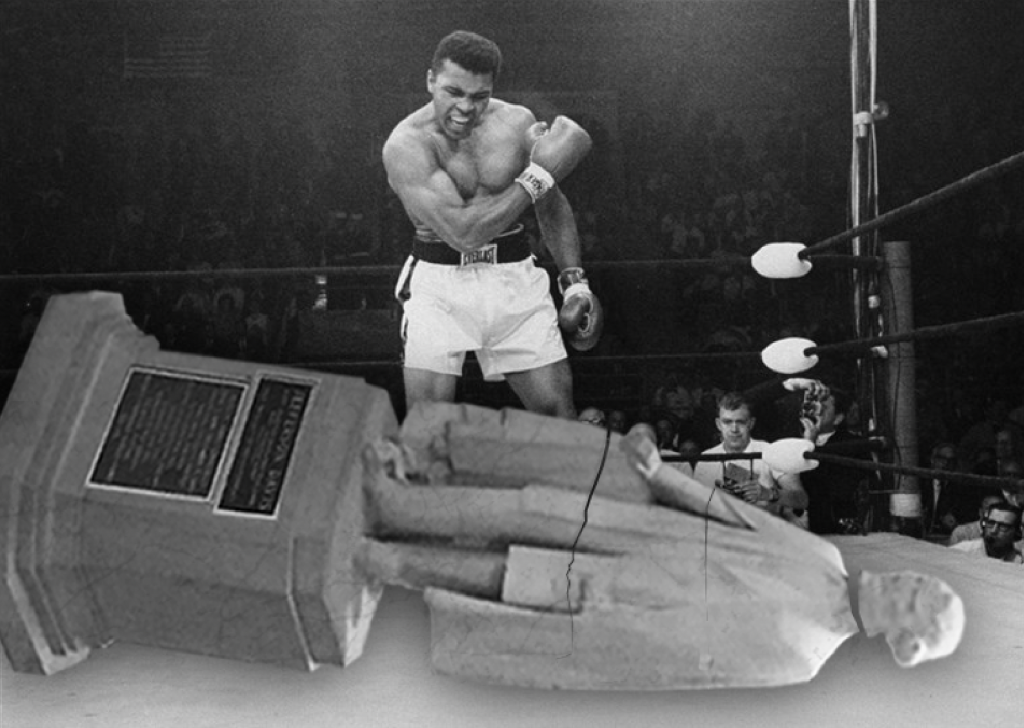
Please sign the petition below to remove the statue of Jefferson Davis currently in Kentucky’s Capitol Rotunda, and replace it with a tribute to Muhammad Ali, “the Louisville Lip” and “the Greatest of All Time.”
I just heard from the Ali family: It is the Champ’s belief that Islam prohibits three-dimensional representations of living Muslims. Accordingly, I have adjusted the petition to call for a two-dimensional representation of Ali (a portrait, picture or mural) in lieu of a statue.
UPDATE (Tuesday, December 2, 2014)
In this interview with WHAS-TV’s Joe Arnold, Governor Steve Beshear endorses the idea of honoring Muhammad Ali in the State Capitol (although he disagrees with removing Davis). Arnold explores the idea further on his weekly show, “The Powers that Be.”
Click here to check out WDRB-TV’s Lawrence Smith’s coverage of the story.
And here’s my op-ed in Ali’s hometown paper, the Louisville Courier-Journal.
UPDATE (Saturday, June 4, 2016)
In the wake of the 2015 Charlestown tragedy, in which a Confederate flag-waving murderer united the nation against racism, all of the most powerful Kentucky policymakers — U.S. Senator Mitch McConnell, Governor Matt Bevin, Senate President Robert Stivers and House Speaker Greg Stumbo — called for the removal of the Davis statue from the Rotunda. Today, as we commemorate last night’s passing of Muhammad Ali, there is no better moment to replace the symbol of Kentucky’s worst era with a tribute to The Greatest of All Time.
UPDATE (Wednesday, June 8, 2016):
Great piece by Lawrence Smith of WDRB-TV in Louisville on the petition drive to replace Jefferson Davis’ statue in the Capitol Rotunda with a tribute to Muhammad Ali.
UPDATE (Thursday, June 9, 2016):
Excellent piece on the petition drive by Jack Brammer that was featured on the front page of the Lexington Herald-Leader.
Highlight of the article:
Miller said he has received a few “angry comments” on his call to honor Ali.
“One of them encouraged me to kill myself,” he said. “You can quote me that I have decided not to take their advice.”
UPDATE (Friday, June 10, 2016)
The petition drives continues to show the Big Mo(hammed): check out these stories from WKYU-FM public radio in Bowling Green and WKYT-TV, Channel 27 in Lexington:
UPDATE (Saturday, June 11, 2016):
Still not convinced? Check out this excerpt from today’s New York Times:
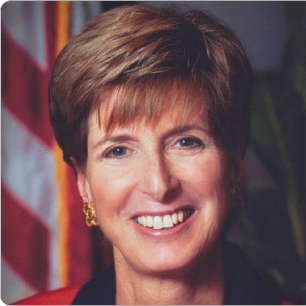
Yesterday, the RP conducted a fascinating interview with Christine Todd Whitman, the former GOP Governor from New Jersey and the Administrator of the Environmental Protection Agency during George W. Bush’s first term in office.
Whitman shared her frustrations with the hyper-partisanship in Washington, the impact of the Tea Party on her beloved GOP, and the gridlock on environmental action and climate change remediation. She also offers her ideas on how to fix her party and her country’s political system.
Listen here:
No Labels is a new grassroots movement of Democrats, Republicans, and Independents who are united in the belief that we do not have to give up our labels, merely put them aside to do what’s best for America. No Labels Radio will offer a weekly dose of news and interviews with the policymakers who are working to find bipartisan answers to the otherwise intractable problems our country faces.
By Stephanie Doctrow, RP Staff, on Fri Jul 8, 2011 at 10:00 AM ET
Maybe this Time magazine article should actually be titled “Ladies, Your Gaydar Is Real.” [Time]
Families with surrogate mothers, sperm donors, and same-sex parents are more common today, so family tree mapping is a little more complicated than it used to be. [NY Times]
Can’t get away from work for a vacation this summer? Eat some Vitamin D rich foods instead. [Psychology Today]
Scientists in the UK are researching innovative sunburn treatments… by starting with human test subjects. [Wall Street Journal]
Yet more scientific proof that we need to go green: a new study reveals that air pollution is linked to memory issues and depression. [Psych Central]
Alabama’s new immigration law is about to become a flashpoint in the culture wars.
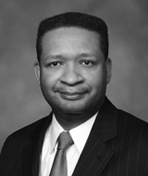
It is the first hard push to the right by a moderate Republican Governor who is an ally of the state’s powerful, and liberal, teachers’ union and who has soft-pedaled his opposition to what his party calls “Obamacare.” I think, taken in its totality, it is a push too far, and the Obama Justice Department should challenge its worst features as fiercely as it has attacked Arizona’s controversial 2010 restrictions.
I don’t criticize the provisions that make businesses confirm the legal status of their employees through E-Verify, or the stiff sanctions the law imposes on companies who knowingly hire illegal immigrants: those policies add teeth to current laws that are reasonable but often under-enforced.
There is also a sound underlying rationale: employers who hire undocumented workers are not motivated by a rush of generosity, but usually by a desire to undercut wages and to pad their payrolls with vulnerable, cheap laborers who can’t sue and who fear deportation too much to complain about lax safety standards.
Read the rest of… Artur Davis: Alabama’s Ugly New Immigration Law
While much of the media’s attention has been focused in the past few weeks on the ongoing national debt ceiling crisis; the polarizing, and seemingly intractable immigration issue continues to divide the country.
Recently, Alabama passed a very controversial immigration statute that some say is even more restrictive and punitive than the very controversial law that was passed by Arizona last year.
Tomorrow morning, contributing RP Artur Davis — a Congressman who represented Alabama for three terms, as well as a former federal prosecutor — shares his take on the law passed in his home state.
Be sure to tune in at 8:30 AM for Davis’ column, and as always, so much more.
By Zack Adams, RP Staff, on Thu Jul 7, 2011 at 3:00 PM ET
The Politics of Speed
Here is a really nice article explaining how the feud between ESPN and Comcast/NBC is killing the already sputtering sport of Indycar racing. Even though Indycar racing in America is old and well-established, in today’s sports world if you aren’t making money, you’re out. [The Daly Planet]
A street-legal, modified Ford GT set the record in a newly-established category for the Guiness Book of World Records: “standing-mile speed by a street-legal car.” The official record time is 223 mph, even though this car has reached speeds of up to 267 mph. [Jalopnik]
If, for some reason, you are not acquainted with rally car racing – this is the article for you. It explains, in detail, why this sport is “The Toughest Motor Sport in the World.” [My Ride Is Me]
This week’s ESPN NASCAR power rankings feature Kyle Busch taking over the top spot, his brother Kurt falling to #5, with Harvick, Edwards, and Kenseth in the middle. [ESPN]
For the first time in 10 years NASCAR’s Sprint Cup will race at a new track: Kentucky Speedway in my home state. After adding around 40,000 seats and selling a total of 107,000 tickets, it’s safe to say that the Bluegrass state is plenty excited to see it’s first Sprint Cup race at Kentucky Speedway. [ESPN]
No Labels is a new grassroots movement of Democrats, Republicans, and Independents who are united in the belief that we do not have to give up our labels, merely put them aside to do what’s best for America. No Labels Radio will offer a weekly dose of news and interviews with the policymakers who are working to find bipartisan answers to the otherwise intractable problems our country faces.
No Labels is a new grassroots movement of Democrats, Republicans, and Independents who are united in the belief that we do not have to give up our labels, merely put them aside to do what’s best for America. No Labels Radio will offer a weekly dose of news and interviews with the policymakers who are working to find bipartisan answers to the otherwise intractable problems our country faces.
Our primary guest is former New Jersey Governor and Bush Administration EPA Administrator Christine Todd Whitman. Whitman has been a long and strong advocate of bipartisan cooperation in Washington and our state capitals.
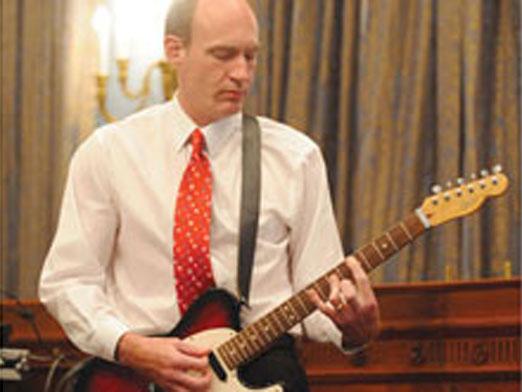
Last Friday, in my role as a contributor to Politico’s “Arena”, I responded to a question about the presidential candidacy of guitar-playing, wise-cracking Michigan Congressman Thaddeus McCotter. Was there room for him in the Republican field?
Sure, I replied. He can join Newt Gingrich in filling the comic relief void. He starts out, I noted dryly, with national name ID approximating that of my dad.
Several people told me they found my remarks amusing. But as I had the chance to reflect over the weekend, I realized that – with all due respect to Mark Halperin – I was being a dick.
I disagree with most of what Thaddeus McCotter – who calls himself a true constitutional conservative – espouses, but people shouldn’t mock passionate, sincere candidates just because they are longshots. And of all people, I definitely shouldn’t mock them.
***
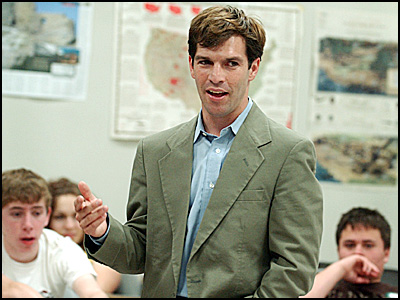
When I decided to run for Congress in 2004, I was a nobody: a 29 year-old adjunct lecturing at a local university while trying to complete my Ph.D. I had no money, no political base and no name; my staff was a ragtag crew of students. The leading candidate was Russ Carnahan, scion of Missouri’s most powerful political dynasty: the “Kennedys of Missouri.” Russ’s dad was a two-term Governor and his mom a U.S. Senator; my dad had been a golf coach, a sportswriter, a pool hustler, and adverstising copywriter, and my mom counseled children with special needs. Ten candidates filed; Carnahan led the field by 40 points.
I set two benchmarks for myself, one concrete, the other less so. The real benchmark was that I vowed to raise $100K in my first quarter, somehow.
The second benchmark was somewhat less scientific. One evening after teaching, I went across the street from campus and canvassed a neighborhood to see if people would take me seriously as a congressional candidate, or if they thought I looked too young (I was a boyish 29, 5’6” and 120 pounds soaking wet). I knocked on about 40 doors.
The first door was answered by a thirty-something woman who immediately after my introduction asked me point-blank if I was pro-choice. “Absolutely,” I said. She said she’d vote for me as long as I didn’t waver on that issue. I thought to myself, OK, there’s one vote, at least I won’t get shut out.
A few doors later an older man asked me if I supported stem-cell research. “Absolutely,” I said, and he said he was a genomic researcher and would back me as long as I supported the right to unfettered scientific research. Two for two. I can do this.
A few minutes later, a middle-aged woman opened her door, and I introduced myself. “Hi, my name’s Jeff Smith, and I’m planning to run for Congress next year, but just wanted to come by today and see if you have any questions for me.”
She looked at me quizzically. “Where are you coming from?”
“Uh, well, from campus, actually.”
“Oh, yes, you must want to see Janie. Hold on one second.” She called up the stairs, “Janie, come on downstairs, there’s a young man here who wants to talk to you, he’s running for Student Congress.”
“Tell him I’m busy, Mom,” came the disembodied voice of a college girl.
I was too embarrassed to explain myself. I said goodbye, walked back to campus, and started thinking of how I could raise $100K in 3 months, which I did, barely.
***
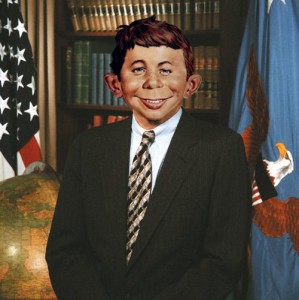
No, I'm Thaddeus!
Thaddeus McCotter knows exactly what I realized back in 2003: Primaries are about finding niches. And the terrain he encounters is not unlike the one I faced nearly a decade ago: a crowded field, but one in which he can identify possible niches to fill.
I knew there would be at least seven candidates (ultimately there were ten), and with each candidate to enter, the race became that much more attractive to more candidates, given the declining percentage needed to win. I spent weeks looking at numbers, analyzing different combinations, figuring out if there was enough space for me to fill. I estimated that with seven candidates, one could win with just 28-29% of the vote, and that the entrance of another candidate or two could reduce that number to 23-24%. For me, every decline in this number made the race more appealing, because the fewer votes needed to win, the more important each vote became. And the increased importance of each vote magnified the influence of a grassroots campaign relative to a money-and-media-driven campaign.


 Blog this!