Contributing RP Artur Davis was Wolf Blitzer’s guest this week in CNN’s “The Situation Room,” discussing his switch to the Republican Party.
Watch the clip below:


 |
|||
Artur Davis Photo Here Photo HereRecovering PoliticianTHEN: U.S. Congressman (AL), 2003-2010; Candidate for Governor, 2010 NOW: Attorney, SNR Denton, LLP Full Biography: link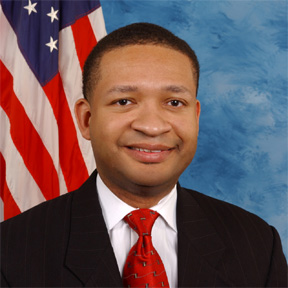    Contributing RP Artur Davis was Wolf Blitzer’s guest this week in CNN’s “The Situation Room,” discussing his switch to the Republican Party. Watch the clip below:
Conservative cynics will note that said template did not prevent one Bush from losing reelection, and another from a disastrous second term, and that the failings of both yielded the two most successful Democratic candidacies in the last three decades. But Bush is certainly right about the long view: a Romney presidency that wanted to make headway on entitlements, that wanted to make the authentically bold education reforms Romney is proposing a reality, and that wanted to end Obamacare without triggering a politically dangerous surge in the ranks of the uninsured, would need room to maneuver and navigate through implacable Democratic opposition. It is not heresy to envision a Romney term that breaks gridlock instead of perpetuating it.
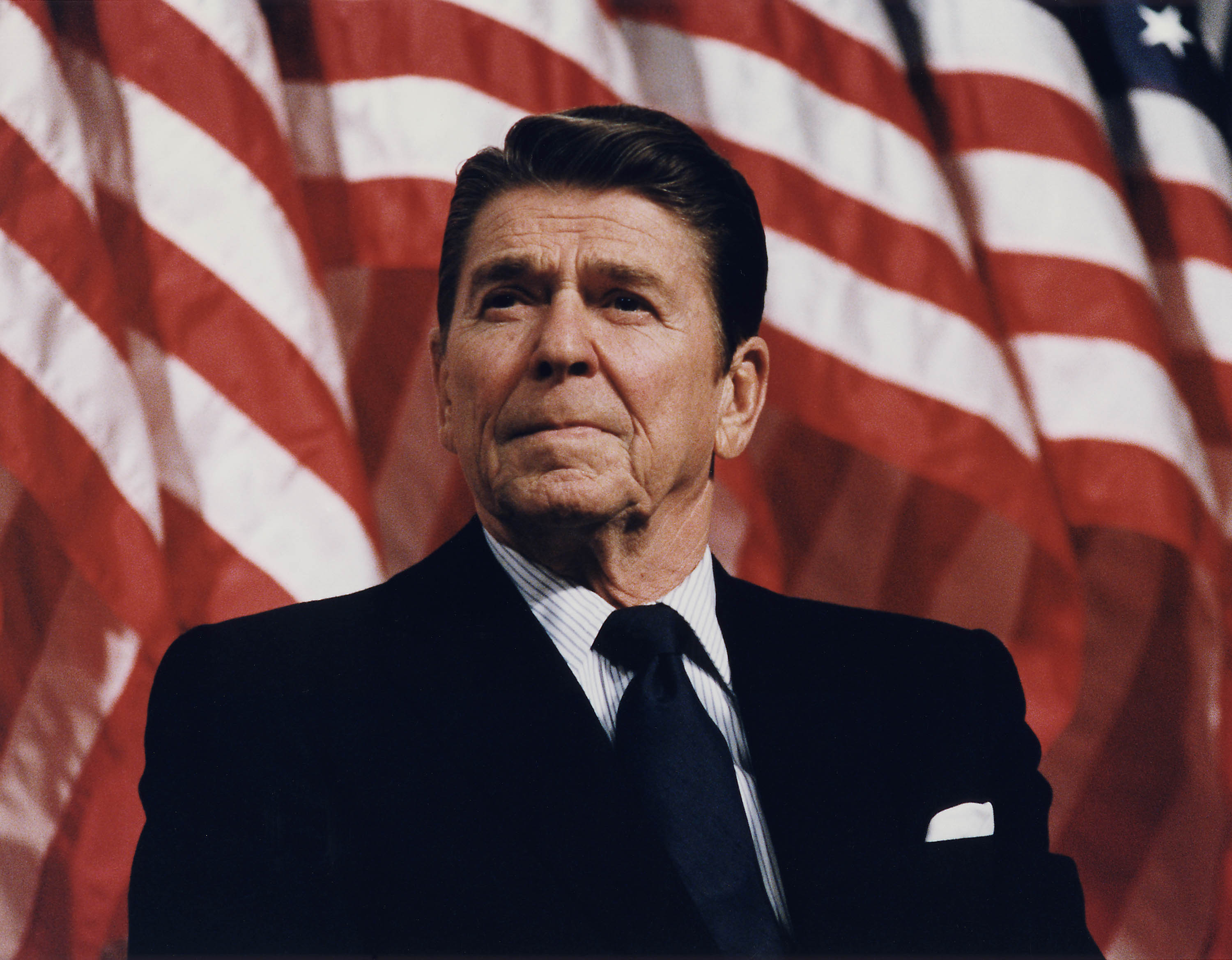
That Reagan won so comfortably seems like historical inevitability now, the natural progression of a country shedding itself of sixties style excess. Shirley’s masterful re-telling of that cycle describes something infinitely more inspiring and complex: a brilliantly tenacious politician who survived through the force of his own personality and who re-imagined conservatism as freedom rather than austerity, as a source of confidence rather than reproach. It does Reagan little justice to shrink him to artificial proportions by suggesting that he was only the sum of the elements of his platform; it shortchanges the ideological instability of the times to interpret Reagan’s victory as a simple instance of a candidate meeting his party’s and a majority of the country’s moods. More than any American figure since JFK, Reagan prospered by shaping that mood himself. And the notion that Reagan’s governing style was the hallmark of an ambidextrous Great Compromiser who couldn’t thrive in today’s hyper-partisan atmosphere? It would amuse the air traffic controllers union he rolled over, and the congressional Democrats he bludgeoned in his first budget fights, and the communists he confronted in Europe and Central America. The deals Reagan did cut, over Social Security financing, for example, were imperfect then and now, but they didn’t define Reagan or diminish him with movement conservative because the times he was unmovable were actually the moments that built the public’s confidence. And the rebuilding of that confidence in the aftermath of the disastrous seventies is what installed him as a bipartisan presidential icon, much more than the specifics of a legislative track record. Read the rest of…
Interestingly, Hajnal and Lee don’t view it as distressing. They speculate that there is actually a virtue in this kind of politics, in that it would supplant the alternative of one racialized party matched against one white, homogeneous one. It is also striking that they describe their approach of “tightly packaged appeals to targeted [minority] electorates” as a strategic novelty, when it is anything but: even a cursory glance of modern politics yields, on the right, Richard Nixon’s cultivation of Catholics and white ethics, George W. Bush’s deploying of an anti gay marriage initiative to shift black votes in Ohio in 2004; and of course, what Hajnal and Lee describe is a fair rendition of the current Democratic pattern of wedge politics from the left: courting Hispanics with opposition to restrictive local immigration laws, blacks with protective rhetoric about voter ID requirements and, increasingly, with defenses of affirmative action in higher education (an issue the conservative dominated Supreme Court has committed to revisit in the next term). 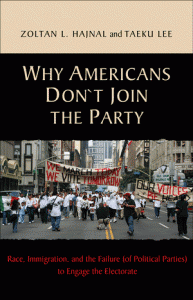 Click here to review/purchase book I can cite any number of arguments from both ends of the spectrum why more of the above is hardly a political panacea. From the liberal perspective, there is a quality of cheap symbolism that is really studied avoidance of more contentious ground like African American poverty or citizenship status for illegal immigrants. On the right, policy minded conservatives might lament that the temptation for the GOP to wield gay marriage and perhaps abortion to offset the Democrats’ advantage with blacks and Latinos is at the expense of more substantive initiatives on education and entrepreneurship. My gut reaction is that the two authors end up in such a curious place—treating old fashioned racial interest group politics as cutting edge and prescribing more of it despite the obvious costs—because they are trying to make sense of a not widely known phenomenon that their research uncovered: the surprisingly high levels of disengagement from among ethnic minorities from both parties. Their data suggests, for example, that among Asian Americans and Latinos, a majority don’t vote, and almost sixty percent of both groups are independent or don’t identify with either party; even within the monolithically Democratic black community, roughly a third express reservations that their interests are not adequately articulated by Democrats or Republicans. Read the rest of…
Fascinating stuff. Of course, it’s a message some conservatives will blanche at for the simple reason that a recall is an extremely unprecedented gesture—three governors in our history have fallen victim—while the 2010 off year races were obviously a regularly scheduled democratic exercise. But Douthat surely has the ultimate conclusion right: both sides have gotten well schooled in the gymnastics of cut and slash opposition; it’s just that Republicans are getting the better of it. And as Douthat allows, the outcome in a bluish state that Democrats are still favored to carry underscores the political pull of reeling in outsized spending and the relative weakness of the liberal alternative, when both are put to the test.
I would even go one major step further: in the post LBJ era, the public has arguably never validated a specific, identifiable liberal agenda at the ballot box. The winning Democrats in that time frame—Carter, Clinton and Obama—have won on a tightly crafted appeal that stressed economic anxiety and blurred ideological content. Even the one congressional landslide for Democrats in memory, the 2006 midterms, were linked primarily to fatigue with Iraq and Republican overreach on Social Security. If one reads the post Reagan era as a closely matched siege over time, the left owes its victories to negative referenda on incumbents and a couple of superstar performers. In other words, liberals have been cursed to plot a course identical to the one they dismissively suggested accounted for Ronald Reagan. Read the rest of…
To be sure, there’s a lot to assail about Dionne’s history lessons. Trying to re-imagine Civil War pensions, or the creation of national hospitals to treat sailors under John Adams, as relevant entries in a debate over modern ideology is about as illuminating as linking pro-slavery antebellum Democrats to the modern Democratic Party’s stance on abortion, or dwelling on the Ku Klux Klan’s twenties era power base in the Democratic Party. In other words, minor rhetorical noise, but not much light. Similarly, describing McCarthyism, Vietnam, the civil rights fires, Watergate, and the generation gap as minor pauses in a robust past consensus is the slight-of -hand of a DC pundit framing another lament about the allegedly woeful times we live in now (times that don’t feature inner-city riots, assassinations, 56,000 deaths in a foreign war, or the wiretapping of political enemies).
Read the rest of…
I’ll venture a guess that Utah’s newly created 4th District is about to break the pattern of irrelevance, at least if a thirty-something African American woman, who happens to be a conservative Mormon Republican, wins a battle that is well within her reach (a dead heat against a Democratic congressman in a Republican leaning seat). Mia Love’s potential breakthrough in one of the whitest districts in America would be a message in a bottle from the future—the kind of promise that is attracting outsized attention and dollars from around the country.  Mia Love It’s important to note what Love is not: unlike Barack Obama, she is not the beneficiary of a liberal party self-consciously aware of the chance to write history, and there was no racial base ready to rally around her, or to punish the party if she had been rejected in her primary. She is no caricature who bends so far to the right that it seems like a disingenuous pose: there is a distinct absence of fire and brimstone, and her embrace of Republican agenda items like the Ryan Plan is couched in process-minded tones, with no overheated claims that socialism is around the corner. Notably, her own mantra on the stump is that she asks about the sustainability and affordability of programs first—a conservative stance but a contrast with, say, Grover Norquist’s flamboyant description of shrinking government to a size that makes it fit to be drowned in a bathtub. Read the rest of… The Washington Post covered the recent announcement by contributing RP Artur Davis that he was defecting to the Republican party:
Click here to read the full article.
The conventional wisdom is that the Obama Administration has all but swept education reform off the table with its own maneuvering toward the center on the issue. The reality, though, is that the White House has mixed instances of toughness—incentivizing states to embrace charter schools, defending mass firings of teachers in underperforming Rhode Island districts—with a conventional Democratic resistance to merit based pay, vouchers, or any revamping of state tenure laws. It is a record that has won bipartisan plaudits from reformers, but not one that has made much headway in alleviating the festering mediocrity that marks many of our public schools, and that careens into outright disgrace in most inner city venues.
Read the rest of…
As to the horse-race question that animated parts of the blogosphere, it is true that people whose judgment I value have asked me to weigh the prospect of running in one of the Northern Virginia congressional districts in 2014 or 2016, or alternatively, for a seat in the Virginia legislature in 2015. If that sounds imprecise, it’s a function of how uncertain political opportunities can be—and if that sounds expedient, never lose sight of the fact that politics is not wishfulness, it’s the execution of a long, draining process to win votes and help and relationships while your adversaries are working just as hard to tear down the ground you build.
And the question of party label in what remains a two team enterprise? That, too, is no light decision on my part: cutting ties with an Alabama Democratic Party that has weakened and lost faith with more and more Alabamians every year is one thing; leaving a national party that has been the home for my political values for two decades is quite another. My personal library is still full of books on John and Robert Kennedy, and I have rarely talked about politics without trying to capture the noble things they stood for. I have also not forgotten that in my early thirties, the Democratic Party managed to engineer the last run of robust growth and expanded social mobility that we have enjoyed; and when the party was doing that work, it felt inclusive, vibrant, and open-minded. Read the rest of…
Read the rest of… |
| ||
| Copyright © 2026 The Recovering Politician - All Rights Reserved | |||




Follow Artur: